
The Izyashny cucumber is an early-ripening, high-yielding variety that has long been cultivated by gardeners in their backyards. This vegetable produces crisp, 9-12 cm long fruits weighing 130-150 g, and the harvest can be completed as early as 40-45 days after the first shoots emerge. More information about the variety's characteristics and cultivation can be found below.
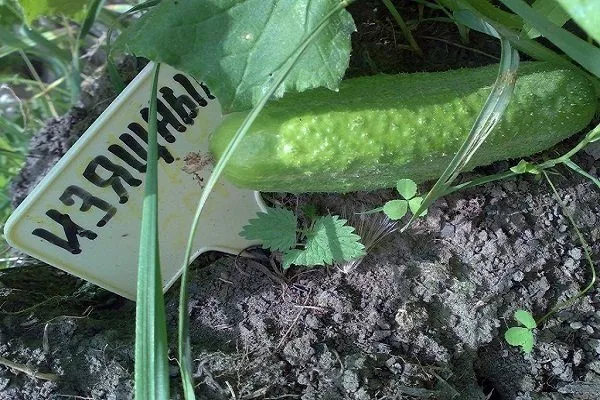
Cucumbers can be harvested 40-45 days after germination.
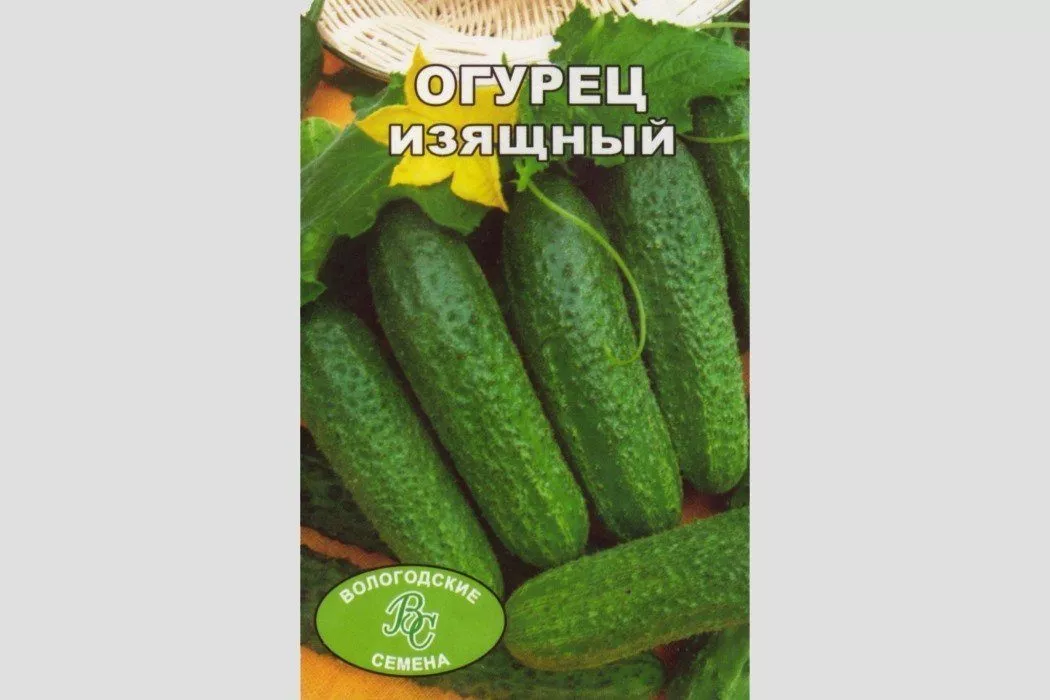
The elegant cucumber can be grown in greenhouses and in open ground.
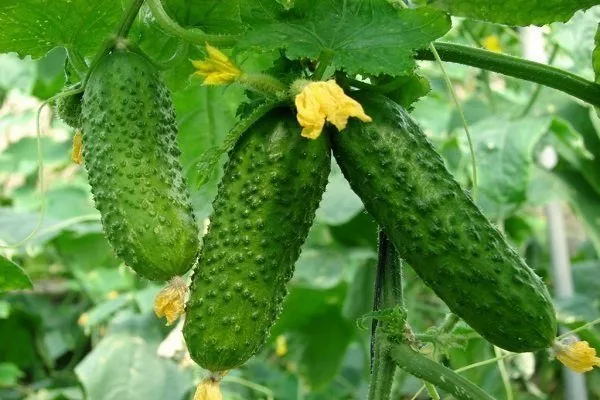
Cucumber Elegant
Breeding history
The variety was developed in the 1960s under the guidance of O. V. Yurin by breeders of the All-Union Scientific Research Institute for Selection and Seed Production of Vegetable Crops (today the Federal Scientific Center for Vegetable Growing, VNIISSOK settlement, Moscow Region).
Izyazhny is a continuation of a line of cold-hardy cucumbers, which includes varieties developed back in the 1930s and formed the basis for subsequent domestic breeding efforts. These include Vyaznikovsky 37 and Muromsky 36.
In 1971, Izyashny was included in the State Register of the Russian Federation for cultivation in many regions of the country, from the central regions to the Far East. In general, it is approved for cultivation in the following areas:
- Far Eastern;
- East Siberian;
- West Siberian;
- Ural;
- Middle Volga;
- Volga-Vyatka;
- Central;
- Northwestern.
The Izyashny cucumber is also in demand in neighboring countries, and since 1974 it has been listed in the State Register of Belarus.
Description of the variety
The "Izyashny" cucumber is suitable for growing in open ground and under spring plastic covers. It's an early-ripening variety, so it takes about 40-45 days from the first shoots to full maturity. How the plant blooms and what fruits it produces will be discussed separately.
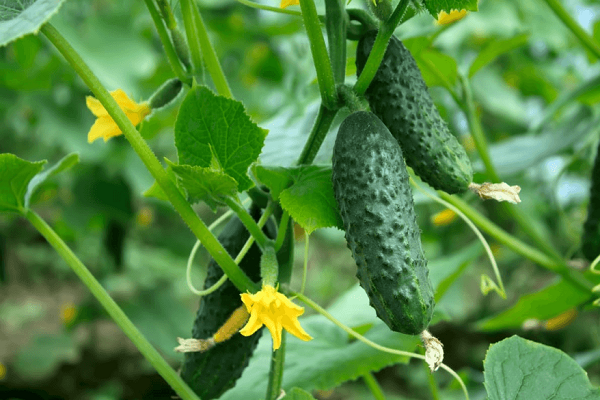
Plant
The main characteristics of the plant are:
- bee-pollinated (in female flowers, ovaries develop only after they are fertilized by pollen from male flowers, and the process of cross-pollination depends on the number and activity of insects);
- mixed by flowering type (mainly male flowers appear in the leaf axils of the central stem, and female flowers with ovaries appear on the lateral shoots of the first order);
- indeterminate (has no growth restrictions);
- medium-braided (medium weaving can produce about 4-6 lateral shoots);
- medium-sized (moderate branching).
Fruit
With proper care, the plant will grow with the following parameters:
- length – from 9 to 12 cm;
- weight – 130-150 g;
- form - aligned elliptical with slight ribbing;
- peel – medium density, light green with white stripes, white fluff and small tubercles;
- pulp – without voids, dense, juicy and crispy, no bitterness.
The cucumbers have an excellent marketable appearance, do not overgrow and do not turn yellow over time.
Table of characteristics
The variety has a number of distinctive characteristics:
| Parameter | Description |
| Purpose | Izyazhny is considered a salad variety, so the fruits are often used in salads and served fresh. However, most gardeners note that the cucumbers are also suitable for pickling and canning. |
| Cold resistance | This variety tolerates cold temperatures well, making it suitable for growing in northern regions with short summers. It also ripens early, allowing for early planting for a consistent harvest even in short summers. |
| Pollination method | Female flowers are pollinated by bees, so cucumbers produce numerous male flowers. These also serve as pollinators for neighboring plants. |
| Disease resistance | This variety is renowned for its low susceptibility to disease and its strong immunity. It is resistant to powdery mildew, olive spot (cladosporiosis), and bacterial blight. |
| Productivity | From 1 square meter of garden bed you can collect 5-7 kg of cucumbers. |
The following video explains the characteristics of the variety:
Agricultural technology
To get an excellent harvest, it is necessary to consider basic agricultural practices from the moment of sowing seeds to harvesting cucumbers:
- Grow this variety by direct sowing or using seedlings. In temperate climates, seeds can be sown for seedlings in late April to early May, and transplanted to their permanent location in late May to early June.
Thanks to the relatively low soil temperature initially after planting, the plant develops a strong root system, while the growth of its aboveground part slows. This subsequently improves its early maturity, yield, and resilience.
- Cucumbers can be grown in a sunny area protected from drafts. The soil itself should be light and loose. It's best to have previously grown crops such as:
- tomatoes;
- peas;
- cabbage
- potato.
It is not recommended to plant cucumbers after pumpkins and squash.
- The cucumber plot should be prepared in advance by fertilizing the soil with manure or humus to a depth of 15-20 cm in the fall at a rate of 1 liter per square meter. Over the winter, this manure will rot, releasing nutrients and warming the soil. To increase the soil's nutritional value, you should also add complex mineral fertilizers, and then dig the soil to the tip of a shovel if the soil is loose.
- To protect cucumbers from winds, plant tall plants, such as corn, in several rows near them. Additionally, to attract insects to the cucumbers, plant honey plants near the bed, which bloom actively in late August and September.
- Feed the seedlings 2-3 times a month, using organic and mineral fertilizers with microelements.
- If young green fruits do not appear, it means that the plant is not pollinated well, so this must be done manually, simply by passing the male flowers over the pistils of the female flowers.
- Cucumbers don't stay on the stems for long, so they need to be harvested daily. This will also ensure new buds form throughout the summer.
- ✓ Use only hardwood ash, avoiding softwood due to its high resin content.
- ✓ Ash should be sifted through a fine sieve to remove large particles and coals.
Seed preparation
It is extremely important to process the seed material properly, which involves the following manipulations:
- Calibrate the seeds. First, soak them in a weak solution of potassium permanganate for a few minutes, then soak them in warm, clean water for 15 minutes. The healthy seeds will sink and should be used for planting. Any seeds that float should be discarded, as they will not germinate.
- Warm the selected seeds slightly by placing them in a cloth bag and hanging them near a radiator. This is done to prevent diseases and protect against pests.
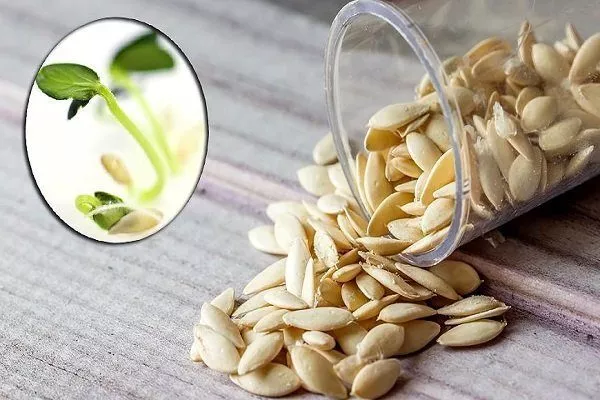
After this preparation, the seeds can be sown directly into the soil, but for maximum germination, they can be germinated first. To do this, place the seeds in a damp cloth or soak them in wet sawdust for 24 hours.
Seeds soaked in a growth stimulator and sprouted until the first shoots appear produce the best cucumber harvest.
Growing from seedlings
Growing from seedlings is considered more reliable, as it allows for faster germination of the plant and ripening of the cucumbers.
Preparing seedlings
To get good seedlings, you should follow these rules:
- Sow the prepared seeds in individual cups or a container with cells, as the plant does not tolerate transplanting well. It's best to use a special soil mixture, adding wood shavings or leaves to improve aeration. The optimal planting depth is 1.5-2 cm. Place 1 or 2 seeds in each hole.
- Before the first shoots appear, cover the planting with glass or film to maintain an optimal microclimate.
- If daylight hours are insufficient, supplement the seedlings with a fluorescent lamp, otherwise they will stretch out.
- Reduce the room temperature at night.
- Feed the seedlings with specialized fertilizers. For example, products such as Kemira, Rastvorin, and Nitrophoska have proven effective.
- Before planting seedlings in their permanent location, harden them off to improve their survival rate and speed up rooting. To do this, place them on the balcony for 20 minutes and gradually increase the hardening time.
The seedlings are considered ready for planting in open ground at the age of 20-26 days, when they already have a thick stem, short internodes and 4 dark green leaves.
Transplanting
Seedlings can be transplanted into open ground when the soil warms up to +15…+18°C, following these instructions:
- A few days before planting, dig up the soil again and add layers of:
- pine sawdust;
- humus;
- peat;
- straw;
- cow dung;
- ash;
- black soil.
Cover the entire area with soil to a depth of 20 cm and, approximately 2-3 days before planting, water with water heated to 60°C to rid the soil of harmful microorganisms. Also water the pre-prepared holes with hot water.
- Plant the seedlings in rows so that there are no more than three plants per square meter. The optimal distance between holes is 40 cm, and between rows – 90-100 cm. Supports should be installed for vertical planting, but not for horizontal planting.
- The planting depth is 9-10 cm. There is no need to plant the seedlings deeper, as the soil at this depth will be excessively cold, which is unfavorable for the plant roots.
- Sprinkle the soil around the sprouts with a little earth to retain moisture and prevent crusting, then water thoroughly with warm water and cover with a temporary shelter to protect from unexpected frosts.
Once the threat of night frosts has passed, the cover must be removed, otherwise the seedlings will not be able to receive full sunlight.
Direct sowing into the ground
Planting should begin after the soil warms to 15°C. Seeds and soil should be prepared in the same way as when growing cucumbers from seedlings.
Sow the seeds at a depth of 1.5-2 cm, placing two seeds per hole. After sowing, keep the soil constantly moist, watering daily if necessary. Until the first shoots appear, it is recommended to cover the seeds with plastic wrap to retain heat and moisture.
You can see how to plant cucumber seeds in a warm bed in the video below:
Read on to find out how and when to plant cucumber seedlings. next article.
Caring for seedlings
The Elegant cucumber will thrive, grow, and bear fruit only with regular care, which includes the following:
- WateringWatering should be regular and generous, using warm water (at least 25°C). The frequency of watering depends on the weather. On dry days, seedlings should be watered every other day, and on rainy days, it's best not to water them at all. Water the cucumbers preferably in the evening at a rate of about 5 liters of water per 1 square meter of area.
- Loosening, weedingA few minutes after watering, the top layer of soil should be loosened, removing all weeds.
- Hilling rootsThis is important, as the plant's root system is located on the surface, and raking the soil up higher will encourage additional root formation, which will increase the plant's yield. To achieve this, simply cover the side shoots with soil in some places.
- Top dressingThe first feeding should be administered two weeks after planting. Seedlings can be treated with Gumi, a gentle natural plant growth supplement in the form of a 30% aqueous paste. In addition, remember to use mineral and complex fertilizers. Feed the plant 2-3 times during the growing season.
- Tying upTo make harvesting cucumbers easier, you can encourage the plants to grow vertically even in open ground. To do this, nail poles to each end of the row, and stretch wire or rope between them at a height of 1.3-1.5 meters. Once the cucumber vine reaches the wire, tie it to it. However, keep in mind that when growing vertically, the plant must be reliably protected from drafts and cold winds. The area should also receive ample sunlight.
- Bush formationCucumbers have weak and poorly developed roots that cannot adequately supply the entire plant with moisture and nutrients, causing individual parts to turn yellow and wilt. Therefore, it's crucial to promptly remove excess plant parts—pinch the top of the main stem after the third true leaf, or after the sixth or eighth true leaf if branching is delayed. A properly formed plant should have five to six lateral shoots.
Some experienced gardeners believe that bee-pollinated cucumbers don't need to be side-sonned. As the plant grows naturally, there will be enough barren flowers left on the main stem for pollination, and the main crop will develop on the side shoots.
- Protection from diseasesTo do this, spray the leaves with a lightly pink solution of potassium permanganate or copper sulfate at a rate of 1 tablespoon of powder per 10 liters of water. If any yellow or diseased leaves are present, they should be removed.
- Pest controlCucumbers of this variety are susceptible to attack by melon aphids. To control them, take 1/2 cup of ash and 25 g of grated soap, dilute them in 5 liters of warm water. Apply this solution to the tops. Spider mites are also occasionally encountered. They can be detected by the web threads on the plants. To eliminate the pest, treat the plant with an infusion of onion peels (100 g per 5 liters of water). If slugs are found, they will need to be collected by hand, and ash or lime should be scattered over the bed.
Features of growing in a greenhouse
When growing cucumbers in greenhouse conditions, the following nuances should be taken into account:
- You can plant seeds in a greenhouse a month earlier, that is, at the end of March – beginning of April.
- The greenhouse should be prepared in advance, removing the remains of old plants in the fall. It's best to dry and burn them. To disinfect the soil, water it with a hot solution of potassium permanganate or Inta-Vir.
- Cucumbers need to be pollinated by insects, but if insects are scarce, the female flowers need to be pollinated manually. To do this, some gardeners coat the plant leaves with sugar syrup or honey and open the windows to attract insects. To make the syrup, add 100 g of sugar or 50 g of honey to warm water.
- Don't rush the formation of the bush. It's better to wait until the cucumbers reach the end of the twine and begin to droop, and only then remove the tops.
- If the weather permits, open the vents in the greenhouse regularly for ventilation, but ensure that there are no drafts.
- A month before planting, disinfect the greenhouse with a sulfur candle.
- Two weeks before planting, add vermicompost to the soil at a rate of 5 kg per 1 sq. m.
- A week before planting, warm the soil by watering it with hot water and covering it with black film.
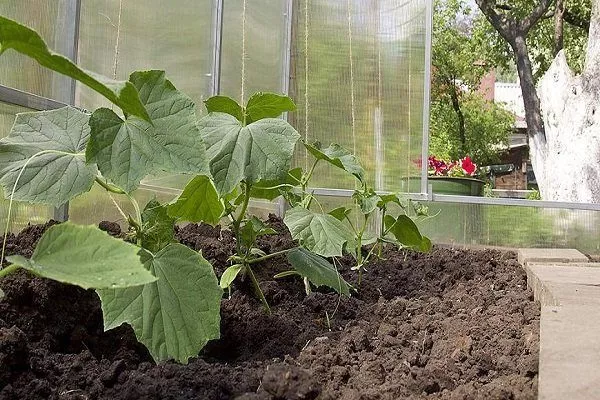
Read more about how to grow cucumbers in a greenhouse. in the article.
Harvesting
Cucumbers should be harvested daily or every other day, as they should not be allowed to grow too large. The fruits should be twisted or pinched to conserve moisture and reduce moisture loss at the breaks.
Timely harvesting of fruits will allow the plant to direct its energy to the formation and filling of new ovaries.
To extend the fruiting period, you should also follow these rules:
- Apply foliar fertilizer at the end of summer. This is because air temperatures drop significantly at this time, which affects plant roots, who absorb fewer nutrients.
- In August, mulch the roots with hay, peat, humus, or sawdust to a depth of up to 5 cm. This also helps protect them from cold nights.
- Conduct preventive measures to combat cucumber diseasesto prevent the plant from getting sick from frequent cold rains and morning dew.
- Rejuvenate cucumbers. To do this, cover the basal stem with soil to encourage new roots to emerge, which better nourish the plant.
The "Izyashny" cucumber is a bee-pollinated variety, so its fruits produce full-fledged seeds. These seeds can be used as seed, as their varietal differences are genetically determined. These seeds should be planted not the following season, but in 2-3 years. Unlike commercial seeds, they require preparation before planting: soaking, disinfecting, pinching, and germination.
Pros and cons
The advantages of this variety include:
- high taste qualities;
- presentation;
- early ripening;
- versatility in use;
- high immunity against many diseases;
- stability and adaptability to weather changes;
- the ability to pollinate other varieties of cucumbers.
The disadvantages of the variety include:
- the presence of a thick peel, especially in overripe fruits;
- uneven coloring - there are cucumbers with white sides (white-sided), which are not particularly suitable for pickling;
- the appearance of internal voids during heat treatment during the marinating process;
- softening during salting.
The Izyashchny variety has enjoyed well-deserved popularity among amateur gardeners and professional farmers since Soviet times. It's suitable for growing in regions with frequently changing weather and cool summers. Due to its thick rind, the fruits aren't everyone's cup of tea, although they have a wonderful flavor and aren't bitter. With proper care, they produce a good harvest.