
The Igrushka cucumber belongs to a group of parthenocarpic hybrids that don't require pollinators (plants or even bees) to form fruit. This allows the vegetable to be grown not only in open beds but also in greenhouses of various sizes (film, polycarbonate, etc.). This variety is versatile.
Introduction to the variety
Igrushka cucumbers reach maturity approximately one month after the first green shoots appear – during this period, the first fruits can be harvested as pickles and gherkins. Large-scale harvesting occurs after 45-50 days. The harvest season can be extended, which contributes to the significant yield of this variety.
Universal application:
- as a raw material for preparing salads, snacks, hamburgers, etc.;
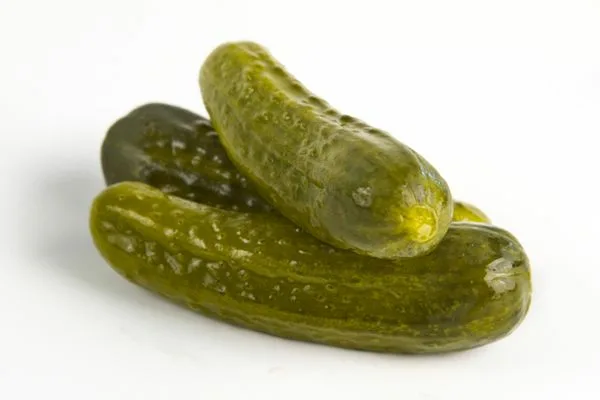
- for marinating and canning.
The hybrid is suitable for both open gardens and temporary shelters, as well as for use in polycarbonate greenhouses. It also has other characteristics:
- Average yield level – 12.6 kg per 1 sq. m.
- Distribution areas – from the first to the seventh light zone.
- General protection against diseases and pests – has strong immunity to fusarium and bacteriosis.
- Resistance to root diseases, powdery mildew – Excellent.
- Resistance to downy mildew – tolerant.
- The first fruits appear – in July-August.
Information about origin
The Igrushka variety was created by a team of scientists, including Tatyana Nikolaevna Meleshkina, Evgeniya Mikhailovna Gorshkova, and Valentina Ivanovna Kolomnikova, and was approved for plant growing in 2010.
Peculiarities:
- It belongs to the category of self-pollinating parthenocarpic hybrids.
- The variety was officially registered in the State Register of the Russian Federation and approved for cultivation in unheated spring greenhouses on private farms. Application for registration was submitted under number 51142 and approved on November 27, 2008.
- Recommended for cultivation in the following regions: Northern, Northwestern, Central, Volga-Vyatka, Central Black Earth, North Caucasian, Middle Volga.
Brief description of cucumbers and bushes
The plant is characterized by moderate branching and medium-sized, bright green leaves. The flowers are exclusively female, with one to three buds per node.
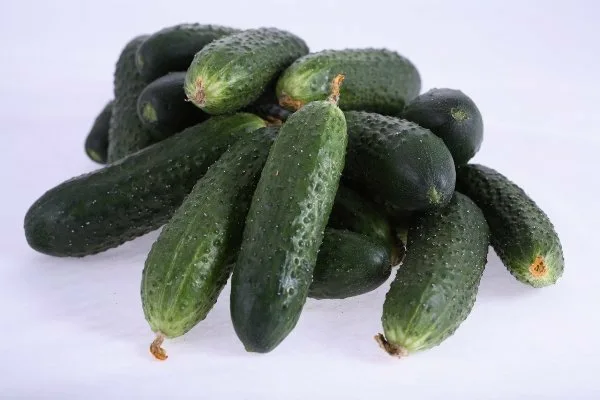
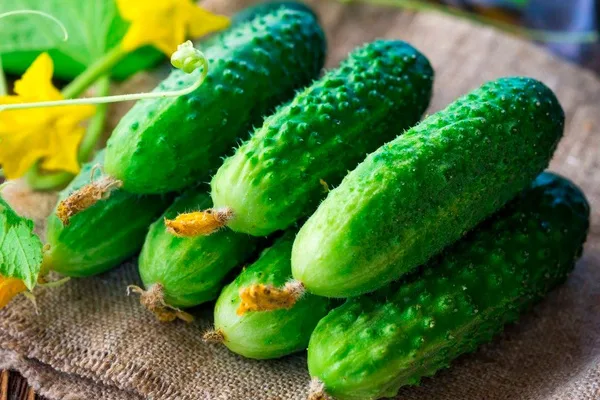
The fruits of this hybrid range in length from 8 to 9 cm and weigh approximately 35-45 g each. They are cylindrical in shape, with a surface covered in medium-sized tubercles. The fruit is green with a pattern of dark lines, and the spines on the surface are whitish.
The taste of cucumbers
Cucumbers have a pleasant and refined flavor. Their flesh is moderately dense and firm. Their juiciness and uniquely refreshing aroma make them versatile. Their distinctive crunch is noticeable even after canning.
Growing and care
To ensure successful growth of the Igrushka cucumber, you should choose a suitable location for planting: this can be an open plot of land, a temporary pavilion made of films, or even a polycarbonate greenhouse.
- ✓ Ensure the area has good drainage to prevent standing water.
- ✓ Check the soil pH level; the optimal level for cucumbers is 6.0-6.8.
As for the predecessors for cucumber, keep in mind that:
- the best options for the previous harvest are green manure crops, herbs and onions;
- satisfactory – potatoes, root vegetables and nightshade vegetables;
- worst - previous harvests of all types of pumpkin and cabbage should be avoided.
The time for sowing seeds for seedlings depends on the type of cultivation:
- For heated greenhouses, the optimal time is April 1-7;
- for greenhouses without heating – April 19-28;
- for direct sowing in open ground – May 1-10.
Other features:
- The cucumber planting scheme involves two rows with an interval of 50-70 cm between them, and the distance between each plant should be 30-40 cm.
- Cucumber seedlings are grown in 500 ml containers.
- A mixture of soil, peat, and sawdust or perlite in a 1:1:1 ratio is used as a planting substrate. For every 5 liters of this mixture, it is recommended to add 6-8 g of any complex fertilizer dissolved in water.
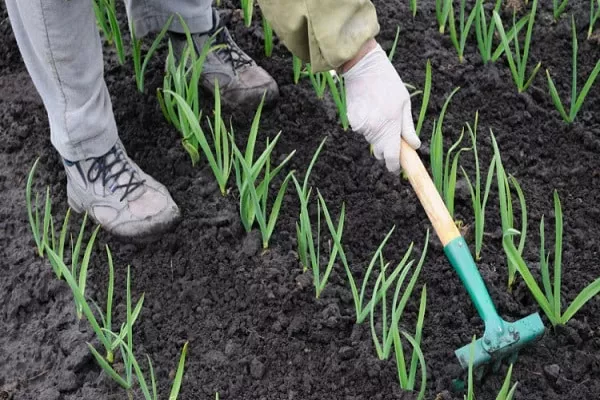
Subsequent care is also straightforward. Simply follow these standard steps:
- To maintain normal growth and development of cucumbers, feed them regularly - every 7-12 days, using organic and mineral components, which is preferably done after watering.
- Cucumbers love warm, chlorine-free water (so let it settle if you use tap water) and plenty of sunlight – choose a location on the south side for them.
- When planting seeds, maintain a depth of 1.5 cm.
- After sowing, cover the surface with film.
- To achieve good results, water as the top layers of soil dry out, weed and loosen the soil.
- Pick the fruit daily or every other day – irregular picking of cucumbers can lead to a decrease in yield.
- It is recommended to grow 2-4 plants per 1 sq. m.
Reviews
Igrushka cucumbers are hardy parthenocarpic hybrids that don't require pollinators, meaning they can be grown indoors. One of the key features of this variety is its high resistance to various diseases and pests.