
The Khrustyashchiy cucumber is a variety consistently popular with gardeners and regular summer residents. It is prized for its properties and qualities, making it ideal for canning. When pickled or marinated, the fruits of this variety turn into crispy and flavorful cucumbers.
Description of the Crispy variety
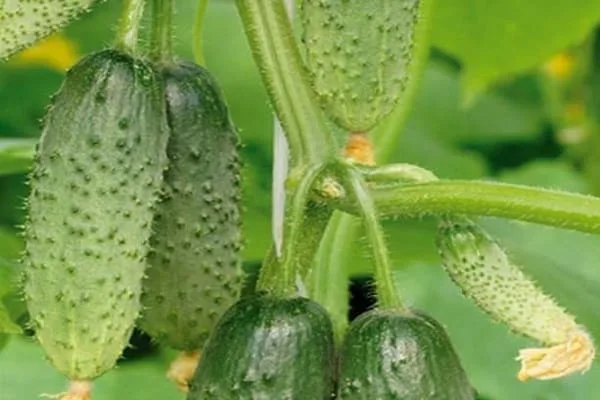
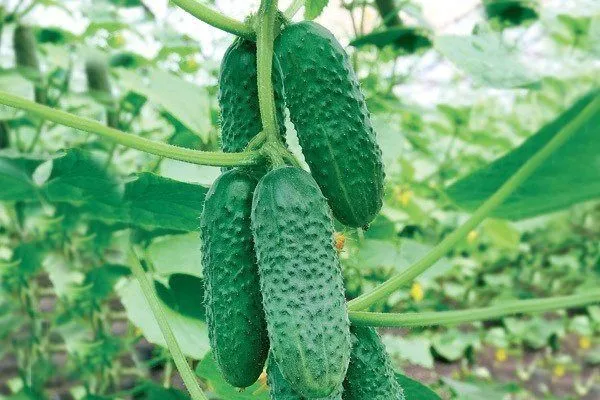
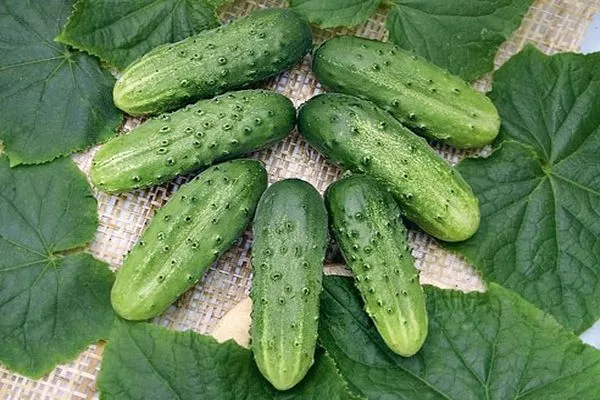
The plant is vigorous and produces predominantly female flowers. Each node produces clusters of up to 6-7 gherkins. The fruits are spindle-shaped, with a coarsely bumpy surface and black spines. Fruit weight is 60-80 g.
Purpose and taste
The Khrustyashchiy variety has excellent flavor in any form—fresh or canned. Cucumbers can be prepared as pickles (1-3 cm), gherkins (3-6 cm), and gherkins (up to 13 cm). Their flesh has an ideal texture and a pleasant, rich aroma.
Ripening and yield
This variety is bee-pollinated and belongs to the early-ripening group. Fruiting begins approximately 45 days after germination. It is highly resistant to powdery mildew, both true and false.
Pros and cons
The Khrustyashchiy variety has many advantages that our gardeners and vegetable lovers couldn't help but notice. If you're just considering planting this domestic variety in your garden, familiarize yourself with all its advantages and disadvantages.
Advantages:
No shortcomings were found in the Khrustyashchiy variety.
Landing features
This versatile variety produces excellent fruit both in open ground and in greenhouses, whether grown from seeds or seedlings. When planting, it's important to choose the right site and time, as well as follow the planting process.
Planting cucumbers:
- Cucumbers require a warm, well-lit area. Any soil is suitable, as long as it's fertile and neutral or slightly acidic. Cucumbers grow best in loose soil. Dense soil should be loosened with humus or compost and dug over in the fall.
- The timing of sowing seeds and planting seedlings depends on the climate in the region. In temperate climates, planting begins after May 25th. Seedlings are sown a month before transplanting into the ground.
- Before sowing in open ground or seedling cups, seeds are soaked for half a day in water at room temperature (18 to 20°C). Next, they are wrapped in a damp cloth and placed in the refrigerator for a couple of days to harden. The final step in seed preparation is germination in a damp cloth in a warm place. However, only seeds that have not been treated by the manufacturer can be soaked (such planting material is usually brightly colored).
- For planting, prepare holes measuring 50 x 30 cm. When planting, use only settled, sun-warmed water for watering. No more than 2-3 plants can be planted per square meter. The seeds are planted 1-2 cm deep, with 2-3 seeds per hole. When the first true leaf appears, remove the excess shoots, leaving the strongest and healthiest ones.

Care Features
The Khrustyashchiy cucumber produces good yields with regular care. It requires watering and fertilizing, as well as all other necessary agricultural practices.
How to care for cucumbers:
- As cucumbers develop, the frequency of watering changes. Before flowering, cucumbers can be watered once a week, and during the fruiting stage, every 3-4 days. During drought, watering becomes daily. The recommended watering rate is 15 liters per square meter.
Watering should be done with warm water; otherwise, the plants will lose their buds and even the root hairs may die, leading to the death of the entire plant. The best time to water is in the morning. - After watering, the soil is carefully loosened, taking care not to damage the surface roots. Loosening the soil allows oxygen to reach the roots, while simultaneously weeding. The soil can also be mulched with straw, peat, etc. to reduce the frequency of watering, loosening, and weeding.
- Cucumbers need to be fertilized approximately four times per season. It is recommended to alternate between organic and mineral fertilizers. Here's a rough fertilizing schedule:
-
- Two weeks after germination, apply 15 g of ammonium nitrate, 20 g of double superphosphate, and 20 g of potassium sulfate per 10 liters of water. One liter of solution is required per bush.
- During the flowering period, apply 0.5 liters of mullein, 15 g of nitrophoska, 100 g of wood ash, and microelements to cucumbers. The dosage is given for 1 liter of water. Apply 3 liters of solution per square meter.
- During the fruiting period, add 50 g of urea, 100 g of wood ash, and 40 g of potassium sulfate. The dosage is given for 10 liters of water; 1 liter of solution is added to each bush.
- Half a month after the 3rd feeding, 100 g of wood ash is added under each plant.

Pest and disease control
The variety is resistant to many fungal diseases, but under unfavorable circumstances, it may be susceptible to gray mold, fusarium, and other fungicides. Topaz, Bayleton, Quadris, and other fungicides are used to combat these diseases.
Harvesting
Cucumbers should be harvested as frequently as possible to stimulate new growth. You can pick the fruits every 1-2 days. Cucumbers should not be allowed to overgrow; firstly, they lose their flavor and marketability, and secondly, the growth of new cucumbers is slowed.
Reviews
The "Khrustyashchiy" cucumber is deservedly popular among gardeners and preservers. This variety is a must-plant for those planning to preserve gherkins and pickles for the winter; they will turn out truly delicious and crispy.