
The Khrustik F1 hybrid is a multi-purpose cucumber, distinguished by its versatility in cultivation, use, and geographic range. Gardeners have been using it in their gardens for many years, despite the regular appearance of new varieties and hybrids on the market. Consumers highly value its fruits for their excellent flavor.
Introduction to the variety
Khrustik F1 is a parthenocarpic variety, meaning the fruit ripens without the help of pollen or bees. This variety is ideal for both traditional gardening and plastic greenhouse cultivation.
The hybrid is easy to care for, resistant to various weather conditions, and at the same time has excellent commercial quality and a variety of culinary uses.
Originators
The Gavrish company and the research institute for plant breeding share copyrights to agricultural property. The application for registration was submitted in April 2011 and was approved by the end of the fall semester. In addition to S. F. Gavrish, the following specialists contributed to the development:
- I. S. Pluzhnik;
- A. V. Shamshina;
- A. E. Portyankin;
- T. Ya. Surovoy;
- N. N. Khomchenko;
- V. N. Shevkunov.
Characteristics of the appearance of the plant and cucumbers
This cucumber variety is indeterminate, meaning there is no genetic limitation on shoot growth. Without pruning, cucumber stems can reach a length of 300-360 cm. Shoot growth is fairly rapid, but the bushes do not form many lateral branches. The foliage is not very large, and the foliage coverage is average.
Other characteristic features:
- The predominant flowers in this variety are female, each promising to become a future cucumber ovary. Flowering occurs in clusters.
- According to the creator of the variety, each bunch contains 7-9 buds, while the State Register and the experience of gardeners indicate that most often their number is 3 pieces.
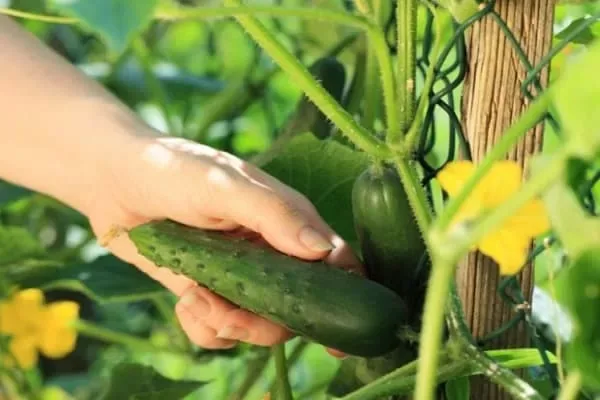
- Cucumbers have the same weight of about 110-120 g and a maximum of 12 cm.
- The shape is cylindrical.
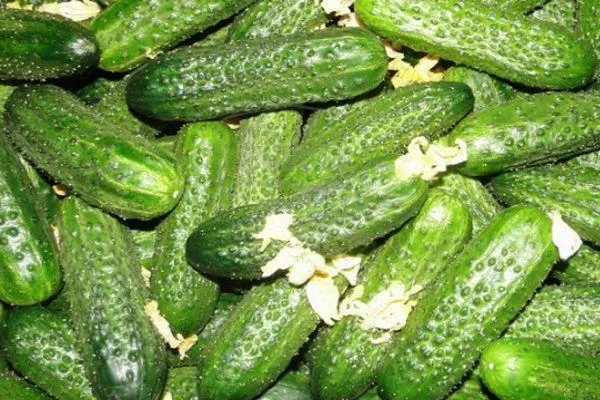
- The skin is thin but firm, with a rich green hue, light stripes and blurred spots.
- Bumps and white spines on the skin are rare, and the pubescence is light and not very dense.
- The cucumber flesh is characterized by increased density, an abundance of juice, the absence of voids, as well as a pleasant fresh cucumber taste and small seeds that are almost invisible when eaten.
Taste and purpose
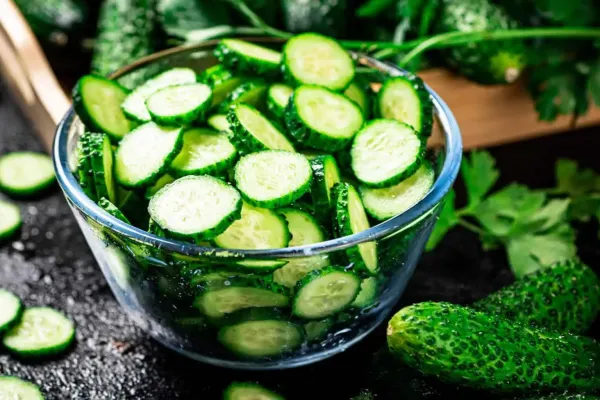
The sweet flavor of this variety is officially recognized as excellent. Genetically, there is no trace of bitterness. These fruits have a wide range of uses. Khrustik cucumbers are excellent for eating raw (either on their own or in salads and okroshkas), as well as for home-canning.
Composition, benefits
Moderate consumption of cucumbers has beneficial health effects and is sometimes used to treat various ailments. Cucumbers are 95% water. They contain potassium, which is essential for cardiovascular health, iodine, calcium, magnesium, B vitamins, and numerous minerals:
- sodium;
- fluorine;
- molybdenum;
- aluminum;
- cobalt, etc.
The substances contained in cucumbers promote better digestion and strengthen the intestinal tract. Thanks to their high fiber content, cucumbers help the body eliminate toxins and deposits.
Due to their low calorie content, cucumbers are considered a dietary food and are recommended for weight loss. 100 grams of this hybrid contains only 14 kcal, making them an ideal addition to your diet.
When ripe, the yield
Descriptions of various sources of this hybrid crop indicate that its yield ranges from 10-11 kg per square meter. However, according to the state registry, these figures are exceeded, reaching a minimum of 14.4 kg per square meter and a maximum of 15.3 kg per square meter.
Cucumbers of this variety reach maturity in clusters, in several waves. Khrustik F1 is an early-ripening cucumber hybrid, with a 45-48-day window between germination and harvest. Sometimes gardeners report a longer window—up to 60 days—which may be due to differences in growing methods and climate conditions.

Climate conditions
Khrustik can be grown in both full sun and partial shade. Seeds should be sown when the air temperature reaches at least 15-17 degrees Celsius, and the soil should be warmed to 8-10 degrees Celsius or higher. When planting, avoid rain and strong winds. During cultivation, the plants also require protection from drafts.
- ✓ The optimal soil temperature for sowing seeds should be at least 15°C.
- ✓ To prevent diseases, it is necessary to ensure good air circulation around the plants.
Planting Khrustik cucumbers
Cucumbers are actively cultivated both indoors and outdoors. Experienced gardeners recommend choosing between direct sowing or starting seedlings indoors. The choice of method affects the start of harvest, which may shift by a week or two.
Site preparation
It's recommended to grow Khrustik f1 cucumbers in a sunny location. This variety produces well in sandy or loamy soils.
Desirable predecessors of the Khrustik variety are cabbage, onions, corn or root crops.
Preparation of the site begins in the fall, when the beds are cleared of their predecessors:
- Dig up the soil thoroughly.
- Get rid of all weeds and their roots.
- Feed with lime and compost.
Sowing of the variety's seeds begins in late April to grow seedlings. If cucumbers are planted directly in open ground, soil and air temperatures must be taken into account.
Seedling technology
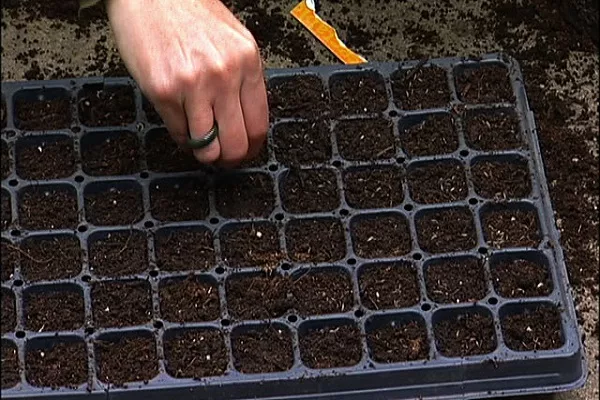
Khrustik cucumber seedlings are characterized by rapid growth, so it is recommended to plant their seeds for seedlings in the last days of April. As with any hybrid seed, they require preliminary preparation, so germination procedures, soaking in biostimulants, treatment with fungicides, and other additional steps are carried out as standard.
The process of growing seedlings is accessible even to novice gardeners:
- Place one seed in each small pot filled with moist, all-purpose seedling substrate. Bury it to a depth of no more than 0.9-1.0 cm, cover with soil, and spray with a spray bottle.
- Transform containers into mini-greenhouses by covering them with cling film or using cut plastic bottles or glass.
- Place the seedlings in a dark, warm place with a temperature of about 25-27 degrees Celsius. Try to constantly monitor the soil moisture and remove condensation by ventilation.
Young seedlings require 11-12 hours of daylight. In most Russian regions, natural light may be insufficient, so use supplemental lighting.
After germination, reduce the temperature to 20-22 degrees, and reduce seedling care to regular watering only (remove the cover completely). - Starting 10 days before the planned planting, adapt the cucumber seedlings to outdoor conditions by taking the containers outside, gradually increasing the time they spend outdoors from 1.5 to 12 hours per day.
- Transplant into the garden bed 18-20 days after the first shoots appear, when they have developed 2-3 true leaves. The recommended plant spacing is 30-45 cm between plants, with row spacings of 60-75 cm.
Before planting seedlings, the soil should be warmed up to at least 16-19 degrees.

Sowing in open ground
Khrustik cucumber seeds should be sown in open ground after May 15 (although gardeners in the Urals, Siberia, and the Far East sometimes have to wait until the first days of June). They should be planted in well-moistened soil to a depth of up to 3 cm. The planting pattern can be the same as for seedlings, or a 50-55 x 50-55 cm spacing.
To speed up the emergence of seedlings, cover the cucumber bed with plastic film or black covering material on arches.
Planting Khrustik cucumbers in a greenhouse
The only difference between planting seedlings outdoors and in a greenhouse is timing. In the latter case, the transplanting process begins between May 1st and 10th, and the seeds are sown in the first days of April.
For greenhouse farming, maintain 25-30 cm spacing between plants. Row spacing in the greenhouse depends on its size and can range from 2 to 5, with plants planted in a staggered pattern.
Caring for Khrustik cucumbers
Care is fairly simple—the same procedures apply as for other cucumber hybrids. However, there are some special considerations specific to this variety.
Watering
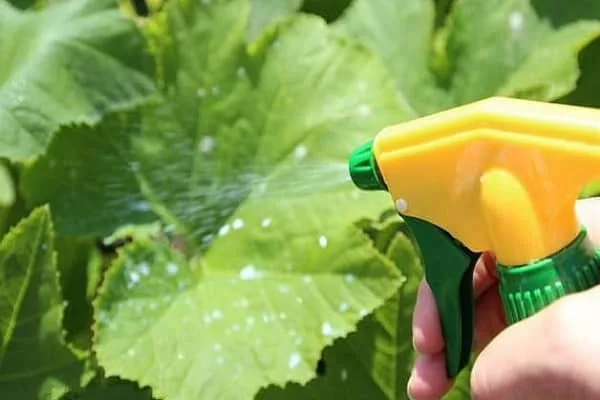
To ensure a bountiful harvest, cucumbers require regular watering. Recommended:
- Do it every 2-4 days.
- It is best to moisturize early in the morning or late in the evening, when the sun has already hidden behind the horizon.
- For watering, use water at room temperature, which is first left in the sun or heated manually.
- Apply water strictly under the roots to prevent the leaves from turning yellow and spoiling.
- The volume of watering liquid per plant is about 3.5-4 liters.
Garter and shaping of bushes
To successfully grow Khrustik, it is important to initially install support structures, such as a trellis or rods, to which the shoots will then be attached.
When training cucumber plants, leave one stem that reaches the predetermined height. If the plant exceeds the desired height, simply bend it or trim it with a disinfected tool. Vegetable growers recommend removing all side shoots and carefully trimming any dead leaves with a knife.
The process of tying and shaping the Khrustik variety bushes must be carried out throughout the growing season. Incorrectly performing these procedures can lead to distorted cucumber shape and size.

Top dressing
During the entire growth period, Khrustik f1 requires three meals a day, a detailed description of which is given below:
- At the initial stage of crop development, provide the plantings with nitrogen-containing fertilizers such as compost, humus or urea.
- During the period of flower blooming, add phosphates or superphosphates to nourish the plants.
- At the final stage of fruiting, feed the plants with mixtures containing high levels of potassium and nitrogen.
Hilling
When cultivating Khrustik, keep in mind that its root system lies close to the soil surface, so hilling the bushes is not recommended to avoid damaging the roots. However, experts recommend using a fork to loosen the soil to remove any dense soil that prevents oxygen from reaching the roots, as well as to remove weeds that can cause disease.
Possible difficulties
Irrigation methods should be carefully considered. Khrustik requires intensive watering during fruit setting and the early stages of development. After this, the frequency of irrigation should be reduced.
Typical diseases and pests, resistance
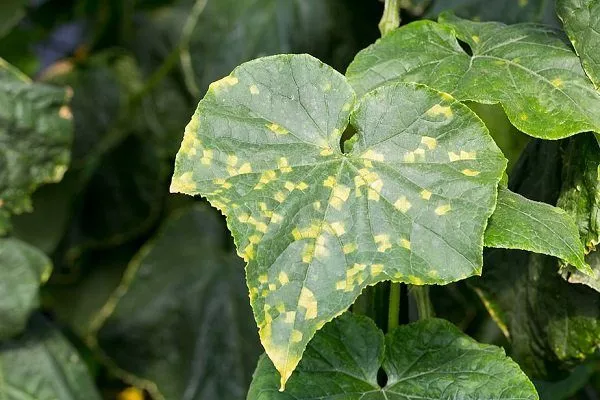
The Khrustik hybrid boasts good resistance to common cucumber diseases, such as mosaic and root rot. However, it lacks resistance to downy mildew, which is one of its limitations.
Khrustik offers no advantages in terms of pest resistance. It is susceptible to the following insects:
- One of the most common pests is the spider mite. It leaves light spots on leaves, which eventually cover the entire leaf, causing it to dry out. Spider mites are also often found on fruit; they can be detected by the fine web they spin on the leaves, which serves as their feeding site.
The mite pierces the leaf and collects sap. Despite its tiny size, it can cause significant crop losses. - Melon aphids are also a serious pest. Adult aphids overwinter on weed leaves and in the soil, continuing to live there until early summer. Then, using ants as vectors, the pests migrate to the undersides of cucumber leaves.
To get rid of diseases, use systemic fungicides, and insecticides will help in the fight against pests.
Harvesting and use of the crop
To ensure a bountiful harvest, harvest ripe cucumbers regularly throughout the ripening period. Do this every one to two days.
Due to their tender flesh, Khrustika cucumbers are an excellent ingredient for fresh salads and okroshka. They are ideal for pickling and using in tomato sauces. Experts recommend this hybrid as the best for pickling and canning.
Pros and cons
Khrustik F1 is deservedly popular among gardeners and consumers due to a number of its excellent qualities:
Despite its many advantages, Khrustik also has some disadvantages:
- ✓ The Khrustik F1 hybrid requires annual renewal of planting material due to the impossibility of preserving varietal characteristics when collecting seeds independently.
- ✓ Highly resistant to mosaic and root rot, but susceptible to downy mildew.
Another relative problem is the need to purchase planting material every year. Seeds collected from Khrustik F1's own harvest will either fail to germinate, or the new plants will not retain their varietal characteristics.
Gardener reviews of Khrustik F1 cucumbers
The Khrustik hybrid is deservedly popular among gardening enthusiasts due to its ease of cultivation and care. It thrives both in greenhouses and outdoors. Its early harvest is especially valuable in areas with short, cool summers. Khrustik promises a bountiful, high-quality harvest.