
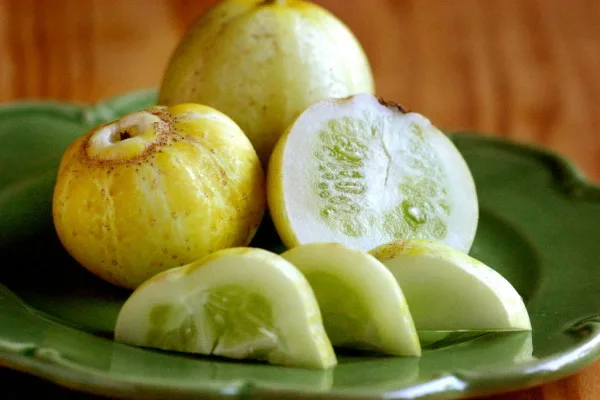
The lemon cucumber, also known as the crystal apple, got its name from its unique appearance. This vegetable combines all the benefits of cucumbers. Its fruits are filled with crystal water, hence the nickname "crystal."
Introduction to the variety
This cucumber variety is still perceived as exotic due to its unique appearance. However, some gardeners have already introduced this exotic plant into their gardens. The plant is characterized by vigorous growth, quickly filling the space allotted to it.
What is a lemon cucumber?
This variety finds a worthy place in garden beds. It doesn't require excessive heat, allowing it to thrive in the Non-Black Earth Region. However, the fruit's flavor may vary due to inconsistent watering and irregular fertilization. Lemon cucumbers can produce fruit until the first frost.
In addition to its flavor, this variety is prized for its ornamental qualities, making it a popular choice for decorating gardens, planting along fences, and growing in pots on patios or even on windowsills.
Cucumber-crystal story
By the mid-20th century, the crystal apple, imported from Australia, had almost disappeared from American agriculture. At the end of that century, this unusual vegetable first appeared in Russia as an exotic plant.
Another theory is that this species has Indian roots. These roots date back to ancient times; references to its cultivation can be found in such ancient texts as the Bhagavad Gita. Many varieties of these cucumbers, varying in fruit shape from round to elliptical, are still cultivated in India.
Other historical facts:
- In the Himalayas, early varieties with small, round fruits are cultivated.
- Europeans only developed one type of Indian cucumber, which was named CRYSTAL APPLE.
- For many years, Russia and Belarus obtained seeds of this variety exclusively from Western Europe. However, the Lemon Cucumber, or Crystal Apple, is now the result of breeding work conducted in New Zealand.
Botanical portrait of fruits
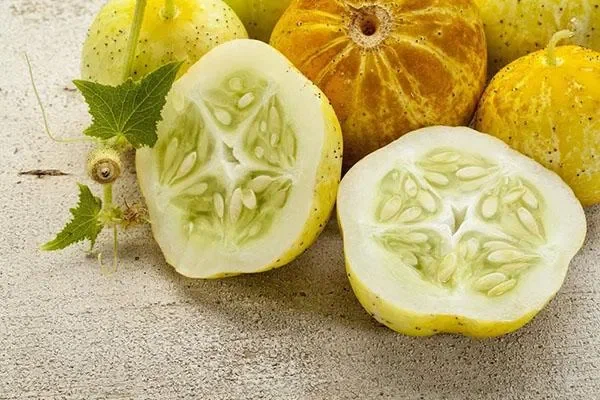
Crystal Apple fruits are medium-sized and round. Their interiors are filled with juicy pulp, which contains transparent seeds. Other varietal characteristics:
- The fruit's color changes over time: early in the growing season, they are a soft greenish hue and covered in a light fuzz reminiscent of peach skin. When ripe, the fruit turns white, and then, when fully ripe, turns a lemon yellow.
- The most appetizing specimens are creamy white with soft green stripes that eventually transform to light yellow if allowed to ripen fully on the vine.
- The diameter of the fruits varies from 6 to 10 cm.
- The surface can be either smooth or ribbed.
- The spines (pubescence) are dark or black in color, and the skin is particularly soft to the touch.
Plant characteristics
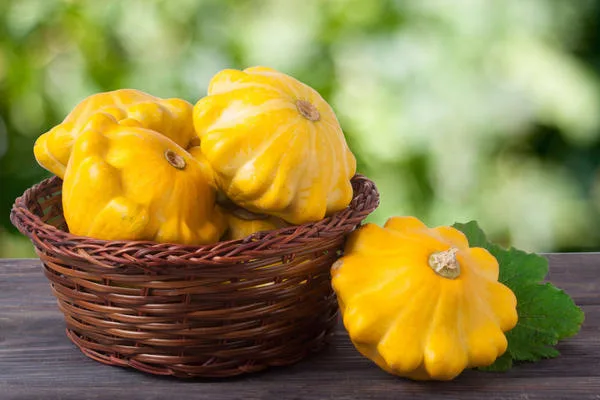
This annual plant has a strong stem that can grow up to 480-500 cm and large leaves. Because of its impressive size, the lemon cucumber is sometimes called the cucumber tree.
For short-term storage of a few days, cucumbers and lemons can be left at room temperature. For longer-term storage, it is recommended to place them in the warmer part of the refrigerator, but not longer than three days.
The healing properties of the Crystal Apple
Cucumbers, also known as lemon cucumbers, are rich in vitamins, minerals, and essential oils. Nutrition experts recommend them as an ideal food for those trying to lose weight – these fruits are low in calories and high in fiber, which promotes rapid satiety and a long-lasting feeling of fullness.
In addition, cucumbers and lemons have healing properties:
- They help lower cholesterol levels, strengthen the cardiovascular system and promote normal metabolism.
- These vegetables have diuretic and choleretic properties and also help in removing kidney stones.
- Doctors recommend including them in the diet of people with weakened immune systems, the elderly, and children.
- The high content of vitamin C helps to strengthen the body and increase its resistance to infections.
- Due to their low calorie content and beneficial properties, cucumbers and lemons are an excellent remedy for fighting excess weight and help normalize metabolism.
- Cucumber-lemon has the property of cleansing and renewing the blood, promoting the elimination of toxins and cholesterol, and also improves memory functions.
Ripening time and yield
The Khrustalnoye apple is a moderately ripe variety characterized by a long fruiting period. Buds begin to open approximately 30-40 days after the first shoots appear. The harvest is completed exactly two months later.
Under favorable growing conditions, this plant can produce an impressive yield, reaching 10-12 kg per season, and sometimes even more. Without strict adherence to agricultural requirements, productivity is only 8 kg per plant.
Application
Young cucumber-lemon fruits, reaching a weight of about 50-70 g, are ideal not only for consumption, but also for creating beautiful interiors and landscapes, and for use in cosmetology.
Use
These cucumbers are ideal raw and complement a variety of salads, as they lack the typical bitter taste of cucumbers. Fresh cucumbers add a special charm to salads, vinaigrettes, and gourmet appetizers, and they are especially perfect for New Year's Eve.
They are often used for winter preservation: salted and pickled, placed in jars, as the fruits retain their unique shape, color, and aroma no matter how they are processed: canning, salting, or pickling. Their crispness remains intact.
For decoration
Lemon cucumbers not only delight with their unusual flavor but also captivate with their exotic appearance, making them a perfect addition to any holiday table. Even when pickled, they retain their vibrant color and unique shape, making them a versatile choice year-round.
This plant is a true interior decoration. Planted in a pot in the fall, it will delight the eye during the winter months, displaying its lacy, rich green leaves and large, lemon-like fruits. It also fits perfectly into landscape design.
In the field of cosmetology
The juice of this vegetable has a beneficial effect on the skin. In cosmetic procedures, cucumber-lemon juice is used for:
- skin lightening;
- removal of age spots and freckles;
- skin hydration.
Growing cucumber lemon in the garden
The Crystal Apple cucumber can be grown both outdoors and indoors, under plastic or in greenhouses. This vegetable thrives on balconies and windowsills.
Choosing a location
Sunny areas protected from strong winds are ideal for lemon cucumber, which requires at least 6-7 hours of sunlight and warmth daily.
Site features:
- Optimal predecessors for this variety are early cabbage varieties, potatoes, tomatoes, onions, legumes and green manure crops.
- Avoid planting after plants from the cucurbitaceae family (squash, pumpkins, squash, melons, zucchini) to minimize the risk of diseases and pests common to them.
- Soil - cucumber-lemon does not have strict requirements for composition, but the best results are achieved on light, fertile soils with a neutral or slightly acidic reaction (pH not less than 6).
Before fall planting, fertilize the area with rotted manure or compost, adding superphosphate and potassium sulfate. Afterward, the soil should be thoroughly dug over. In the spring, just before planting, apply nitrogen mixtures or fertilizers.

Sowing seeds in open ground
Seeds for sowing outdoors are planted in the soil in late spring or early summer, buried 2 cm deep. The distance between individual plants should be at least 100-120 cm. Cucumbers can be grown either on vertical supports or as creeping shoots.
Greenhouse cultivation
For greenhouse cultivation, it's preferable to use seedlings rather than sowing seeds directly into the ground. The cultivation process is no different from that used for other cucumbers.
Conditions for growth
This crop is sensitive to groundwater levels and requires specific temperature and humidity conditions. Optimal growth parameters include temperatures between 25 and 30 degrees Celsius and humidity levels of 70-80%. Growth stops at temperatures below 10 degrees Celsius, and the plant dies when temperatures drop to freezing.
Pollination
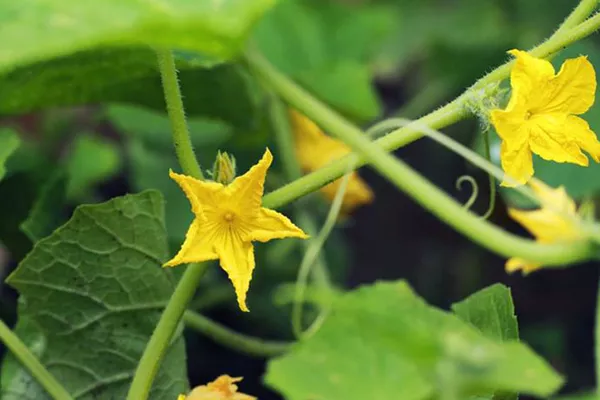
Pollination occurs through insects or air currents. Female flower buds produce small, pea-sized ovaries, while male flowers are larger.
In greenhouse conditions, pollination is carried out manually – using a brush, when pollen is transferred from the male flower to the female.
Procedure
To obtain seedlings, seeds are planted in pots throughout April. Transplanting occurs after 25-30 days. When planting seeds or seedlings in soil, maintain a spacing of 30-50 cm and plant the seeds no deeper than 2 cm. The ideal temperature for planting outdoors is 25 degrees Celsius.
Care for a good harvest
Lemon cucumber does not require any special conditions for growth; its agronomic needs are similar to those of regular cucumbers.
Soil cultivation
The procedure consists of two steps:
- Hilling. After each watering, it is necessary to carefully loosen the soil and carefully add it to the stems, taking into account that the root system of cucumbers is located close to the surface.
- Shelter. When cold weather sets in, it is recommended to cover the vines to protect them from hypothermia.
Moisturizing
The frequency depends on the growth phase of the crop and meteorological conditions:
- Before flowering - moderately every 5-7 days, using 3-4 liters of warm water per 1 sq. m.
- During budding and fruiting, the frequency increases to every 2-3 days with a water volume of 6-12 liters.
- ✓ The water temperature for irrigation should not be lower than 20°C to avoid stress on plants.
- ✓ During the fruiting period, watering should be increased gradually, starting with 6 liters per 1 sq. m and increasing to 12 liters, to prevent cracking of the fruit.
The soil where cucumbers grow should be kept consistently slightly moist. To retain moisture, it's recommended to use peat or grass clippings as a mulch.
Rules:
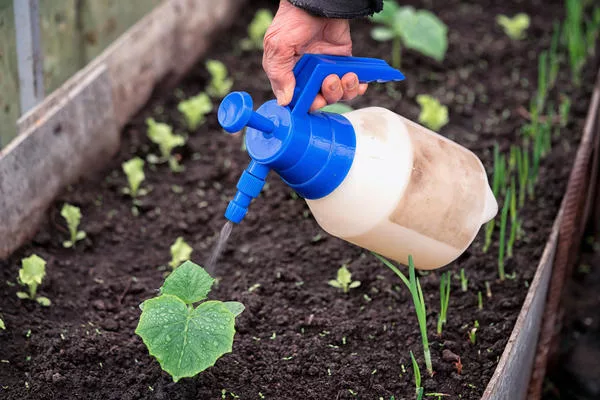
- During periods of extreme heat and direct sunlight, it is best to water cucumbers directly at the roots or in special grooves to avoid water getting on the leaves, which can lead to overheating and burns.
- The optimal irrigation option is a watering can with a nozzle that sprays water without creating a powerful stream. This method prevents damage to fruits, stems, and leaves, and also prevents soil erosion around the roots.
Top dressing
Cucumber responds well to fertilizers; during the growing season, it is recommended to apply 6 to 8 fertilizer applications, using both mineral and organic mixtures:
- At the initial stage of budding, a mixture of nitrophosphate and mullein dissolved in water is suitable.
- During the period of fruit formation, the cucumber is fed several times at intervals of 10-14 days, using a mixture of nitrophoska and mullein.
- The final procedure is carried out two to three weeks before the expected harvest.
Diseases, pests
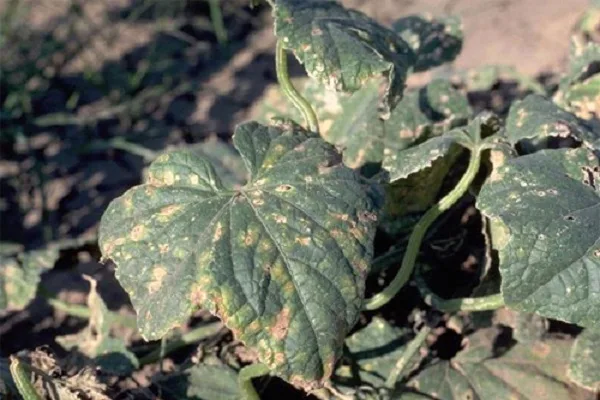
Improper care of citron cucumber can lead to the following problems:
- the appearance of powdery mildew;
- aphid infestation;
- spread of slugs.
- Inspect the undersides of leaves regularly for aphids, especially in hot weather.
- At the first signs of powdery mildew, treat the plants with a solution of milk whey (1 liter per 10 liters of water).
- To prevent slugs, scatter ash or crushed eggshells around plants.
If a disease is detected on one of the plants, it should be immediately removed from the bed and destroyed by fire to prevent infection of neighboring lemon cucumbers. Insects can be controlled manually and with insecticides.
Harvesting
Lemon cucumbers are harvested as they ripen. Harvesting begins when the young, greenish-hued fruits reach 7 cm in length. These cucumbers can develop either on the main stem or at the nodes of the first and second leaves on lateral shoots.
Other recommendations:
- It's recommended to regularly check the vines for ripe fruit, at least every two days. Overripe fruit can interfere with the formation of new ovaries and impair the flavor.
- The entire crop should be harvested before the first frost.
- It is preferable to harvest cucumbers and lemons in the morning or evening hours, with minimal disturbance to the plants.
- The harvested fruits must be immediately placed in a cool place, as Crystal apples have a short shelf life - up to two weeks.
Reviews
The Crystal Apple variety allows you to collect seeds for planting next season, as it is a distinct variety and not a hybrid. It's important to collect seeds from plants grown separately from other cucumber varieties to avoid cross-pollination.