
Cucumber Gosha F1 is an early maturing and productive hybrid variety, which is ideal for a variety of culinary delights. This cucumber thrives in both greenhouse and outdoor conditions, without requiring any special weather or soil conditions.
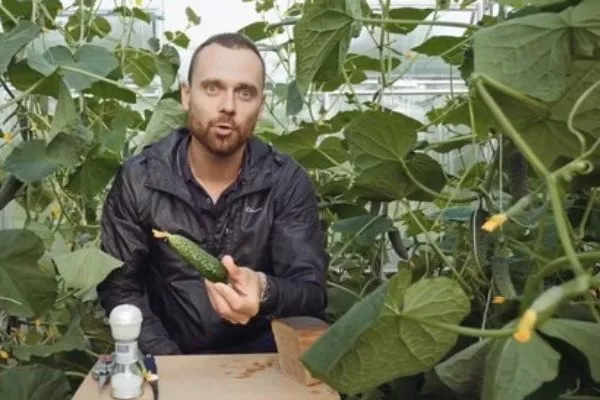
Character of the variety
Cucumbers are parthenocarpic, meaning they do not require pollination by insects or other means. The seeds of these plants are formed in embryonic form and cannot be used for reproduction. New planting material for these varieties is obtained only by crossing certain hybrids, making them essentially hybrids.
The yield of the Gosha F1 variety depends on the quality of care and growing conditions. With optimal humidity and stable temperatures, the plants exhibit high yields.
Authorship
The Gosha F1 hybrid was created at the request of the agricultural firm "Partner." Development began in 2017 on the firm's "Dacha" plots. The variety was developed by breeder V. I. Blokin-Mechtalin. In 2021, after all testing, the crop was approved for use.
External indicators
The Gosha cucumber is an indeterminate variety. Its growth is not naturally limited, so additional staking and training are essential. The plant must be secured to a trellis, otherwise it will begin to creep along the ground.
Other varietal parameters:
- The plant is characterized by weak branching. Cucumber bushes grow compact and are indeterminate.
- The leaves on them are quite wide, five-pointed, usually medium-sized and rich green in color.
- The shoots also have a green tone and average growth activity, but the lateral branches develop much more actively.
- Small bouquets of flowers, usually 3-4 pieces, form on the stems of cucumbers.
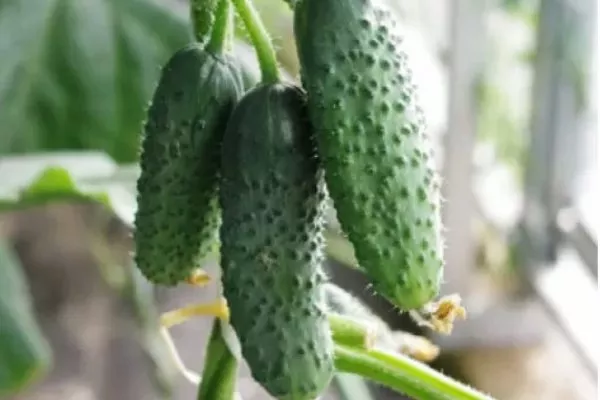
- The fruits are medium-sized, from 9 to 12-13 cm in length, and the weight of fully ripe cucumbers is about 100-120 g.
- The vegetables are rounded cylinders with a classic green color. The base is much darker than the top.
- The surface of ripe cucumbers is medium-tuberous, with evenly distributed formations.
- There are small light-colored spines on the skin of the fruit.
Taste and purpose
This salad-type vegetable is ideal not only for fresh consumption but also for pickling, canning, and decorating first and second courses. Short-term freezing is also possible.
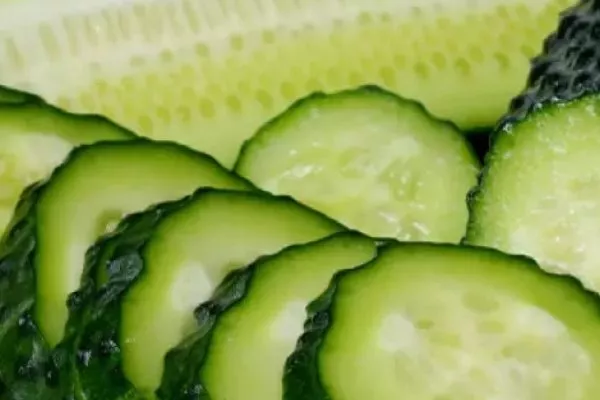
Cucumbers have a pleasant, aromatic flavor and are not bitter. Only overripe cucumbers can be watery and bitter. They can be recognized by a yellowish tint on the skin.
Ripening time and yield
The Gosha cucumber is popular among vegetable growers due to its early ripening of high-quality fruit. It takes just 38 days from the first shoots emerging from the seeds to the start of fruiting, which is excellent. In cooler conditions, the ripening period is different, reaching around 42-45 days.
The average yield of this hybrid is approximately 18-20 kg per square meter. But this isn't the limit, as with proper plant care, even greater results can be achieved. Each bush can yield up to 10 kg of fruit.
Regionalism
Producers claim that the highest yields are achieved in the Central Black Earth, Central, Middle Volga, and Northwestern regions. The crop also grows successfully in the Far East, Ural, and West Siberian regions.
Planting cucumbers Gosha
Before planting Gosha cucumbers, you must first germinate their seeds. If you plan to sow them in a greenhouse, the emergence of small sprouts will be sufficient. When planting in an open garden bed, it is advisable to sow the seeds first to obtain seedlings.
Based on the originator's recommendations, the hybrid requires one of the following options: a plastic cover, a greenhouse made of glass, polycarbonate, polyethylene, or a more insulated material. However, in southern regions, sowing directly into the garden is acceptable.
Planting dates
Seedlings are transplanted to their permanent locations when the soil temperature reaches approximately 11-14 degrees Celsius. In the temperate zone, this period occurs from April 20-25 to May 5-10. Cucumbers can be planted in a greenhouse slightly earlier than in open beds. The time from sowing to transplanting the seedlings is approximately 25-30 days.
Site preparation
To grow the Gosha variety, choose a garden plot in partial shade to avoid exposing the delicate plants to bright sunlight—this is a significant distinguishing feature of the hybrid.
- ✓ The soil acidity level must be strictly within the range of 6.2-6.8 pH, otherwise the yield will decrease significantly.
- ✓ The soil must be well-drained to avoid waterlogging and root rot.
The soil should be light, loamy, and well-drained. The optimal pH is 6.2 to 6.8. Cucumbers will not produce a good harvest in soil that is too alkaline.
Preparation of the bed for Gosha cucumbers must begin in advance:
- In the fall, dig up the area, remove weeds, their roots and other debris.
- Add organic mixtures - humus with compost, in the amount of 5-10 kg per 1 sq. m (the exact amount depends on the composition and degree of depletion of the soil).
Additionally, add potassium-phosphorus preparations, but in small quantities (about 10-15 g), which can be replaced with 150 g of wood ash. - In the spring, dig the soil again a week before sowing seeds or transplanting cucumber seedlings. Make furrows in the bed about 30-35 cm deep and fill them with rotted manure or compost (5-7 kg per square meter). Then fill with store-bought peat moss. Cover the bed with plastic film. A week later, remove the cover and plant.
Seedlings are planted in a greenhouse in the same way as in a garden bed. The greenhouse must be prepared in advance. Description of the preparatory work:
- remove weeds;
- pour a fertile soil mixture on top, consisting of store-bought peat, mineral additives and humus;
- The greenhouse structures and soil are treated with potassium permanganate for disinfection.
Planting seeds
When planting Gosha f1 in a greenhouse, first germinate the prepared seeds. To do this, wrap them in a damp cloth and place them in a plastic bag to retain moisture. Keep the bag in a warm place. After 2-4 days, the seeds will begin to sprout and can be sown.
Planting seedlings
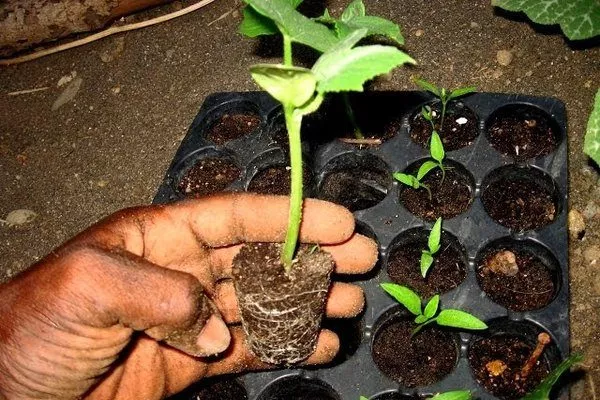
To plant in a garden bed, first grow the seedlings. For this, use nutrient-rich, loose soil, which can be purchased at a local grocery store. Other guidelines:
- Sow seeds in cups, as cucumbers' root systems are sensitive to transplanting. Peat pots are the best option; in this case, the plants, with their fragile root systems, don't need to be removed from the container.
In addition, peat contains useful micro- and macroelements, which serves as an additional nutrition for seedlings. - After sowing, cover each cup with plastic wrap and place in a warm place for germination. Cucumber seedlings will appear in approximately 6-7 days. After this, transfer the cups to a windowsill and remove the covering completely.
During the germination period, periodically open the film to ventilate the soil mixture and moisten the plantings from a spray bottle.
You can feed the seedlings with liquid nitrogen fertilizers, such as urea, but it's important to dilute the fertilizer properly to avoid burning the roots and killing the plant. When the seedlings have 2-3 leaves, they are planted in a permanent garden bed, whether in a greenhouse or a vegetable garden.
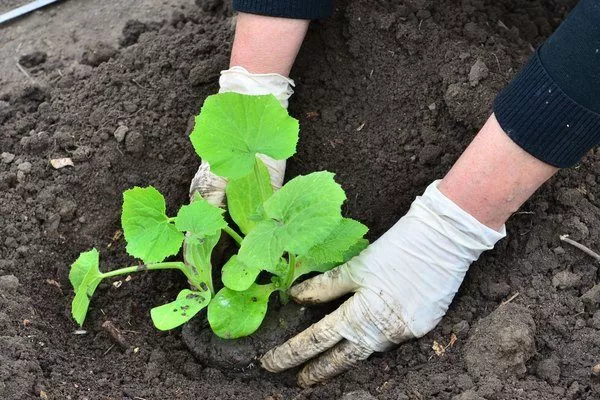
Planting diagram
The following scheme is used for planting cucumbers of the Gosha variety:
- distance between plants – 50-55 cm;
- the distance between rows is 40-45 cm.
Gosha's cucumber care instructions
Gosha cucumbers require careful care and adherence to basic agricultural practices. Key care measures include watering, staking and shaping the bushes, and fertilizing.
Cucumber beds need to be regularly loosened and weeded, as this can interfere with plant growth. In the first few days after planting, the soil should be loosened daily, digging no deeper than 2.5-3 cm. Subsequently, this procedure should be performed weekly or once a decade.
Watering
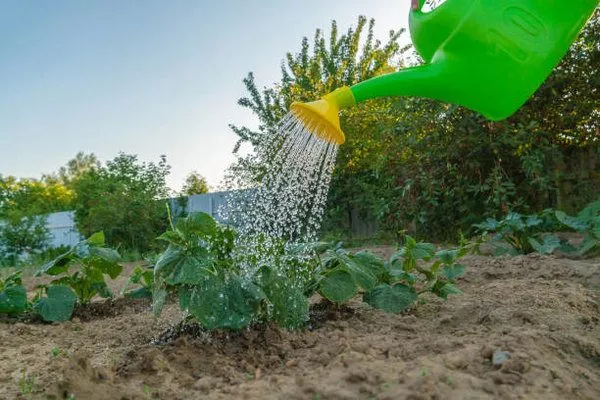
Gosha cucumbers require regular watering. The water should be warm, free of chlorine and other harmful compounds (so let it sit for at least 5-8 hours). Watering is especially important during flowering and fruit formation. Here's how:
- before budding begins, water once every 6-8 days;
- during the flowering and fruiting period, increase the frequency of watering to 2-4 times a week;
- in hot weather, water cucumbers daily;
- Water in the morning or in the evening - in greenhouse structures do it in the evening, and outside in the morning;
- After each application of water, loosen the soil to improve air permeability.
Garter and shaping of bushes
The Gosha variety has climbing stems and requires support. Special trellises are installed in the greenhouse to guide the cucumber shoots. The main stem is pinched after the sixth to eighth leaf appears, which stimulates the growth of side branches.
When cultivating in open ground, trellis structures are also used so that the fruits do not lie on the ground, but climb along prepared systems.

Top dressing
Gosha requires regular fertilization. Fertilization is performed using both organic and mineral fertilizers, alternating between them. This should be done at least five times per season.
- First feeding: 2 weeks after planting the seedlings, use nitrogen fertilizers.
- Second feeding: at the beginning of flowering, use potassium-phosphorus fertilizers.
- Third feeding: during the period of active fruiting, use complex fertilizers.
During the budding period, plants require supplements containing nitrogen, potassium, and phosphorus. You can use a mullein solution (in a 1:10 ratio) or sodium humate (15-20 g). A mixture of nitroammophoska (15-20 g) and 150-250 g of diluted chicken manure is also suitable. Another option is a mixture of mullein and potassium sulfate. The solution recipe is:
- 5 liters of warm water;
- 250 mg mullein;
- 5 g potassium sulfate.
Five liters of this solution is enough to feed 1 square meter of cucumber plantation.
Hilling
To extend the fruiting period and improve productivity, it is recommended to cover cucumbers of this variety with soil on all sides. This procedure is performed after watering, avoiding dry soil. Rake the soil under the cucumber bushes to a height of 6-8 cm, after loosening the moistened substrate to a depth of 2.5-3 cm.
Resistance to diseases and pests

Gosha has excellent resistance to many diseases and pests. However, problems sometimes arise due to adverse weather or poor agricultural practices:
- Angular spot or bacterial spot. This disease occurs in cucumbers when it rains first, followed by a significant and sudden increase in temperature. Unsightly yellow spots appear on the cucumber leaves.
To prevent the disease, perform the following actions:- disinfect greenhouse structures;
- regularly ventilate greenhouses, not allowing humidity to rise above 70%;
- The seeds are treated with Fitolavin-300.
- Olive spot. This is a fungal infection that affects cucumbers, primarily young ones. The vegetables become misshapen, turn yellow, and develop spots, after which they begin to rot and become unfit for consumption.
The infection can be transmitted to cucumbers through contaminated equipment, insect vectors, or weeds. To prevent the disease, disinfect greenhouse frames, treat garden tools, and ensure regular ventilation. Spraying with a copper-containing preparation is recommended before budding. - Root rot. Caused by excess moisture, this disease causes cucumber stems to become thin, and the leaves to turn yellow and dry out. Root rot cannot be cured, so careful monitoring of soil moisture is essential.
Harvesting and storage
Gosha cucumbers are harvested as they ripen. It's recommended to pick the fruits from the bushes at least every two to three days. Avoid allowing the vegetables to become overripe, as they will begin to turn yellow and lose their flavor.
Gosha cucumbers have a long shelf life. They can be stored in the refrigerator for about 12-16 days without risk of damage.
Reviews
The Gosha cucumber variety is very popular among many gardeners due to its consistently high yield, excellent fruit flavor, versatility, and ease of cultivation. With proper care, the Gosha hybrid can yield an excellent harvest of delicious, crisp cucumbers.