
The Garland cucumber is a hybrid that possesses all the necessary qualities for successful cultivation in our country and an excellent harvest. This variety is resistant to diseases and pests and thrives in variable climates, but only with proper agricultural practices and minimal attention.
Introduction to the variety
This is one of the best varieties, suitable for growing in greenhouses and hothouses. It is successfully cultivated on the balconies of city apartments and in open ground. This early-ripening variety with female flowering is distinguished by its excellent taste and a lingering, pleasant aftertaste.
Who developed the variety and when?
The hybrid was created by breeders A. V. Shamshina, S. F. Gavrish, A. E. Portyankin, V. N. Shevkunov, T. Ya. Surovova, and N. N. Khomchenko. It was approved for use in 2010.
Characteristic features of the appearance of the plant and fruits
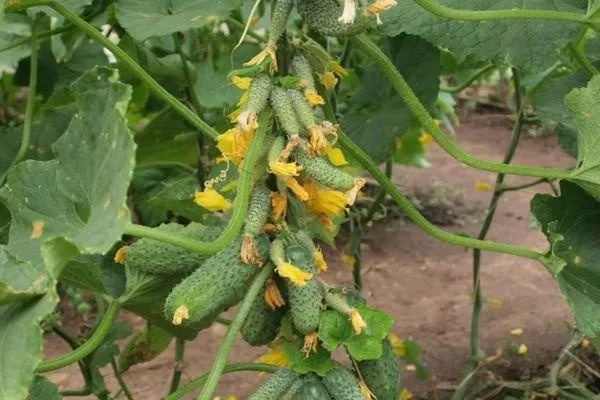
The bush has vigorous growth and a robust structure with minimal branching. The leaves are abundant, dark green, and medium-sized. The main stem reaches a height of 200 cm or more. Each node produces approximately three or more flowers. Each bunch produces four to five cucumbers.
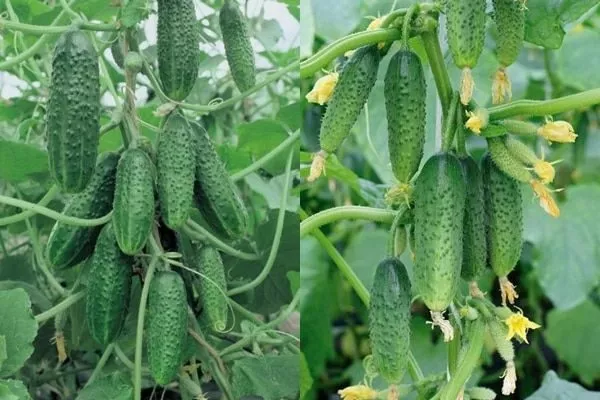
The vegetables are characterized by a short, cylindrical shape. They reach 12-14 cm in length and weigh approximately 115 g. The skin is dark green, with frequent tubercles with light stripes on the surface. The pubescence is white.
Purpose and taste
The flesh is juicy, crisp, and without bitterness. The cucumbers are suitable for salads, pickling, and canning.
Maturation
Weak branching eliminates the need for constant pinching. During the growing season, 3-4 ovaries form in the axils. Begin harvesting the first fruits 42 days after the first shoots emerge.
Productivity
Garlanda bears fruit for a long time without interruption, which is a definite advantage. Daily fruit picking is essential for the formation of new buds. The yield per bush ranges from 10 to 12.5 kg.
Composition and properties
Cucumbers contain small amounts of vitamins C, PP, E, and B vitamins. They are 90-95% structured water, making them a good thirst quencher and detoxifier.
Nutritional value per 100 g of product:
- proteins – 0.9 g;
- fats – 0.1 g;
- carbohydrates - 2.7 g;
- fiber – 0.7 g
The fruits contain a natural organic acid that performs many beneficial functions:
- dissolves sand and stones in the kidneys;
- flushes out free radicals;
- removes cholesterol plaques from blood vessels;
- removes salts from joints;
- improves blood counts.
This healthy vegetable is recommended for consumption in large quantities during fasting days. It's low in calories, so you don't have to worry about gaining extra pounds.
How to grow cucumbers yourself
| Condition | Meaning |
|---|---|
| Soil temperature for sowing | +15°C |
| Water temperature for irrigation | +25°С |
| Distance between plants | 30 cm |
| Distance between rows | 70 cm |
The timing of seed planting depends on the chosen cultivation method. Direct sowing is done in late May or early June, when the soil warms up to 15°C. For seedlings, seeds are planted in the last ten days of April.
Direct planting of seeds into the ground
Sowing seeds directly into the soil is a simple and effective way to grow a crop. Follow these instructions for best results:
- Choose a sunny site with good drainage. Cucumbers prefer light, fertile soil.
- Dig the area to a depth of 20-25 cm, remove weeds and plant debris.
- Add organic fertilizers such as rotted manure or compost at a rate of 20 liters per 1 sq. m.
- Select healthy, large seeds. Soak them in a weak solution of potassium permanganate for 20-30 minutes to disinfect, then rinse with clean water. Soak them in warm water (around 25°C) for 12-24 hours to accelerate germination.
- Make holes 2-4 cm deep at a distance of 30 cm from each other, and leave 70 cm between rows.
- Place 2-3 seeds in each hole, then cover them with loose soil.
Crop rotation plays an important role. Good predecessors for the crop:
- beans;
- beans;
- garlic;
- onion;
- peas;
- cabbage;
- corn;
- potato;
- tomato.
Do not grow cucumbers again in the same place or after melons.
Growing seedlings
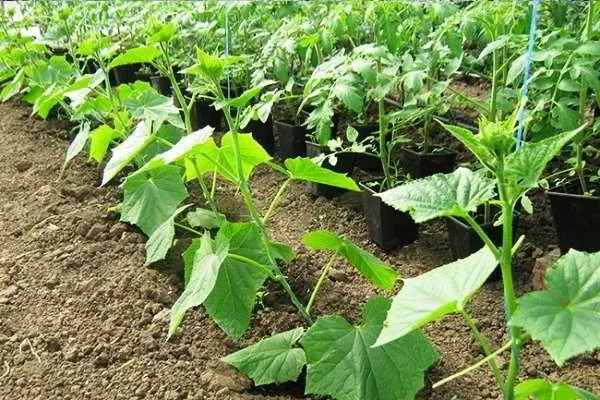
For hybrids, the seedling method is more suitable than the direct method. The main disadvantage of this method is its labor-intensive and time-consuming nature. Peat pellets are considered the best container for seedlings, as the prepared, disinfected soil stimulates seedling development.
Step-by-step instructions:
- Place the tablets in a container and fill with water. After 15 minutes, when they've absorbed the water, plant the seeds.
- Press them into the tablets 1-2 cm deep, then place them in a common box, cover it with polyethylene or transparent glass and put it in a dark place.
- Moisten the substrate periodically with a spray bottle.
Once the seedlings sprout, remove the covering. Transplant the seedlings to their permanent location in late spring or early summer. The planting pattern is the same as for direct planting.
Care activities
Cucumbers are moisture-loving plants that require regular watering in hot weather. During the early stages of growth, before the plants have developed a strong root system, they require watering at least twice a week. The recommended watering rate is 4-5 liters per square meter. During flowering and fruit set, increase the watering to 10-12 liters.
Helpful tips:
- If watering is insufficient, mulch the soil to maintain moisture. This will significantly reduce moisture evaporation. Apply a mulch layer of about 7 cm thick using compost, peat, manure, pine needles, or straw. Avoid overwatering, as this can lead to disease.
- Regularly loosen the soil around the bushes and remove weeds, which compete with the plants for nutrients and water. Perform this procedure 12-24 hours after watering. The frequency depends on the soil type: in light, sandy areas, this may not be necessary, while in clay soils, it is essential.
- Fertilize cucumbers up to six times during the growing season, using both mineral and organic fertilizers. Apply the first fertilizer at the beginning of flowering, and then every three weeks.
As fertilizers, use: ash infusion (200 g per 10 l of water), a solution of urea, potassium sulfate and superphosphate (20 g each per 10 l of water), an infusion of chicken manure or mullein (in a ratio of 1:15). - Initially, bushes require nitrogen fertilizers, and later increase the concentration by adding potassium and phosphorus. Alternate organic and mineral fertilizers. Apply to the roots after watering.
Grow the Garland hybrid vertically. Tie the bushes to a net or trellis, which simplifies care and provides more sunlight.
Features of cultivation and possible difficulties
Growing techniques are almost identical to those for other varieties. Follow simple care procedures to ensure high-quality fruit that withstands long-distance transportation well.
Diseases and pests typical for these cucumbers
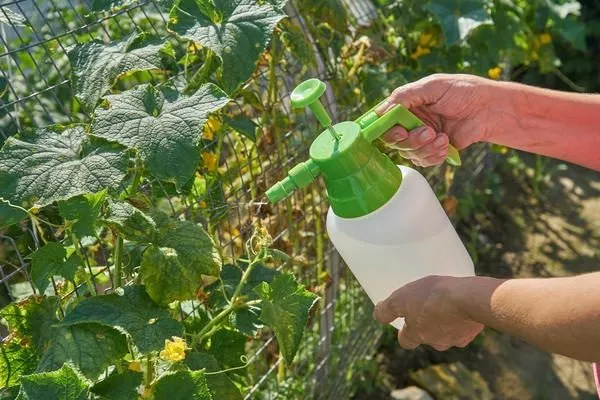
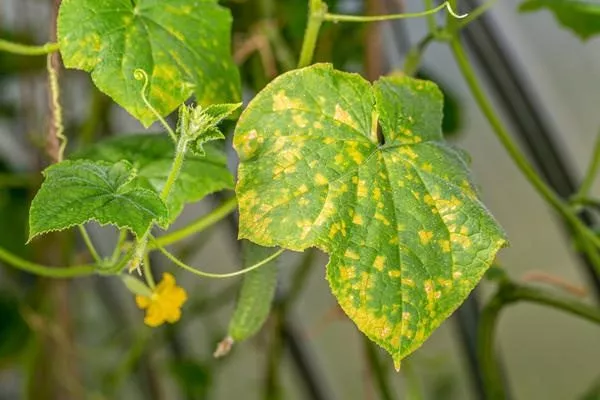
The hybrid is highly disease-resistant, but there is a certain risk. If problems with diseases or pests arise, use specialized treatments, strictly following the package instructions, to avoid harming the plants.
The most common illnesses and diseases, and ways to combat them:
- Powdery mildew. It appears as white spots on the leaves. Over time, these spots spread to all areas, leading to wilting and cessation of fruiting.
Remove affected parts and treat with fungicides, such as Ridomil Gold or Previcur. If the disease has spread to the entire bush, remove it. - Cladosporiosis. Brown cankers are affecting the leaves and green fruits. Stop watering for 5 days and treat the plants with a Fundazol solution (10 g per 10 liters of water). Remove any damaged areas.
- White rot. It appears as a white, sticky mass that causes fruit and plant rot. Remove the affected parts and treat the bush with a solution made from 10 g of copper sulfate, 10 g of urea, and 10 g of zinc sulfate per 2 liters of water.
- Downy mildew. Yellow spots appear on the leaves, leading to wilting. Stop watering and fertilizing for 3-4 days, then treat with a solution of Polycarbacin (10 g per 5 liters of liquid).
- Aphid. Green insects that feed on foliage, causing it to wilt. Spray with an ash solution (200 g of wood ash and 100 g of soap per 10 liters of water).
- Whitefly. Tiny white flies that suck the sap from plants leave behind sooty mold and cause leaf wilting. Treat with a garlic infusion (200 g of grated garlic or onion per 10 liters of liquid, let steep for 24 hours).
- Spider mite. Small insects on the undersides of leaves that form webs cause infections and feed on the foliage. Spray the undersides of the leaves with a soapy solution (200 g of grated laundry soap per 10 liters of water).
Fight diseases early, otherwise they can kill plants and spread to neighboring crops. If pests are detected, act immediately.
Harvesting and use of the crop
To achieve a high and long-lasting yield, harvest the greens promptly. Regular harvesting stimulates the formation of new fruits, and begin harvesting the first vegetables approximately 40 days after germination.
At temperatures below 0°C, vegetables become soft and spoil quickly, so store them in the refrigerator, avoiding placing them near the freezer.
Advantages and disadvantages
Before planting seedlings in your garden, make sure you're happy with the selection—research its pros and cons thoroughly. The hybrid has the following advantages:
Flaws:
The hybrid does not require complex care and adapts well to various growing conditions.
Reviews
The Garland cucumber is a popular and sought-after variety among gardeners. This hybrid is an excellent choice, boasting excellent characteristics and producing generous harvests. Growing this crop is very easy, it's low-maintenance, and requires minimal attention. With proper cultivation practices, yields will increase severalfold.