
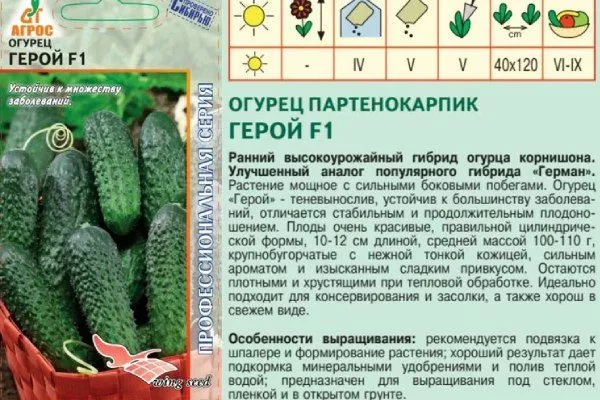
F1 Hero – a sought-after variety From Dutch breeders, this cucumber is distinguished by its high fertility and is a parthenocarpic variety. It is noteworthy for its ease of cultivation and resistance to various adverse conditions.
Introduction to the variety
This cucumber has gained popularity among gardeners due to its self-fertility (mostly producing female flowers), excellent flavor, and ease of care. Hero produces strong bushes that produce abundant harvests. This variety is suitable for growing in both heated and unheated greenhouses, as well as in the open ground.
Breeding achievements
The variety was created by renowned Dutch breeders who have been developing new cucumber varieties for over 20 years. The renowned specialist Frank Francis, whose work has gained popularity not only in the Netherlands but also abroad, contributed to the development of the Hero. The Hero is no exception.
Introduced into cultivation in the early 2010s, the variety quickly spread to neighboring countries, and its seeds soon became available throughout Europe, including Russia. In Russia, the variety was officially registered in 2013. Over the past nearly ten years, Hero has carved out a niche in the seed market, attracted the attention of gardeners, and found a loyal following among consumers.
Specificity of bushes and cucumbers
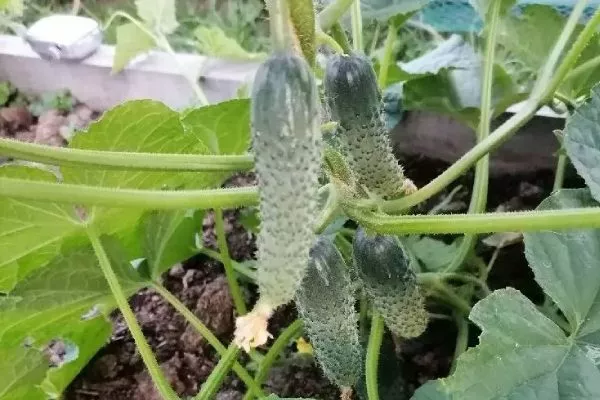
This plant grows several meters tall and is indeterminate. Moderate branching and strong stems are its distinctive features. But there are other characteristics as well:
- leaves are light green, medium sized;
- flowering occurs according to the female type, with the formation of nodes in which usually up to two flowers are tied;
- cucumbers belong to gherkin species, so their length is only 8-12 cm, depending on the stage of ripeness;
- the weight of the fruits varies from 80 to 110 g;
- the cucumbers have a cylindrical shape;
- their skin is thin and delicate, but at the same time elastic and strong;
- painted in a dark green tone with a light waxy coating;
- the surface is covered with small spikes and compacted tubercles of medium size;
- pulp: crisp, with moderate greenish tint.
Taste and application
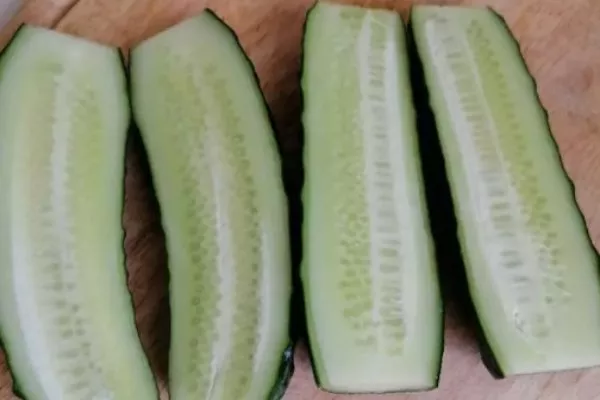
The Hero cucumber has excellent flavor. Its flesh is crisp and firm, without any bitterness and a pleasantly subtle sweetness. The aroma of these cucumbers is distinct and perfectly complements their flavor.
Fruiting period, productivity
From the moment the first shoots appear until the young cucumbers are harvested, it takes 40 to 45 days. This variety is distinguished by its long fruiting period, which continues until the first autumn frosts.
When grown outdoors, Hero yields up to 9-9.5 kg per square meter. However, when planted in greenhouses (both plastic and winter), productivity can increase to 11-12 kg, which, combined with its long fruiting period, makes this variety particularly productive.
Rules for planting and growing cucumbers Hero
Before planting Hero cucumbers, it's crucial to carefully select a suitable location. Sunny, well-drained areas are ideal.
Soil preparation
Preparatory activities include several stages and nuances:
- First, you need to choose a site that is protected from the wind and has light, fertile soil.
- If the soil in your area is heavy and poorly draining, it's worth improving its structure. Organic amendments such as humus or compost will help with this.
- Carefully analyze the soil composition. Hero cucumbers prefer soil with a neutral pH. If the soil is slightly acidic, add lime.
- Treat the area with organic fertilizers to provide plants with everything they need for full growth throughout the growing season.
- Before planting cucumbers, thoroughly water the future beds, dig them over, and loosen them well. This will create ideal conditions for root growth and ensure proper ventilation and water permeability.
Planting seedlings
This method has its pros and cons. The main advantage is the ability to harvest earlier. Furthermore, it provides plants with ideal growing conditions, including control over temperature, humidity, and lighting.
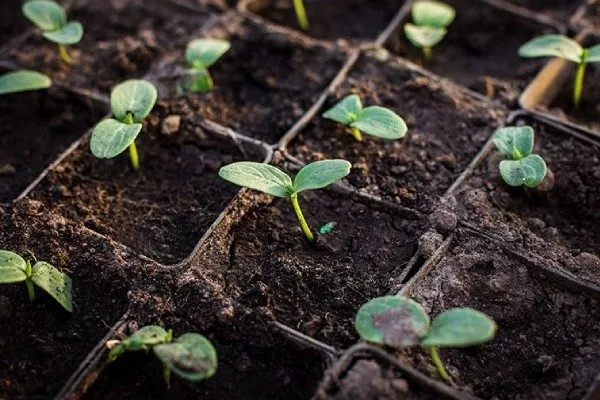
Subtleties of growing crops from seedlings:
- The ideal temperature for seed germination is 26-28 degrees Celsius. Once the first sprouts appear, to prevent them from stretching, the temperature should be reduced to 18-19 degrees Celsius.
- The Hero F1 variety has a rather fragile root system at the very beginning of its growing season. Therefore, special care must be taken when transplanting the seedlings to their permanent location, which is a significant drawback.
To reduce the risk, sow seeds in spacious containers or use peat or peat-humus pots. Don't skimp on container size—it should hold at least 500 ml.
Start planting cucumber seeds 3-4 weeks before you plan to transplant them outdoors. During this period, they will grow into robust plants with 3-4 true leaves, ready for transplanting, as further cultivation in seedling pots will no longer be practical.
The process of sowing seeds includes the following steps:
- Fill the pots with a light and nutritious substrate, which you can buy at the store or prepare yourself.
- Moisten the substrate thoroughly.
- In the center of each glass, create a small depression 2-2.5 cm deep and carefully place the sprouting seed into it.
- Cover it with soil and water it again.
- Place the pots in a warm and well-lit place.
- Check the soil moisture regularly, avoiding it from drying out. At the first sign of dryness in the top layer, water the plants with warm water.
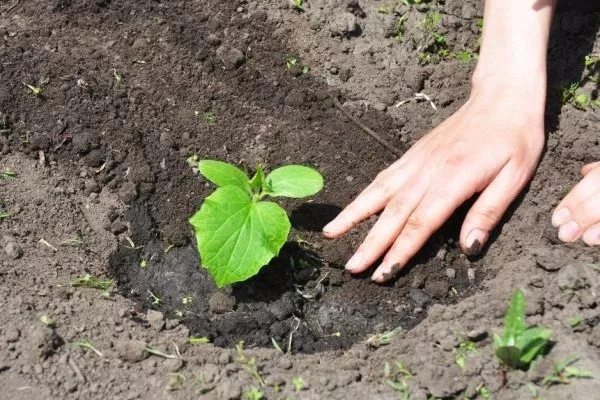
Plant plants with 3-4 true leaves when the soil temperature reaches 10-12ºC. This requires several consecutive days of daytime temperatures around 20-22ºC and nighttime temperatures between 10 and 16ºC.
- ✓ The optimal soil temperature for planting seeds in open ground should not be below +15°C, which is not mentioned in the article.
- ✓ To prevent seedlings from stretching, it is necessary to provide additional lighting for 12-14 hours a day, especially in conditions of insufficient natural light.
Sowing seeds in open ground
Don't rush planting; wait until the air temperature has risen steadily; otherwise, your plants, planted in cool soil, will be puny and slow-growing. The optimal time for sowing outdoors is mid-May. Cucumbers prefer light, humus-rich soil.
Some key points for success:
- Dig thoroughly with a shovel/pitchfork and level the bed with a rake.
- Form holes, keeping a distance of 30-35 cm between them and 70-80 cm between rows for full plant growth.
- Add 1 tbsp of urea and 300 g of humus to each hole, mix thoroughly with the soil.
- Moisten the soil.
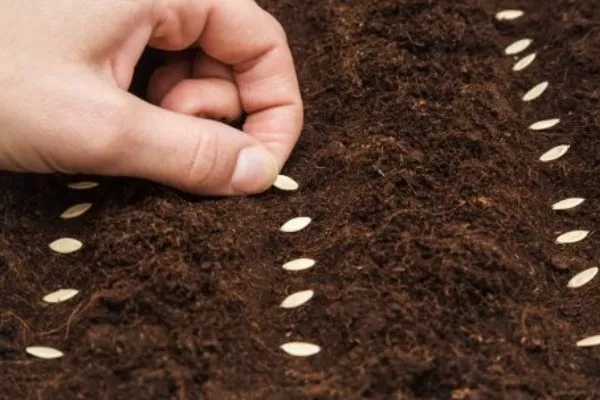
- Place 3-4 seeds in each hole and cover them with substrate to a depth of 3 cm.
- Once the bed has been prepared and seeded, cover it with mulch and cover it with film until the first shoots appear.
Dutch agronomists note that the Hero F1 hybrid demonstrates excellent growth results when grown alongside corn, due to the unique biological interactions between the plants. Corn not only provides essential shade for cucumbers but also serves as reliable support for plants grown on trellises. The stems serve as supporting poles.
Fertilization and watering
Caring for the Hero F1 hybrid requires a specific approach depending on where it's grown. Be sure to consider these aspects.
Fertilizing and irrigation in open fields involves the following:
- During the season, plants need to be fertilized 5-6 times, starting from the moment they bud. Apply the first fertilizer with urea, then move on to potassium and phosphorus fertilizers.
- Watering should be done in the morning or evening, with the amount of water adjusted based on rainfall and soil conditions. After rain or waterlogging, loosen the soil the following day.

Fertilization and watering in greenhouse conditions:
- It's important to alternate mineral fertilizers, such as Kemira Lux, with organic mixtures (mullein and wood ash solution). The interval between fertilizing is 10-15 days.
- Watering should be done every other day, and the soil should be loosened carefully the next day after watering.
Other important care features
Regularly removing weeds from the beds is an integral part of caring for cucumbers, as they are their main competitors.
For best results, hybrids should be grown on a trellis, forming single-stem plants from them, gradually increasing the number of fruiting branches at the top.
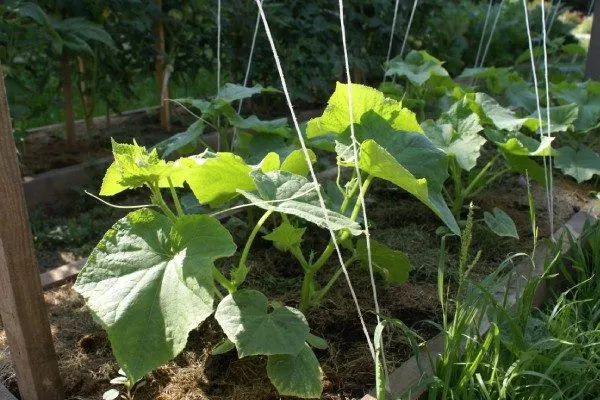
Method of forming whips:
- When the plant reaches a height of 50-65 cm, prune all side shoots and ovaries on the main stem (called blinding). At a height of 50-95 cm, pinch off the branches on the sides, leaving one leaf and one ovary.
- On the second order shoots let there be one leaf and one shoot.
- Wrap the main stem, tilted at an angle of 45°, around the trellis, secure it and pinch it above 2-3 leaves.
- Direct the top 3 shoots downwards and pinch them every 45-55 cm.
- On the main stem, regulate the number of ovaries, leaving 4-8 fruitful ovaries in the middle and upper parts.
Dangerous diseases and pests
Hero F1 stands out among others thanks to its impeccable resistance to a number of diseases, including cucumber mosaic, cladosporiosis, and both types of powdery mildew. However, preventative measures are recommended starting during the flowering period.
The crop is not afraid of harmful insects, but if they invade fields and gardens en masse, be sure to treat the plantings with insecticides.
Positive and negative qualities
Modern Dutch cucumber varieties, including Hero, don't require pollination, unlike older varieties for which it was mandatory. But breeding hasn't stopped there, and Hero is proof of that. Pros:
Cons:
Reviews
The Hero cucumber is deservedly popular among gardeners and farmers due to its productivity, disease resistance, and pleasant flavor. This early-ripening hybrid is a versatile vegetable suitable for eating raw, canning, and pickling.