
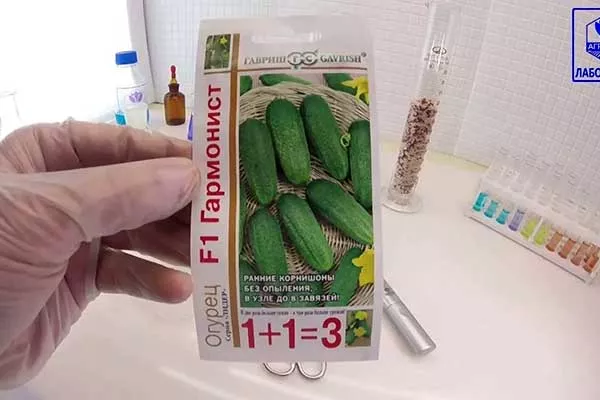
The Harmonist cucumber is a relatively new variety that has already become quite popular among gardeners. The main feature and advantage of this hybrid, suitable for both open and closed ground, is its early ripening period. It also delights vegetable lovers with its high yield and excellent taste.
Breeding history
The first-generation hybrid, Garmonist F1, was developed by Russian breeders. Authors: S.F. Gavrish, A.E. Portyankin, A.V. Shamshina, and V.N. Shevkunov. The hybrid variety Garmonist was added to the State Register and approved for cultivation in 2008.
Description of the plant
The Harmonist F1 hybrid plant is medium-sized with rough, creeping shoots. The bushes have medium branching and moderately sized leaves, green or dark green, heart-shaped, with five lobes.
The flowering type is female. The flowers are large and yellow. The stems reach 1.6-2 m in length. At the tops are tendrils with which the plant clings to supports. Four to five ovaries form in each axil.
Description of fruits
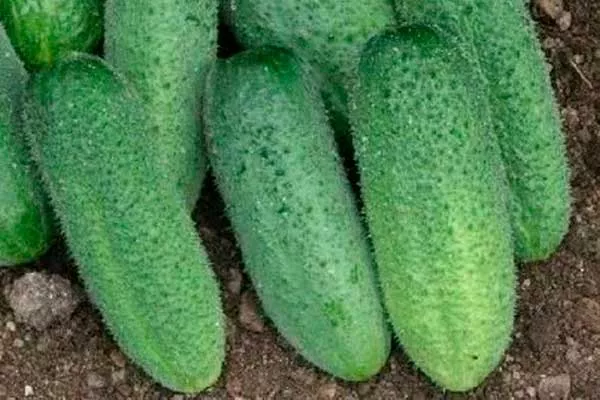
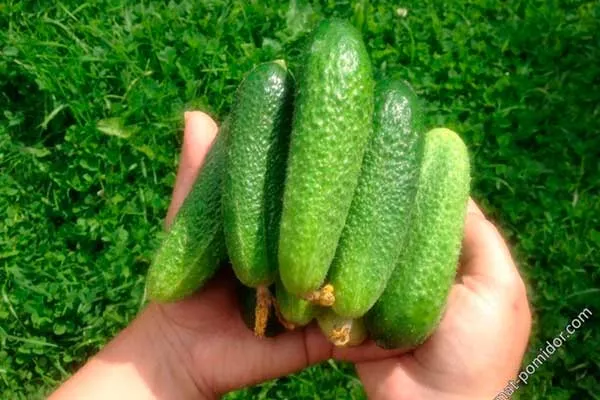
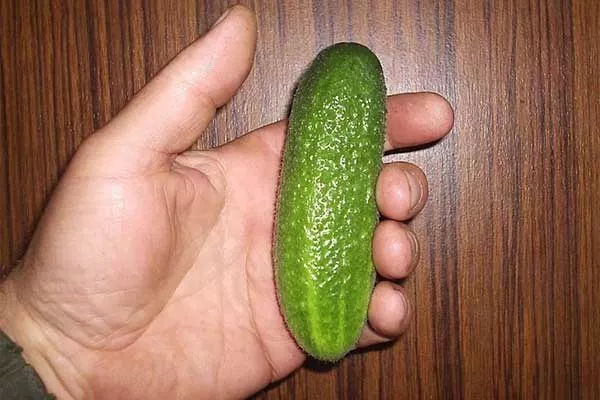
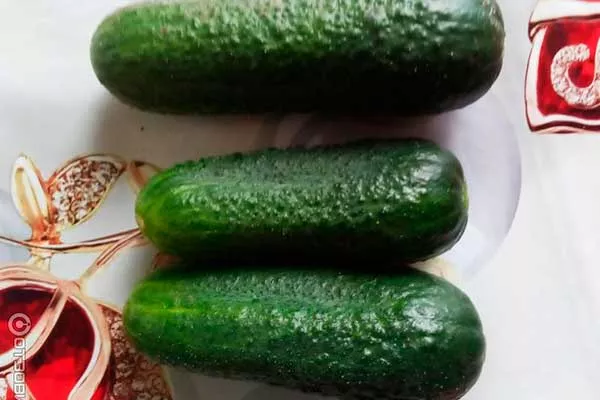
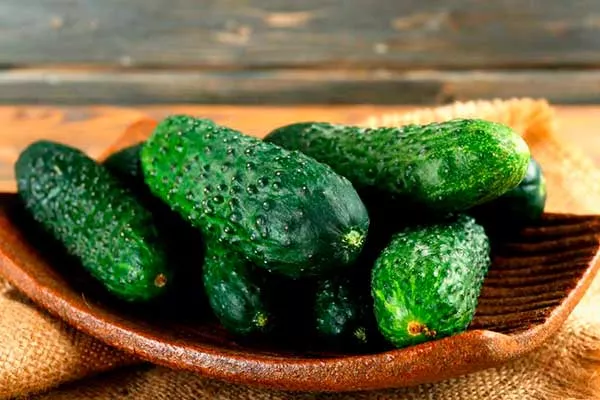
The fruits are cylindrical and have a finely tuberculated surface. At technical maturity, they reach 10-13 cm in length and approximately 3-3.5 cm in diameter. Each fruit weighs 80-110 g. They are dark green in color and have whitish spines. Light spots or blurred stripes may be present. The cucumbers grow in clusters of 6-8.
Taste and purpose
The Harmonist cucumber has an excellent flavor, completely free of bitterness, including the stem. The flesh is crunchy, and the texture is firm, with no voids.
Cucumbers are ideal for eating fresh. This salad variety is also suitable for pickling and canning.
Characteristics of the Harmonist variety
Harmonist F1 is a parthenocarpic (self-pollinating) hybrid suitable for open ground and plastic shelters. This bunch hybrid variety belongs to the early-ripening group, with approximately 40 days from germination to ripening of the first fruits.
- ✓ Resistance to temperature fluctuations, making it ideal for regions with unstable climates.
- ✓ Self-pollination ability, which increases yields in the absence of bees.
The Harmonist cucumber is considered a high-yielding variety, yielding approximately 12.5 kg of fruit per square meter. It is resistant to most diseases, including root rot, cladosporiosis (brown olive spot), and powdery mildew, both common and downy.
Pros and cons
Before planting the Harmonist variety in your garden, it's worth familiarizing yourself with all its advantages. The Harmonist hybrid has many advantages that make it very attractive to gardeners, summer residents, and farmers.
Landing
Harmonist F1 cucumbers can be grown from seeds or seedlings. Regardless of planting method, cover the plants with plastic film, as there is a risk of critical temperature drops at night. Covering also helps protect the crop from adverse weather conditions.

Features of sowing in open ground:
- Choose a site on the south side of the property. It should be free of drafts and strong winds. Swampy and shaded areas are contraindicated.
- The Harmonist cucumber will grow best after legumes and cereal crops, tomatoes, and cabbage.
- The soil for cucumbers is prepared in the fall: it's dug, disinfected, fertilized with compost and wood ash, and potassium sulfate is added. In the spring, the beds are formed and covered with plastic to warm the soil.
- The seeds are sown at a depth of 3-4 cm, with a distance of 20-30 cm between adjacent seeds. They are covered with soil to a thickness of approximately 2 cm. Arches are placed over the beds and a plastic covering is stretched over them.
- Sowing should be done at a time when the threat of frost has passed by the time the seedlings emerge. Seeds are usually sown outdoors from late May to mid-June.
- ✓ Soil pH should be between 6.0-6.8 for optimal nutrient absorption.
- ✓ The soil must be well-drained to avoid waterlogging and root rot.
To get an earlier cucumber harvest, use the seedling method. Sow the seeds in the third ten days of April. Sow in individual cups, containers, or peat cups. Plant the seeds 1.5 cm deep, cover with plastic wrap, and place in a warm location (27°C). When the seedlings have 2-3 true leaves, transplant them into the ground. Planting pattern: 50x50 cm.
Care Features
The Harmonist variety requires quite a bit of care, especially watering. To ensure a good harvest, you need to water the beds regularly, apply fertilizer, and follow other recommended agricultural practices.

How to properly care for cucumbers:
- In normal weather, water the plants 2-3 times a week. In hot weather, water the beds every other day. Use warm, settled water. Pour it under the roots, making sure no water drips onto the leaves. The best time to water is in the evening.
- Cucumbers are fertilized several times during the season. During the flowering stage, a diluted chicken manure infusion (1:20) is applied, and during fruiting, liquid manure (1:20) is applied. To increase yield, double superphosphate and ammonium nitrate are also applied.
- The bushes are tied to trellises as they grow. To prevent overgrowth, side shoots are removed. The tops are pinched at a height of 1.5 m.
- In the mornings, they loosen, weed, and mulch the soil. The beds are covered with peat, humus, straw, etc.

Prevention of diseases and pests
The Harmonist F1 hybrid is highly resistant to most diseases, but during the active fruiting stage, when the plant expends a lot of energy, the risk of fungal pathogens increases. To boost the plants' immunity, it is recommended to spray them with infusions of onion peels and bread crusts.

Cucumbers are treated with a wood ash infusion as a preventative measure, 2-3 times per season. This type of spraying reduces the risk of powdery mildew and other fungal diseases.
The most dangerous insects for the Harmonist cucumber are whiteflies, root-knot nematodes, and spider mites. To minimize the risk of damage, thoroughly disinfect the soil, maintain crop rotation, and maintain a proper watering regime. In case of widespread pest infestations, systemic insecticides are used.
Harvesting
Cucumbers are harvested every two days to prevent them from becoming overgrown. Frequent harvesting also promotes the growth of new fruit. Picked cucumbers can be stored for a while in a cool, dark place or in the refrigerator.
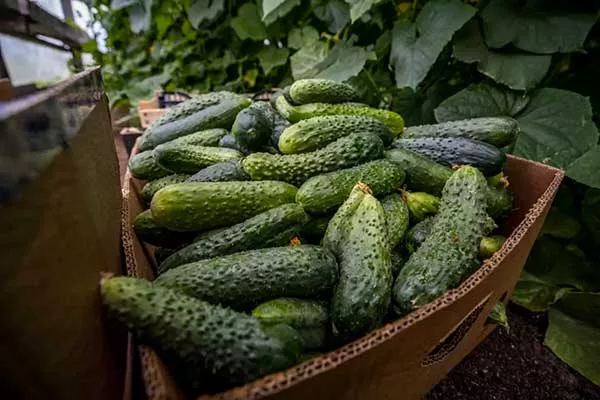
It's recommended to harvest cucumbers in dry weather between 6:00 and 9:00 a.m. At this time, cucumbers are firm and contain the maximum amount of vitamins and minerals.
Reviews
The Harmonist cucumber is a promising, versatile variety suitable for both home and commercial growing. These bumpy cucumbers, with their catchy name, are great for any occasion—they're delicious in salads, pickles, and marinades.