
Forsage F1 is an early-ripening cucumber variety, a hybrid. In its short existence, it has become a favorite among many domestic gardeners and farmers due to its high yield, marketable appearance and uniformity of fruit, its pleasant flavor, excellent shelf life, and transportability.
Who developed the variety and when?
Forsage is a domestic hybrid, created by Poisk agrofirm employees (2013). The authorship belongs to the following breeders:
- Maksimov S. V.;
- Klimenko N. N.;
- Chistyakova L. A.
In 2015, it was added to the Russian Federation State Register. It is recommended for indoor cultivation. Cultivation of the hybrid in a greenhouse, as well as in an open garden bed with temporary plastic cover, is possible in the following regions:
- Northern;
- North-West;
- Central;
- Volga-Vyatka;
- Central Black Earth Region;
- North Caucasian;
- Middle Volga;
- Lower Volga;
- Ural;
- West Siberian;
- East Siberian;
- Far Eastern.
Introduction to the variety
Forsage is renowned for its excellent technical characteristics. It's not only productive, but also shade-tolerant, resistant to adverse weather, and resistant to many cucumber diseases. Its strong immunity makes it suitable for outdoor cultivation.
Characteristics of the appearance of the plant and cucumbers
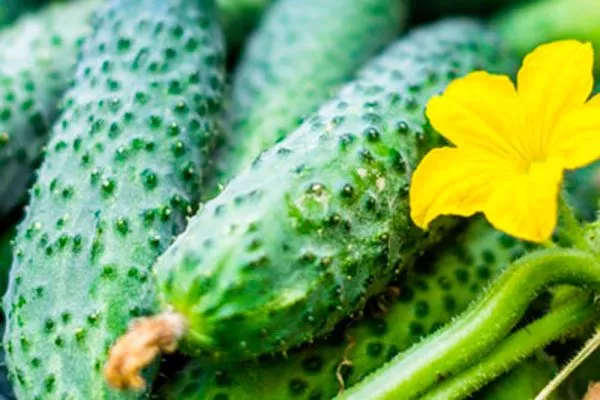
This vegetable variety is parthenocarpic. Its plants produce only female flowers. They are self-pollinating. They also have other characteristics:
- tallness (belonging to indeterminate cucumber species);
- medium degree of branching;
- limited growth of lateral shoots;
- moderate foliage;
- Foliage: medium-sized, dark green, angular-heart-shaped, with a slightly wrinkled surface.
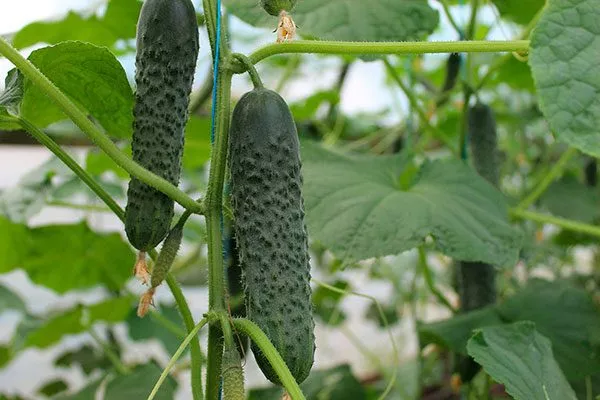
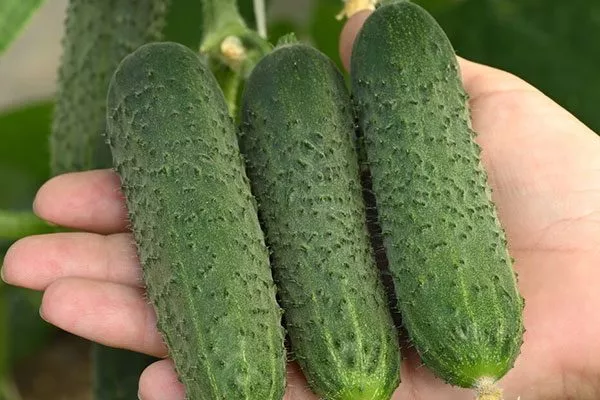
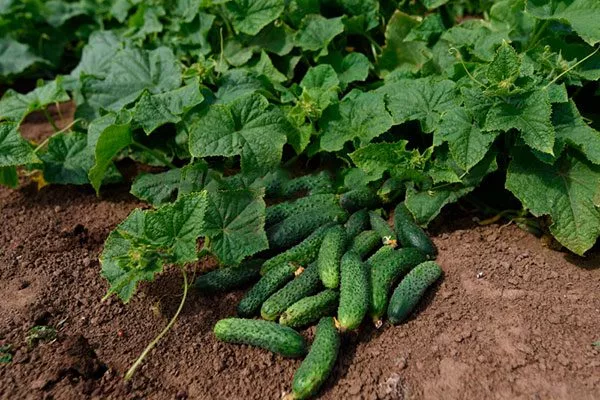
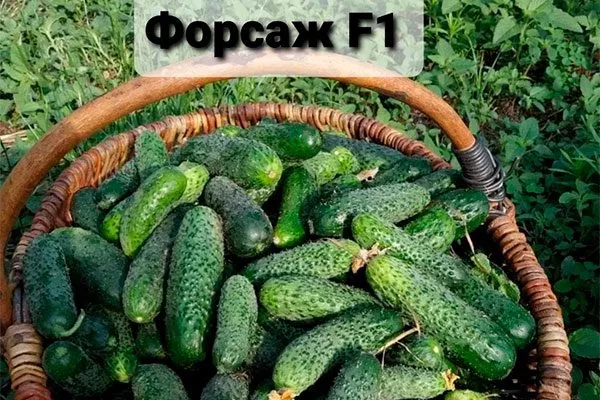
The Forsage hybrid yields high-quality fruits. The fruits are uniform and attractive. They are distinguished by the following characteristics:
- small size (the cucumber reaches 10-12 cm in length and 3.5-4 cm in diameter);
- weight - 110-130 g;
- cylinder shape;
- uniform dark green color;
- soft skin, distinguished by its elasticity and large, bumpy surface with white spines;
- dense pulp with a crunch and an abundance of juice, very aromatic.
Purpose and taste of fruits
The fruits of the Forsage hybrid are characterized not only by their attractive appearance but also by their excellent taste. It is pleasant, slightly sweet, and refreshing. The presence of milky-ripe seeds in the cucumber flesh is undetectable.
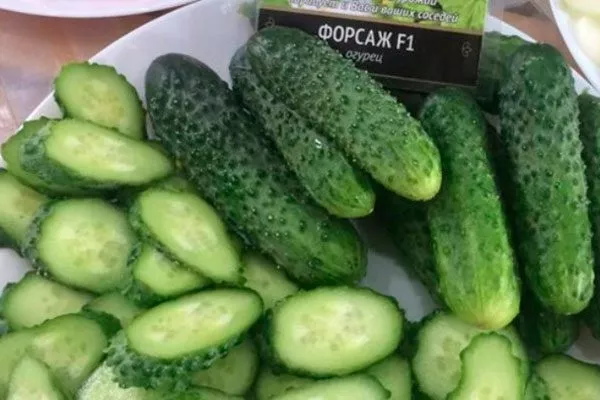
The purpose of the vegetable crop is universal:
- the fruits are eaten fresh;
- add them to summer vegetable salads;
- salt;
- canned.
Ripening and yield
Forsage is an early-ripening cucumber variety and hybrid. Its harvest ripens within 38-42 days after the first shoots appear. Its bushes produce fruit consistently and continuously, from July to September. Even if you don't pick a ripe cucumber in time, it won't become coarse or overgrown.
This vegetable variety is considered high-yielding. Its characteristics are as follows:
- 12.5 kg per 1 sq. m of cucumber planting is the yield indicated by the authors of the hybrid in the application for its approval for use (when grown in a film greenhouse);
- up to 17 kg per 1 sq. m is the maximum possible yield in closed ground conditions, provided that the bushes are intensively fed;
- Up to 15 kg per 1 sq. m is the maximum yield for open ground.
The harvest is characterized by excellent shelf life and transportability. Its marketable appearance remains intact even during long-distance transportation.
Features of planting and preparation
Domestic gardeners grow this vegetable variety using seedlings. They adhere to the following planting dates:
- April-May - sowing hybrid seeds for seedlings;
- from the end of May (after the 25th) to the beginning of June (the first 5 days of the month) - transplanting seedlings into the garden bed.
- ✓ Optimum soil temperature for transplanting seedlings: not lower than +15°С.
- ✓ The need to use phytolamps for seedlings: at least 16 hours of light per day.
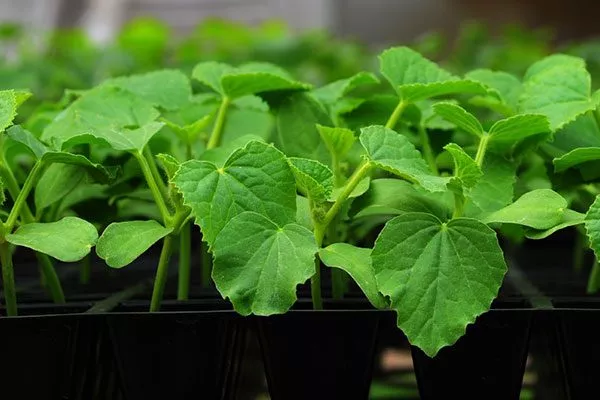
When growing Forsage seedlings, provide them with favorable conditions for growth:
- room temperature — +22-25°С;
- abundance of light degrees (daylight hours - at least 16 hours, ensured by the use of phytolamps).
Prepare the seedlings for transplanting into the garden. A week before transplanting, begin hardening them off. Take the containers with the cucumber seedlings out to the balcony and leave them in the fresh air. Gradually increase the time the plants spend outdoors each day.

Transplant seedlings into the garden bed, following the diagram:
- the distance between seedlings is 30-40 cm;
- row spacing - 70 cm.
What should you know about care?
An important aspect of growing tall, vigorous hybrid plants is shoring them up to a trellis. This ensures maximum productivity and makes them easier to maintain.
Forsage requires careful shaping. Experienced gardeners train its bushes into a single stem. They remove all shoots and ovaries at the first three nodes. After the fourth leaf, the ovary is left alone, but side shoots are removed.
Cucumber planting also requires other care procedures:
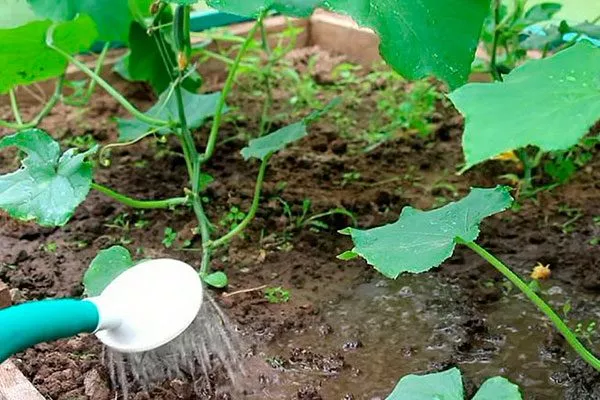
- WateringThe plant is moisture-loving and requires abundant watering. Use only warm, settled water. The recommended rate is 6-12 liters per square meter. A drip irrigation system is recommended.

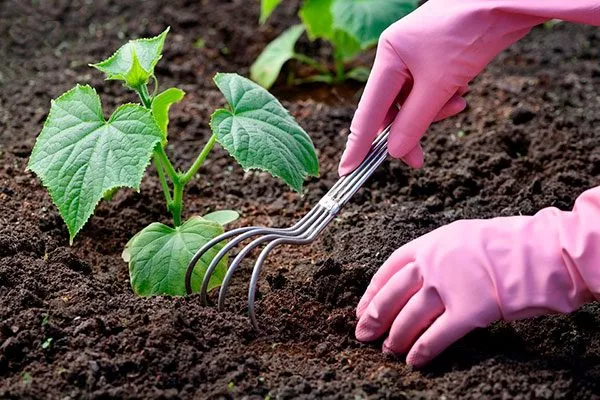
- Loosening and weedingThese measures ensure the soil is loose, permeable to water and air, and retains nutrients by removing weeds. Don't neglect mulching either. A 10-cm layer of mulch will help retain moisture and prevent weed growth.
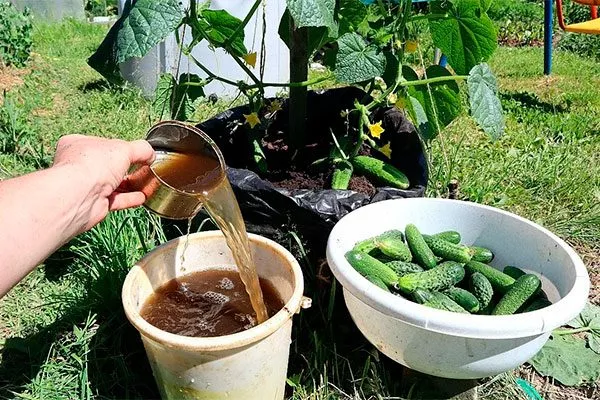
- Top dressingDuring the growing season, apply fertilizer mixtures at least 3-4 times. Use ready-made complex formulations, such as Master Agro, Agronom Profi, or Fertis.
Diseases and pests
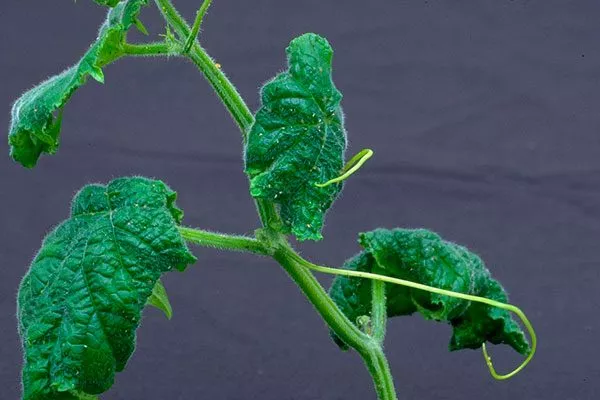
Forsage, like most cucumber hybrids, is disease-resistant. Its plants have strong immunity and are rarely affected by infections:
- powdery mildew;
- downy mildew;
- Cladosporiosis;
- cucumber mosaic virus.
Don't neglect disease prevention for hybrid bushes. Take the following measures:
- water the cucumber bed with warm water;
- mulch the soil under the bushes with fresh sawdust and peat;
- normalize the humidity and temperature in the film shelter;
- spray the plantings with fungicidal preparations (Quadris, Ridomil Gold, Stark) for the prevention and treatment of plants;
- Remove infected bushes from the garden bed and disinfect the soil with dry bleach.
Under unfavorable weather conditions, the risk of cucumber bushes being attacked by pests increases:
- AphidsSpray the planting with dandelion or celandine infusion, dust with dry mustard powder or shag, and use Fitoverm, Iskra, or Aktara for severe infestations.
- WhiteflyIf a pest appears in the greenhouse, freeze it. Treating the plants with Tanrek or Inta-Vir also helps get rid of the insect.
- ThripsA garlic decoction or celandine infusion will protect cucumber plants from the pest. If the situation is severe, use Aktara. Installing fine-mesh netting on the windows and planting marigolds or yarrow nearby will help prevent thrips from entering the greenhouse.
Advantages and disadvantages of the variety
The Forsage hybrid has become a favorite among domestic summer residents due to its many advantages:
Reviews
Forsage F1 is a domestic cucumber hybrid that delights gardeners with its low maintenance, high yield, and strong immune system. With proper care, its plants produce abundant, delicious, marketable fruit. Cucumbers of this variety are popular for their pickling qualities. They look great in jars containing canned vegetables.