
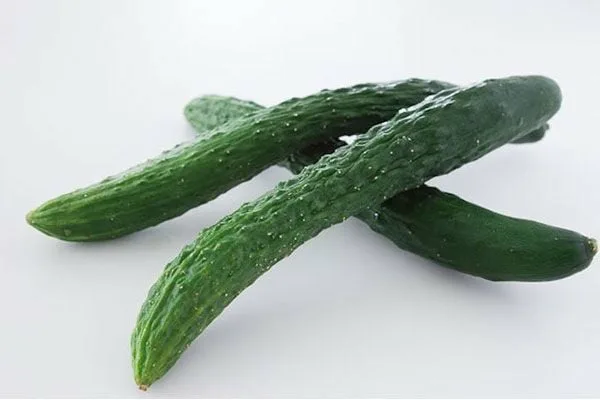
Feng Shui F1 is the name of a self-pollinating hybrid with a mid-season harvest. It is chosen by lovers of long, "Chinese" cucumbers. Gardeners appreciate it not only for its unusual fruit appearance and remarkable flavor, but also for its excellent yield. It is suitable for cultivation in glass and plastic greenhouses in spring, summer, and fall.
Introduction to the variety
This vegetable variety exhibits parthenocarpy. Its bushes don't require bees to produce fruit. They produce predominantly female flowers and a few male ones, allowing them to regulate their own fruit load. Each node produces 1-2 cucumbers.
The hybrid requires 42-48 days to ripen. Thanks to greenhouse cultivation, fruiting begins as early as spring. It is uniform and long-lasting. The cucumber harvest peaks between June and October, ending with the autumn frosts. Gardeners harvest between 11 kg and 23 kg (an average of 17 kg) per square meter.
Feng Shui has a strong immune system. Its plants are rarely affected by diseases:
- Cladosporiosis;
- powdery mildew;
- cucumber mosaic virus;
- root rot;
- downy mildew (moderate resistance).
Features of selection
This hybrid cucumber variety belongs to the Asian variety. It was developed by A.E. Portyankin, a researcher at Sembiotek. The breeder succeeded in creating a high-yielding and resilient vegetable crop suitable for cultivation in most regions of the Russian Federation.
- Northern;
- North-West;
- Central;
- Volga-Vyatka;
- Central Black Earth Region;
- North Caucasian;
- Middle Volga;
- Lower Volga;
- Ural;
- West Siberian;
- East Siberian;
- Far Eastern.
Specificity of bushes and cucumbers
Feng Shui plants are indeterminate. They are characterized by a vegetative growth pattern. The list of external characteristics of the bushes includes:
- powerful structure;
- tall (up to 2 m);
- degree of branching - above average;
- good foliage;
- dark green foliage, medium in size.
The hybrid cucumber harvest is distinguished by its marketable appearance. The fruits are characterized by the following characteristics:
- length - 20-30 cm;
- diameter size - 4-4.5 cm;
- weight - 200-330 g (individual specimens can reach a weight of 400 g and even 800 g with increased application of fertilizers);
- elongated cylindrical shape with a small handle, curved, sickle-shaped in profile;
- dark green skin with a pattern of short light stripes;
- large-tuberous surface with frequent tubercles and white-spined pubescence;
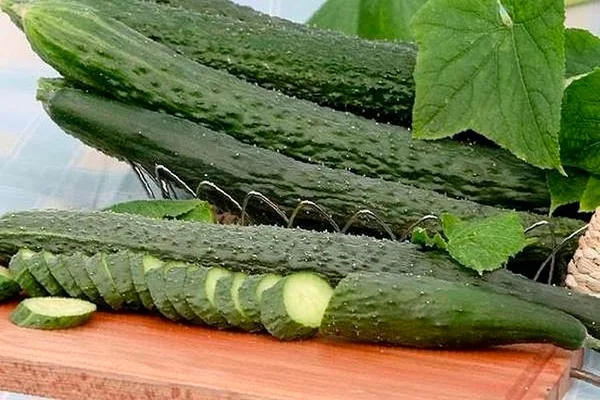
- dense and crispy flesh, very aromatic and juicy.
Taste and application
The fruits of the "Chinese" cucumber are very tasty. Their flesh is neither bland nor watery, and has a wonderful crunch. The flavor has a refreshing note, accented by a rich cucumber aroma.
Agricultural technology rules
Grow the Feng Shui F1 cucumber using seedlings in a greenhouse. Gardeners in warm climates can try planting the hybrid's seeds or seedlings in open ground (without cover).
- ✓ Use only hardwood ash, avoiding softwood due to its high resin content.
- ✓ The ash must be completely cooled and sifted to remove large particles.
Prepare the soil for your future cucumber bed in the fall:
- dig it to a depth of 30 cm;
- remove weeds;
- add manure.
Germinate the seeds before sowing. After germination, plant them in peat pots filled with nutrient-rich soil, planting them to a depth of 2 cm. Water the seeds. Grow the seedlings at a temperature of 20-25°C.
Transplant the seedlings to the garden bed after they have 5 true leaves (at 20 days old). Follow the planting pattern:
- 60 cm is the distance between planting holes;
- 80 cm is the distance between rows.
Care for your hybrid plantings properly to ensure a bountiful harvest. Follow these steps:
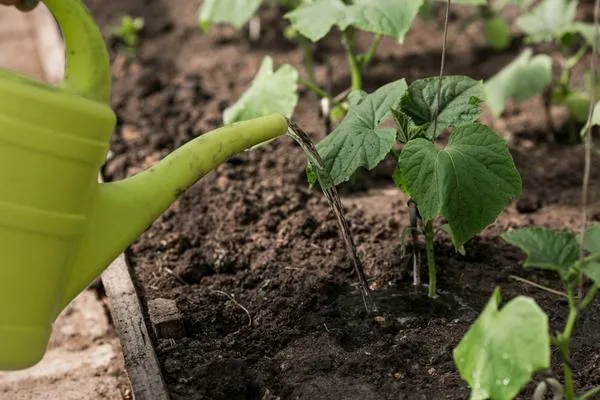
- WateringMoisten the soil under the cucumber plants every other evening. In dry weather, water the bed daily. Don't let the soil dry out, but don't let it get too wet either. Use only warm, settled water. Water the plants at the roots.
- Loosening the space between rowsWhen performing this procedure, be careful not to touch or damage the cucumber roots. Work the soil to prevent a dense, air-impermeable crust from forming on the surface.
- WeedingRemove weeds from your garden bed promptly. They harbor pathogens and pests. They also shade cucumber plants, preventing them from developing properly by depriving them of nutrients and moisture.
- Top dressingFertilize cucumbers in the evening. Use mineral and organic fertilizers, alternating them. Apply 3-5 applications during the growing season. Apply nutrient solutions every 2-3 weeks.
Remember that Feng Shui is a vegetative vegetable crop. When creating a nutritional plan for it, avoid the heavy use of nitrogen-rich compounds and weak nutrient solutions. - Formation of bushesUse the classic pruning method. This involves leaving the side shoots, which produce the lion's share of the harvest, and restricting their growth after the second leaf. You'll also need to pinch the top of the plant when it reaches the neighboring bush.
Reviews
The Feng Shui cucumber is a mid-season hybrid vegetable. It is increasingly being chosen by gardeners for cultivation in their backyards. It is popular due to its excellent fruit flavor, resistance to most infections, ease of cultivation, and low maintenance requirements.