
Emelya F1 is an early-ripening cucumber variety. Vegetable growers love it for its ability to withstand cold snaps and sudden temperature fluctuations. Thanks to its increased stress tolerance and consistent and abundant fruiting, it is gaining increasing popularity among gardeners and farmers growing vegetables for sale.
Introduction to the variety
Emelya is a parthenocarpic cucumber hybrid. Its plants are characterized by female flowering and do not require insect pollinators. They form ovaries independently and regardless of weather conditions. They bear fruit in clusters of seven or more cucumbers each. They ripen evenly.
- ✓ Resistance to temperature changes up to 10°C without loss of ovary.
- ✓ Ability to self-pollinate in the absence of pollinating insects.
Originators
In 2022, the hybrid was added to the Russian Federation State Register. The rights to it are owned by the Manul agrofirm. Authorship belongs to its research staff:
- Borisov A.V.;
- Krylov O.N.
External characteristics of the plant and cucumbers
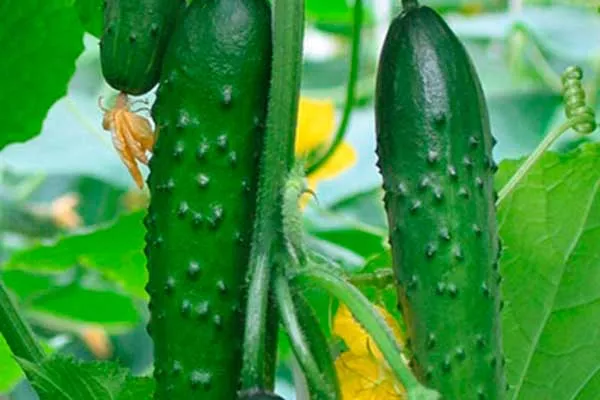
Emelya bushes are an indeterminate variety. They are vigorous, with the main stem reaching 2.5-3 meters in length. Other distinctive plant characteristics include:
- medium degree of branching;
- shortened internodes;
- uniform distribution of leaves along the stem;
- green color and medium size of leaf blades;
- slightly wrinkled surface of foliage, slightly wavy edge.
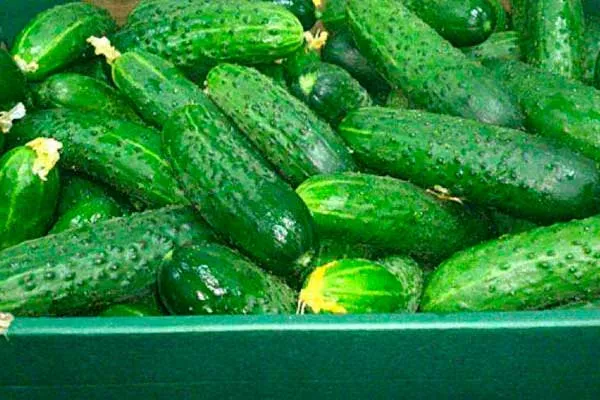
The hybrid cucumber harvest is characterized by high commercial quality. The cucumbers have the following characteristics:
- oval-cylindrical in shape;
- length - 13-15 cm (some specimens can reach 23 cm in length);
- diameter - 4 cm;
- weight - 120-150 g (maximum up to 250 g);
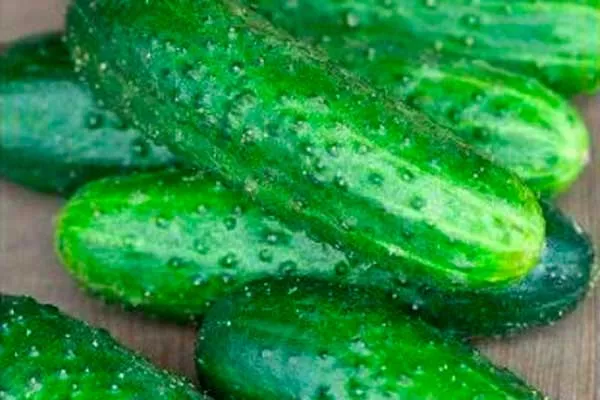
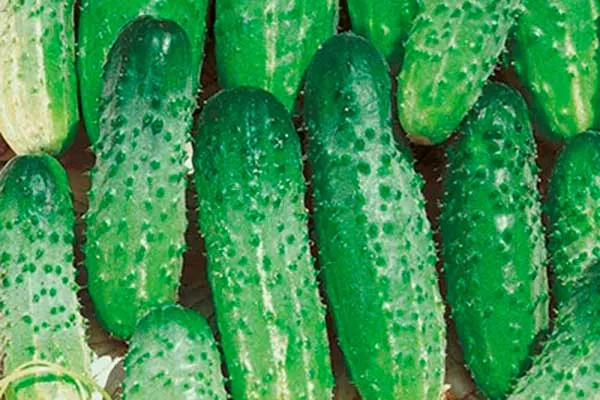
- skin: thin, dark green with a pattern of stripes of a lighter shade, medium-tuberous with sparsely spaced tubercles, with the presence of white-spined pubescence on its surface;
- pulp: dense, salad-colored, aromatic, without voids;
- small size of the seed chamber;
- seeds: miniature, soft, not felt by the eater.
Taste and purpose
Hybrid cucumbers are characterized by a balanced, refreshing, and sweet flavor. They are never bitter. Their aroma is vibrant and classic.
Thanks to their excellent taste, vegetables are suitable not only for eating fresh, but also for preparing various dishes:
- fresh summer salads with tomatoes, peppers, and spicy herbs;
- okroshka;
- pickle soup;
- vegetable stew;
- vinaigrette, Olivier salad, crab salad;
- sandwiches;
- sauces.
Housewives use them to make preserves for the winter, salt them, and ferment them. This only improves the fruit's flavor.
When ripe, the yield
This hybrid delights gardeners with its early maturity. It produces a harvest in 39-45 days after germination. Fruiting is early, uniform, and abundant, even in unfavorable weather.
Fruit ripens simultaneously on the bushes in large quantities. Yields are high, reaching 12-16 kg/m2.
Soil requirements
To obtain the maximum yield, grow the Emelya cucumber in soils with the following characteristics:
- loose;
- nutritious (rich in organic matter, but low in nitrogen);
- non-acidic;
- loams or sandy loam soils;
- moderately moistened;
- well drained.
- ✓ The pH level should be between 6.0-6.8 for optimal nutrient absorption.
- ✓ Organic matter content of at least 4% to ensure good soil structure and moisture retention.
If the soil in your garden is acidic, it will need to be limed before planting cucumber seedlings. Dense, heavy soils are also unsuitable for this crop. Organize them with sand or other loosening agents.
Climate/regions
Emelya cucumber plants are cold-hardy and hardy (hardiness zones 7-8). They tolerate cold snaps and temperature fluctuations. Inclement weather does not reduce their yield.
This vegetable crop variety is recommended for cultivation in the following regions of the Russian Federation:
- Northern;
- North-West;
- Central;
- Volga-Vyatka;
- Central Black Earth Region;
- North Caucasian;
- Middle Volga;
- Lower Volga;
- Ural;
- West Siberian;
- East Siberian;
- Far Eastern.
Positive and negative qualities
Landing features
The hybrid vegetable variety can be grown by direct sowing of dry seeds in open ground in late May or by using seedlings. Experienced gardeners prefer the latter method. The following timing is observed:
- the last days of March, the beginning of April – sowing seeds for seedlings;
- May - transferring seedlings to a garden bed in the presence of permanent or temporary shelter;
- beginning of June – planting seedlings in an open area of the garden (for summer residents in the middle zone, in the south it is permissible to do this earlier);
- July-August - harvest.
Preparing the garden bed
Set aside a plot of your garden for cucumber beds with the following characteristics:
- smooth;
protected from the wind; - no drafts;
- well-lit by the sun, with partial shade during the hottest part of the day.
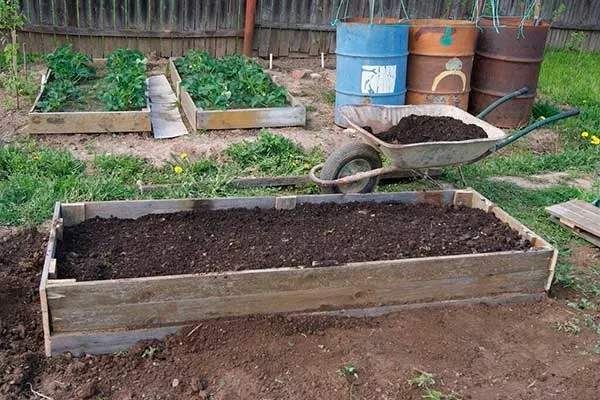
Prepare the plot in advance. Dig it over in the fall. Clear away weeds. Add manure. In the spring, before planting, dig the soil again. Fertilize it with mineral fertilizers rich in potassium, phosphorus, and magnesium. Water it the day before with a copper sulfate solution (6 g per 10 liters of hot water).
Germination of seeds
Grow Emelya seedlings in peat pots filled with nutritious potting soil. To make the potting soil, combine the following ingredients:
- peat - 6 parts;
- humus - 1 part;
- turf soil - 1 part;
- wood sawdust - 1 part.
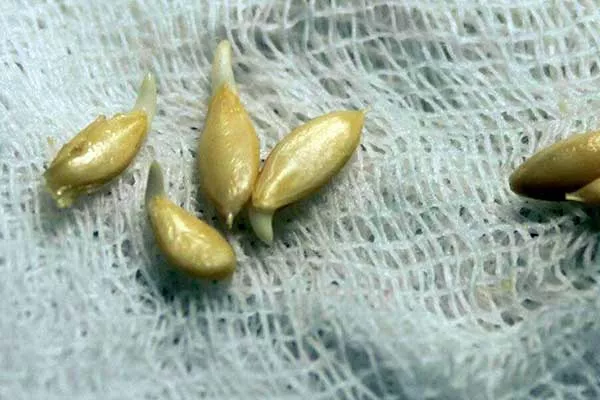
Plant 1-2 seeds in each container. They can be germinated the day before planting by wrapping them in a damp cotton cloth and leaving them in a warm, dark place. Cover the seeds with a depth of 1-2 cm in the soil mixture. Keep the seeds at a temperature of 25°C until the sprouts emerge. Once the seedlings emerge, reduce the temperature to 18-20°C.
Transplanting seedlings
Transplant the seedlings into the garden once they have 3-4 true leaves. By this time, the soil should be warmed to 20ºC (mid-May). Follow these steps to transplant the seedlings:
- Make holes in the soil 40 cm deep. Space them 30 cm apart, and 50 cm apart between rows.
- Fill each hole with a soil mixture made by combining peat, humus, and sand.
- Place one seedling per hole. Transfer them along with the root ball. If you grew the seedlings in peat pots, place them in the hole along with the container.
- Fill the hole with soil containing the seedling.
- Water the planting with lukewarm, settled water. Use 3 liters per plant.
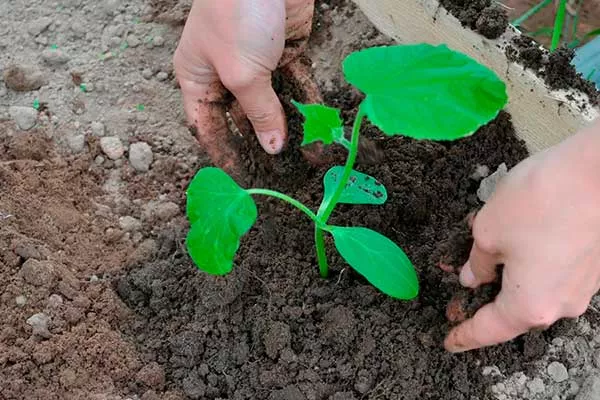
Observe the planting density recommended by the Emelya hybrid seed manufacturer:
- 2.5 plants per 1 sq. m – for a greenhouse;
- 3-4 seedlings per 1 sq. m - for an open bed.
When planting seedlings outdoors, cover the plants with plastic sheeting if there's a risk of frost. To do this, dig metal arches into the bed and drape the covering material over them. You'll also need to install a trellis or large-mesh netting near the holes to secure the cucumber vines.
Care
To get a bountiful harvest of Emelya cucumbers, follow proper cultivation practices. This hybrid is considered easy to grow. It requires standard care, including the following:
- watering;
- top dressing;
- loosening the soil;
- weeding;
- mulching the beds.
Watering
At different stages of development, the hybrid bushes' need for watering is not the same:
- Before flowering Water them 1-2 times every 7 days. Rain also counts as watering. Use 4-5 liters of warm, settled water per 1 square meter of planting.
- After flowering and formation of ovaries Water the cucumber bed 3 times every 7 days. Increase the water flow to 8-12 liters per square meter. Maintain this watering schedule until the active harvest period is complete.
- From mid-August until the end of the season Water the soil under cucumber plants no more than once every 10 days. Use 3-4 liters of water per square meter.
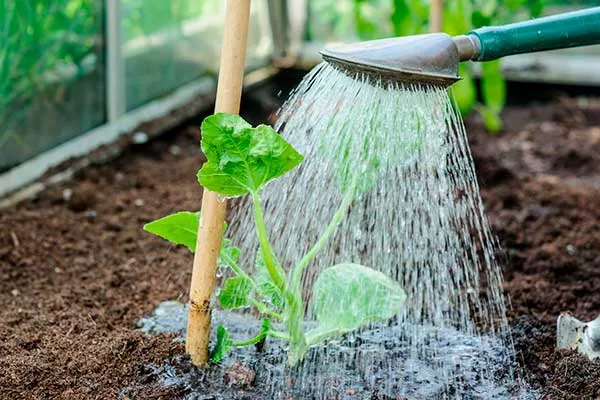
Loosen the soil after each watering to improve moisture and air flow to the vegetable roots. At the same time, remove weeds, which interfere with proper cucumber development and weaken their immunity. Mulch the soil with organic matter after watering and loosening to conserve moisture.
Top dressing
Apply fertilizer several times throughout the season to ensure abundant fruiting of cucumber plants and to maintain their health:
- First time Feed the plants with a complete nitrogen-rich cucumber fertilizer or organic matter (cow manure, chicken manure). Apply the nutrient mixture early in the plant's development, before it begins to flower.
- For the following feedings Use formulations that contain the following elements: potassium, phosphorus, nitrogen and sulfur.
After fruit set, water the bushes with a nitrophosphorus solution (15 g per 10 liters of water). After 7 days, feed them with liquid fertilizer. Mix 10 liters of water with 0.5 liters of mullein and add 10 g of potassium sulfate.
Next, add balanced mixtures, maintaining an interval of 1 week. - For autumn feeding of cropsFor plants growing in open areas of the garden without shelter, use 10-25 g of potassium salt, 15-25 g of ammonium sulfate and 25 g of ammonium nitrate.
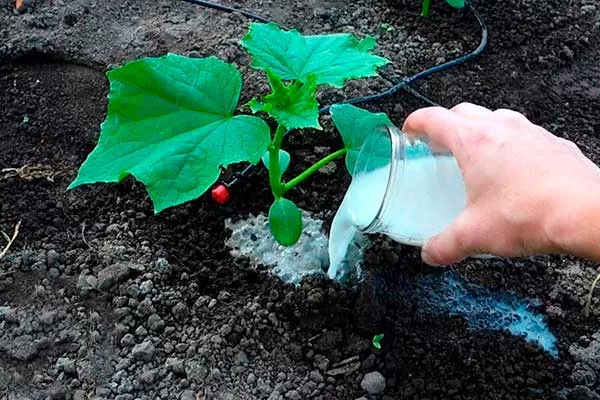
Remember that Emelya cucumbers grown in protected soil require more frequent fertilizing than bushes growing in an open garden bed.
Diseases and parasites
The hybrid vegetable variety exhibits resistance to insect attacks and viral diseases such as olive spot and cucumber mosaic virus. It is more susceptible to fungal infections, particularly powdery mildew.
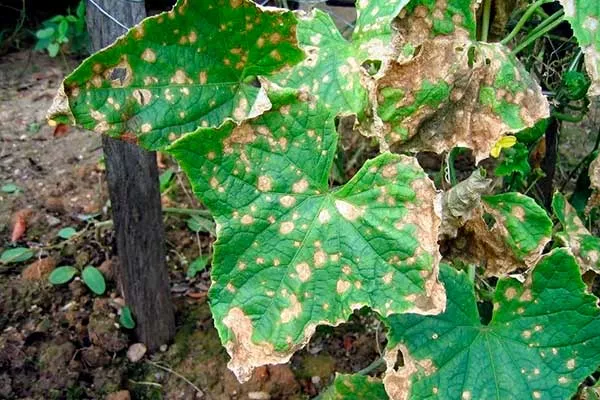
Prevent diseases and pest infestations:
- observe crop rotation;
- do not thicken the planting;
- weed and remove plant debris from the area;
- remove diseased plants from the garden bed;
- treat seeds before planting;
- loosen the soil;
- Feed the crop regularly;
- Preventively treat the plantings with fungicidal preparations once every 14 days (if symptoms of diseases appear, treat the bushes more often - once every 7-10 days);
- Carry out preventative treatments of plantings against spider mites.
Apply insecticides when pests are detected. Apply them 1-2 times per season. It is highly undesirable to treat the bushes with chemicals while they are fruiting. The fruit should not be picked or eaten for 1-2 weeks afterward.
Harvesting and storage
Harvest the Emelya hybrid in July-August. Pick the fruits from the bushes by hand, being careful not to damage the cucumber vines. Don't let the cucumbers grow too big. Harvest them every other day or daily.
Store the harvest in the refrigerator's vegetable drawer for up to 14 days. After that, the fruit begins to wilt, losing its flavor and marketability.
How to increase yield?
The Emelya hybrid is a high-yielding variety. To maximize its productivity, use fertilizers, particularly mineral supplements, as well as growth stimulants and folk remedies:
- Water the planting with a solution of potassium sulfate (20 g per 10 liters of water) with the addition of superphosphate (40 g). Apply 1/2 liter of liquid solution per plant.
- Spray the cucumber bed with potassium humate (100 g per 10 liters of warm water). Apply once every 10 days.
- Use Rossa's solution. Prepare a solution of 20 g of the product and 10 liters of water. Spray the bushes with it once every 21 days.
- Use green manure made from weeds with the addition of yeast (1 kg per 10 liters) and sugar. After fermentation, strain the liquid. The recommended application rate is 1/2 liter per plant.
- Prepare a liquid fertilizer using MagBor (25 g) and water (10 l). Apply 10 l per 3 square meters of cucumber bed. Magnesium and boron will strengthen fruit set, prevent plant rot, and ensure normal development.
- Spray the planting with a boric acid solution (5% concentration). It's an excellent antiseptic and fertilizer for the crop. Apply once every 21 days.
- Use the growth stimulator Zircon. Dilute the product with water (1.5 ml per 1 liter). Apply 50 ml per plant. Use no more than once every 30 days.
Reviews
The Emelya hybrid is a bestseller, popular among Russian gardeners. Its bushes are renowned for their cold and stress tolerance, and resistance to many diseases. They hold their fruit tightly, not dropping their young even during brief cold spells. The fruits are juicy and tasty, without bitterness. They are suitable for all purposes.