
Ecole is a relatively new cucumber variety suitable for growing both indoors and outdoors, both in spring and summer and in summer and fall. The first harvest of tuberculate cylindrical cucumbers with a small seed chamber can be harvested 42-45 days after germination. The cucumbers are excellent for fresh eating, canning, and pickling.
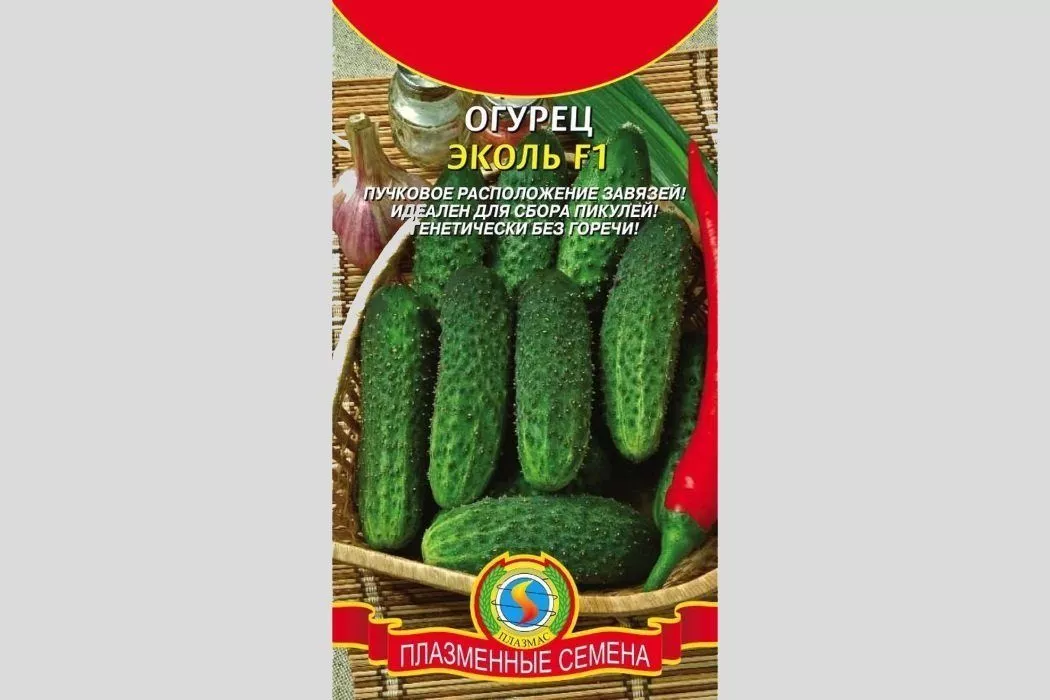
Ecole cucumbers
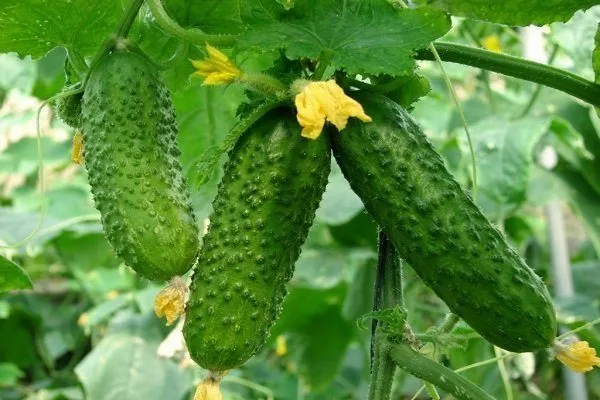
Cucumbers of the Ecole variety
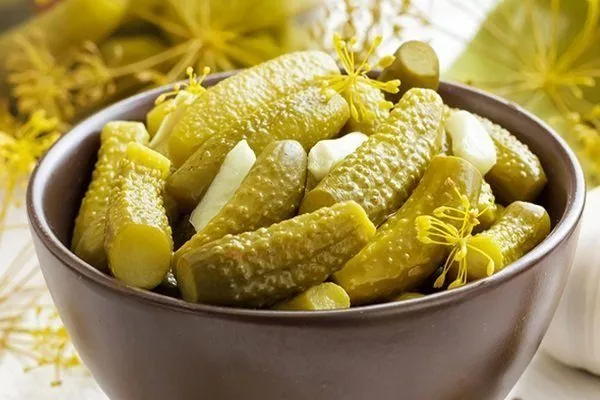
Ecole cucumbers are suitable for pickling.
Description of the variety
The Ecole F1 hybrid was developed by Dutch breeders from the seed company Syngenta Seeds BV. Testing of the sample was conducted in 2001. The variety was added to the State Register of Breeding Achievements of the Russian Federation in 2007 and is intended for cultivation in the North Caucasus region, which includes:
- Adygea;
- Dagestan;
- Chechen Republic;
- North Ossetia-Alania;
- Ingushetia;
- Kabardino-Balkaria;
- Rostov region;
- Stavropol and Krasnodar Krai.
We will consider separately how the hybrid grows and bears fruit.
Bushes
The plant has the following characteristics:
- parthenocarpic (self-pollinating), therefore does not require pollination by bees;
- tall – reaches 2.5-3 m in height;
- medium-sized, with dark green leaves of medium and small size;
- cluster (bouquet) type of flowering - ovaries are formed quickly and intensively, 5 pieces in an axillary bud;
- indeterminate (the main stem grows without restrictions);
- compact with short internodes and additional shoots with 2 leaves (generative type).
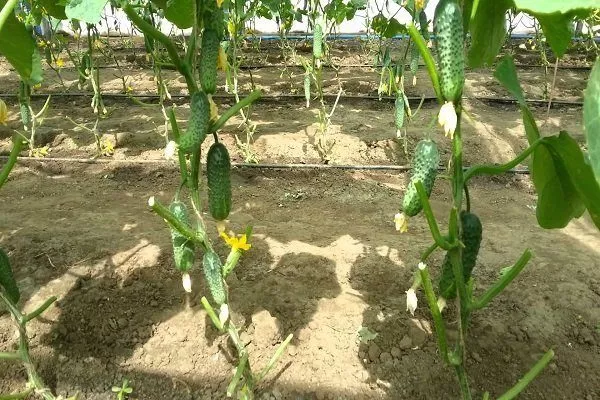
With sufficient nutrition, 5 to 7 cucumbers can form in each node.
Fruit
Ecole bears fruits with the following characteristics:
- type - pickles, gherkins;
- weight – on average 60-75 g (the largest specimens can reach 95-100 g);
- form – cylindrical;
- length - from 6 to 10 cm, with a width to height ratio of 3:1;
- skin – high density, bright green in color with whitish stripes and faint spots, a large tuberculate surface and frequent white spines (this type of skin is called “Dutch shirt”);
- pulp – juicy and crispy with an excellent refreshing taste, genetically free of bitterness and voids, with a dense structure and a small seed chamber.
The Ecole hybrid is often grown for pickles, as even small fruits 4-6 cm long are fully formed and have excellent commercial and taste qualities.
Table of characteristics
The main parameters of the variety can be found below:
| Parameter | Description |
| Growing method | Gherkin seeds are suitable for growing outdoors and in greenhouses. About growing cucumbers in a greenhouse read here. |
| Ripening period | The variety is early maturing, so it takes about 42-45 days from the emergence of the first shoots to the formation of ripe fruits. |
| Productivity | With proper care, 1 square meter of plot can yield 18-20 kg of full-sized cucumbers or 7-8 kg of pickles. Marketable yields are at least 110 t/ha, due to the small internodes. |
| Harvesting | Fruiting begins 1.5 months after sowing, and harvesting can be done from May to late September. Avoid overripening the fruit, as this will make it hard, tough, and unpalatable. |
| Disease resistance | The hybrid is resistant to major bacterial diseases—powdery mildew, brown spot, and cucumber mosaic virus. The plant quickly recovers from stressful conditions. |
| Application | This variety is suitable for canning, making it ideal for pickling and salting. After heat treatment, the internal structure remains intact, no voids form, and the flesh remains firm and crisp. The fruits can also be eaten fresh. |
Agricultural technology
To ensure the Ecole F1 cucumber grows and thrives in your garden, you should first consider the following agricultural practices:
- In temperate climates, the crop can be grown by direct sowing of seeds in open ground. In other regions, seedlings are better, as this method allows the plant to begin bearing fruit more quickly and produce more fruit. The best time for sowing is the second ten days of May.
- For cucumbers, choose medium loamy soils that are sufficiently loose. If the soil is heavy, fertilize it with moistened wood shavings in the fall.
- Seeds can be sown in areas where the following vegetable crops were grown in the previous season:
- cabbage;
- potato;
- onion;
- legumes;
- pepper.
- To ensure uniform germination, treat the seeds with growth stimulants such as Zircon and Epin before planting. Next, place the seeds in a damp cloth and leave until they swell and sprout. If the seeds are blue or red from the manufacturer, they have been treated with fungicides and do not require pre-germination.
- After planting, ensure proper care for the plant, which includes regular watering, soil cultivation, fertilizing, and protection from various diseases and pests.
The parthenocarpic hybrid produces an equally good harvest in both the first and second crops, making it one of the best options for growing in spring or summer.
Soil preparation
The soil in your garden or greenhouse should be prepared for planting cucumbers in advance. To do this, follow these steps:
- In the fall, remove all tops and weeds from the garden bed, and in greenhouses, it's advisable to completely remove the top layer of soil. Dig the soil up to the depth of a bayonet and add organic fertilizer.
- Warm the soil 21 days before planting and destroy pathogenic microflora by adding horse manure. Bird manure is an alternative, but it should be applied 14 days before planting. Applying organic matter immediately before planting will burn the seeds or roots of the seedlings.
- Immediately before planting, dig up the soil again, add fertilizer and water with warm water.
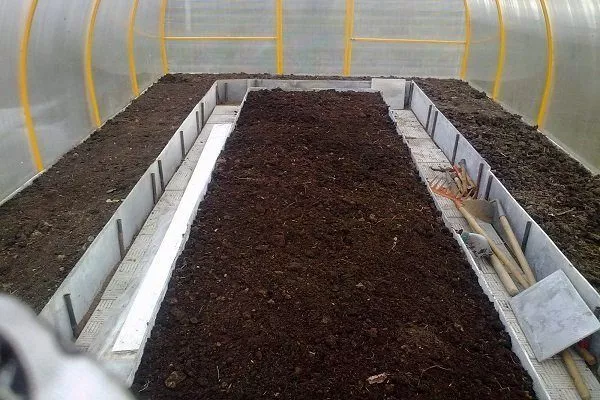
Before planting, the soil should be moist and well fertilized so that the transplanted seedlings can quickly adapt to the new growing conditions.
Sowing seeds in open ground
The direct-seeding method can be used in late spring, when the threat of further frost has completely passed and the soil has warmed to 15-16°C. In the temperate zone, this period occurs between May 25-30.
- ✓ The optimal soil temperature for sowing seeds should not be below +15°C, which is critical for germination.
- ✓ The distance between plants when planting should be at least 20-25 cm to ensure sufficient space for the root system to grow.
Sowing of hatched seeds is carried out in the following order:
- In the prepared soil, make shallow holes in advance, spaced 10-15 cm apart. The optimal distance between rows is 60-65 cm.
- Moisten the furrows and plant 4-5 seeds in each hole, ensuring 2-3 plants remain per hole. Plant at a depth of 2-3 cm.
- Cover the crops with film material, which can be removed after a few days.
The first seedlings should be thinned out 10 days after planting, leaving up to 10 cm between seedlings. A week later, the seedlings should be thinned again, increasing the distance between them to 20-25 cm.
For information on how and when to plant cucumber seedlings, see this article.
Planting through seedlings
When growing the Ecole hybrid from seedlings, it's best to use individual 0.3-0.5 liter cups, as the seedlings don't tolerate transplanting well. You can grow seedlings in individual containers in the following order:
- A soil mixture of peat, wood shavings, leaf mold, and fertile soil can be baked or treated with special products to kill pest larvae and fungal spores. To skip this step, you can purchase pre-sterilized soil at a garden center.
- Fill cups or pots with soil, plant pre-treated seeds to a depth of 2-3 cm and moisten with warm water.
- Move the containers to a warm, sunny location. A south- or west-facing windowsill is ideal.
- Cover the seedlings with plastic or glass until the first shoots emerge. Then, remove the covering, and water the seedlings regularly and generously with warm water. Of course, avoid overwatering the soil, as this can cause the fragile root system to rot.
- In cloudy weather, use a fluorescent lamp to extend daylight hours. Otherwise, the seedlings will stretch and not produce a good harvest. Supplemental lighting is also recommended in the morning and evening hours.
- To ensure rapid growth, seedlings can be fed with complex fertilizers for vegetable crops that do not contain chloride compounds.
- 10-12 days before transplanting into open ground, harden the seedlings by taking them out onto the balcony or street for several hours every day.
Once the seedlings have 3-4 true leaves, they can be transplanted to their permanent location, as they can quickly root and resume vigorous growth. At this stage, strong and healthy seedlings should have the following characteristics:
- height – no more than 30 cm;
- leaf color – dark green, without dry spots, tears or wilted areas;
- the roots are strong and undamaged, entwining the entire root ball.
It is not worth keeping such seedlings in pots any longer, since at a more mature age it will be more difficult for them to take root in the garden bed.
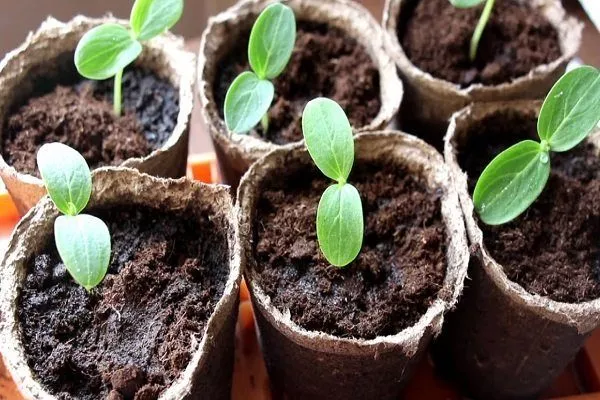
The seedlings, along with the root ball, should be carefully planted into pre-prepared holes. Seedlings grown in peat pots should be placed directly into the soil, as the pots will provide additional fertilization for the roots. The optimal planting density for this hybrid variety is 2-3 plants per square meter.
Caring for seedlings
To ensure that Ecole F1 bears fruit abundantly, it must be properly cared for, with all agricultural practices carried out in a timely manner.
Watering and loosening
Watering cucumbers Watering should be abundant and regular, as cucumbers thrive on moisture. Without it, the hybrid's yield will drop, and the taste of the resulting cucumbers will be significantly affected.
Water the bushes with warm water in the evening or morning every 3-5 days at a rate of 30 liters of water per square meter. In hot weather and during fruit setting, it's advisable to increase the frequency and intensity of watering. On rainy days, it's best to postpone watering the soil.
The best method for watering Ecole is by furrowing or sprinkling. Water should be applied carefully to avoid dripping onto the leaves, as this can cause leaf burn in sunny weather. Avoid applying too much water pressure, as this can damage the roots, which are close to the soil surface.
After each watering or rainfall, it's advisable to loosen the soil between rows to a depth of no more than 8 cm to improve air circulation. To conserve moisture, mulching the soil with grass or hay is also recommended.
Top dressing
During the development period, the hybrid needs to be fertilized several times with organic and mineral fertilizers. This should be done on moist soil and in warm weather, when the roots are actively working.
- The first feeding should be carried out 14 days after planting the seedlings, using complex mineral fertilizers.
- The second feeding should be carried out at the beginning of flowering, increasing the dose of potassium fertilizers.
- The third feeding should be carried out during the period of active fruiting, using organic fertilizers.
Ecole can be fed with organic fertilizers presented in the table:
| Fertilizer | Preparation and application |
| Horse manure | Dilute the organic matter with water in a 1:1 ratio and mix thoroughly to avoid lumps. Let it sit for 24 hours, then dilute it with 5-6 parts water and use for watering. |
| Mullein | Prepared in the same way as horse manure, but diluted with 4-5 parts water. Also used for watering. |
| Bird droppings | Unlike the previous fertilizers, after soaking for 24 hours, dilute with 8-10 parts water. Apply during irrigation. |
| Ash | It is diluted in water at the rate of 100 g per 10 l and used for watering bushes. |
As for mineral fertilizers, cucumbers should be fertilized three times per season. The application schedule is presented in the table:
| Fertilizer | Deadlines for contributions |
| 10 g of potassium salt, superphosphate and ammonium nitrate per 10 liters of water (per 4 sq. m) | On the 14th day after planting the seedlings in a permanent location. |
| 20 g of potassium salt, superphosphate and ammonium nitrate per 10 liters of water (per 4 sq. m) | 2 weeks after the first feeding. |
| 30 g of potassium sulfate per 10 liters of water (per 4 sq. m) | During the fruiting period (can be applied daily) |
Read about how to properly feed cucumbers in open ground. next article.
Tying to a support
Plant bushes must be tied to a support to ensure they grow vertically, preventing them from collapsing under the weight of their foliage and numerous fruits. If left unsupported, the vines will drag along the ground, which can lead to various plant diseases. Proper staking, however, will raise the plant toward the sun and create favorable conditions for fruit set.
When tying to a support, the plant stem needs to be twisted twice near the support, and then released downwards, 3 leaves should be added and the growth point should be pinched.
Formation of bushes
The Ecole hybrid is characterized by moderate branching of its lateral shoots. When 6-7 leaves form, the main stem should be pinched to promote the growth of the cucumbers and increase the yield of the vegetable crop. Therefore, one to two strong stems should be left and the remaining shoots should be cut back.
To ensure the bushes develop a strong root system, the buds in the internodes of the lower six leaves should be pinched off. Two to three leaf blades below the buds can be left in place. If the bush is underdeveloped, it's also advisable to remove buds from the next tier.
You can clearly see how properly formed bushes bear fruit in the video:
Protection from diseases and pests
As a preventative measure, after the appearance of three leaves and before the onset of mass fruiting, the plant should be sprayed twice with the fungicide Quadris-250 SC, using a 0.05% solution. During this period, preventative spraying of the bushes with a 0.02% solution of Farmayod also produces good results. These treatments should be performed in the evening to prevent sunburn.
Even with proper care, the plant can still become ill during prolonged inclement weather. The following diseases pose a significant threat to cucumbers:
- Powdery mildewThe plant is affected by cloudy and damp weather. The disease can be identified by a white coating on the leaves and dried leaf blades. The fungicide Thiovit Jet has proven effective in combating powdery mildew.
- PeronosporosisIt's caused by cold weather and excess moisture. It appears as yellowish-brown oily spots on the surface of the leaves, which are also covered with a gray coating underneath. To combat downy mildew, cucumbers should be treated with chemicals, including Ridomil Gold and Topaz, popular among gardeners.
- White rotIf excess moisture accumulates on shoots, this leads to the development of white rot, indicated by a white coating on the stems and fruit. All affected parts of the plant should be removed, and the wound treated with a dark pink solution of potassium permanganate and sprinkled with wood ash.
- Gray moldIt also develops in cool and rainy weather. All parts of the plant become covered with a gray, loose coating. These should be treated with Switch 62.5 WG fungicide.
- Cucumber mosaicThis is a virus transmitted by infected seeds. Symptoms include leaf shape changes and spots on the plant. Affected plants should be removed from the garden and destroyed, as the disease is incurable.
The following pests also pose a certain danger to the Ecole hybrid:
- AphidThey suck the vital juices from the leaves, causing them to shrivel, curl into tubes, and dry out. To kill aphids, the plant should be treated with chemicals such as Karbofos and Fitoverm.
- Spider miteWhen attacked by pests, the leaves become covered with light spots that gradually turn yellow. Webbing also appears on the underside of the foliage. To kill the mites, treat the plant with Vertimek. A hot infusion of potato tops can also be used for the same purpose. To prepare it, mix 1 kg of tops and 10 g of red pepper, add 10 liters of water, and let steep for 4 hours. Spray the affected plants with the solution.
- WhiteflyIt attacks the leaf blades, which eventually darken and dry out. To get rid of the pest, rinse the leaves with clean water.
To protect cucumbers from pest infestations, you need to regularly loosen and weed the soil, maintain a watering regime, and destroy all dry plant debris immediately after harvesting the last crop.
Read more about cucumber diseases, pests, and control methods in next article.
Harvesting and storage
The Ecole cucumber is one of the few vegetables that tastes great when unripe, which is why it's harvested that way. Overripe fruits are best used for seed harvesting, as they lose flavor and marketability, becoming barrel-shaped.
Hybrid gherkins and pickles should be harvested every morning or evening. Avoid twisting the stems, as this can easily damage the vines. Cucumbers are best cut with a knife or pruning shears. Any yellowed shoots or rotten leaves should also be carefully removed.
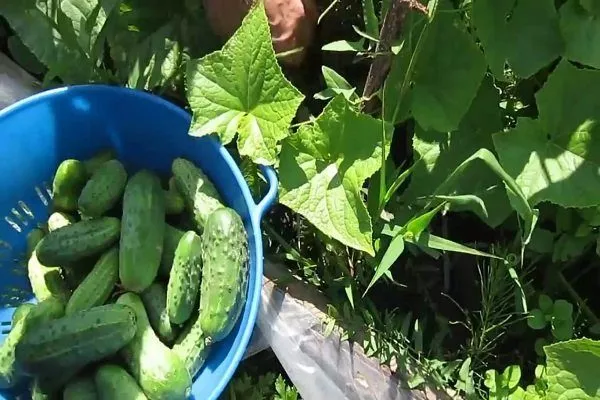
Harvested cucumbers can be stored for several days in a cool place, but discard any wilted or yellowed ones, as they are unfit for consumption. Healthy cucumbers can be eaten fresh or used for canning, given that Ecole F1 pickled and salted cucumbers are not hollow.
Pros and cons
Gardeners have come to appreciate the Ecole cucumber for its following advantages:
- has a stable and high yield (110 t/ha);
- is distinguished by intensive fruit setting (forms up to 9 ovaries from each fruiting node);
- can form fruit ovaries without pollination;
- has high resistance to tobacco mosaic virus and powdery mildew;
- the fruits are distinguished by their high marketability (the ratio of the length and width of the gherkin is 3:1);
- produces excellent pickles, sweet in taste and without bitterness.
The disadvantages of the hybrid include:
- the presence of prickly thorns on the fruits;
- loss of taste and excessive thickening of fruits when harvested at the wrong time;
- lack of tolerance to downy mildew.
Hydrid Ecole F1 is a new parthenocarpic cucumber bred in Holland with a mid-early ripening period, demonstrating excellent survival and adaptability to growing in the central Russian region. This variety is considered low-maintenance, but following all cultivation practices is essential for a good harvest.