
The Ekipazh cucumber is the ideal choice for those who love to grow their own vegetables at home. This variety is renowned not only for its excellent taste but also for its excellent resistance to various diseases and pests. By following agronomic recommendations, you can achieve a bountiful harvest of premium fruits.
Introduction to the variety
The Ekipazh F1 hybrid is suitable for a variety of growing methods, including open ground and various types of greenhouses. It is a parthenocarpic variety that does not require pollination.
Specifications:
- The hybrid is resistant to temperature fluctuations and can withstand light frosts without losing its ovaries.
- The root system is powerful and branched, which provides the plant with protection from drought.
- Crew is a variety that begins bearing fruit quickly, with ripening occurring within 35 to 42 days after germination. Fruiting peaks in July and August.
- The yield averages 11-12 kg per square meter, with a single plant yielding 6.5 to 7 kg of fruit. These figures make it an excellent choice for home gardens and small farms.

Information about origin
The hybrid cucumber variety "Ekipazh," created by breeders S. V. Maksimov, N. N. Klimenko, and O. V. Baklanova, was introduced to the market in 2015, with the application filed a year earlier. It is characterized by parthenocarpy, allowing it to bear fruit without the need for pollination.
Features of bushes, fruits, taste
The key external features and properties of the Crew f1 hybrid are as follows:
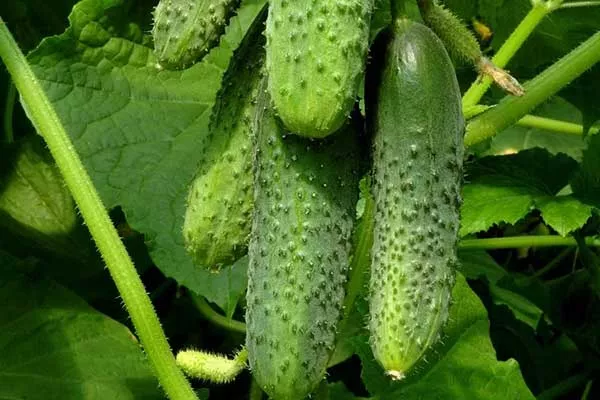
- the bushes are characterized by rapid growth and strength, have weak branching and medium density of foliage;
- the leaf blades are large, five-lobed, with sharp edges and a dark green color;
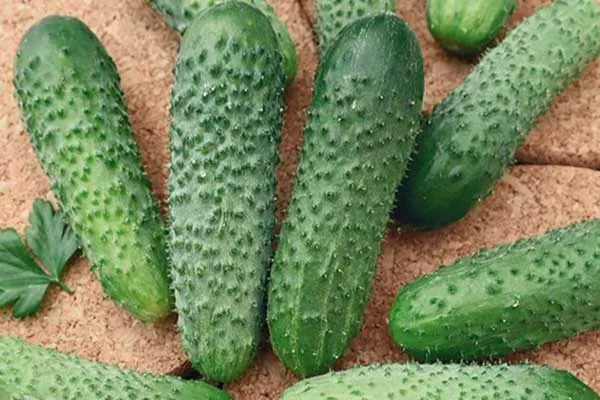
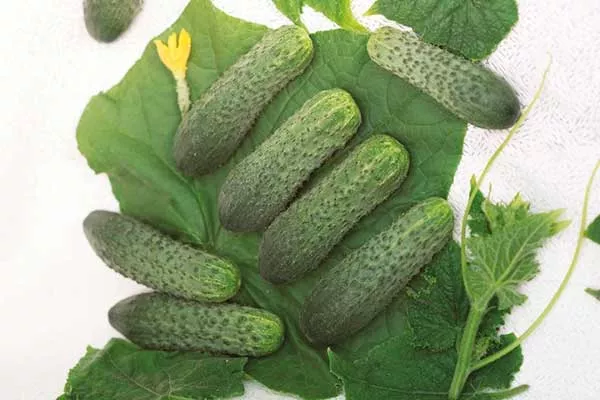
- the fruits are gherkins 11-15 cm long and 3.5 to 4.5 cm in diameter, weighing 120 to 140 g (there are heavier specimens), with a characteristic barrel-shaped form;
- the skin of cucumbers is covered with large tubercles, but it is thin, rich green in color with a white coating;
- The pulp of the Crew f1 fruit is distinguished by its dense texture and pronounced fresh aroma;
- The vegetables have a pleasant taste and a crunchy texture, making them an ideal choice for eating raw, in salads or as an appetizer;
- Cucumbers are great for pickling and preserving.
How to plant correctly?
Planting of Ekipazh F1 begins no earlier than April 13-16. This variety prefers a small but well-lit area of the garden, so that each plant receives the necessary amount of sun and warmth. Ideal precursors for it include crops such as parsley, beans, or peas.
- ✓ The optimal soil temperature for planting should be at least 15°C.
- ✓ To prevent root rot, ensure drainage and avoid overwatering.
Site preparation
For successful growth, Ekipazh F1 requires beds protected from winds and drafts. The variety has a strong and extensive root system, so it thrives in loose, light, well-aerated soil.
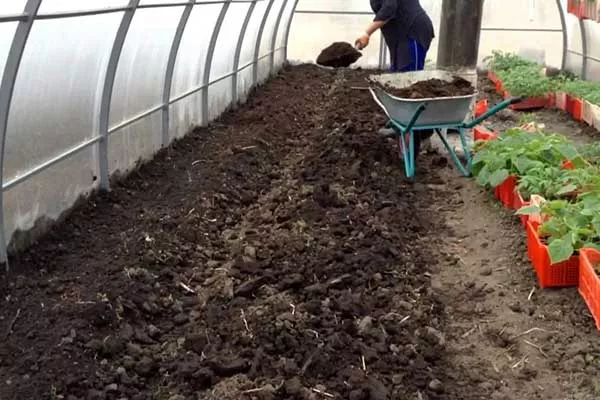
The preparatory activities are simple:
- In autumn, dig up the soil for the cucumber to a depth of 45-60 cm.
- Spray with Trichodermin solution for disinfection.
- Add charcoal or compost/humus.
- In the spring, before sowing, get rid of weeds, loosen the surface of the garden and fertilize with manure.
Germination of seeds for seedlings
Before germination, the seed material is soaked for about 15-25 minutes in a weak salt solution (during this time, the hollow grains will float to the surface, and those suitable for growing will fall to the bottom of the container).
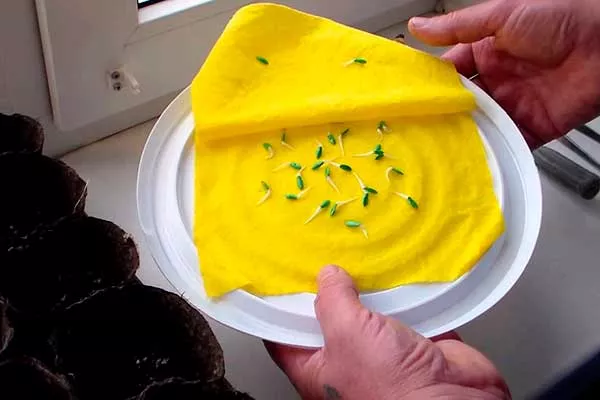
Sowing features:
- Seed planting begins on April 15-20.
- Place one seed at a time into a peat tablet or container to a depth of 1.5 cm.
- The container must be covered with glass or plastic film, but periodically opened for ventilation and humidification.
- Crops require a lot of light, so the plantings are additionally illuminated from above with phytolamps.
- Water the sprouting cucumber every other day.
Transfer of bushes
Cucumber seedlings should be transplanted into open ground approximately 22-25 days after the first shoots appear. By this time, the plant should have developed three full leaves.
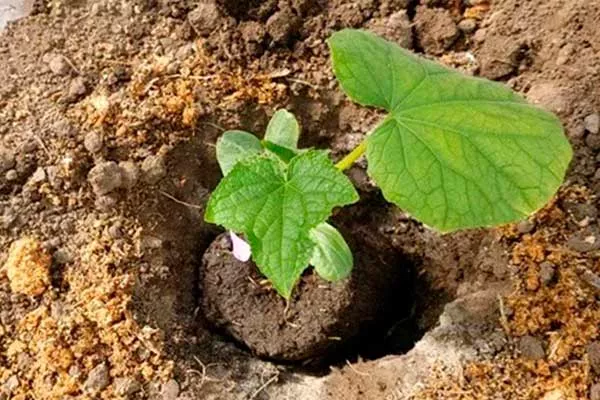
Key aspects:
- Transfer young plants to a warm, but not hot, cloudy day when there is no strong wind or rain.
- It is necessary to leave a gap of 35-40 cm between plants of this variety, and 70-80 cm between rows.
- The optimal planting density is 20-30 plants per 10 sq. m.
- After the bushes are planted, they should be carefully earthed up, while leaving the top leaf intact, and watered.
Care methods
The Ekipazh f1 variety doesn't require complex or expensive care. Its bushes are moderately branched and compact, allowing young shoots to grow at a moderate pace. As a result, instead of creating side shoots, simply pinching the tops at 140-150 cm is sufficient.
Watering
Water the bushes every three days, or daily during hot, dry summers. Water should be clean and soft, having been left in the sun for at least 30-40 minutes.
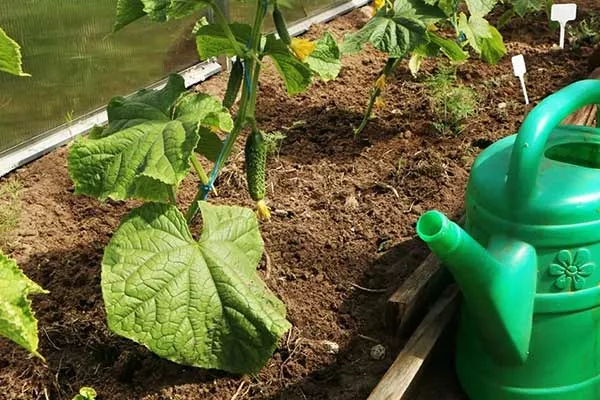
The optimal irrigation option is drip irrigation, but it is important to turn on the system only early in the morning to avoid drips falling on the green mass.
Nutrition
To ensure a bountiful harvest with excellent flavor, the Ekipazh F1 hybrid is fertilized approximately four times throughout the growing season. The fertilization system is as follows:
- Carry out the first procedure 3-4 days after transplanting the plant to a permanent location, using chicken manure for this.
- Carry out the second stage of fertilization before the start of budding, using either nitrophoska or sodium sulfate.
- After flowering is complete, a third feeding should be carried out, for which use ash powder or humus.
- The final feeding occurs at the beginning of fruiting: add ammonium nitrate or urea solution to the bed.
- A week after transplanting, apply a complex mineral fertilizer with a predominance of nitrogen.
- At the beginning of flowering, use fertilizer with a high content of phosphorus and potassium.
- During fruiting, apply potassium fertilizers to improve the taste of the fruit.
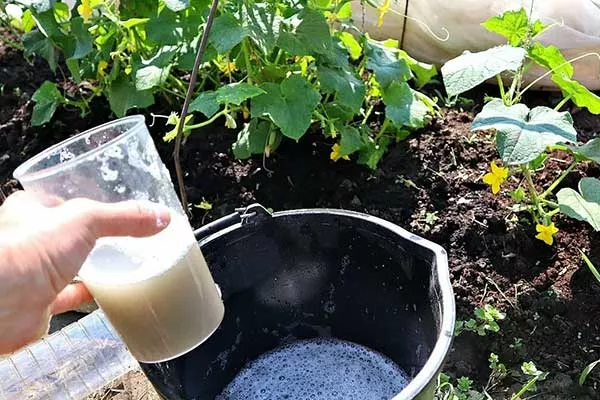
The optimal interval between these procedures is approximately 10-12 days. It's important to ensure the plant is disease-free before each application of fertilizer, as some additives can exacerbate disease problems.
Dangerous diseases and pests
The F1 crew boasts strong disease resistance thanks to its robust immune system. It is resistant to diseases such as powdery mildew, olive spot, and cucumber mosaic.
However, the gardener should be alert to the risk of root rot and pest attacks:
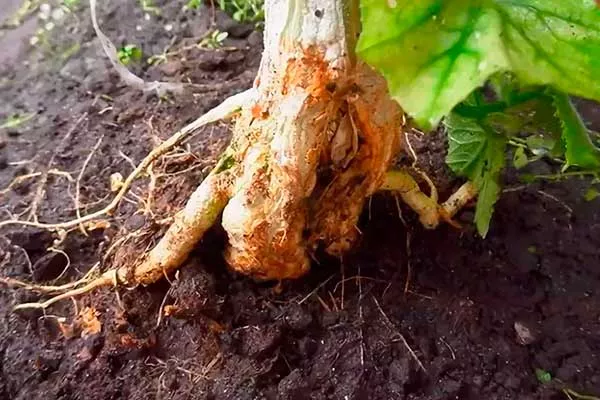
- Root rot. This problem most often occurs in heavy soils, during rainy summers, or when the area around the trunk is overwatered. Gray-beige growths and wet ulcers appear on the roots of the plant. The cucumbers' appearance deteriorates, and they begin to dry out and rot.
To combat the disease, use a solution of chalk and copper sulfate, sprinkle the affected areas with ash or coal powder and stop watering for several days.
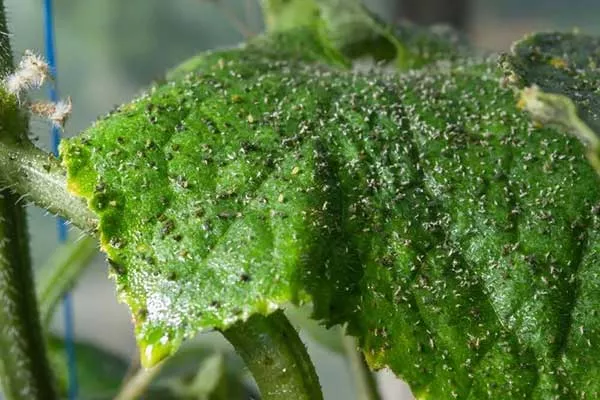
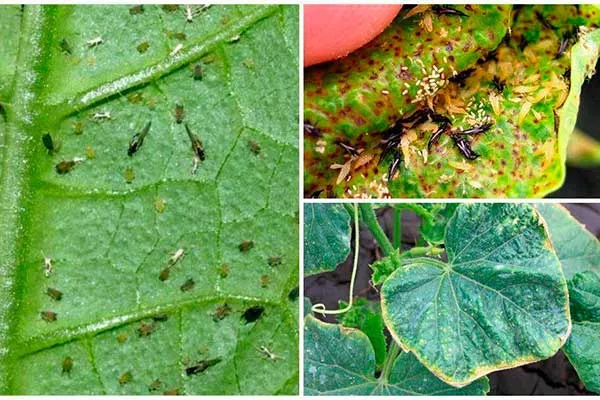
- Aphid. These small, gray-brown insects attack cucumbers during the hot, humid summer months. Whitish spots and holes appear on the leaves, as if they've been scorched. To control aphids in your garden, purchase Tanrek or Biotlin.
As a preventative measure, plant mustard, yarrow, or celandine around the Crew f1 in early spring. When the first flowers appear, spray the beds with garlic infusion for additional protection.
- Thrips. These tiny pests often establish themselves in gardens where beds and walkways are not sufficiently cleared of weeds. Signs of thrips infestation on cucumbers can be identified by light spots and distorted leaf shapes.
To protect the Ekipazh F1 hybrid from pests, purchase Prestige or Matador. However, the most effective way to prevent thrips is to treat the plants a few days before budding.
How to collect and store correctly?
The hybrid's fruits begin to ripen around June 10-20. Since the harvest ripens gradually, it's sufficient to harvest the cucumbers every three days. The vegetables are best harvested in the evening or early in the morning after watering. The fruits should be cut carefully, leaving a portion of the stem attached.
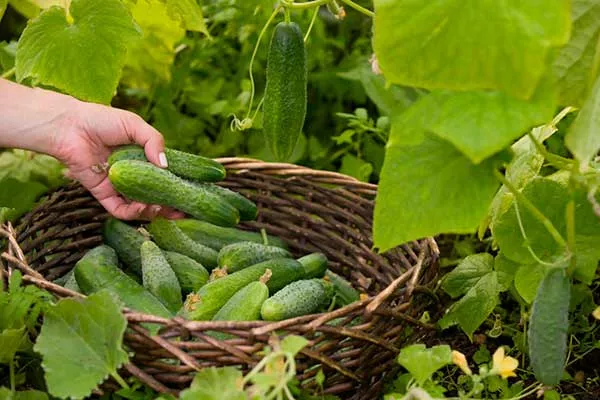
Wipe the surface gently with a dry cloth, place it in a loosely sealed plastic container, and refrigerate. At a temperature of approximately 7-9°C, Crew F1 fruits can remain fresh and juicy for up to 5-6 days.
Positive and negative qualities
The crew has become popular with our gardeners and farmers for its many advantages, among which the following stand out:
There is one drawback: the inability to collect seeds independently due to the hybrid form of the variety.
Reviews
The Ekipazh F1 hybrid is suitable for a wide range of growing conditions, including open ground and greenhouses. This variety is parthenocarpic, allowing it to self-pollinate. The fruits are attractive in appearance and flavor, ideal for fresh cooking and canning.