
The Effect cucumber is an ideal choice for gardeners seeking a bountiful harvest of tasty, juicy vegetables. This salad cucumber is known for its generous yields and excellent flavor. Its fruits are characterized by their elongated shape, self-pollination, and hybridity.
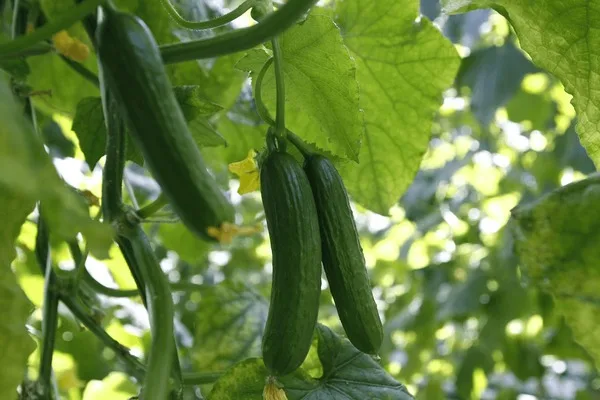
Introduction to the variety
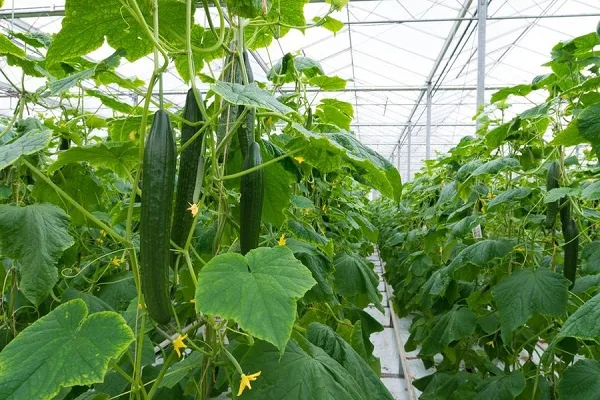
This cucumber is a hybrid crop and is characterized by its ability to self-fertilize, making it ideal for greenhouse cultivation. It boasts high consumer qualities and is considered one of the most successful options for film-based farming.
Cucumber yield depends on various factors. For example:
- In the first light zone reaches 22-25 kg/sq. m, which exceeds the performance of standard varieties (Stella F1 and Villina F1) at 20-21 kg/sq. m.
- In the third zone The fruiting of popular high-yielding varieties (Sharm F1 and Stella F1) reaches 24-28 kg/sq.m, while for Effect it is 24-25.5 kg/sq.m.
- In the fourth zone This hybrid is capable of producing a yield of 30-36 kg/sq.m.
Effect cucumbers exhibit high resistance to various diseases, including Cladosporiosis (brown olive spot) and Ascochyta blight. However, to ensure maximum plant protection, regular watering, fertilization, and preventative treatments are recommended during the growing season.
Originators
Effect is a hybrid cucumber variety created by a team of specialists: Lyubov Vasilyevna Suchkova, Anna Pavlovna Ivanova, Iraida Dmitrievna Popova, Zinaida Nikolaevna Zinatova, and Natalya Alekseevna Khokhlova.
Characteristic features of the appearance of the plant and fruits
The medium-sized cucumber bush is adorned with large, bright green leaves with barely noticeable wrinkles. The leaf edges are slightly curved. This plant is a female flowering plant, producing one to three female buds at each node.
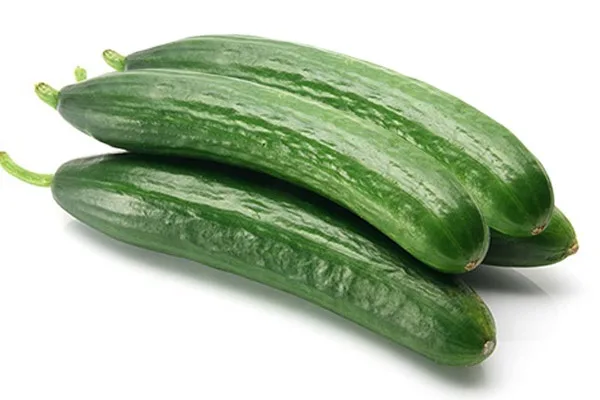
The crop has a cluster-shaped structure. The varietal green cucumbers, cylindrical in shape, average 25 cm in length and weigh approximately 190-220 g. They have a smooth surface and are free of white stripes.
Purpose and taste
The hybrid's fruits have a flavor that can be described as slightly sweet with a hint of spiciness. They are juicy and have a delicate texture, making them ideal for salads and sliced dishes. They are not ideal for pickling or canning.
Growing and care
Cucumbers of this variety prefer loose, air- and water-permeable soils with a neutral or slightly acidic pH. Before planting the vegetable seeds, add compost or humus/rotted manure to the soil.
- ✓ Soil pH should be in the range of 6.0-6.8 to ensure best nutrient absorption.
- ✓ Test your soil before planting to determine if lime or sulfur is needed to adjust pH.
To ensure cucumbers develop quickly, it is important to maintain a special microclimate in the greenhouse:
- Daytime temperatures should fluctuate between 20 and 27 degrees, and at night between 16 and 19 degrees.
- High air humidity in the region of 60-70% is also preferable.
- Plants require intense lighting, which can be achieved with the help of phytolamps.
Reviews
Effect cucumbers are considered mid-season, high-yielding, and produce a long, continuous crop. They are characterized as resistant to diseases and harmful insects, and don't even require bees for pollination, a key advantage when grown in greenhouses.