
The Donchak cucumber variety is an ideal choice for gardeners seeking a bountiful harvest of cucumbers with excellent flavor. This hybrid is resistant to diseases and pests, making it especially appealing to organic food lovers.
Introduction to the variety
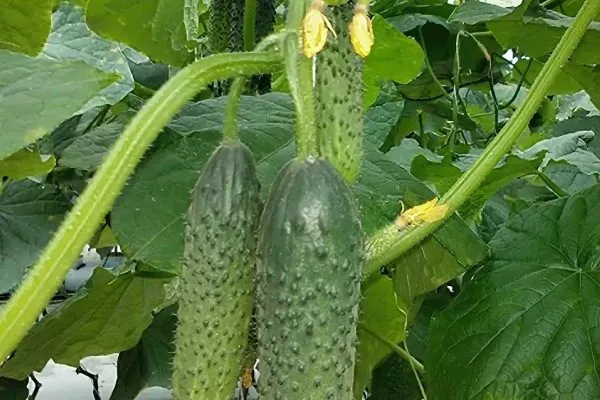
Donchak f1 is an easy-to-grow, all-purpose variety that belongs to the medium-ripening group. Fruits reach maturity 40-45 days after planting. It grows well both under temporary plastic cover and in greenhouses, yielding 15.5-16.5 kg per square meter.
- ✓ Parthenocarpy: does not require pollination for fruit formation, which is critical for greenhouse cultivation.
- ✓ Predominantly female flowering type: increases yield due to a greater number of ovaries.
Other characteristics:
- Due to their good transportability, the fruits are suitable for long-distance transportation.
- To achieve good results when growing cucumbers, it is important to provide the plant with sufficient light and heat, as well as regular watering and application of mineral fertilizers.
- The variety is distinguished by its parthenocarpy and versatility in use – it is suitable for both salads and canning.
- The plant is indeterminate, with minor branching and predominantly female flowering, with 3-4 buds in each node.
Originators
The hybrid cucumber variety Donchak was developed by the Scientific Research Institute for Vegetable Crop Breeding. The application for approval, registration number 65795, was submitted on November 26, 2014. In 2015, this variety was added to the list of varieties approved for use.
Developers of the variety: Sergey Fedorovich Gavrish, Anna Vyacheslavovna Shamshina, Valery Nikolaevich Shevkunov, Nina Nikolaevna Khomchenko, Tatyana Yakovlevna Surovova, Ivan Sergeevich Pluzhnik, Konstantin Olegovich Chaykin.
Characteristic features of the appearance of the plant and fruits
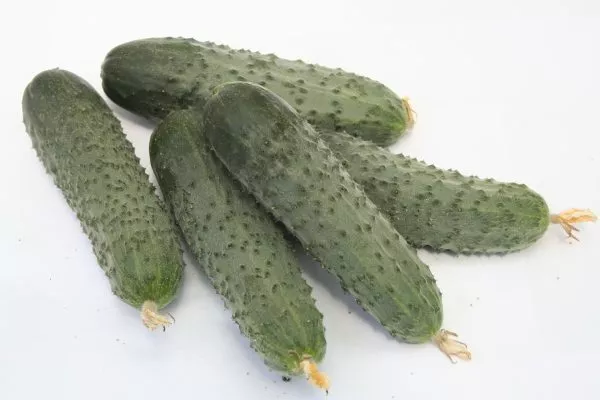
The standard size of the Donchak f1 gherkin ranges from 11 to 14 cm in length, weighs from 115 to 145 g, and has a diameter of 3.0-3.5 cm. Thanks to its well-developed root system, this variety resists drought due to its good moisture absorption.
Key features of the hybrid:
- The bush is distinguished by thick, strong stems, moderate branching and abundant foliage.
- The leaf blades are large, have a triple structure and a deep green color, and are practically not curved.
- The fruits are short gherkins with a smooth cylindrical shape.
- The cucumber skin is firm, with distinct black bumps and light-colored spines, and is colored a rich marsh color.
- Cucumbers have short strokes.
Application and taste
The fruits of this hybrid are distinguished by their sweet flavor, refreshing aroma, and juiciness, without bitterness. They are ideal for canning, retaining their firmness and freshness even after a year in marinade.
Planting subtleties
The Donchak f1 hybrid prefers large plots with fertile black soil or moderately clayey soil. Before planting, the soil should be thoroughly cultivated, disinfected with Fitosporin, and enriched with an organic mixture based on cow manure.
- ✓ The optimal soil temperature for planting should not be below +16°C, which is critical for preventing stress in plants.
- ✓ Use only settled water warmed to 25-26°C for irrigation to avoid shock to the root system.
Please pay special attention to some nuances:
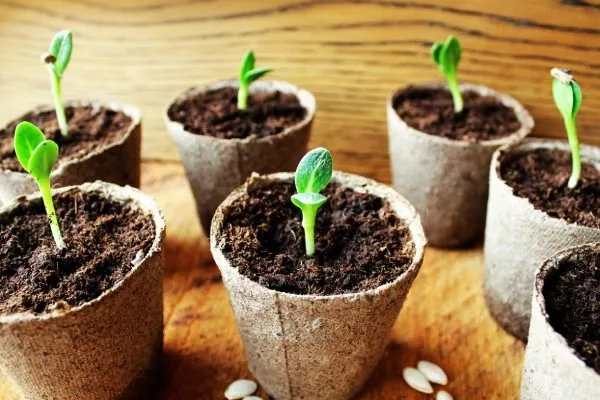
- It is recommended to sow seeds for seedlings from April 15-20, using peat tablets or pots.
- Add sand, compost and wood ash to the soil mixture intended for growing cucumbers to improve its nutritional properties.
- The seedlings are transplanted to a permanent location after a month, but only when the soil temperature has stabilized at +16-18 degrees.
- For this variety, it is optimal to place three plants per 1 sq. m.
- The distance between rows should be 65-75 cm, and between plants in a row – 40-45 cm.
- The sowing of the hybrid is completed by abundant irrigation with warm water.
Care nuances
Plants require regular care: weed and loosen the soil to a depth of 20 cm every week. Water twice a week, directly at the roots, in the evening. Water for irrigation should be preheated to 25-26 degrees Celsius and allowed to settle in the sun.
The hybrid is fed four times per season. The first feeding occurs when the third leaf appears, and the remaining ones are done at 10-day intervals. The following components are preferred:
- potassium nitrate;
- Superphosphate;
- nitroammophoska;
- boric acid;
- chicken manure;
- onion peel.
Dangerous diseases and parasites
The Donchak f1 cucumber variety boasts good resistance to diseases such as cucumber mosaic, fusarium wilt, and copperhead. However, there is a risk of developing the following problems:
- Powdery mildew. This fungal disease attacks in conditions of high humidity and heat. A characteristic grayish-white coating appears on the leaves. To combat powdery mildew, use fungicides such as Baktofit or Albit.
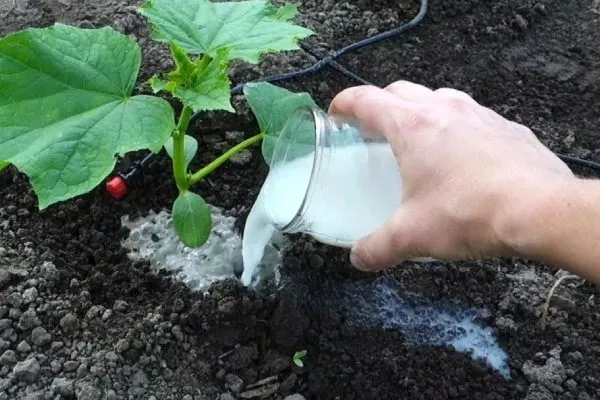
Ammonia fertilizers and whey sprays provide effective protection against this disease. In greenhouses, ventilation and formalin treatment of the walls are recommended to prevent the spread of the disease. - Root rot. The Donchak f1 hybrid has a strong and extensive root system. However, a lack of nutrients or watering with cold water can trigger the development of root rot. This disease manifests as grayish-brown rotten growths on the roots and lower stems.
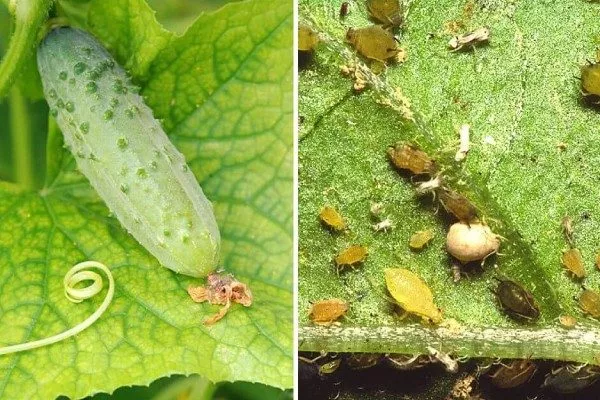
To treat infected plants, it is recommended to soak the roots in a hot solution of potassium permanganate for 10 minutes. To prevent infection, treat the soil under the seedlings with Trichopolum. - Aphid. Greenish-gray insects can infest garden beds during dry, hot summers. Signs of infestation are easy to spot: holes with brown edges remain on the leaves.
Topsin, Maxim-M, or Biotlin are suitable for pest control. To repel aphids from Donchak f1 beds, you can surround the area with strongly scented plants, such as allspice, tobacco, or celandine.
Harvesting and storage
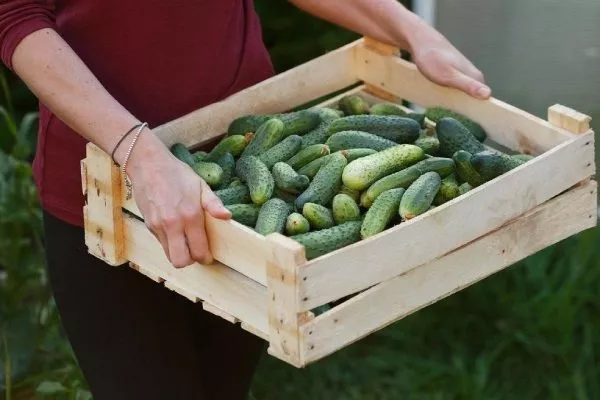
The fruits of this hybrid ripen quite quickly and have a tendency to overripe, so it is recommended to cut them regularly, preferably every day and in the evening.
To harvest cucumbers, use sharp scissors, cutting the fruits 15 minutes before watering, after which they should be stored on a shelf in the refrigerator at a temperature of about 6 degrees.
Positive and negative qualities
The cultivar's creators emphasize its growing advantages. However, experience shows that this variety also has its drawbacks.
Advantages:
Reviews
The Donchak f1 cucumber is characterized by gherkin-type fruit development and an indeterminate bush. This variety easily adapts to various soil types, is rarely susceptible to fungal diseases, and boasts a refreshing, pleasant flavor. It is versatile in use.