
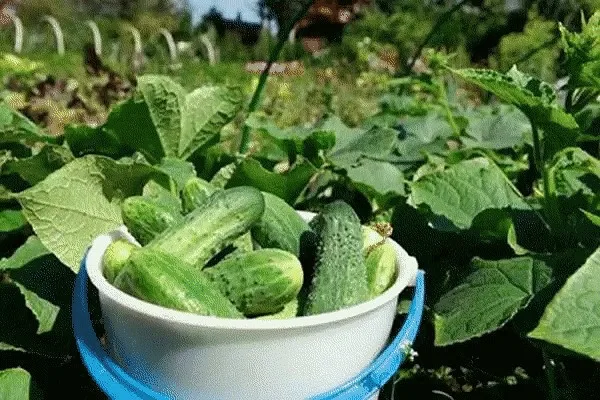
The Dachnik cucumber is characterized by bee pollination and parthenocarpy. It is renowned for its generous yields, resistance to a wide range of diseases, and excellent transportability. Furthermore, Dachnik is noted for its excellent taste and hybridization.
Introduction to the variety
This cucumber can easily tolerate short-term temperature drops. It quickly adapts to a variety of weather conditions, even dry and hot summers.
Moreover, the hybrid does not require complex care and can grow on various types of soil; it is enough to simply follow basic agricultural recommendations.
History of origin
The developers of this unique hybrid are Russian breeding specialists. The founders of the new variety are A. N. Lukyanenko, S. V. Dubinin, and I. N. Dubinina.
In 2012, the Dachnik variety was officially approved for agricultural use. It currently produces fruit throughout the Russian Federation.
Characteristics of the appearance of the plant and cucumbers
This variety is a vigorous, indeterminate bush with moderately developed branching. Its leaves are a rich green hue and medium in size, with only slightly wrinkled leaflets.
- ✓ The ability to parthenocarpy allows you to obtain a harvest without pollination.
- ✓ Resistance to a wide range of diseases reduces the need for chemical treatments.
Other varietal characteristics:
- The hybrid is prone to vigorous growth.
- The plant is usually pollinated by bees, with female flowering predominating. During fertilization and subsequent development, the plant can function without male elements, that is, without pollen.
- The ovaries are formed in a group, with one to two ovaries formed at each node.
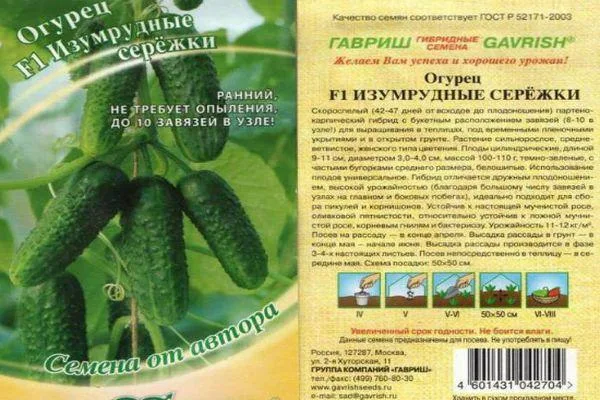
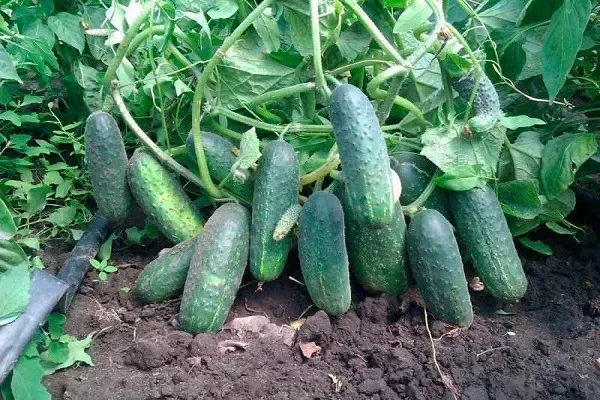
- Cucumbers have a shortened shape, their length ranges from 8 to 11 cm, and the weight of one cucumber is from 65 to 90 g.
- The fruits are cylindrical in appearance with a slightly pointed tip, covered with green lines with large tubercles distributed over the entire surface, which can be of medium size.
- Soft spikes in light tones.
- Beneath the thin but tough skin lies dense, crisp flesh.
Taste and purpose
Cucumbers, with their pleasant flavor, are most often eaten fresh. They make a wonderful addition to salads. Furthermore, the fruits are suitable for canning, retaining their attractive appearance, excellent flavor, and characteristic crunch after cooking.
When ripe, the yield
This cucumber variety is characterized by its rapid ripening time. It begins to produce fruit no later than 45 days after the first green shoots appear. In an unheated plastic greenhouse, a yield of 13-13.2 kg can be expected from a 1 square meter area.
Diseases and pests
The Dachnik variety is distinguished by its good resistance to various diseases and destructive insects. It is rarely susceptible to problems such as bacterial blight and cladosporiosis. Infected plants should be treated with bactericidal agents.
Sometimes, spider mites, whiteflies, and aphids may appear on bushes. To effectively control pests and restore plant health, biological insecticides are recommended.
Positive and negative qualities
One of the notable advantages of this hybrid variety is its tendency to bear fruit early, producing fruits that are not only sweet in taste but also attractive in appearance. Key benefits:
The only downside to this crop is the need to purchase seeds annually. It's impossible to obtain planting material from harvested cucumbers that would retain all the variety's advantages. This is due to the hybrid nature of the variety.
Landing rules
To start growing cucumbers, you can sow seeds directly into the garden bed. However, the most effective method for this cucumber variety is to use seedlings.
- ✓ The optimal soil temperature for sowing seeds should not be below +15°C.
- ✓ The distance between plants when planting should be 30-40 cm to ensure sufficient space for growth.
Peculiarities:
- Bury the disinfected seeds to a depth of about 2 cm.
- Transplant the seedlings into open ground when the danger of spring frosts has passed, which usually happens in May.
- Choose a planting location that receives plenty of sun and is free from drafts and winds.
- Cucumber seedlings easily take root in various types of soil, but the ideal option is moderately loamy soil with good air exchange.
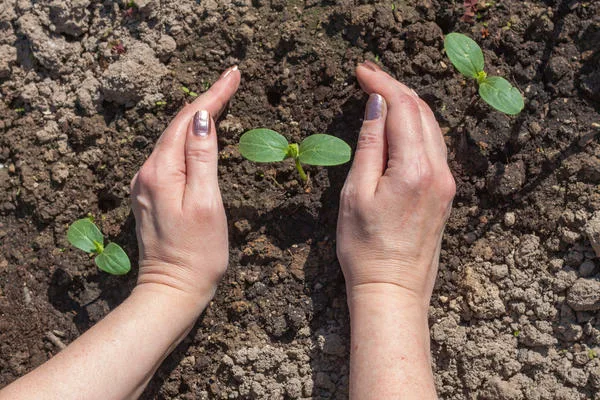
- Once 3-4 true leaves appear on the plant, they are ready for transplanting to a permanent location.
Planted plants should be watered intensively and temporarily covered with protective material.
Care activities
Caring for cucumbers doesn't require much effort from gardeners. Water at a temperature of 24 to 27 degrees Celsius (75 to 80 degrees Fahrenheit) is applied to the root zone after sunset. A drip irrigation system is recommended to prevent water from getting on the leaves and stems.
It's important to avoid both drying out and overwatering the soil. Increase watering during hot weather. After each watering, lightly loosen the soil around the roots to provide oxygen to the root system.
Other care procedures:
- During the growing season, feed cucumber bushes two or three times; preference is given to mineral fertilizers that dissolve well in water.
- Use stakes to support tall cucumber plants. Under plastic, cucumbers are secured to special trellises, and in open beds, to netting. The vines should be properly secured and distributed to ensure uniform light distribution.
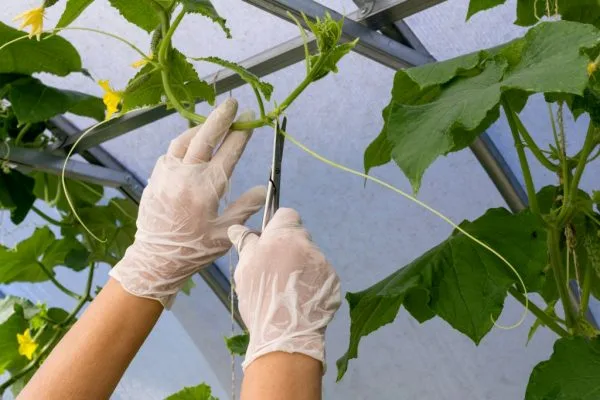
- In the first four axils, remove all ovaries and side shoots. In the next three axils, leave one leaf and one green leaf on each lateral stem. All other lateral branches are not pruned or removed.
- To prevent infection and pest infestation, spray the bushes with Bordeaux mixture.
Experts emphasize the importance of using tobacco or garlic solutions as a preventative measure. Damaged shoots, dried leaves, and weeds should be carefully removed to prevent pest infestations and egg-laying.
Reviews
Dachnik cucumbers are characterized by a strong immune system, impeccable taste, and small fruit sizes that exude a fresh cucumber aroma. This variety is easy to grow, simple to care for, and capable of producing generous harvests when standard agricultural practices are followed.