
Bridge F1 is a Dutch cucumber hybrid. Domestic vegetable growers have appreciated its productivity, early maturity, strong immunity, and adaptability to various soil and climate conditions. It is grown outdoors (with or without temporary plastic cover) for both private and commercial consumption.
Introduction to the variety
This vegetable variety is parthenocarpic. Its bushes produce only female flowers. They are self-pollinating, requiring no bees.
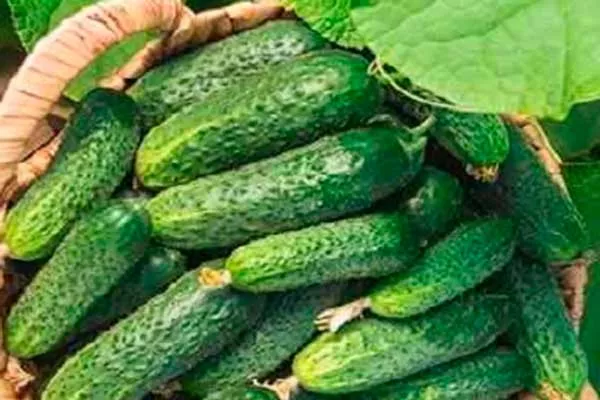
Bridge F1 is an early-ripening hybrid. The crop ripens within 38-42 days after germination. The bushes bear fruit for a long time. Gardeners harvest cucumbers from June to October. From 1 square meter of open garden bed, they obtain 4.9 kg to 6.1 kg of gherkins. In an unheated plastic shelter, the yield increases to 20.0-22.3 kg/1 square meter.
Other technical characteristics of the hybrid cucumber are as follows:
- resistance of bushes to stress, unfavorable growing conditions, and sudden weather changes;
- cold resistance;
- shade tolerance;
- resistance to damage by cladosporiosis and cucumber mosaic virus;
- excellent field hardiness (plants remain healthy until the end of the season);
- Possibility of growing in 2 rotations (spring and summer).
Originators
Bridge (or Bridsh) F1 is a new variety bred abroad. It was developed by researchers at the breeding company Rijk Zwaan Zaadteelt En Zaadhandel BV (Netherlands). In 2020, it was included in the Russian Federation state register and recommended for cultivation in the following regions:
- Northern;
- North-West;
- Central;
- Volga-Vyatka;
- Central Black Earth Region;
- North Caucasian;
- Middle Volga;
- Lower Volga;
- Ural;
- West Siberian;
- East Siberian;
- Far Eastern.
External characteristics of the plant and cucumbers
The Bridge hybrid bushes are vigorous and vigorous, and are indeterminate. They are distinguished by a well-developed root system and a high capacity for regeneration. They have the following external characteristics:
- the length of the main stem is 2 m;
- medium degree of branching;
- strength of the vine;
- short internodes;
- powerful foliage apparatus;
- Leaves are dark green in color, medium in size.
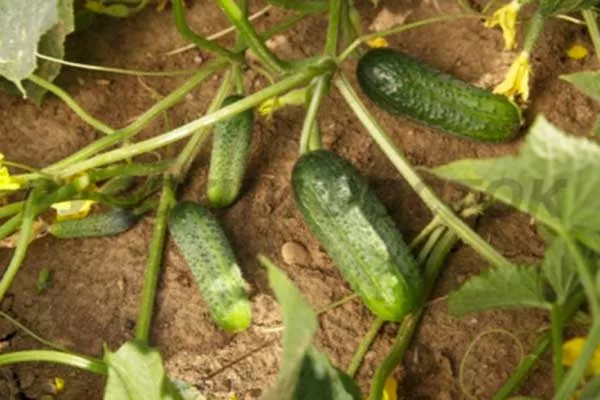
Each node on the plant produces 1-2 gherkins. When ripe, they are picked at the gherkin stage. The fruits are uniform, neat, and marketable. They have the following characteristics:
- small in size (up to 8-12 cm in length);
- length to diameter ratio of 3:1;
- weight - 90-120 g;
- cylindrical shape;
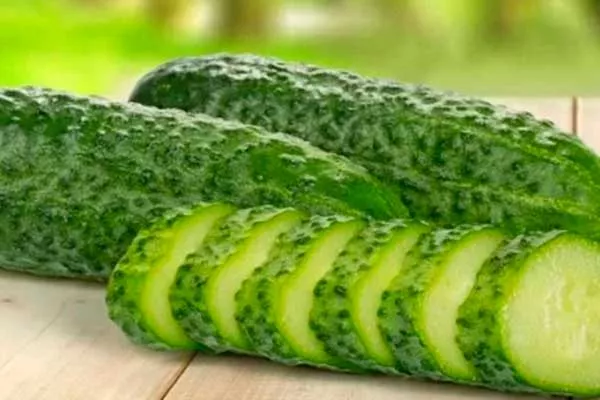
- highly tuberculate surface (large tubercles);
- dark green skin with a barely distinguishable pattern of short stripes of a slightly lighter shade;
- homogeneous and evenly colored pulp of salad color, dense and crispy;
- small white seeds that are not felt by the eater.
Taste and purpose
This Dutch hybrid is renowned for its excellent flavor. These cucumbers are aromatic, crisp, slightly sweet, and not at all bitter. They are ideal for fresh consumption, salads, canning, and pickling.
Positive and negative qualities
This new Dutch variety has become a favorite among domestic gardeners and farmers growing vegetables for sale, thanks to its many advantages:
Vegetable growers consider the only drawback of this hybrid to be the inability to harvest the seeds themselves. Parthenocarpic plants do not produce fruits with seeds suitable for propagation.
How to grow it yourself?
Domestic gardeners grow Bridge cucumbers in open ground, either with or without temporary plastic cover. They use one of two cultivation methods:
- seedling;
- direct sowing of seeds into garden soil.
- ✓ The optimal soil temperature for sowing seeds should not be below +15°C, which is critical for their germination.
- ✓ To prevent diseases, it is necessary to ensure good air circulation around the plants, which is especially important under film cover conditions.
Preparing the garden bed
Set aside an open, level, and sunny area in your garden for cucumbers. Ensure it receives partial shade during the hottest part of the day. Prepare it for vegetable planting in the fall:
- clear away plant debris;
- dig deep;
- remove weed roots;
- fertilize with organic matter, for example, compost (consumption rate is 3-7 kg per 1 sq. m), add ash.
In the spring, water the soil with a hot solution of potassium permanganate. Then dig it over again. Level the soil, form furrows, or make planting holes.
Germination of seeds
Sow seeds for seedlings in the second half of April or early May. There's no need to pre-treat them with growth stimulants or disinfectants. The manufacturer has already taken care of this. They have excellent germination and are resistant to diseases and pests.
If desired, you can germinate the seeds by wrapping them in a damp cotton cloth and leaving them in a warm, dark place for several days. Do not allow the cloth to dry out. Once sprouts appear, begin sowing. Plant 1-2 seeds per cup filled with nutritious potting mix. Plant them 1.5-2 cm deep.
Provide crops with a favorable temperature for their growth and development:
- + 23-25°С — until emergence;
- +18-20°C — after the sprouts have emerged en masse.
Keep the seedling containers on a sunny windowsill. Use a light-diffusing screen to protect the seedlings from direct sunlight. The recommended daylight hours are 16 hours (supplemental lighting with phytolamps is required).
Planting seedlings
Plant the grown and strengthened seedlings in the garden bed when they reach 25-30 days of age. The soil should be warm. Follow the planting pattern:
- place no more than 3 plants per 1 sq.m.;
- maintain a distance between them in a row of at least 30 cm (preferably 40-50 cm);
- row spacing is 50-60 cm.
Care methods
With proper care, the Dutch hybrid will thrive and develop, delighting you with abundant fruiting. This standard care includes the following procedures:
- watering;
- top dressing;
- preventive treatment against diseases and pests.
Don't neglect to loosen the soil after watering the beds. This improves soil aeration. Combine this with weeding. Don't be lazy about mulching the beds with organic matter to retain moisture, enrich the soil with nutrients, and prevent weed growth.
Watering
Water the Bridge hybrid plantings with warm, settled water (temperature not below 25°C). Use 4-5 liters per square meter for young plants and 8-12 liters per square meter for mature fruiting bushes. Recommended watering frequency:
- twice every 7 days is the average;
- Once every 5 days - at the initial stage of growth, before flowering;
- 3 times a week - after the formation of ovaries.
Top dressing
During the growing season of the vegetable crop, carry out at least 3 additional feedings:
- On the 12th-15th day after the sprouts have emerged, water them with a solution of mullein (1:10) or bird droppings (1:20) to stimulate the development of bushes and the growth of green mass (it is acceptable to replace organic matter with the following mineral composition: 20 g of ammonium nitrate, 10 g of potassium sulfate, 10 g of superphosphate, 12 liters of water);
- at the time of budding, feed the hybrid planting with a solution of potassium nitrate (30 g per 10 l) with the addition of Superphosphate (40 g);
- At the beginning of the fruiting period, fertilize the cucumber bushes with a solution of nitrophoska (15 g per 10 l of water) or potassium nitrate (25 g per 10 l).
To sweeten cucumbers, additionally feed the fruiting plantings of the hybrid with compositions prepared according to folk recipes:
- Yeast feedingTo make it, take 30 g of dry yeast, 10 liters of water, and 100 g of granulated sugar. Mix the ingredients. Let the mixture sit for 5 hours.
- Ash infusionPour 100 g of ash with water (10 l). Let it steep for 10 hours. Strain.
Diseases and pests
Bridge F1 is resistant to many infections, particularly the mosaic virus and olive spot. Its bushes rarely suffer from diseases and pests (aphids, spider mites, leaf rollers, and others). With proper care and favorable growing conditions, gardeners do not experience such complications.
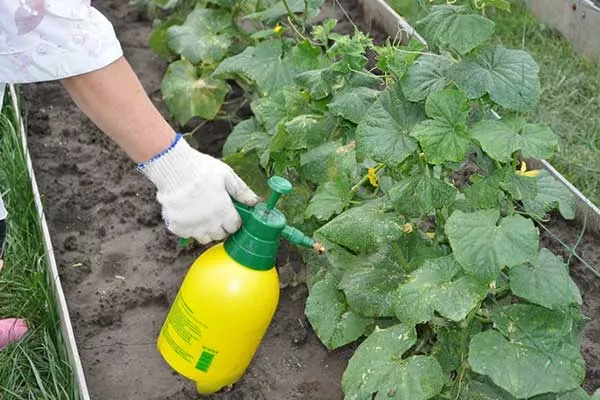
To strengthen the immune system, carry out preventative spraying of the cucumber bed with fungicides (Radomil Gold, Quadris, Healer, Efatol) or folk remedies (milk-iodine solution, onion peel decoction, garlic and tobacco infusion). Give preference to biological products:
- Fitosporin-M;
- Baikal;
- Fitoverma.
Harvesting and storage
Harvest the Bridge hybrid cucumbers manually or mechanically using special harvesting platforms. Do this every other day or daily. Do not allow the cucumbers to become overgrown. Take care not to damage the vines when picking the gherkins.
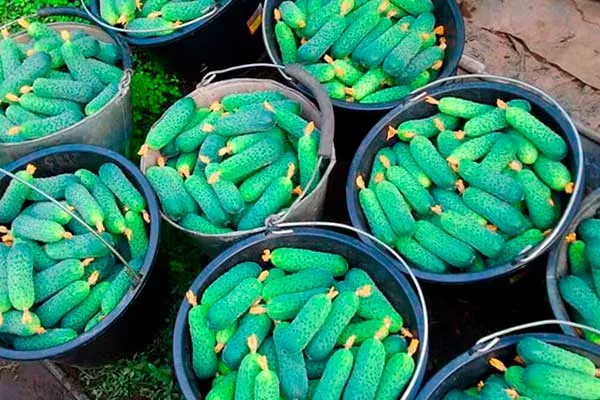
Store the harvest for 14 days under the following conditions:
- temperature - not lower than +10°С and not higher than +15°С;
- dry and dark place.
Reviews
Bridge F1 is a popular Dutch hybrid that impresses domestic gardeners with its low maintenance, stress tolerance, high yield, and ability to grow twice a season. With proper minimal care, its bushes produce abundant fruit, producing many beautiful and delicious fruits.