
The Berendey cucumber is a domestic hybrid suitable for growing in gardens, greenhouses, and even on balconies. This variety is prized by gardeners for its excellent flavor, hardiness, and versatility.
Description of the variety Berendey
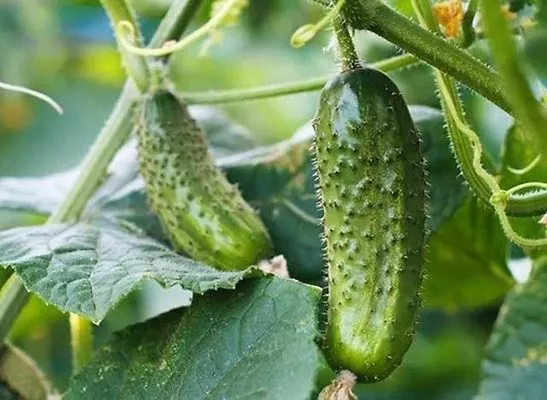
The plant is indeterminate (having unlimited growth of the main stem). The leaves are medium-sized and green, the flowers are predominantly female, branching is moderate, and fruiting occurs in clusters. Each cluster contains at least three cucumbers.
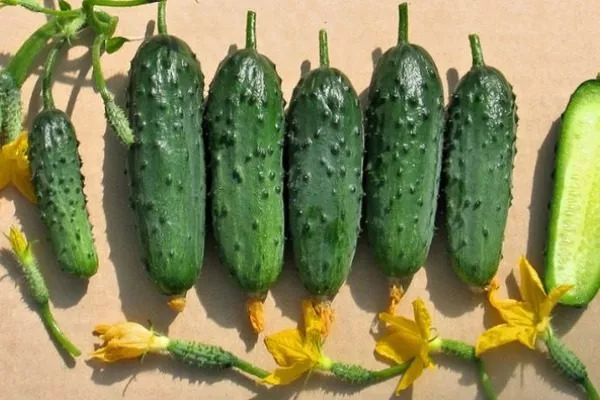
The cucumbers are cylindrical, medium-length—12-14 cm. Each cucumber weighs 130-140 g. They are green, with small stripes, a finely bumpy surface, and white spines. The flesh is crisp and firm, and the skin is thin and tender.
Who developed the variety?
The hybrid variety Berendey was bred by specialists of the Gavrish agricultural company in 2003. Its authors are a group of breeders: S.F. Gavrish, A.V. Shamshina, A.E. Portyankin, N.A. Prutenskaya.
Taste and purpose
The fruit has a very good, pleasant flavor, without a trace of bitterness. They are ideal for eating fresh. Berendey cucumbers make wonderful summer salads, and they are also suitable for winter preserves—they can be salted, pickled, or canned.
Main varietal qualities
Cucumber Berendey F1 is a first generation hybrid and belongs to the group of parthenocarpic varieties (read about the best of them Here). It has an early ripening period, with 45-50 days from first shoots to harvest. The average yield of the Berendey hybrid is 14 kg/sq. m.
Pros and cons
The Berendey hybrid is deservedly popular among our gardeners. This versatile cucumber has many valuable qualities, which are worth learning about in advance.
This hybrid has no drawbacks. The only thing to keep in mind when growing the Berendey cucumber is its hybrid nature. This means that seeds must be purchased annually from the grower; self-harvesting is not allowed, as the varietal characteristics of plants grown this way will degenerate.
Planting in the ground
The optimal planting pattern for Berendey cucumbers is 50x50 cm. They can be planted from seeds or seedlings. The variety can be grown under or without plastic, depending on climate conditions and the gardener's preferences.
- ✓ Soil pH should be between 6.0-6.8 for optimal nutrient absorption.
- ✓ The soil must be well-drained to avoid waterlogging and root rot.
Landing features:
- The best planting location is the southern part of the garden; the area should be level and well-lit. However, some shade is acceptable.
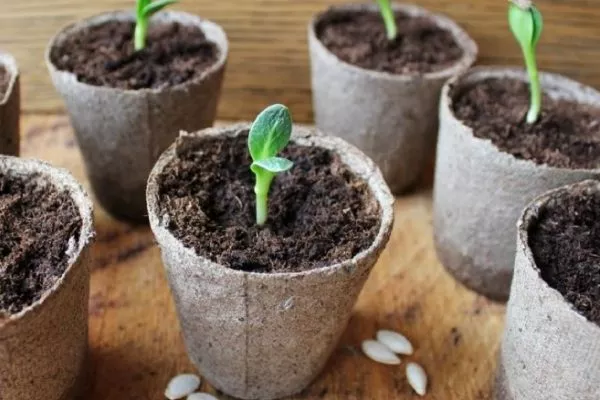
- Seeds for seedlings are sown in late April, and the finished seedlings are planted in late May or slightly later—this is the appropriate time for temperate climates. In the south, planting occurs a few weeks earlier. The timing varies by region, depending on how quickly the soil warms up and establishes stable temperatures. The minimum soil temperature is 13 to 15°C, while the optimum is 20 to 25°C.
- Before planting, seeds can be placed in a growth stimulator and then germinated by wrapping them in a damp cloth.
- The soil is prepared in the fall, adding organic matter and mineral fertilizers. It should be loose, light, rich in humus, and breathable. In the fall, the soil is dug over, adding fertilizer, and in the spring, the beds are loosened and prepared, with holes dug into which a small mixture of wood ash and humus can be added. Then, they are watered with warm water; once the water has soaked in, they are sown.
- Plant at a depth of 1.5-2 cm. It's recommended to plant 2 or 3 seeds in each hole to ensure 100% coverage. Cover the seedlings with plastic or agrofibre. When seedlings emerge, select one from several and leave the strongest and healthiest seedling in the hole.
The planted seedlings are watered with warm, settled water and covered with plastic film. This will not only protect the plants from sudden cold snaps at night, but also from direct sunlight, which can damage the delicate leaves of the seedlings.

Care instructions
Planted seedlings or emerging shoots require regular care. But cucumbers require care not only at the initial stage but throughout the entire growing season.
Care features:
- Water cucumbers only in the evening or morning. Avoid getting water on the leaves. Using cold water for irrigation is not recommended, as it encourages root diseases.
Watering frequency: initially 3-4 times a week, and after the beginning of flowering and during the period of fruit formation - twice as often. - Fertilize regularly, once flowering begins, about once every 10 days. Alternate between organic and mineral fertilizers. Water the cucumbers with chicken manure diluted 1:20, a wood ash solution, and scatter granular complex fertilizers (before watering).
- After each watering, the cucumber beds are loosened and weeded. Weeding and loosening are done very carefully to avoid damaging the surface roots.
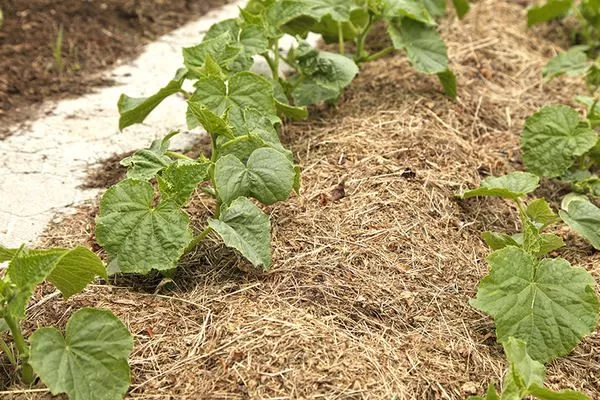
- To reduce the amount of watering, tilling, and weeding, mulch the beds. Humus, straw, or any other loose organic material are suitable for this purpose.
- Bushes with unlimited growth require shaping. Excess shoots are removed, and side shoots are pinched back to the fourth leaf.
The Berendey variety thrives on balconies and windowsills. It can be grown in containers or regular plastic bottles. Place a drainage layer on the bottom and add nutritious soil. Water the plants every three days. They can reach a height of 2 meters indoors, so it's important to train them accordingly.
Diseases and pests
The Berendey hybrid is highly resistant to powdery mildew (both common and downy), as well as root rot. However, under unfavorable conditions, it can be susceptible to late blight. For prevention, it is recommended to spray cucumbers with Bordeaux mixture or other copper-containing preparations.
- ✓ Aphids prefer young shoots and the underside of leaves, leaving a sticky trail.
- ✓ Spider mites leave small yellow dots on the leaves and a thin web.
The hybrid is not susceptible to insect infestation, but it is not immune to them. To prevent them, spray the bushes with a tobacco or garlic infusion. In severe cases, insecticides such as Actellic, Aktara, Fitoverm, etc. are used. The most dangerous pests for the hybrid are aphids, whiteflies, and spider mites.
How to harvest crops properly?
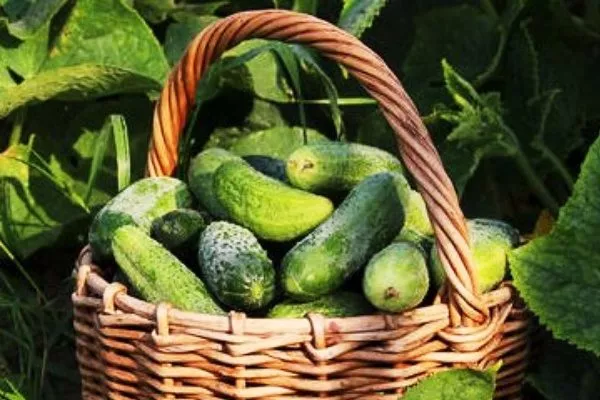
The cucumbers are harvested in dry weather; this ensures their best storage. Pick them carefully to avoid damaging the vines; preferably, cut them at the base with pruning shears. Alternatively, gently twist them with one hand while holding the vine with the other. The best time to harvest cucumbers is morning.
Reviews
Bernedei F1 is an excellent solution for any garden; this promising hybrid is truly versatile and suitable for any purpose. This hardy, delicious variety is suitable not only for growing for food but also for sale.