
When distinctive white spots appear on cucumber leaves, the plant is spoiled and the fruit is no longer edible. This phenomenon signals the deterioration of a healthy plant and forces gardeners to take action to address the problem.
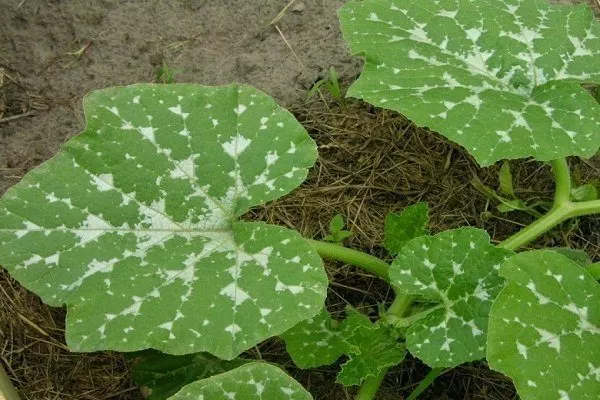
Incorrect agricultural practices
The primary cause of this disease is improper care. Plants may lack sun, warmth, and nutrients. Sometimes the cause is low soil acidity or improper planting time.
Lack of light
After planting seedlings in the soil, white spots can appear due to insufficient light. This almost always occurs in greenhouses or hotbeds, but can also occur in open ground, especially if the area allocated for growing cucumbers is shaded.
Due to insufficient light, the lower leaves begin to turn white. If the other leaves aren't deteriorating this way, there's no need to worry; simply provide additional lighting. Cucumbers are dense plants, so the upper leaves get plenty of light, but the lower leaves receive little light.
Lack of nutritional components
White spots on leaves can be caused by a lack or partial deficiency of all necessary components. This is very rare.
When the bush becomes lighter in color and the lower leaves dry out, it indicates a magnesium and potassium deficiency, so add these nutrients as soon as possible. If, in addition to these signs, the leaves develop dark veins, the bush needs manganese and iron. A lack of copper will cause the upper foliage to become lighter and dry out.
Landing time
In this case, everything depends on the climate in the region where the cucumbers are grown. Generally speaking, it's best to plant this crop in mid-April. If you plant it earlier, the seeds may simply fail to germinate, and the sprouts will freeze and fail to grow.
Pay close attention to weather forecasts; if there are still frosts, there is no need to rush to plant the plant in the soil.
Watering
Watering is crucial when caring for cucumbers. Sometimes too much moisture, or too little, can cause white spots to appear on the leaves. Plants grown in open soil are often affected, as it's difficult to fully control watering there.
In some regions of the country, excessive rainfall during the summer causes cucumbers to turn white. High humidity negatively impacts the root system of the plants, leading to root rot and the gradual death of the plant.
Lack of or partial water shortage can also lead to this problem. The foliage dries out and turns white. To eliminate this problem, you should regularly monitor watering: reduce the amount of water, and sometimes increase it. We've discussed the rules and methods for watering cucumbers in more detail. previously.
Soil acidity
Cucumber leaves also turn white due to increased soil acidity. In such soil, the crop may stop growing altogether. This possibility must be ruled out or confirmed by testing the soil's acidity yourself.
Take a small amount of soil and place it in a container. Fill it with distilled water until it reaches the consistency of sour cream. Add 1 teaspoon of baking soda. If bubbles appear and a fizzing sound occurs, the soil is too acidic.
To reduce acidity, use ash. Mix 250 g of ash per 5 liters of water. Apply this solution to the planting holes when planting cucumber seedlings.
- ✓ Use only wood ash, as it contains the optimal amount of potassium and phosphorus.
- ✓ Ash should be sifted to remove large particles that may damage plants.
Aging
Even perennial plants age, and cucumbers are no exception. During this process, photosynthesis slows, leaves begin to dry out, and white spots appear on them.
However, natural aging of a crop occurs after harvest. If the plant begins to dry out earlier, it's not due to aging.
Diseases and pests
When proper care is taken, but characteristic damage still appears on the foliage, it means that some kind of infection is the cause.
Powdery mildew
Powdery mildew is a fungal disease that affects virtually all vegetable plants. The disease progresses as a white coating appears. This not only changes the leaf's shape but also causes it to dry out, ultimately killing the plant.
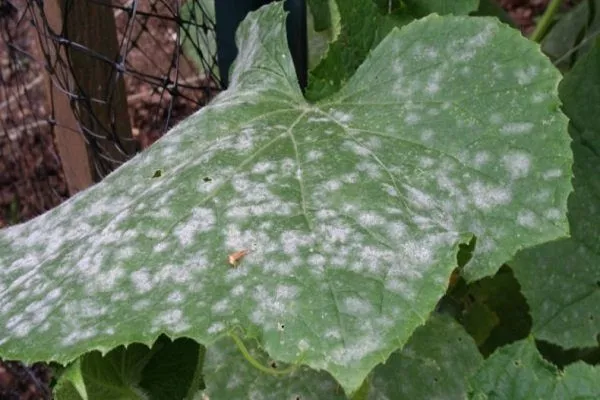
The disease destroys more than just one bush; the fungus spreads throughout the entire planting. It's possible to get rid of the disease, but it's difficult.
- ✓ The first signs appear on the lower leaves in the form of white, powdery spots.
- ✓ The disease spreads quickly in high humidity and moderate temperatures (+18…+22°C).
Causes: high humidity, especially in June, air temperature +18…+22 degrees Celsius, too much nitrogen fertilizer.
Powdery mildew prevention:
- Practice crop rotation to help prevent the fungus from persisting in the soil.
- Regularly clear the area of weeds and debris.
- Treat the area after harvesting the fruits.
- Maintain the temperature at +20 degrees Celsius, protect plants from temperature fluctuations.
- Water plants only with warm water.
- Treat the bushes with special products; Quadris has proven itself to be excellent.
- Don't overdo it with nitrogen fertilizers.
If you notice obvious symptoms of this disease on your plant, you should resort to radical measures.
Methods of combating powdery mildew:
- Spray the bushes with a skim milk solution. This will eliminate the disease and prevent its spread. Treat the bushes with sodium silicate.
- Use lactic acid bacteria; they're gentle on cucumbers but merciless to fungus. You can also use kefir (even past its expiration date is better) or yogurt.
- Pour cold water over the manure and let it sit for 3 days. Separate the solution and dilute it with water (1:10). Spray the bushes with this mixture. Use herbs, such as nettles, to soak them.
- Special products: Thiovit, Jet, VDG, Topaz, KE, Hom. Treat plants in open soil with a 20% colloidal sulfur solution; in greenhouses, use a 40% solution. Regular treatment with a 1:1 mixture of soap and soda will also help.
- Try treating the bushes with an infusion of weeds. Chop them up, add water, let them ferment for 2 days, and then use it as a spray.
Don't resort to chemicals right away; try folk remedies first; in most cases, they bring positive results.
White mosaic
This viral disease begins to manifest itself in sick and weakened plants. It penetrates the plant and reaches the root system. White mosaic is extremely dangerous because it significantly reduces cucumber yields and eventually leads to plant death.
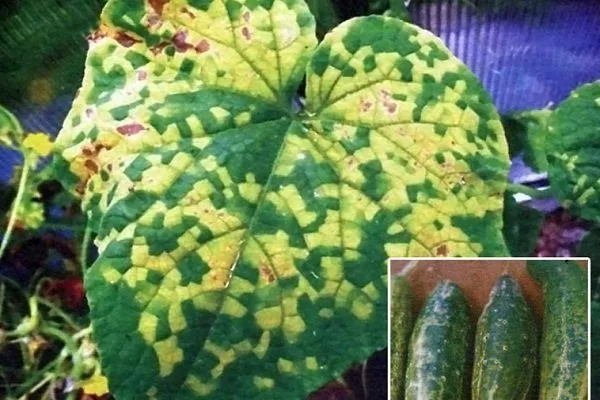
Causes of the disease: too high temperature (above +25 degrees Celsius), its sharp changes both during the day and at night.
Symptoms: visible changes in plants, shoots stop developing, white spots with a yellow tint appear on young leaves, the damage merges into a large spot as the disease progresses, cucumbers become deformed and lose their color.
Gardeners have come up with many ways to treat this disease, but all of them require consistent action and the farmer's attention.
Prevention and control methods:
- Remove weeds from the area regularly.
- Purchase planting material only from experienced sellers.
- After harvesting, destroy all plant remains.
- Do not plant bushes too close to each other.
- Avoid watering plants with cold water and avoid sudden temperature changes. Infected plants should be uprooted and burned.
- Take all necessary steps to eliminate aphids, as they are considered disease carriers. Treat all healthy plants.
Spider mite
Spider mites aren't harmful to humans, but they are harmful to cucumbers, significantly weakening the plant's immune system and preventing photosynthesis. Affected plants quickly dry out and die.
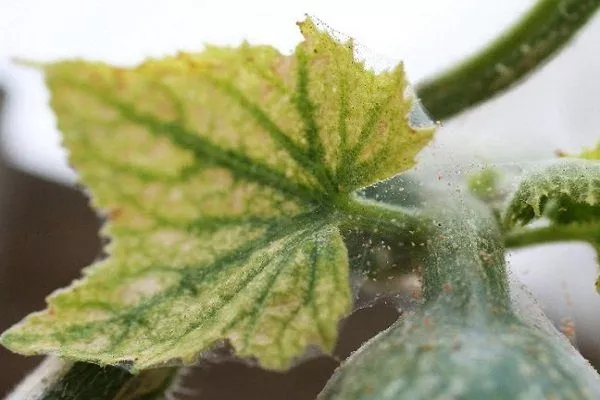
Causes: excessively high temperatures and dry weather. To prevent spider mites, it's important to carry out all preventative and treatment measures in advance (if spider webs were noticed on plants last year, spray with products this spring, such as Ditox, Antikleshch, Akarin, Fitoverm, etc.).
Symptoms of the disease: the appearance of white spots on the back of the leaves, the formation of cobwebs on the plant, a slow growing season, and a yellow tint to the leaves.
Preventive measures:
- After harvesting, burn or recycle all parts of the bushes.
- Before planting, dig up the area you'll be growing cucumbers in, as pests overwinter in the soil. Pull out all weeds, and don't leave anything untouched in the area.
- At all stages of growth and development of this vegetable crop, inspect all parts of the bushes; if you find infected areas, immediately remove them and burn them.
- Alternate planting cucumbers with tomatoes. Treat infected plants with pesticides.
If spider mites appear in a greenhouse, the risk of infestation of all plants increases significantly, because the ideal conditions for their spread and development are created here: high air temperatures and low humidity.
Methods of controlling spider mites:
- Remove the top layer of soil and burn the trellis.
- Use insectoacaricides. In fact, the main method of insecticide treatment doesn't work in practice. Insectoacaricides are considered the most effective, but there are no safe spraying options for humans, so gardeners often use stomach- and contact-active substances. Their use depends on the temperature (the higher the temperature, the shorter the intervals between treatments).
- Place phytoseiulus near infested areas; it will quickly destroy the pest eggs. It should be planted once every three weeks.
- Use folk remedies: treating with soap, planting herbs that attract ladybugs, which will easily destroy this pest.
The best chemicals are Karbofos and Bitoksibacillin. Apply in the evening to ensure the products don't evaporate and have time to work.
Azochitosis
This disease is extremely dangerous, harming not only mature cucumber plants but also young ones. Besides this crop, the disease also affects pumpkins, watermelons, and melons. No matter where the cucumbers are grown, the damage from azcositis is the same. Plants with weak immune systems quickly die, so it's better to prevent azcositis than to try to get rid of it later.
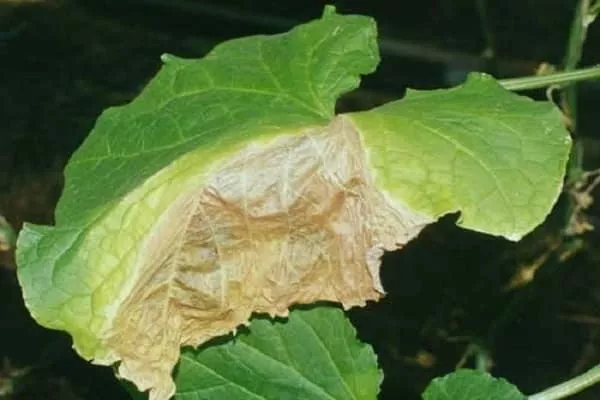
Signs: Light spots appear on the leaves, which then spread to cover the entire foliage. Black specks—fungi and spores—appear on the affected areas. Small white-brown spots appear on the root system and root collar; if the infection recurs, gum is released. Cucumbers change color and become mummified, and may also become covered with a dense network of black specks.
The disease is most active during the fruiting season. It appears due to large amounts of organic debris, is carried by the wind, and can also be present in cucumber seeds. Once infected, the fruit is no longer edible, and curing the plants is very difficult, if not impossible.
Prevention and control methods:
- Do not water with cold water, do not allow temperature fluctuations.
- Use only beans from trusted manufacturers.
- Steam and treat the soil annually with a solution of potassium permanganate or formalin.
- Spray plants with Bordeaux mixture (1%), copper sulfate (3 g per 5 l of water) and urea (5 g per 5 l of water).
- Grow disease-resistant varieties.
Anthracnose
Considered one of the most common and dangerous diseases, anthracnose affects crops in both greenhouses and open ground. Fungal spores develop at any temperature (from 3 to 33 degrees Celsius). The disease affects all above-ground parts of the crop. Affected seedlings quickly die. The incubation period is approximately 7 days, depending on the conditions.
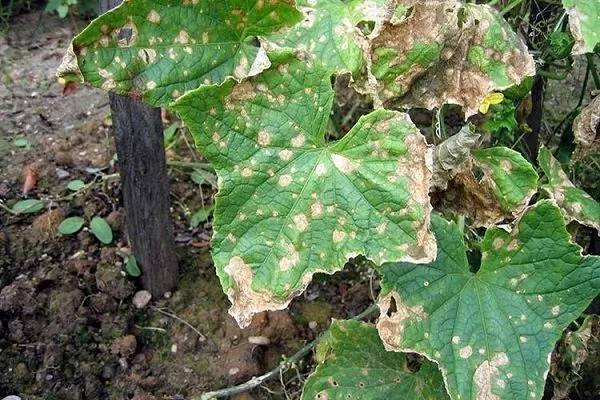
The main symptoms are white spots, sometimes yellow, appearing on the leaves. As they develop, they merge into a single large spot. Brownish hairs appear on the surface, and the affected areas often become sunken. If the plant is heavily infected, large brown spots form on the fruit.
Methods of control:
- Add a solution of Bordeaux mixture (1%) or Abiga-Peak solution (0.5%) under the root.
- Before applying the product, moisten the soil thoroughly.
- If the first treatment does not help, then repeat it several more times.
- Treat infected leaves with copper oxychloride or Polyram.
- Use the following products: colloidal sulfur, Kumus, Strobi and Quadris.
Greenhouse whitefly
Whiteflies attack only greenhouse cucumbers. White or yellow spots appear on the leaves. The pest reproduces very quickly, especially if proper care is not taken. Adults are characterized by a yellow body measuring 1 to 1.5 mm. Their wings are white, rough, and can fold into a single piece.
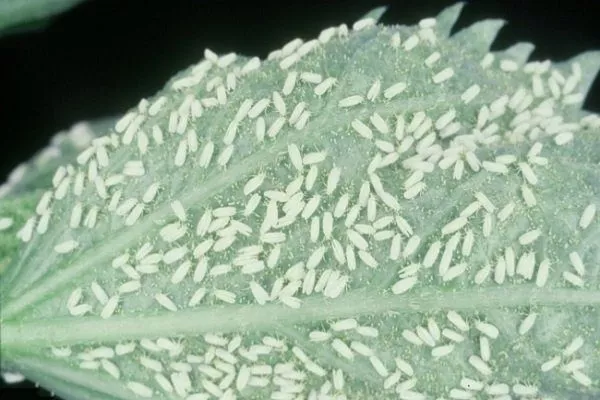
The insect has light-colored antennae measuring 0.7 mm in length. A single female can lay over 100 eggs, and the embryos develop in approximately two weeks. More than 10 generations can occur in a single season. The insects cluster and settle on the underside of leaves, feeding on plant sap, which prevents the crop from developing fully.
Preventive measures:
- Cover ventilation holes in greenhouses with nets.
- Before planting cucumber seedlings, clear the soil in the greenhouse and remove all weeds.
- Keep the temperature in the greenhouse low.
- Mulch the soil and also add foil, which repels insects.
Methods of control:
- Collect pests by hand, use sticky traps.
- Plant the parasite encarsia, it is specially bred to fight whiteflies, as soon as it eats them it dies.
- Try using decoctions and infusions; if they don’t help, turn to chemical preparations.
Prevention
It's better to prevent any illness or disease than to treat it. Therefore, follow these basic preventative measures to protect your cucumbers:
- If you've been buying cucumbers of the same variety for a long time and are constantly having trouble growing them, consider replacing the grower or switching to a different variety.
- Follow all crop rotation rules; cucumbers can only be replanted in the same location after three years. If this is not possible, add fertile soil annually.
- After harvesting the fruits, completely clear the soil of plant debris; if there are any infected bushes, burn them.
- Regularly spray the plants with herbal infusions or Fisporin M or Obereg.
- Maintain a healthy microclimate in the greenhouse, avoid temperature fluctuations, winds and high humidity.
- Ventilate the greenhouse regularly. Open it as early as possible to prevent the air under the film from warming up too much; otherwise, the temperature difference will create a slight breeze.
- Water the bushes early in the morning or evening. Regularly inspect the bushes for diseased, yellow leaves with white lesions on the surface.
To learn about the causes of white leaves on cucumbers and how to treat the plant, watch the following video:
The appearance of white spots on the leaves of this crop is a clear sign of spoilage. This indicates poor plant health and requires treatment and subsequent preventative measures, otherwise the consequences could destroy the plant.
"It's impossible to protect plants from spider mites because the fungal spores are carried by the wind." – How so?
What, some kind of tick-mushroom hybrid?
Comrades, help me out!!! I have cognitive dissonance!