
The Bastion cucumber is considered an unpretentious variety bred using hybridization techniques. It is self-pollinating, parthenocarpic, and suitable for cultivation not only in open beds but also in plastic greenhouses and under temporary shelter. It is distinguished by its versatility and resistance to adverse conditions.
Introduction to the variety
The shrubs have such a powerful root system that they can adapt to any soil structure. Their shoots spread wide and deep in search of food, resulting in cucumber stems that grow quickly and are characterized by strength.
History of variety selection
The Bastion hybrid debuted in 2015 as one of the highest-quality varieties. It is a cultivated cucumber from Agrofirm Poisk's unique collection of varieties and hybrids, developed through years of breeding. The selection of plants in this series is focused on preserving traditional flavor characteristics, which is especially important for the Bastion f1 variety.
External and taste characteristics, purpose
Cucumber Bastion f1 is a parthenocarpic variety characterized by resistance to viral diseases and moderate demands on growing conditions. It grows particularly well in gardens with plastic covering.
Key characteristics of this plant include the following:
- The bush is tall, indeterminate, with moderate foliage and highly branched, long, widely spreading stems.
- The leaves of this variety are large, heart-shaped, with slight waviness and a rich dark green color.
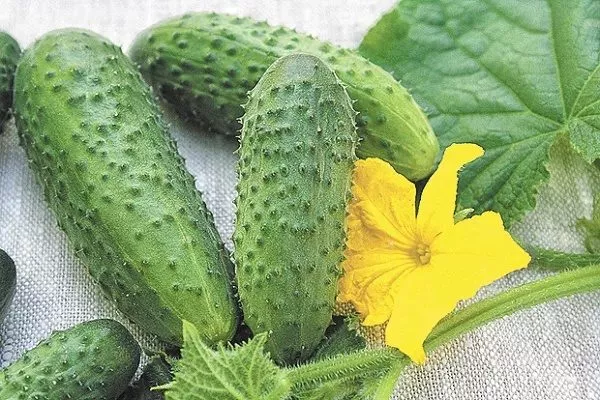
- Cucumber Bastion F1 is a vegetable with an elongated shape, reminiscent of a barrel.
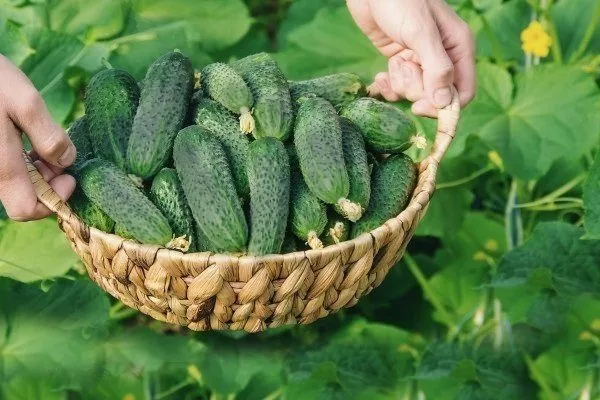
- Fruit parameters are 12-16 cm in length, weighing from 120 to 160 g and up to 4.5 cm in diameter.
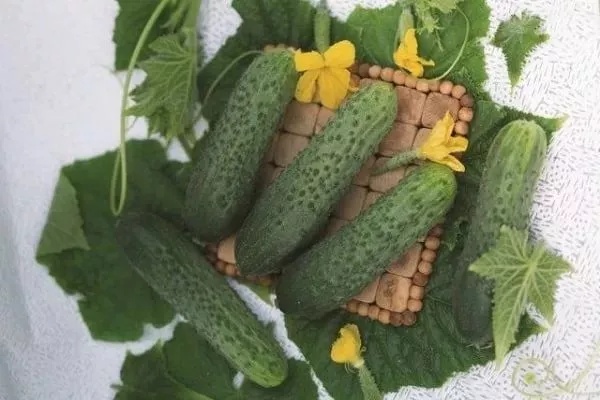
- The skin of this variety is dense and thin, decorated with many small tubercles, giving the cucumbers a rich green color with a slight light stripe.
- The bumps are randomly distributed along the convex stripe. The bumps on the cucumber's surface end in the typical spikes of this vegetable; in Bastion, they are white.
- There are no internal cavities in cucumbers, which indicates their high quality.
- The pulp is characterized by elasticity, juiciness and a characteristic crunchy sound when chewed.
- The color of cucumbers remains natural, without any tendency to yellowing.
- The taste of these cucumbers is pleasant, without any bitterness, and the skin does not cause any unpleasant sensation of toughness when eating.
Productivity and fruiting
Bastion is distinguished by its early maturity: the crop is ready for harvesting 40-42 days after the first leaves appear. Cucumbers begin to be harvested in June or early July. In a heated greenhouse, the sowing date is up to the gardener.
Fruiting characteristics:
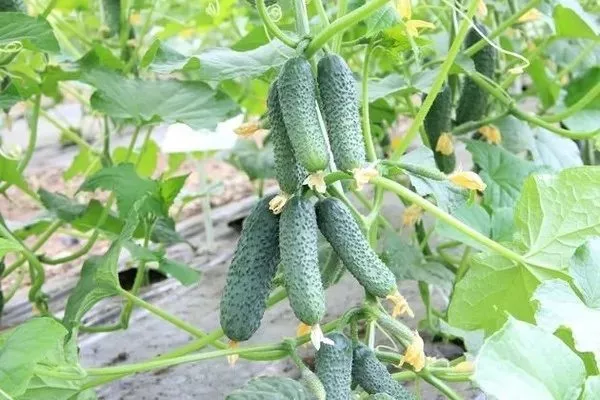
- Cucumbers of the Bastion variety form cluster ovaries, with up to 5-7 fruits developing in each node.
- One bush can yield up to 4.5-5.5 kg of cucumbers.
- The yield increases if all agricultural recommendations are followed, including proper bush support, regular watering and fertilizing.
- In a greenhouse, the yield of cucumbers is usually higher due to the creation of ideal temperature conditions for the plants.
- Fruit set is enhanced by regular harvesting of gherkins and larger cucumbers, which are collected at intervals of two to three days.
- Removing the fruits stimulates the plant to form new cucumbers.
Scope of application
Bastion f1 cucumbers, popular among fresh salad lovers, are noted for their fresh flavor. These cucumbers are a great base for a variety of appetizers, including pickled, marinated, and canned. For quick freezing, choose fruit that is dense and without any air pockets.
Advantages and disadvantages of the variety
The hybrid has a number of positive qualities, among which the following stand out:
Consumers and gardeners do not note any critical shortcomings.
Planting and care rules
The Bastion variety, which requires little care and can withstand adverse weather conditions, is planted in pre-dug holes in the garden. For an early harvest, which can ripen three weeks earlier, it's recommended to use the seedling method.
Planting seedlings
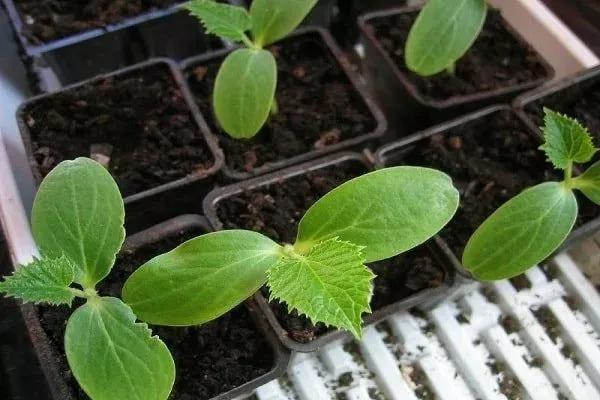
Cucumber seedlings develop at an amazing rate: just 18-20 days after the first green leaves appear, they can be transplanted to their permanent location. The ideal time for sowing cucumbers using seedlings or under unheated plastic cover is mid-April.
If you don't want to buy a ready-made substrate, in the fall you can mix garden soil, humus, peat, and sand in equal proportions to create a light and airy mixture. To ensure the nutritional value of the soil in pots or other containers, use Kemira fertilizer.
The process of growing seedlings includes the following steps:
- Prepare the seeds – sort, stratify, germinate.
- Place them at a depth of 2 cm, carefully sprinkle with soil and moisten.
- Cover with film and place in a place with a temperature above -23-25 degrees.
- The first green shoots will appear in 5-6 days. During this time, reduce the temperature to 18-20 degrees Celsius during the day and no lower than 16-17 degrees Celsius at night.
- Remove the cover.
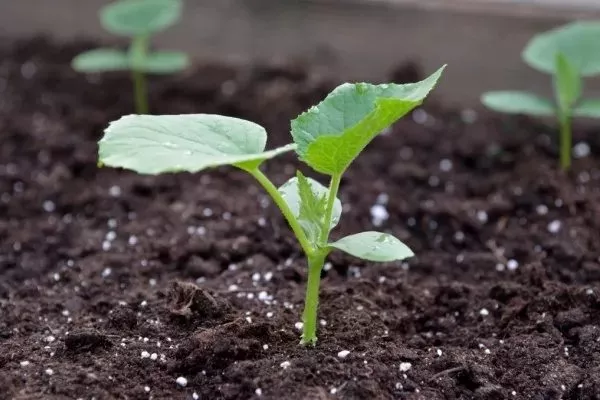
Water every 1-2 days to keep the soil moist but not soggy. When the third leaf appears on the Bastion cucumbers, begin fertilizing with nitrophoska.
It is important to ensure that cucumbers do not become overgrown, as replanting a young, rapidly developing root system can lead to injury and a decrease in the survival rate of the plants.
Growing cucumbers without seedlings
Bastion f1 doesn't require any special growing conditions, but it thrives best in chernozem or sandy loam with a neutral pH. Prepare the soil in the spring:
- remove plant debris;
- dig to a depth of 45-50 cm;
- carry out disinfection using a solution of copper sulfate or potassium permanganate;
- Apply urea fertilizer.
How to grow Bastion correctly:
- Before planting seeds, make sure the air temperature is above +18 degrees.
- Treat the planting material with growth stimulants, so pre-germination is not required.
- Sow the seeds to a depth of 3-3.5 cm, laying them out in a pattern of 90-100 x 30-40 cm.
- To ensure air flow and create a greenhouse effect, lay plastic film over the bed and make several slits in it at the places where the planting material will be placed.
- When the first shoots appear, remove the cover, but this should happen on the condition that the temperature at night does not drop below +12 degrees, and the weather remains favorable.
In cold climates, it's recommended to grow cucumbers in protected conditions to improve their survival. This is especially true if you don't use a greenhouse.
Aftercare
This cucumber variety requires regular soil loosening, clearing of weeds, and occasional but nutrient-rich fertilizers. Proper preparation of the bush for the growing season is also crucial. Bastion f1 cucumbers are recommended to be tied to a net.
Watering
The Bastion variety has strong roots, allowing it to easily withstand drought and reduce its water requirements. It only requires one watering every 3-4 days, with each bush requiring approximately 5-8 liters of water, depending on the plant's size.
The optimal time for watering is in the evening, after sunset. Use warm, settled water. Drip irrigation is the recommended irrigation method for Bastion f1.
Fertilizer
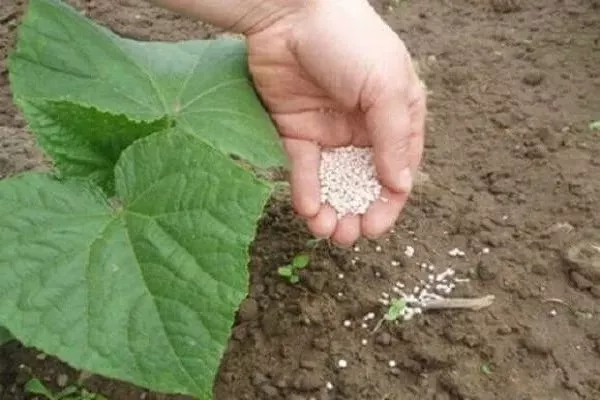
Bastion F1 is particularly responsive to organic and potassium-phosphorus liquid fertilizers. For maximum results, it is recommended to apply fertilizer three times during the growing season:
- Apply the first fertilizer when the plant's 4th or 5th leaf appears. At this point, apply nitroammophoska or wood ash.
- Make the second addition of fertilizer before the budding begins – use potassium salt or rotted sawdust/wood shavings.
- The last time, apply Superphosphate at the stage of beginning of fruit ripening.
Fertilizer should be scattered around the plant's roots 15-20 minutes before watering. Additionally, fill the spaces between the Bastion rows with compost mixed with straw, onion peels, and grass hay. This method not only increases yield but also protects the cucumber from pests.
Bush formation
Cucumbers, which don't require pollination to bear fruit, can produce impressive yields if trained properly. Don't allow the plant to become overgrown with buds and shoots—even a hybrid's robust root system can't provide all the necessary nutrients.
One effective approach is as follows:
- Completely remove the ovaries and shoot rudiments from the first 3-4 lower nodes of the plant.
- Fruiting will occur at the nodes of the central stem, where, in turn, the side stems are also pruned first. The side shoots will reappear and initiate a second flush of fruit.
Harvesting and storage of crops
The variety begins to bear fruit in the first days of July. Daily harvesting is recommended to stimulate new fruit growth. These fruits do not turn yellow or become overgrown, even during the final stages of ripening.
Subtleties of collection and preservation:
- Cucumbers should be cut with scissors 20-30 minutes after watering, leaving a third of the stem on the bush.
- After harvesting, there is no need to wash the fruits; they should only be wiped dry with a soft towel.
- Cucumbers are packed in a plastic bag and stored on the top shelf of the refrigerator at a temperature of 10 degrees, where they can retain their quality for up to 10-12 days.
How to combat diseases and pests?
Bastion f1 boasts a decent level of immunity and resistance to common diseases, such as cladosporiosis and cucumber mosaic. However, the variety is susceptible to powdery mildew and, when grown outdoors, is susceptible to pest attacks:
- Powdery mildew. For treatment, spray with washing soda or Bordeaux mixture. Affected plant parts should be removed. As a preventative measure, treat the cucumber 2-3 times per season with a weak solution of potassium permanganate or garlic infusion.
- Ants. To control ants, first locate and destroy their nest, then burn it. Then spray with a weak mustard solution (150-200 g per 5 liters of water) or dust with ash powder. To completely eliminate ants, treat the soil under the cucumbers with a solution of tar soap and kerosene.
- Spider mite. When ticks infest, chemicals such as Agravertin, Apollo, or Flumait are used. To prevent infection, it is recommended to plant aromatic plants around the garden bed, including lavender, mustard, mint, lemon balm, or wormwood.
Reviews
The young hybrid Bastion F1 is still gaining popularity, but it has impressive prospects, as it combines all the positive qualities expected of a quality variety. Currently, it has no drawbacks, except that seeds are difficult to obtain, as they are distributed by only one agricultural company.