
The Barabulka cucumber is a domestically bred hybrid that easily adapts to any soil conditions and cool weather. This variety was developed specifically for the diverse climates of our country.
The history of the development of the Barabulka cucumber
The Barabulka variety was developed by breeders at the Scientific Research Institute of Vegetable Crop Breeding and the Gavrish Breeding Firm. Authors: S.F. Gavrish, A.E. Portyankin, A.V. Shamshina, and V.N. Shevkunov. The variety was approved for cultivation in 2007.
What does the plant and fruit look like?
The plant is vigorous, with active branching. The main stem has an uneven surface and is densely pubescent. The shoots branching from it are fragile, forming numerous tendrils. The leaves are green, with elongated petioles and wavy edges. The shape is heart-shaped, medium in size. The flowering type is female. The flowers are yellow. The roots are strong, located close to the ground surface.
Description of fruits
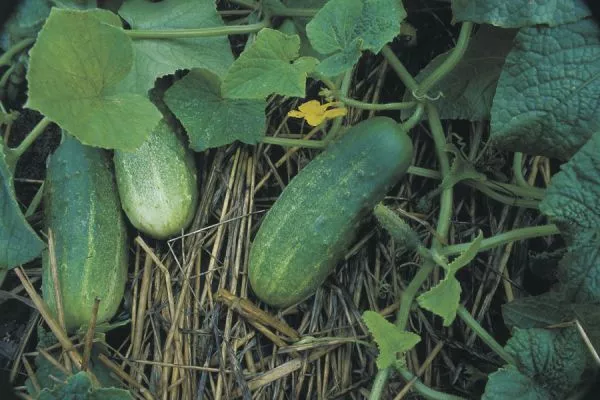
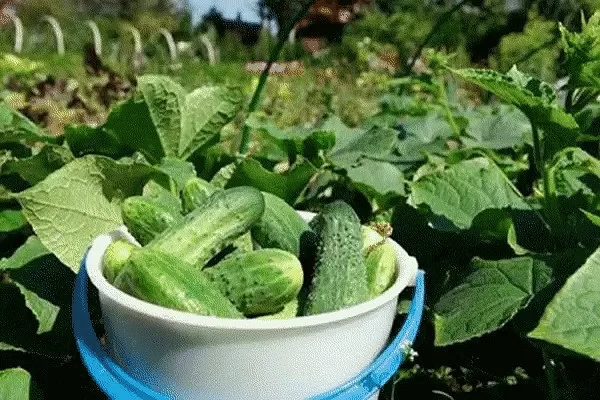
The fruits are collected in bunches of three or more. They are short, cylindrical, glossy, and green, reaching 10-12 cm in length. Each cucumber weighs approximately 90-100 g. The fruits have a bumpy surface, with short, blurred stripes on a green background. The bumps are arranged at a moderate density and have white spines.
Taste and uses
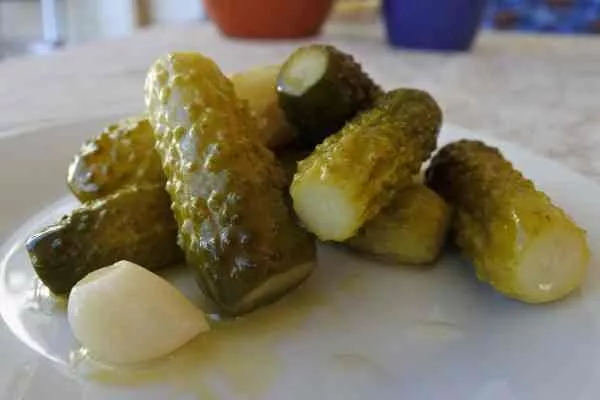
Barabulka cucumbers have a very good, rich flavor with hints of sweetness. The flesh is light and crisp, soft and tender. There is no bitterness or sourness. This variety is suitable for salads, pickling, and canning.
Characteristics of the variety
The parthenocarpic (self-pollinating) hybrid Barabulka belongs to the group of indeterminate varieties with early ripening periods. From germination to the ripening of the first cucumbers, it takes approximately 45-47 days. This variety is very productive, yielding up to 15 kg of cucumbers per square meter.
Pros and cons
The Barabulka hybrid is rightfully considered one of the most interesting and promising varieties. It possesses a number of qualities not found in many other varieties:
Flaws:
Subtleties of planting
The Barabulka hybrid is successfully grown from seedlings and by direct sowing. Both methods have their advantages and are widely used by gardeners.
- ✓ Optimum soil temperature for sowing: +12..+14 °С.
- ✓ Seed sowing depth: 1 cm.
Features of planting by sowing in open ground:
- Use only store-bought seeds. These are usually already treated and disinfected. Otherwise, the planting material is first immersed in a saline solution to select high-quality specimens, soaked in potassium permanganate for half an hour, and then rinsed with water. It is also recommended to harden the seeds in the refrigerator, first wrapping them in a moistened cloth.
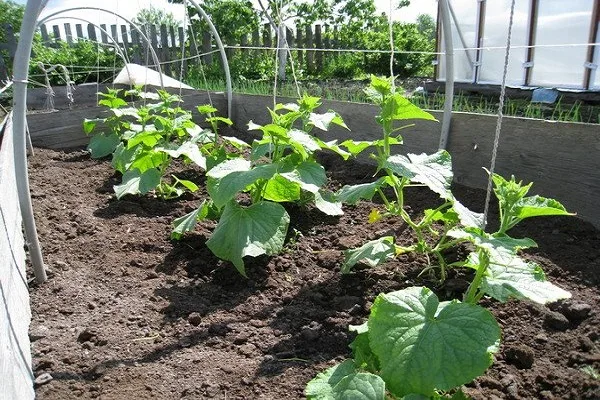
- The soil is prepared in the fall using the standard method: digging, fertilizing, loosening, and/or reducing acidity if necessary. In the spring, the beds are formed, watered, and covered with plastic wrap. Three days later, the seeds are sown. The optimal planting pattern is 50x50 cm.
- In the middle zone, seeds are sown at the end of May; in general, the timing depends on specific climatic conditions, and the suitable time for planting is determined by the soil temperature - it should warm up to +12...+14 °C.
- The planted seeds are covered with film or other covering material to speed up the emergence of seedlings.
Barabulka cucumber seedlings are sown in April and planted in the ground a month later. Sow the seeds in individual cups filled with nutrient-rich substrate. Cover the seeds with a 1-cm layer of soil. Cover the containers with plastic wrap and place in a dark, warm place.
Are there any special care requirements?
To obtain a bountiful and high-quality harvest, the Barabulka variety requires regular care—watering, fertilizing, and other measures required by the crop's agricultural practices.
How to care for cucumbers:
- Watering is recommended in the morning or evening. Drip irrigation is recommended. Warm water is required for watering; cold water can lead to the development of fungal diseases. Water should be applied only at the roots. In hot weather, increase watering frequency to 2-3 times a week. The recommended watering rate at the beginning of the growing season is 6 liters per square meter, and after flowering, 10 liters.
- After each watering, irrigation, or rain, loosen the beds. Weeds are also removed. Loosening prevents the formation of a hard crust that blocks oxygen from reaching the roots.
- Cucumbers are fed every 3-4 weeks. Both organic and mineral fertilizers are used. Nitrogen-rich fertilizers are preferred initially, followed by potassium-phosphorus fertilizers during the fruiting period.
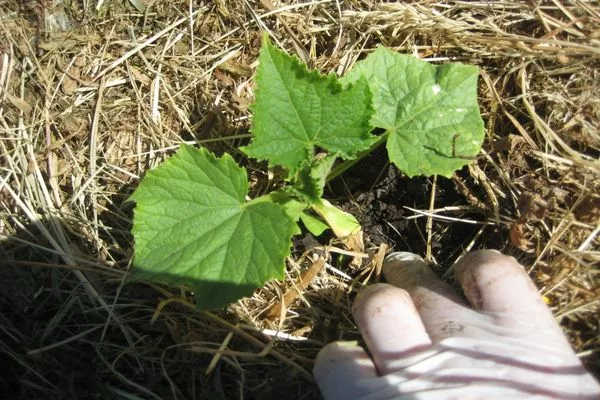
- The hybrid requires specific training. Excess shoots must be removed to prevent excessive vine growth and ensure a high yield. Excess shoots are pinched by hand; they should not grow longer than 5 cm.
Prevention of diseases and pests
The Barabulka cucumber rarely gets sick; this hybrid is resistant to most common melon diseases, including downy mildew, leaf mosaic, and powdery mildew. However, to avoid damage, it's important to maintain crop rotation and other preventative measures, such as proper watering, pruning, and regular inspection.
- ✓ Resistance to downy mildew, leaf mosaic and powdery mildew.
- ✓ Demanding to watering regime: does not tolerate over-watering and moisture deficiency.
To protect cucumbers from pathogens, it is recommended to spray them with milk or whey diluted 1:1 in water every two weeks. For severe infections, treat the plants with fungicides.
Cucumbers can be attacked by whiteflies, aphids, and spider mites, which can be controlled with various chemical and biological solutions. Spraying with a soap solution or a bitter herbal decoction also helps. However, in case of a massive pest infestation, more powerful pesticides must be used.
How to harvest crops properly?
Cucumbers ripen uniformly, with the fruiting period extending over a couple of months. The fruits are harvested as often as possible, preventing them from becoming overgrown.
The best time to harvest is in the evening, half an hour after watering. Barabulka cucumbers store quite well—they retain their freshness, flavor, and appearance after a week in the bottom drawer of the refrigerator.
Reviews
The Barabulka cucumber is a versatile and promising variety, suitable for home growing or commercial cultivation. This hybrid requires minimal care, is undemanding, and is well-protected from diseases. It's an excellent choice for gardens, cottages, and commercial cultivation.