
The Balcony cucumber is a variety whose purpose is easily understood by its name. It's one of the best hybrids for growing on loggias and windowsills. It's perfect for those who enjoy growing vegetables at home.
History of the Balcony cucumber variety
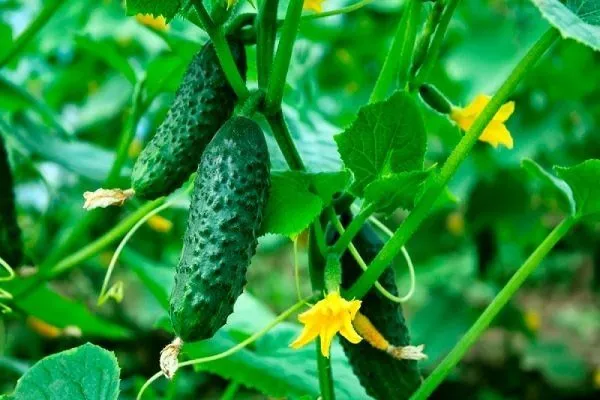
The Balcony cucumber is a hybrid developed by the Manul Breeding and Seed Company. It was approved for cultivation in 2008. Although the variety was created for growing on balconies, this is far from the only place where it can grow and bear fruit. The Balcony cucumber can also be successfully grown in open ground and under plastic structures.
Description of the variety
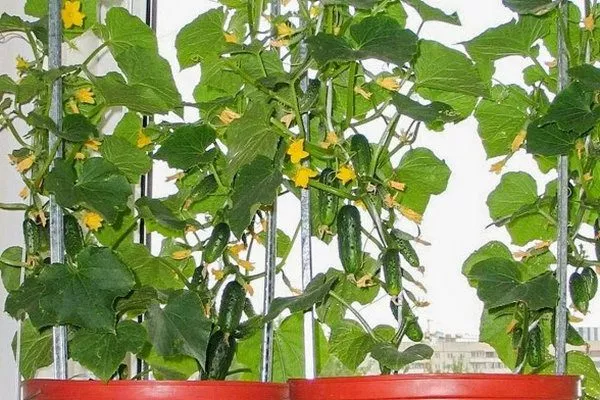
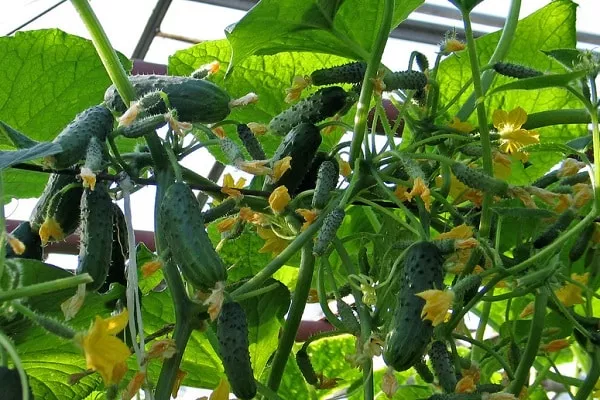
The plant is medium-sized. It has medium branching and small, green leaves. It flowers female. The cucumbers form in clusters, each containing 2 to 10.
Balcony cucumber fruits are short, oval-cylindrical, and reach 10 cm in length. The diameter of the fruit is 3-3.5 cm. Each cucumber weighs an average of 90 g. The fruit is green with short, light stripes, and the surface is gently ribbed, glossy, and covered with small bumps and whitish spines.
Characteristics of balcony cucumber
The Balcony cucumber is a parthenocarpic variety (producing fruit without insect pollination). It takes 40-41 days from germination to ripening of the first fruits. This hybrid produces very high yields—up to 10 kg of cucumbers per square meter.
Taste and purpose
Bunch cucumbers have excellent flavor and shelf life. They look beautiful sliced on the table, are suitable for pickling and canning, and are ideal fresh, making delicious salads.
Pros and cons
Before planting the Balkonny hybrid, familiarize yourself with all its advantages and disadvantages. This will help you determine whether this variety is suitable for growing in your home.
Advantages:
No disadvantages were found in the Balcony hybrid.
Requirements for soil mixture
The hybrid prefers loose, fertile soils with a neutral pH. It is not recommended to use potting mixes intended for indoor plants. The best option is a soil mixture of peat and humus, mixed in equal proportions.
To adjust acidity and potassium saturation, wood ash (50 ml per plant), as well as superphosphate (20 g) and urea (30 g) are added to the soil.

Planting diagram
If the Balcony cucumber is being planted in a greenhouse, it is recommended to plant 2-3 plants per square meter. In a garden, this cucumber can be planted more densely—4-5 plants per square meter. When growing this hybrid indoors, space the containers 30 cm apart.
How to plant cucumbers on a balcony?
Growing cucumbers on a balcony requires the same procedures and attributes as any indoor plant. In addition to potting soil, you'll need containers of a suitable size.
Landing features:
- For growing, it is recommended to use containers with a volume of 6 to 8 liters.
- Before planting, the seeds are soaked in a potassium permanganate solution for half an hour, then soaked in aloe vera juice for 12 hours to infuse them with nutrients and microelements. The seeds are pre-dried before sowing.
- Place the planting containers so they receive plenty of light. However, direct sunlight is dangerous for cucumbers. To prevent its destructive effects, cover the windows with tulle or install mosquito nets.
Care Features
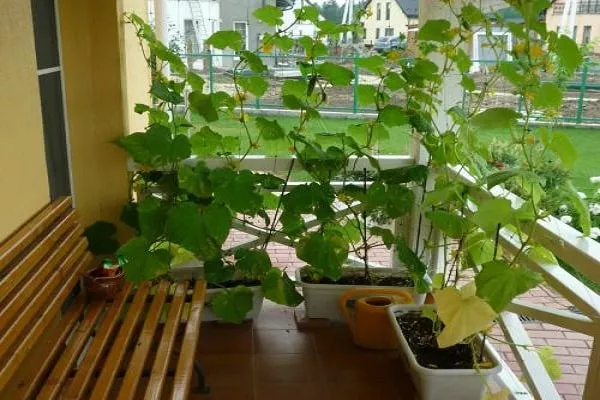
To get a good harvest from the Balcony Hybrid, it is important to provide it with certain care.
How to care for cucumbers on the balcony:
- Water as the top layer of soil dries. If the soil periodically dries out completely, the cucumbers will taste bitter. Use warm, settled water for irrigation. During the fruiting stage, water the cucumbers every other day. The recommended watering rate for young plants is 500 ml per cucumber plant; for mature plants, 4 liters.
- During midday hours, the plantings need to be shaded so that the leaves are not damaged by direct sunlight.
- The temperature in the room or on the loggia should not fall below +15°C.
- Lateral shoots are pruned as they appear. A single strong shoot is sufficient for a balcony plant. Mature plants require not only shaping but also support.
- Fertilize every 2-3 weeks from the moment seedlings emerge. Fertilizers are applied based on the following indications:
- if the leaves turn yellow - superphosphate and potassium salt;
- if the plant does not grow green mass well, use nitrogen fertilizers;
- at the flowering stage - mineral complexes with boron (necessary for the formation of ovaries);
- during the fruiting period - growth stimulants.
- It's advisable to mulch the soil in the containers with sand or sawdust. The mulch should be loosened regularly.
Pest and disease control
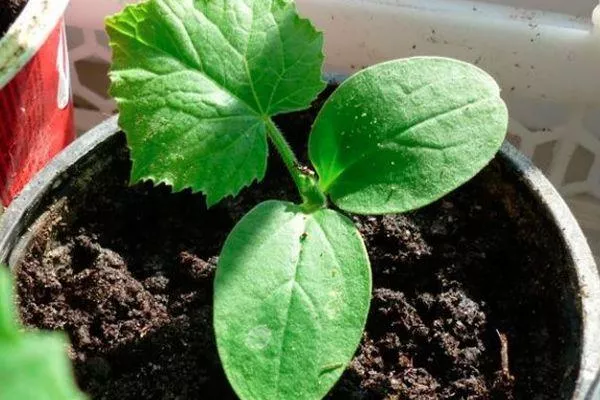
The Balcony cucumber is rarely affected by pathogens. It is almost never affected by powdery mildew, cucumber mosaic virus, or cladosporiosis. However, this hybrid is not immune to insect pests. It is important to detect them early and take appropriate measures.
Most often, cucumbers on balconies are affected by:
- Whitefly - it is repelled by spraying with a decoction of tobacco leaves.
- Spider mites are averse to garlic infusion and high humidity. It's important to water your plants regularly.
- Aphids - a soap solution with mustard added helps to destroy them.
Harvesting
Cucumbers are harvested as they ripen. Leaving the fruit on for too long is not recommended. The more frequently you pick ripe cucumbers, the more vigorously the fruit will develop, the more abundant the harvest will be, and the longer the fruiting period will last.
Reviews
The Balcony cucumber is a truly versatile variety, popular with both city dwellers and gardeners. This hybrid grows well in a wide variety of conditions, is easy to care for, rarely gets sick, and produces delicious fruit. Plant this hybrid on your balcony, and you'll be eating fresh, crisp cucumbers every day.