
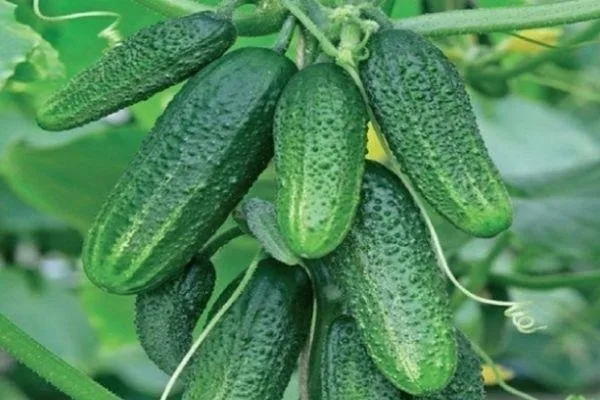
The Babushkin Vnuchok cucumber variety is parthenocarpic, meaning it can self-pollinate. This hybrid is versatile, as it can be used not only fresh but also for canning and preparing a variety of culinary dishes.
Introduction to the variety
This cucumber requires little care and adapts easily to a variety of climates. Its fruits are attractive and transport-resistant, while maintaining their nutritional value and appearance. This variety is ideal for commercial cultivation. Cultivation is possible both in open fields and under temporary shelter.
Originators
The Babushkin Vnuchok variety was created by a team of Russian specialists and received official recognition in 2012. Its developers include S.F. Gavrish, A.E. Portyankin, A.V. Shamshina, V.N. Shevkunov, N.N. Khomchenko, T.Ya. Surovova, and I.S. Pluzhnik.
External characteristics of the plant and cucumbers
The "Babushkin Vnusechok" cucumber, as it's affectionately known, occupies a fairly narrow space in a summer cottage: 3-5 plants are ideal per square meter. The bushes are distinguished by a strong structure and resilience, but their branches are not very developed, and the lateral shoots are formed sparingly.
Although the bushes are sparsely branched, their vines are strong and covered with five lobes of dark green leaves—they are small in size. This variety produces predominantly female flowers, making sterile blooms noticeably less common.
Fruit characteristics:
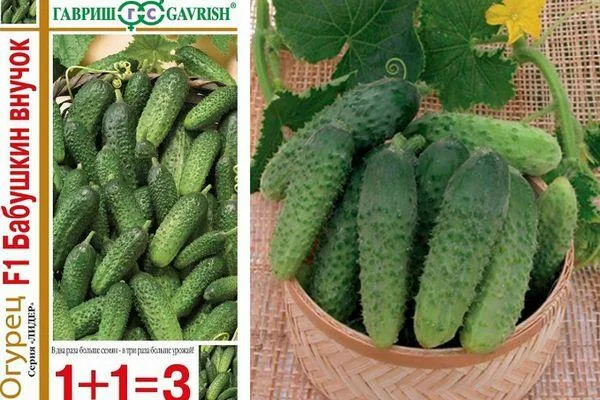
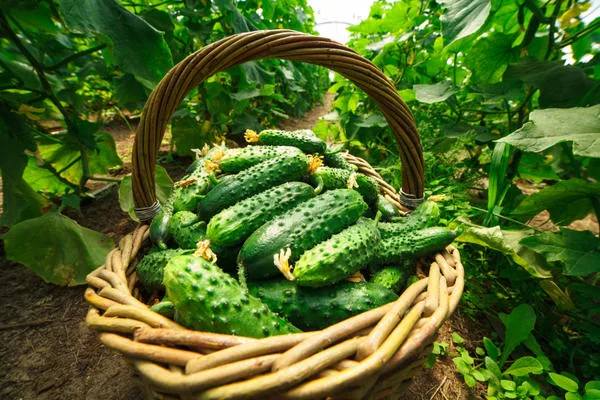
- the shape resembles an oval cylinder with a slightly shortened base;
- the length of the fruits is 8-11 cm;
- the weight of one vegetable ranges from 75 to 150 g, depending on the stage of development (picculines, gherkins, etc.);
- the diameter reaches up to 2.5 cm;
- the color is uneven: dark green at the base, turning into a lighter tone towards the top;
- cucumbers are decorated with longitudinal yellowish-light lines and pronounced spotting;
- the skin is covered with tubercles and light-colored spines;
- the flesh is light green and has a dense texture;
- When eaten, a characteristic crunching sound is heard.
Taste and purpose
This variety wins the hearts of gardeners with its superb flavor. Its dense, air-tight flesh, with small seeds and a pleasant crunch, is a delight for any lover of refreshing vegetables. The aroma of this hybrid variety is vibrant and appetizing.
The hybrid becomes an indispensable component in freshly picked salads, and is also excellent for pickling and preserving for the winter.
Composition, benefits
This hybrid is rich in various useful substances - vitamins: C, A, PP, B1, B2, beta-carotene, microelements: zinc, iron, potassium, manganese, magnesium, iodine, copper, folic acid, chromium, sodium, chlorine, phosphorus.
Cucumber is highly digestible due to its structure, which is 90-91% water. It:
- has a beneficial effect on the thyroid gland, reduces the risk of developing urolithiasis, varicose veins, cardiovascular diseases and helps reduce the level of bad cholesterol in the blood;
- stimulates the elimination of waste, toxins and heavy metal salts from the body.
When ripe, the yield
Grandma's Grandson is a respectable crop. Over the course of a season, 13 to 14-15 kg of cucumbers can be harvested from one square meter. From the moment the first shoots emerge from the ground until the first cucumbers can be harvested, it takes 30 to 43 days, indicating early ripening.
Soil requirements
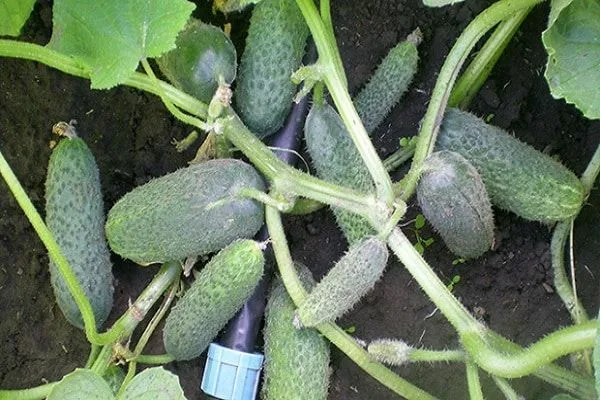
To ensure your Babushkin Vnunchok cucumbers produce good fruit, you need to select the right soil. Ideally, it should have a neutral pH. Slightly acidic soils are also suitable. Here are some tips:
- Loams and sandy loams require minimal fertilization in the fall.
- Sandy soils require more abundant fertilization with organic compounds.
Climate conditions
There's no information on this variety's cold tolerance, so in cooler regions, gardeners always plant cucumbers in greenhouses. Babushkin Vnuchok is known to thrive in sunny locations. Therefore, when choosing an outdoor planting site, choose bright, warm areas. This variety doesn't tolerate drought well.
Positive and negative qualities
The hybrid impresses with the variety of its advantages, among which the following stand out in particular:
Flaws:
How to grow it yourself?
Sowing should begin from the end of April until the first of May. However, this period depends on many factors, including weather, climate zone, and planting method. The main thing to remember is that following all the rules, from seed preparation to proper planting and care of young plants, determines the quality and volume of the harvest.
- ✓ Check the expiration date of the seeds; the optimal shelf life is no more than 2 years.
- ✓ Pay attention to the seed producer; give preference to proven agricultural firms.
Planting by seed and seedling methods
Before sowing, carefully check the seeds, weeding out small and damaged ones that are not suitable for successful cultivation.
Next, the planting material is processed:
- placed in a solution of potassium permanganate with a concentration of 2-3% for a period of up to 30 minutes for disinfection;
- After this, they are left in a growth stimulating agent, following the manufacturer’s instructions (Epin, Heteroauxin, etc.).
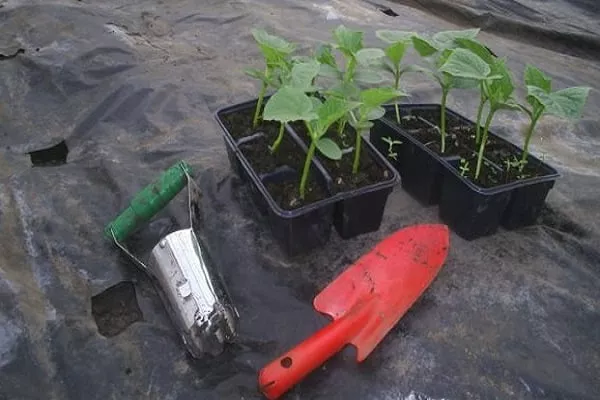
Seeds are planted in small containers or cups—peat pots or longitudinal boxes are best. In southern regions, the process is carried out directly into the soil.
For the seedling method, use soil that can be purchased at a specialty store or prepared at home by mixing compost, peat, humus, and sand. The seeds are planted at a depth of 2-2.5 cm.
When growing in containers, the following points should be considered:
- cover the surface with plastic film;
- maintain the temperature within +25…+29 degrees;
- provide lighting for at least 13-14 hours a day using phytolamps;
- Open the containers every day to ventilate (which prevents rotting) and spray the soil with a spray bottle.
When planting seeds in open ground, it is important:
- wait until the soil temperature has consistently reached +13…+16 degrees and when there is no threat of night frosts;
- make rows with an interval of 50 cm;
- deepen the planting material by 3 cm;
- Place two seeds in each hole, planting them at intervals of 30 cm.
Growing and care
A week after planting, you can expect the first green shoots to appear. If the plants are growing in a greenhouse, open it for a few hours each day to ensure sufficient oxygen supply and maintain optimal humidity.
For successful cultivation, several important rules should be followed:
- Plants are watered only with fresh, warm water, preferably in the morning or evening. In hot weather, watering should be repeated twice a day.
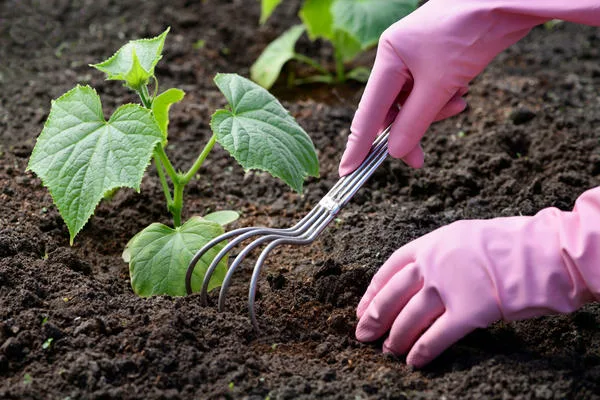
- It is recommended to remove weeds and lightly loosen the soil with each watering.
- The soil is regularly drained and then deepened around the plants, which helps strengthen their root system.
- As the plant grows and develops, the shoots are secured to wooden posts using cotton tape or twine, being careful not to tie the stems too tightly.
Feeding is performed several times at different stages of development:
- two weeks after transplanting the seedlings or the same amount of time after the formation of 3-5 leaves on the bush;
- during the budding period;
- during the ripening of fruits.
| Fertilizer type | Validity period | Recommended dosage |
|---|---|---|
| Compost | 2-3 months | 5 kg/m² |
| Humus | 4-6 months | 3 kg/m² |
Organic mixtures are used for fertilizing. These include ammonium nitrate, potassium preparations, and superphosphate. These substances are diluted in water and applied directly to the roots, avoiding contact with the leaves and stems.
Features and possible difficulties
To avoid any difficulties in gardening, which is especially important for novice gardeners, carefully familiarize yourself with the main aspects of plant growing for the Babushkin Vnuchok variety:
- Cucumber is not demanding to soil conditions, but prefers moist, well-aerated and light soil enriched with humus.
- For optimal growth of hybrid cucumbers, it's important not to plant them in the same spot every season. Rotating crops every 3-4 years is recommended. The best predecessors include tomatoes, potatoes, peas, and corn, while strawberries, pumpkins, squash, watermelons, and melons are not recommended.
- To ensure that water is distributed as evenly as possible during watering, and does not stagnate or run off too quickly, use a rake to create small depressions, but in such a way as not to damage the roots.
- To prevent the bush from growing excessively, remove the main stem after 7 leaves appear.
- Fruits harvested at the wrong time become overripe and their skins become rough. It's important to harvest at least several times a week. This will encourage the bushes to produce more fruit.
Diseases and pests
This variety has proven resistant to diseases such as powdery mildew, brown spot rust, root rot, cucumber mosaic, and downy mildew. Furthermore, it is virtually immune to insect attacks.
But there are factors that can lead to problems:
- presence of weeds in the field;
- excessive moisture in the root area;
- high air humidity in the greenhouse;
- incorrect crop rotation.
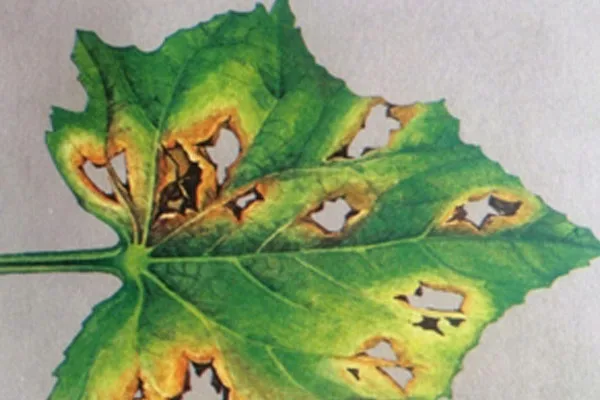
To prevent diseases, plants are carefully inspected for dark spots, leaf damage, or signs of weakening after each watering. If symptoms are detected, the plants are treated with effective products such as Fitosporin, Bordeaux mixture, Quadris, or Thiram.
Harvesting and storage
Throughout the growing season, the fruits are harvested one after another. The vegetables are used to make fresh salads, added to a variety of dishes, preserved, pickled, and salted. However, it's best to do this immediately after harvesting.
This variety is also grown commercially on farms. The resulting harvest is sold both retail and processed in canning factories.
To preserve cucumbers, use wooden boxes with ventilation holes and a cool room where the humidity is 75-85% and the temperature does not rise above +6 degrees.
Reviews
The Babushkin Vnuchok f1 hybrid cucumber is easy to grow. It grows well both outdoors and in a greenhouse, providing a consistent and abundant harvest throughout the season. This variety is resistant to the most common diseases and pests. The cucumbers are crisp, with a mild flavor and a fresh aroma.