
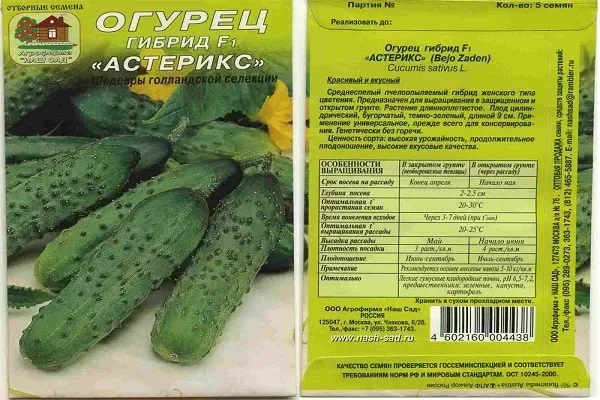
Asterix is an early-ripening hybrid cucumber suitable for open-bed gardening. This variety is distinguished by its abundant productivity, resistance to diseases and pests, and ability to tolerate low temperatures and dry periods. Asterix also adapts quickly to various climatic conditions.
Introduction to the variety
Asterix cucumbers are easy to transport and can be stored in cool, dry conditions for long periods without losing their flavor or quality. The plants easily adapt to climate change and continue to produce a consistent harvest.
Features of selection
The hybrid was developed in the Netherlands by Bejo Zaden BV under the guidance of breeders V. I. Putyatin, N. A. Ilyina, and V. S. Ilyin. The first seeds were obtained in 1995, and in 1998 the variety was officially registered in Russia for use in the Central and Central Black Earth regions.
Specificity of bushes and cucumbers
This medium-sized plant is distinguished by a robust central shoot. It has a moderately developed branching system. Its base consists of attractive, deep-green leaves with light wrinkles and a slightly wavy edge.
Pay attention to other varietal characteristics:
- Flowering is predominantly female, and in most cases, one or two ovaries form at the nodes, although sometimes the number can reach five. This plant has no sterile flowers, making it particularly productive.
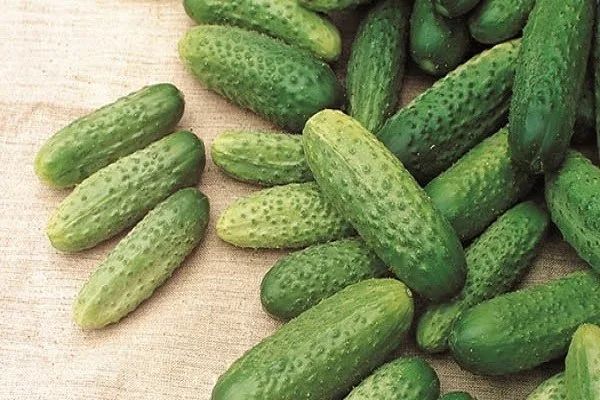
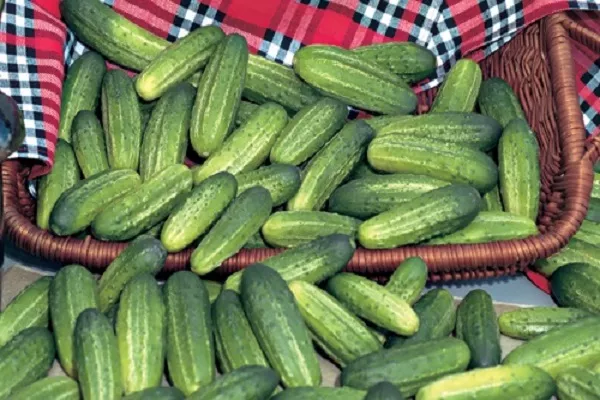
- The fruits are medium-sized, have a classic cylindrical shape with rounded ends.
- The length of cucumbers ranges from 9-15 cm, and the weight is approximately 65 to 90 g.
- The skin of the fruit has a rich greenish color with emerald shades and long light lines, as well as slight spotting.
- The surface is slightly ribbed and has sparse tubercles on which are located several whitish spines that form pubescence.
Taste and application
Asterix is characterized by a refined flavor—it combines a subtle sweetness, deep aroma, and a refreshing note. This is achieved thanks to the crisp, fragrant, and dense flesh. Among the variety's advantages, it's worth noting the absence of voids, bitterness, and excess moisture, a sign of high-quality selection.
The fruits are versatile: they're ideal for canning and preserving, while retaining their firmness and crunch. Cucumbers of this variety are often included in appetizers, salads, and eaten raw.
Fruiting period
The Asterix hybrid is an early variety: from the moment the shoots emerge until the first ripe fruits are harvested, it takes between one and a half months and 55 days. Cultivation via seedlings accelerates growth and fruiting.
Planting seedlings outdoors in early May allows you to expect a harvest as early as June, and plants planted in June will yield fruit in July. The growing season continues until autumn.
Productivity
As a result of testing, the yield of the Asterix cucumber variety was found to be higher than that of the highest-yielding known hybrids. Commercial yields for Asterix range from 130 to 335 centners per hectare, with maximum productivity exceeding 420 centners per hectare.
In private plots, cucumbers can yield up to 13-14 kg per square meter, but to ensure a good marketable appearance, it's important to regularly monitor their size and harvest them on time to prevent them from overgrowing.
Soil requirements
Asterix grows best in light, humus-rich soils with neutral pH (6.5-7.0). To prevent soil depletion, a crop rotation system is recommended: cucumbers grow particularly well after crops such as cabbage or potatoes.
- ✓ The pH level must be strictly within 6.5-7.0, otherwise the plant will not be able to absorb the necessary microelements.
- ✓ The soil must be well drained to avoid waterlogging and root rot.
Varietal uniqueness of planting
To ensure cucumbers have an attractive appearance and uniform shape, and a bountiful harvest, vegetable growing experts strongly recommend strictly following planting instructions.
This variety is sown using two methods:
- directly into open ground;
- through seedlings.
Deadlines
Scientists emphasize the importance of observing the planting timing for each method and carefully preparing the planting beds. The most common method for growing Asterix f1 in cold climates is seedlings, when the soil warms to an optimal temperature of 15-17 degrees Celsius. For seedlings, seeds are planted between April 12-16.
Plant seeds in open ground between May 20-22 and June 8-12, when the soil temperature reaches the same levels as for seedlings.
Preparatory work
Asterix is a cold-sensitive cucumber variety, so it's best planted on the south side of the garden, where it will be protected from the wind and receive adequate sunlight. After the previous vegetables have been harvested (in the fall), thoroughly cultivate the soil:
- dig up;
- remove all weeds;
- To improve the soil, add organic matter when digging – manure/compost/humus.

Sowing processes
Sowing Asterix f1 seeds doesn't require any special preparation, as the planting material has already been treated with fungicides by the manufacturer. However, many gardeners recommend hardening the seeds. This is because cucumbers are sensitive to low temperatures, and a sudden cold snap can kill the young, immature plant.
Peculiarities:
- Hardening of Asterix f1 seeds is accomplished by immersing them in hot water at 50 degrees Celsius for 2 minutes, followed by immersing them in cold water for 2 minutes. Afterward, the seeds are dried on a cloth.
- Plant the seeds in holes 1.5-2 cm deep, then lightly compact the soil and then cover with a layer of mulch, cover the future plants with thick film to retain heat and moisture.
Transplanting seedlings
To grow Asterix seedlings, prepare 500-600 ml containers and fill them with a special soil mixture or a combination of garden soil, humus, and sawdust.
Next, proceed as follows:
- Place the cucumber seeds, nose up, into these containers to a depth of 2 cm.
- Moisten with a spray bottle and move to a warm place for germination.
- When the first shoots appear, move the containers with seedlings to a south-facing windowsill.
- Before planting seedlings in open beds, treat the plant roots with growth stimulants such as Epin or Zircon.
The seedlings are transplanted three weeks after germination. After transplanting, the plants are watered with warm water and covered again with plastic film for several days to create greenhouse conditions.

Planting diagram
Asterix f1 plants are planted at intervals of 40-50 cm between each other and 60-70 cm between rows. This arrangement provides sufficient space for each plant to grow, preventing them from intertwining and shading each other. This simplifies both fruit harvesting and overall plant maintenance.
Rules for caring for cucumbers
The variety requires adherence to generally accepted agronomic practices, including regular watering, fertilization, loosening the trunk area and maintaining the plants in an upright position.
Watering
To avoid overheating cucumbers, water them in the morning or evening, when the sun's rays are at their mildest. Most often, water heated by the sun or preheated water is used. Sometimes, artificial sprinklers can be used.
Rules:
- Pour the liquid directly near the roots of the bushes to prevent the development of root rot.
- Typically, more than 20-23 liters of water are required per 1 square meter.
- The frequency depends on weather conditions: in dry conditions, bushes need daily watering, while in comfortable temperatures, once every two to three days will be sufficient.
Garter and shaping of bushes
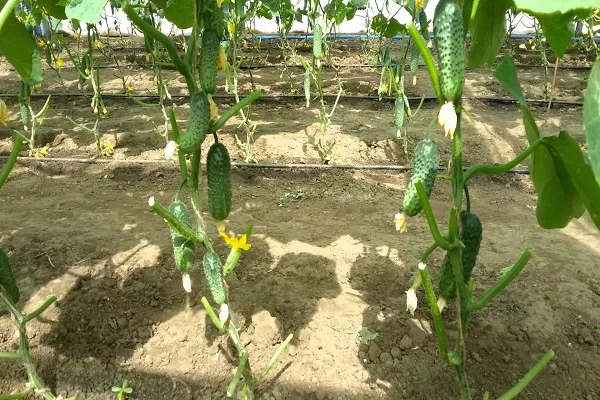
Asterix is a cucumber variety that requires training on a vertical support. The central stem is attached to a trellis, and its upper part is bent downward.
Try to remove excess side shoots. It's important to leave the lower shoots and the main stem of the plant intact. Trim the remaining branches back to 45-55 cm from the base.
Fertilizer
During the growing season, Asterix is fertilized three times. For this, use complex fertilizers such as Chisty List, Agro Nova, or Rodnichok, as well as potassium, superphosphate, urea, and nitrophoska.
Hilling
To prevent a crust from forming on the surface of the soil around the cucumbers, regularly loosen and rake the soil under the trunk. Since cucumber roots are located close to the surface, they should be carefully pierced with a pitchfork.
Hilling is necessary to strengthen the root system and stimulate the formation of new root shoots.
Resistance to diseases and pests
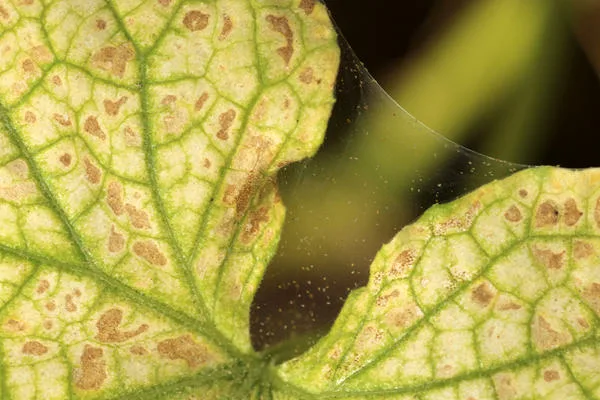
Although the Asterix F1 cucumber variety exhibits excellent resistance to diseases such as powdery mildew, olive spot, cladosporiosis, and cucumber mosaic, it can still fall victim to downy mildew and insect attacks if not properly cared for.
To detect signs of disease or pest infestation early, experts recommend carefully studying information about symptoms and methods of combating them:
- Downy mildew. Downy mildew, also known as LMR, is a serious disease that can destroy all Asterix plants and fruits. Initial symptoms include spots and holes on the leaves, as well as the formation of oily marks of various shapes.
Leaves begin to turn brown, and a whitish coating with small black spots appears on their undersides. The disease negatively impacts the quality of the fruit: cucumbers become pale and lose their flavor, becoming less juicy and less tasty.
To prevent infection and protect plants, spray cucumbers with special chemicals - Alirin-B, Ordan, Topaz, Acrobat MC or Quadris. - Aphid. This small parasite happily feeds on plant matter. It has a phenomenal ability to reproduce and destroys crops with astonishing speed. Signs include sticky droplets forming on the lower leaves, and leaf blades becoming deformed, curling, and dying.
Due to aphid attacks, plant ovaries and flowers begin to fall, and numerous ants appear in the fields. To combat aphids, buy Karbofos, Iskra-Bio, Aktara, or Tanrek. - Thrips. This small but very common pest leaves narrow, gray or white streaks on cucumber leaves. It causes stunted growth, leaf loss, and failure of fruit set.
To combat thrips, it is recommended to use the following preparations: Actellic, Karate, Karbofos, Fitoverm or Vertimek.
Harvesting and storage
This variety is prolific, so the vegetables are harvested every couple of days. Irregular harvesting can delay the formation of new ovaries and lead to overripening of the cucumbers.
For long-term storage, temperatures around 4-5 degrees Celsius are optimal. A refrigerator, basement, or cellar is usually suitable.
Positive and negative qualities
This variety is versatile: it's suitable for winter preservation, pickling, and fresh consumption, such as in salads. It also has other advantages:
Flaws:
Reviews
The Asterix F1 variety is ideal for cultivation in both southern, northern, and central regions. It has a well-developed root system and high resistance to various diseases. To achieve a good harvest, simply follow basic plant care guidelines.