
Aramis F1 is a representative of the early parthenocarpic (self-pollinating) cucumber hybrid category. Domestic gardeners are increasingly choosing it for their gardens because its bushes are highly productive, easy to care for, and fairly disease-resistant.
Introduction to the variety
Aramis is a new domestically bred variety developed by Russian scientists (Poisk agricultural firm):
- Maksimov S. V.;
- Klimenko N. N.;
- Baklanova O. V.
In 2008, it was included in the State Register of the Russian Federation as a variety of cucumber intended for cultivation in private household plots and farmland located in the following regions:
- Northern;
- North-West;
- Central;
- Volga-Vyatka;
- Central Black Earth Region;
- North Caucasian;
- Middle Volga;
- Lower Volga;
- Ural;
- West Siberian;
- East Siberian;
- Far Eastern.
The hybrid has a high yield:
- 10-11 kg per 1 sq. m - when cultivating cucumber bushes in open areas of the garden;
- 13.3 kg per 1 sq. m - when growing vegetable crops in open ground with a temporary film cover.
Characteristic features of the appearance of the plant and fruits
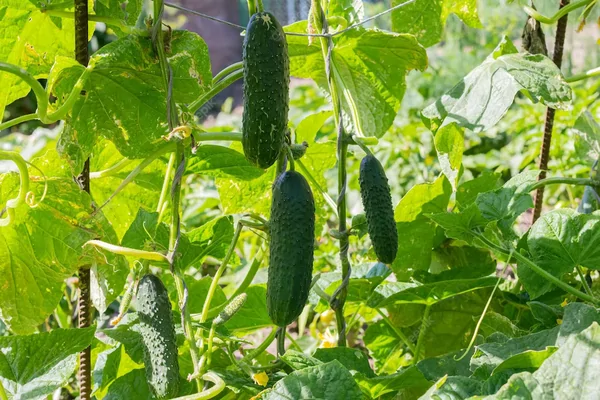
Aramis bushes are indeterminate, reaching a height of up to 1 m. They are medium-sized climbers, covered in rich green foliage of medium size. Bright yellow flowers appear on the plants in clusters (several in each). All flowers are female. Fruiting occurs in clusters.
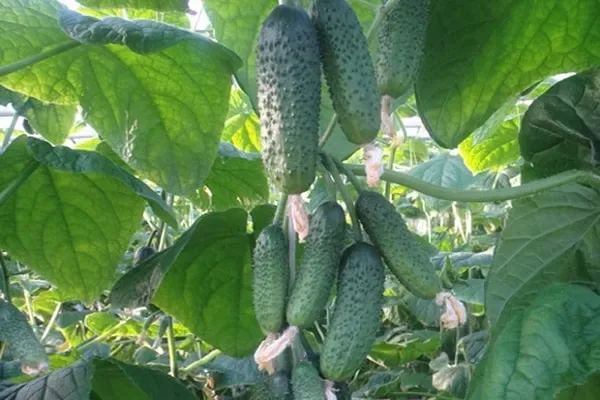
Cucumbers ripen in bunches on the bushes. Gardeners pick them when they're gherkins. The characteristics of the hybrid's fruit are as follows:
- elongated cylindrical shape (length exceeds diameter by 2.9 times);
- weight - 80-90 g;
- small size (no more than 7-9 cm in length);
- dense, bright green skin with a pattern of barely noticeable short stripes;
- large tuberculate surface (medium-dense arrangement of tubercles);
- the presence of white spiny pubescence on the skin:
- the pulp is juicy, tender, and crunchy.
Hybrid cucumbers not only have an attractive appearance but also excellent shelf life. The fruits retain their firmness and juiciness for 10-14 days if stored in the refrigerator's vegetable compartment. They are also suitable for long-distance transportation.
Purpose and taste
Aramis gherkins are delicious and crisp. They delight the eater with their refreshing, slightly sweet flavor and are never bitter. Even cold temperatures don't cause them to lose their flavor or become bitter.
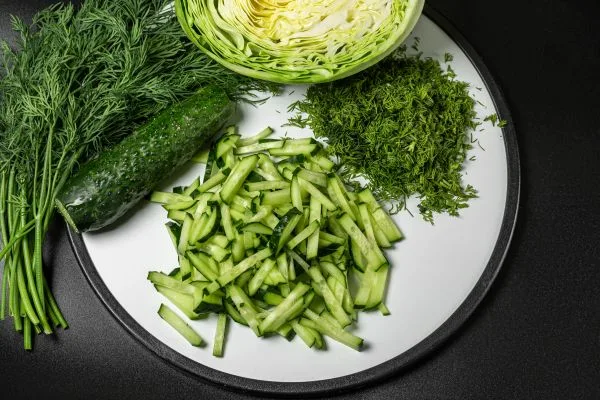
The hybrid's harvest is versatile. These cucumbers are eaten fresh and added to summer salads. Their small size and neat shape make them excellent for canning for the winter. Homemakers also salt, pickle, and ferment them.
Advantages and disadvantages
This vegetable variety has many advantages. It also has several significant drawbacks.
Positive qualities:
Cons:
Growing and care
This variety is designed for cultivation in open ground (with or without temporary plastic cover). Grow the Aramis hybrid cucumber using one of two methods:
- through seedlings;
- direct sowing in open ground or under temporary film cover.
The most suitable soil for growing vegetable crops:
- loose;
- light;
- loamy or sandy loam;
- neutral in acidity;
- well aerated;
- sufficiently moist;
- with a high organic content (rotted manure, peat, compost).
- ✓ The pH level must be strictly within 6.0-7.0 for optimal absorption of nutrients.
- ✓ The soil must contain at least 4% organic matter to ensure the necessary microflora.
The site for the cucumber bed should be protected from strong winds and drafts, and receive full sun (the hybrid does not tolerate shade or partial shade). Dig it over in the fall. Fertilize it. If the soil is acidic, add lime.
Set aside space for planting Aramis bushes where the best predecessors for cucumbers previously grew:
- parsley;
- legumes;
- corn;
- onions.
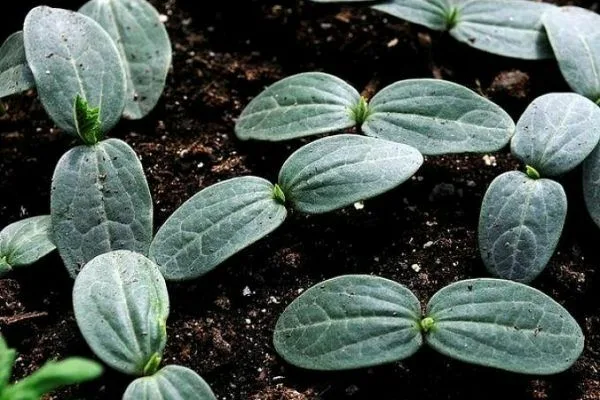
Transplant the seedlings into the garden beds once they have at least 3 true leaves (early June). Follow this pattern:
- the distance between seedling bushes is 30 cm;
- between rows - 60 cm;
- planting density - 5-7 bushes per 1 sq. m.
Direct sowing of seeds into garden soil should be done when the soil has warmed to 14-16°C. Follow the procedure step by step:
- Level the soil in the area. Make holes in it 2 cm deep.
- Water them.
- Place 1-2 seeds in each hole and cover them with soil.
- Cover the crops with film.
Maintain your cucumber bed properly to ensure a bountiful and high-quality harvest. Follow these steps:
- Water the bushesCucumbers are moisture-loving plants. They especially need moisture during and after flowering. A lack of moisture can cause flower drop. Water 2-3 times a week. Apply up to 3 liters of water per mature plant.
- Feed the plantingsApply fertilizer 2-5 times per season. Provide plants with nitrogen early in their growth phase, and phosphorus and potassium during fruit set.
After the first true leaves appear on the seedlings, water them with a 1:10 mullein solution. For adult cucumbers, use superphosphate, potassium sulfate, and wood ash.
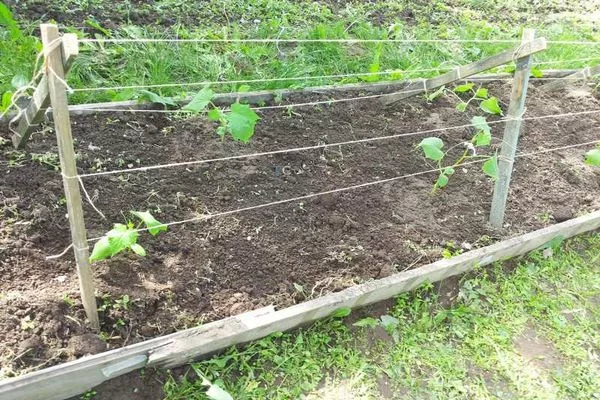
Cucumbers don't respond well to high concentrations of fertilizer. Feed them frequently (every 10-14 days), but at a lower dose. - Tie up the bushesSecure them to a trellis to prevent the shoots from breaking under the weight of ripening fruit. Growing vertically will also make caring for the crop and harvesting easier.
- Pinch out plantsAfter 6-7 leaves appear on the bush, pinch its main stem to stimulate branching and increase yield.
- Weed and loosen the soilThese measures will strengthen the plant's immunity and prevent diseases and pests. Perform these procedures after watering at least once a week. Loosen the soil to a depth of 4 cm, without disturbing the roots.
- Carry out prevention and control of diseases and pestsThe hybrid is resistant to many crop infections, particularly cucumber mosaic virus and powdery mildew. Preventative treatments with fungicides and insecticides should be carried out before flowering. Then, use biological products (Fitosporin-M, Baktofit, Fitoverm).
Use folk remedies against insects (tobacco dust, soapy water, soda solution, onion and garlic broth, a mixture of red and black pepper).
- Two weeks after planting the seedlings, apply nitrogen fertilizer (10 g of ammonium nitrate per 10 liters of water).
- At the beginning of flowering, feed the plants with phosphorus-potassium fertilizer (15 g superphosphate and 10 g potassium sulfate per 10 liters of water).
- During fruiting, repeat the phosphorus-potassium fertilization every 2 weeks.
Reviews
Aramis is an early-ripening, self-pollinating cucumber hybrid with many advantages. Its low maintenance and strong immune system make it easy to grow, even for a novice gardener. It's an excellent choice for those looking to grow beautiful and delicious gherkins, ideal for canning, pickling, and salting.