
The Anakonda f1 cucumber, developed by the renowned agricultural company Aelita, stands out for its unique flavor and shape, as well as its competitive yield. This hybridized variety, intended for salads and cooking, is distinguished by its ability to form abundant clusters of fruit.
Introduction to the variety
Anaconda f1 is a self-pollinating parthenocarpic hybrid that combines excellent commercial performance with ease of care. Unlike other varieties, it is considered a low-growing Chinese cucumber, producing fruits that are astonishingly long.
Originators
The creators are Vladimir Georgievich Kachainik, Mikhail Nikolaevich Gulkin, and Galina Vladimirovna Golovko. The variety was officially introduced for commercial use in 2019.
External characteristics of the plant and cucumbers
This plant is characterized by compact growth and limited development. It can be recognized by the following characteristics:
- The height of the main stem reaches approximately 50 cm, and branching is poorly expressed.
- The leaves are of medium length and have a rich green hue.
- The bush is characterized by weak climbing, has long and strong roots, a moderate number of leaves and a strong structure.
- The leaf blades are round-polygonal in shape, slightly hairy, with a leathery covering.
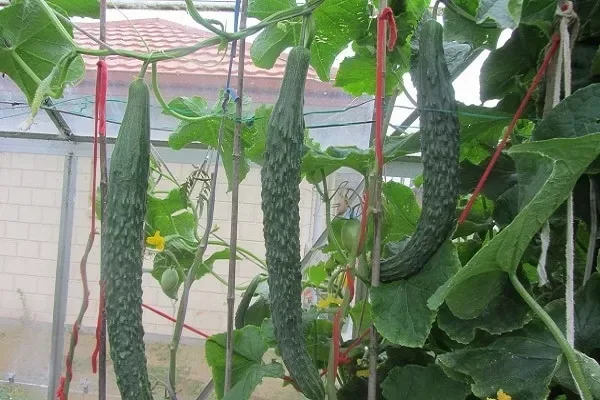
- The fruits are impressive in size (up to 240-250 g), up to 50 cm long, cylindrical in shape, and have an average diameter of 3 cm. If harvested when not fully ripe (technical, not biological), the length will be 30-40 cm.
- The skin is shiny, with small but numerous spines, refined with an emerald green tone.
- Cucumbers have a characteristic neck.
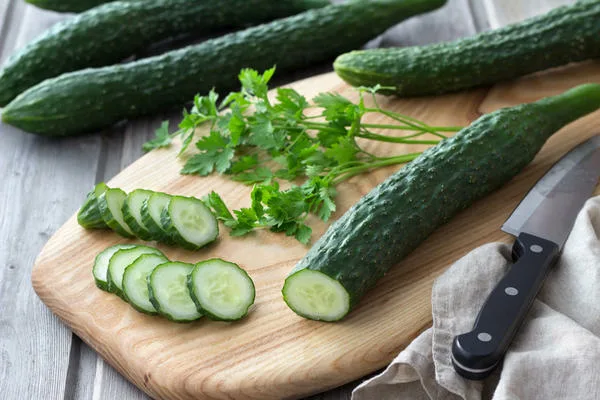
- The pulp is juicy, dense and at the same time tender, and has no voids.
- The seeds are quite small and not coarse, so you won't feel them while eating the vegetable.
Taste and purpose
This hybrid variety boasts a mild, sweet flavor without bitterness and a refreshing vegetable aroma. Its flavor is best enjoyed with salads and light appetizers, especially during the warmer months.
Cucumbers can be pickled and preserved for the winter – the flesh and skin do not soften, but remain as crisp and elastic as possible.
Types of Anaconda
| Name | Hybrid type | Length of the fetus | Fruit color | Purpose |
|---|---|---|---|---|
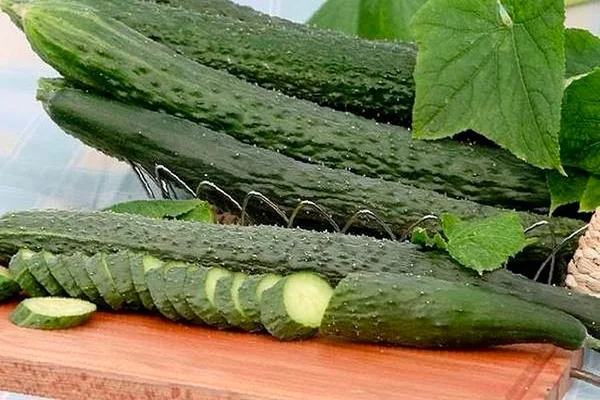
| Green anaconda | Parthenocarpic | Up to 50 cm | Emerald green | Salads, canning |
| White anaconda | Parthenocarpic | Up to 35 cm | Snow-white | Salads |
Currently, there are two varieties of Anaconda: the common green and the white. They have slight differences but many common characteristics:
- White Anaconda is also a hybrid cucumber variety, created by the same breeders, but in 2020.
- The fruits of this variety grow to a maximum of only 35 cm in length and weigh about 160 g.
- Their shape resembles a turban or a semicircle, which gives the vegetables a special appeal and recognizability.
- The cucumber's surface is covered with large tubercles, and its taste deserves praise: it is fresh and crisp, ideal only for salads - vegetables cannot be canned.
- The leaves are large, not medium-sized like those of the Green Anaconda.
- The variety ripens 7-10 days earlier.
One of the variety's key characteristics is its snow-white color. The other parameters are identical.
When it ripens and the yield
Anakonda f1 is a moderate-ripening variety, requiring 45-52 days for fruit formation. This cucumber variety demonstrates impressive productivity, yielding up to 12.5-13 kg per square meter under plastic covers, which is almost 4 kg more than the similar Chinese Snake variety.
Planting rules
Anaconda f1 is successfully cultivated in various regions, including the North Caucasus, the Urals, and even southern Siberia. It's important that the site where it's to be planted has previously been planted with cruciferous plants or lettuce. Cucumbers prefer semi-shaded areas and don't tolerate elevated locations.
- ✓ The soil acidity level must be strictly within the range of 6.3-6.4 pH, which is critical for the absorption of nutrients.
- ✓ The digging depth in autumn should be 45-55 cm to ensure optimal aeration of the root system.
Working with a garden bed
This cucumber variety requires light, moderately moist, and fertile soil. The ideal soil pH for Anaconda f1 is 6.3-6.4. In early autumn, the bed for this variety is thoroughly cleaned, dug to a depth of 45-55 cm, and fertilized with finely ground wood ash.
A day or two before planting seedlings or sowing seeds, gently loosen the soil again, remove weeds, treat with Coragen, and fertilize with concentrated mullein with added monophosphate. Leave it like this for a couple of weeks.
Germination of seedlings
To ensure cucumbers thrive, it's recommended to plant them in a greenhouse as seedlings. However, this must be done according to certain guidelines:
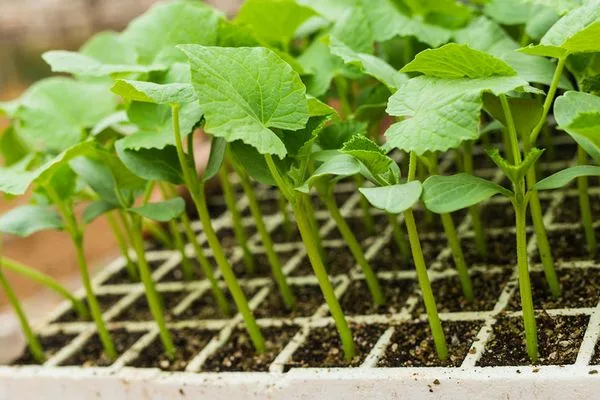
- Germinate hybrid seeds in individual containers with a volume of at least 450-500 ml.
- Deepen the planting material into the soil mixture by 1.5 cm.
- Grow for 26-28 days.
- During this period, regularly water the seedlings both morning and evening, as the seeds of this variety require a sufficient amount of moisture to germinate.
- The sprouts are considered ready for transplantation when they have formed four full leaves.
- After this, begin to harden them by taking them out into the fresh air in the morning for 40-90 minutes for a week.
Planting seedlings
The optimal time for transplanting seedlings outdoors is from May 7-8 to May 15-20, when the air temperature is consistently above 20°C (the exact date depends on the region and current weather conditions). It's best to choose a cloudy day for planting, avoiding bright sunlight.
Please adhere to some nuances:
- Plant the bushes 8-9 cm deep, but in any case, use the size of the root system and the root ball as a guide. Keep in mind that the lowest leaves should be above ground.
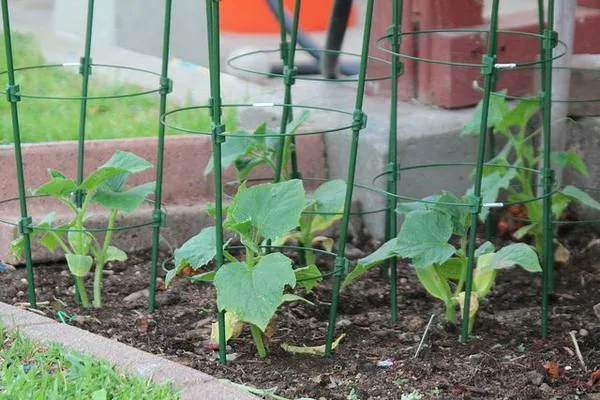
- Once the plants have adapted and grown a little, tie them to supports. It's best to install them while planting the seedlings to avoid damaging the root shoots later.
Cucumbers do not tolerate overcrowding, so place no more than three plants per square meter of bed, leaving 40-50 cm of space between them, and up to 50-60 cm between rows.

Principles of care
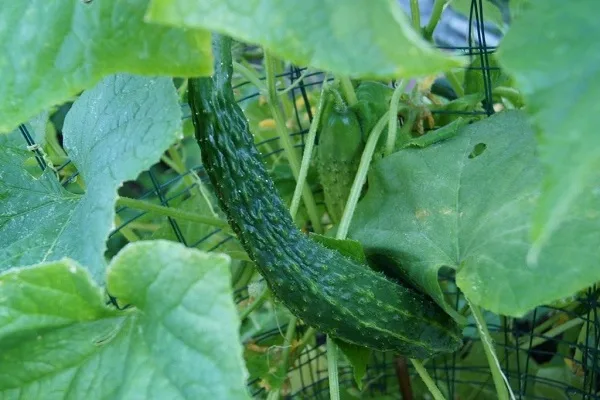
Like any other cucumber, the variety presented above requires regular watering and occasional fertilization. This hybrid requires careful care: you'll need to shape the plant starting from the main stem and trim the side branches above the third leaf. Weeding every five to seven days is equally important.
The nuances of irrigation
In greenhouse conditions, watering is required approximately every four days. However, the frequency of watering should be adjusted depending on the soil moisture level: if the top 12-15 cm of the bed is dry, the cucumbers need watering. It's important to remember that the plant prefers water temperatures no lower than 22°C.
The optimal time for watering is early morning, after the dew has evaporated, or evening, after dark. Overwatering should be avoided in a greenhouse, so loosen the soil around the Anaconda f1 roots every other watering to prevent rot.
Features of top dressing
Fertilizer plays a key role not only in stimulating the growth of Anakonda f1 plants but also in achieving their characteristic flavor. Experienced vegetable growers recommend following the following fertilizing schedule for cucumbers:
- 13-15 days after transplanting the seedlings into the soil (regardless of whether these are open beds or protected structures), it is necessary to add boric acid mixed with urea.
- During the end of budding, use an ash solution with the addition of potassium sulfate.
- After the first ripe cucumber appears, use bird droppings diluted with a Superphosphate solution.
Resistance to diseases and pests
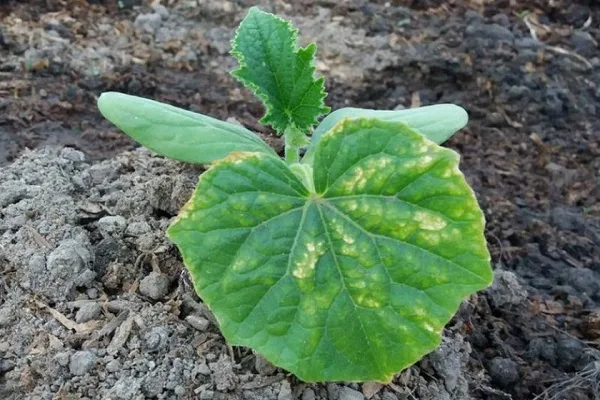
The Anakonda f1 cucumber variety boasts good resistance to various diseases, including powdery mildew, viral mosaic, and cladosporiosis. However, this variety can be susceptible to anthracnose, as well as mites and thrips. How to recognize and treat the problem:
- Copperhead. This anthracnose, caused by the fungus Colletotrichum, is particularly active in greenhouses with chronically overwatered areas. On leaves, the disease appears as dried-out areas with sunken, reddish spots.
To combat anthracnose, immediate action is necessary: treat plants with Tiram or Thiovit Jet. As a folk remedy, use serum with 5 drops of iodine added. To prevent the disease, spraying cucumbers with sorrel infusion is recommended. - Spider mite. These microscopic pests, known as Tetranychus urticaria, often attack cucumbers grown in densely populated greenhouses. They prefer dry climates and high temperatures.
The main sign of their presence in the garden is a thin, silvery web that wraps around the stems of young bushes. If the mites are not numerous, a calendula tincture mixed with regular soap can help save the plants. If the infestation is severe, spray the cucumbers with Kleschevit or Masai. - Thrips. These small winged insects, belonging to the order Thrips, overwinter in the soil and often settle on cucumber crops in greenhouses where the plants lack oxygen. Crowded plantings also facilitate their spread.
Thrips manifest themselves through sticky secretions and scorched spots on the leaf surface. To get rid of affected plants, spray the bushes with Vertimek or Guapsin. To prevent and protect the variety from infestation, use an infusion of marigolds or dandelions.
Harvesting and storage
Anaconda f1 cucumbers begin bearing fruit after June 20th. Once the first fruits appear, they should be picked every two days to prevent them from losing their shape and developing a bitter taste. The optimal time for picking cucumbers is early morning, 15-30 minutes after they have been watered.
The fruit is carefully cut off with pruning shears, leaving the stem on the plant. Harvested vegetables are best stored in the refrigerator in a plastic bag, where they will stay fresh for up to three days. However, for the best flavor, it is recommended to consume Anakonda f1 cucumbers within the first day after harvesting.
Positive and negative qualities
This new hybrid, despite its recent origins, has already won the hearts of our gardeners and summer residents. It possesses numerous advantages. However, it also has some drawbacks.
Advantages:
Flaws:
Reviews
Chinese Anaconda cucumbers are renowned for their long size, pleasant flavor, and high-quality harvest. While they are highly productive, their shelf life is limited, making it difficult for many large farmers to grow them.