
The Amur cucumber is a hybrid variety developed by the Manul breeding and seed company. Since 2000, the variety has been included in the Russian State Register. It is suitable for cultivation in private gardens and small farms in any region. This variety offers numerous advantages and a high yield.

Amur cucumber seeds
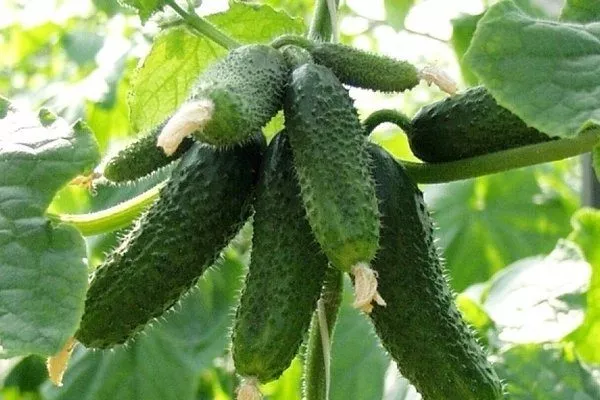
Cucumber belongs to the bunch type of fruiting
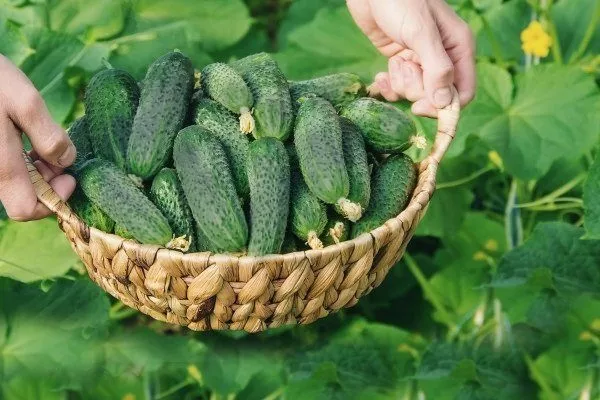
Ripe Amur cucumbers
Description of cucumber varieties
The Amur cucumber is an ultra-early hybrid—fruiting begins 37-40 days after germination. The plant can be grown both outdoors and in greenhouses.
Cucumber Amur is parthenocarpic plant, meaning it has a female flowering pattern. It is a vigorous indeterminate cultivar—stem growth is unlimited. The plant is characterized by very little branching, which virtually eliminates the need for bush training. It typically produces 1-2 ovaries per node. Several fruits typically ripen simultaneously.
Amur leaves are medium-sized and green, with slightly wavy edges. The fruits are oval-fusiform, slightly wrinkled, finely tuberculated, and have a short neck. They reach 12-15 cm in length and weigh an average of 100 g.
The fruit has dark green skin, the first third of which is covered with faint, light-colored longitudinal stripes. The Amur variety is characterized by light pubescence and the presence of white spines.
The main harvest is collected in the first month of fruiting. 12-14 kg of cucumbers are harvested per square meter. Fruit growth is characteristic along the entire length of the vine.
A key feature of this variety is its self-regulating branching. Side shoots appear only after the main shoot has actively grown and the main crop has formed.
Advantages and disadvantages
The Amur cucumber has many advantages:
- ultra-early ripening period;
- no need for pollination;
- cold resistance;
- branching is self-regulating, there is practically no need to shape the bush;
- cluster-type fruit formation;
- fruiting is abundant and long-lasting.
- short-fruitedness;
- excellent taste;
- resistance to many diseases;
- versatility in application.
The Amur variety also has some disadvantages:
The plant bears fruit actively for only a month, and if harvested late, the fruits become overgrown and lose flavor. This variety's disease resistance has one caveat: this quality becomes apparent when grown on a trellis.
Soil requirements
Soil preparation for growing Amur cucumbers should begin in the fall. It should be dug over and superphosphate added. Before planting in the spring, fertilize the soil with rotted manure and wood ash.
- ✓ The soil should be light, breathable, and have a high organic content.
- ✓ The optimal soil pH level for Amur cucumbers is 6.0-6.5.
After planting, mulching is effective. Peat (shredded) and sawdust are used for this.
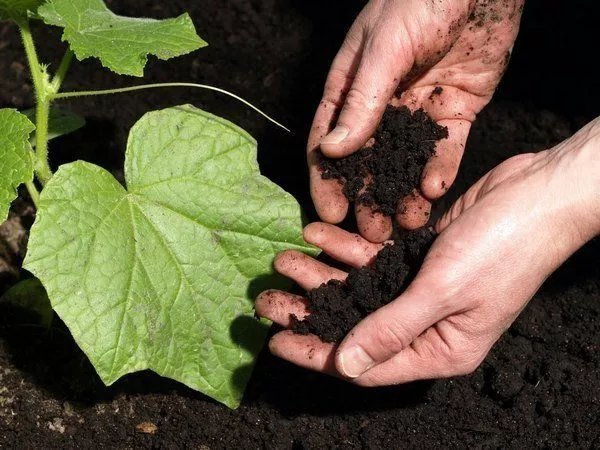
The crop's ultra-early ripening and high yield put a significant strain on the soil, leading to rapid depletion. This problem can be avoided even at the seedling stage by properly composing the soil mixture. It should consist of humus, peat, forest soil, and sand. Mix them in equal parts, and add 1 tablespoon of nitroammophoska and 3-4 tablespoons of wood ash for every 10 liters (0.5 gal).
Rules for sowing seeds and planting seedlings
An important feature of the Amur variety is that the seeds are sold already processed. This is evidenced by their colored coating. This processing means the seeds do not require pre-soaking or germination – they can be used immediately for planting in open ground or for seedlings.
Amur is an early cucumber variety, so it can be planted outdoors. In this case, it's necessary to provide temporary cover—arches covered with film or agrofibre. You can also use ordinary plastic bottles, covering the holes with makeshift cups.
The crop can be planted in open ground immediately after the end of frost using seedlings, or by seeds at temperatures above 24 degrees Celsius. In temperate regions, seeds should be sown by mid-June, and in southern regions, by the end of the month.
The video below explains how to plant Amur cucumber seedlings:
The Amur cucumber can be planted not only in traditional garden beds, but also in a compost heap, bags, barrels, or boxes. To fill the container, use natural debris such as fallen leaves, weeds, twigs, and household waste. The top layer should be a mixture of garden soil and humus or compost. Mix them equally.
Planting density depends on the method used. In a greenhouse, it's recommended to plant 3 plants per square meter, and in open ground, 4-5 plants. When using 200-liter barrels, plant 3-4 plants, and in a bag, 1-2.
If you want an early harvest, you need to plant Amur seedlings. They are grown according to the following rules:
- sow seeds for seedlings a month before their planned planting;
- use separate pots or cups - plant 1-3 seeds in each container;
- For growing seedlings It is recommended to use a ready-made mixture - its composition is maximally adapted and rich;
- if there are several seedlings in one container, leave the strongest specimen - the rest must be removed carefully so as not to damage the roots;
- To plant seedlings, the soil must warm up to at least 16 degrees.
When planting seedlings in open ground, it's recommended to cover the seedlings almost completely with soil. This ensures the development of a strong root system, the key to a bountiful harvest.
Post-planting care
The Amur cucumber is relatively easy to care for. This involves the following steps:
- WateringIt should be abundant during periods of active fruiting and during dry periods. No more than 20 liters of water per square meter is needed; during drought, sprinkling is effective when solar activity is minimal. The water temperature should be up to 25 degrees Celsius.
- Top dressingFertilizer should be applied at least 2-3 times. Complex fertilizers are effective. The first application is necessary at the beginning of flowering, then repeat at intervals of 1-1.5 weeks. Special fertilizer mixtures such as BioHumus, Agricola, and Zdraven are good choices. Green fertilizers—fermented infusions of weeds (nettle is commonly used)—are also effective. The infusion should be diluted in 5 parts water. Apply 1.5-2 liters of this solution per bush.
- Bush formationThe first removal of inflorescences is required before 5-6 true leaves develop. To tie up the vines, it is necessary to provide vertical supports – there are many ovaries, so untied stems may not be able to withstand the weight.
How to achieve a bountiful harvest?
The typical fruiting period for Amur rhododendron is one month. During this time, adequate watering and regular fertilizing are necessary.
It's important to remember the recommended water temperature for irrigation. If it's too cold, fruit growth will slow and the risk of disease will increase.
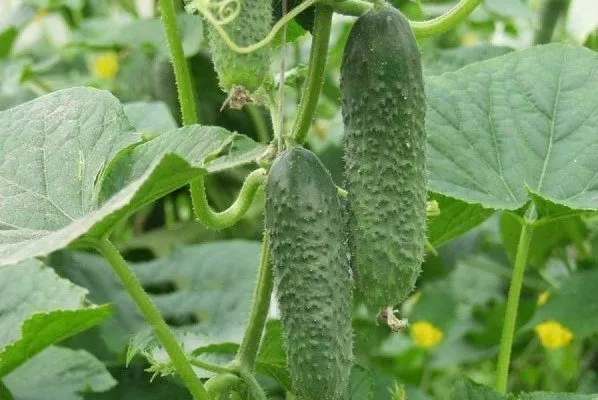
Diseases affect the qualitative and quantitative characteristics of the crop. Timely prevention is essential.
The harvest period can be extended by using a conveyor-type planting method. This means planting the crops at regular intervals rather than on the same day. A month between the first and last plantings will be most effective.
Diseases and their prevention
Amur is characterized by high resistance to various pests and diseases, but certain factors can trigger such problems. It is important to carry out timely prevention and, if necessary, treatment.
Diseases may be the following:
- CladosporiosisThe disease manifests itself as rapidly growing dark brown spots on leaves and fruits. It is caused by the remains of diseased plants in the soil. Bordeaux mixture and special preparations are used for prevention.
- Powdery mildewThis fungal disease is characterized by the appearance of a white coating on the surface of the leaves, followed by yellowing and drying. It is usually caused by cloudy and cold weather. Fungicides and colloidal sulfur solutions are used for treatment and prevention.
- White rotThis disease is also known as sclerotinia. It manifests itself as gradually darkening and spreading white spots on stems or leaves, followed by their rotting. Prevention involves planting bushes at a sufficient distance from each other, removing affected plant parts, and treating the soil with lime and crushed charcoal.
- AntsThese insects are beneficial, but they can bring aphids or damage the crop's root system. They can be eliminated by treating the soil with boiling water, pouring kerosene into the anthill, or using special traps.
- WhiteflyThe insect's larvae feed on plant sap, causing damage. To prevent this, loosen the soil and plant tobacco near the cucumbers.
Harvesting and storage rules
Harvesting should be done 1-2 times a week. Harvesting less frequently will cause the fruit to become coarse and lose flavor.
The Amur variety is considered a salad variety, so it's often eaten during the fruiting period. This hybrid is also suitable for canning, but it should be harvested and processed quickly, otherwise the flavor will change and the skin will become rougher.
Cucumbers of this variety are often grown commercially because they store well and survive transportation. At home, the fruits should be stored in plastic bags in the refrigerator for no more than a week.
Amur cucumbers are ideal for pickling. The fruits can even be frozen whole—in winter, they can be grated and added to prepared dishes.
The Amur cucumber is a hybrid that ripens in an extremely short time. It produces a good yield, and fruiting can be extended using various techniques. Proper care, including a comprehensive range of measures, is essential.