
The Altai cucumber is a self-sufficient variety, so its seeds can be used for planting the following season. It's considered an easy-to-grow crop, grown in open beds, but in harsh climates, greenhouse planting is acceptable. The varietal characteristics are excellent, but pollination by bees is essential.
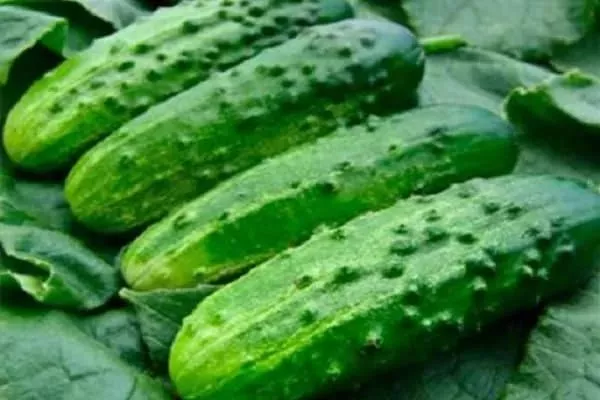
Introduction to the variety
Altai cucumbers are highly disease-resistant, making them ideal for large-scale cultivation. This variety is particularly popular among gardening enthusiasts, known for its substantial yields and delicious flavor.
Origin
Altai was the result of work by vegetable breeders at the Federal Scientific Center for Vegetable Growing in 1977. Over the following years, after extensive testing and the introduction of various improvements, this cucumber variety was officially registered in the State Register in 1981 and approved for widespread use.
Bush
The Altai bush has moderate branching, with its main shoot, which spreads along the ground, reaching a length of 120-130 cm. The bush has slightly convex contours with a rounded shape.
Other varietal characteristics:
- The stem's surface is decorated with small bristles. Three to five branches extend from the main shoot. At the fourth node, the bush begins to form long tendrils from the base.
- Altai's pentagonal leaves are attached to the stem by long petioles. Their average diameter reaches 13-15 cm, and their rough surface is adorned with an emerald green hue. When dehydrated, the leaves darken, turning brown. Young foliage displays deep folds between the veins.
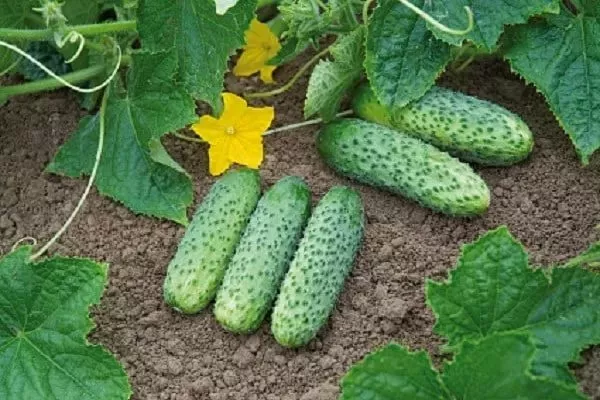
- Along the stem, along the loop, are bright yellow male and female flowers with five petals. The female flowers are larger in size than the male flowers.
- The root system of Altai shrubs is robust, with a main root extending 20 to 35 cm into the ground and producing numerous branches. Some of these branches can extend up to 100-110 cm or more from the bush.
- On cucumber stems, both types of flowers grow side by side, with female flowers preferring a place in the leaf axils, often appearing in pairs.
Fruit
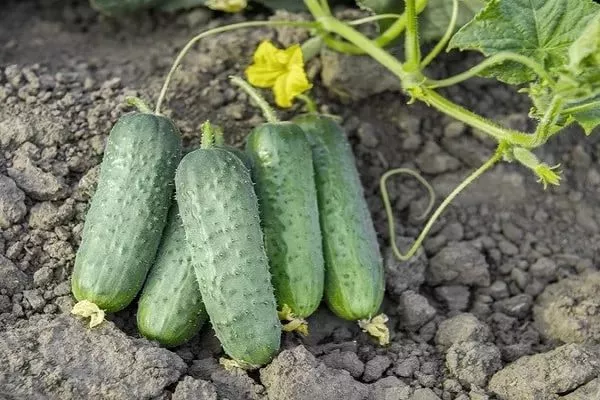
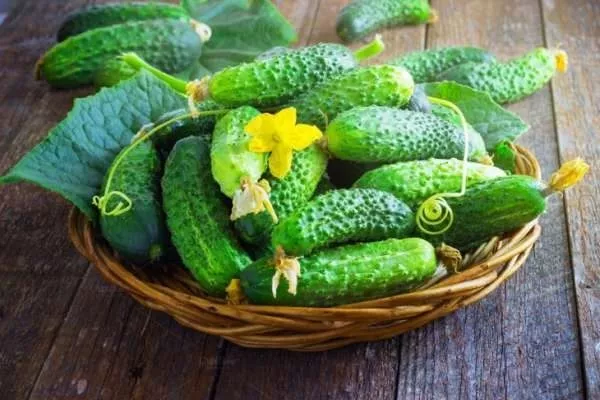
Altai vegetables are oval-shaped and weigh on average 90 to 120 g. Note the fruit's other parameters:
- The cross-sectional dimensions of cucumbers are 3-4.5 cm, and the length is from 9 to 13-14 cm.
- The fruit's skin is decorated with sparse blisters with black spines, which disappear as the fruit ripens. Some sources indicate that the pubescence is white.
- The cucumber has a classic green color and a bumpy surface.
- The flesh is juicy, tasty, and cucumber-fragrant, with a light, crunchy texture, and the number of seeds inside is small.
Altai is known for producing only high-quality fruit, with minimal rejects per bush. They retain their attractive appearance even during long-distance transportation. After harvest, cucumbers remain fresh and tasty for 15-20 days.
Purpose and taste of fruits
Altai cucumbers are distinguished by their excellent flavor—harmonious and rich: the sweetness is perfectly balanced with a refreshing aroma. A distinctive feature of this variety is the absence of bitterness and the minimal amount of seeds in the pulp. Fresh Altai cucumbers can be eaten as is, added to salads and vegetable mixes, pickled, preserved, and salted.
Productivity, when does it ripen?
This is an early-ripening variety: from the appearance of the first green leaves until the cucumbers reach full biological maturity, only 35-38 days pass.
The fruits reach maturity almost simultaneously, allowing for quick harvesting. The mass harvest begins in July; to obtain fresh cucumbers, pick them every 3-4 days.
Resistance to diseases and pests
This variety exhibits resistance to various diseases and pests. It is resistant to diseases such as downy mildew, but can be susceptible to anthracnose and bacterial blight. Pests that can damage cucumbers include mites, thrips, aphids, and cucumber bugs.
Climatic conditions for growing
Altai cucumbers grow easily in all regions of Russia, whether in open ground, under plastic, or in greenhouses. Although they adapt well to lower temperatures, cucumbers require warmth, especially during budding and ripening.
Particularly favorable conditions for growing the Altai variety are found in regions such as the Volga-Vyatka, East Siberian, Far Eastern, West Siberian, Ural, and Central.
The subtleties of planting work
This cucumber variety is adapted for cultivation in Siberian climates and elsewhere, where spring cold can threaten young seedlings. Therefore, it's advisable to germinate the seeds indoors in advance and then transplant them outdoors about a month after the first green shoots appear.
Planting dates
In order to transplant cucumber seedlings into open ground a month after they appear, you need to start planting seeds for seedlings in mid-April.
Preparatory work on the site
To successfully grow Altai, choose a location that provides the plants with sufficient sunlight and protection from gusty winds.
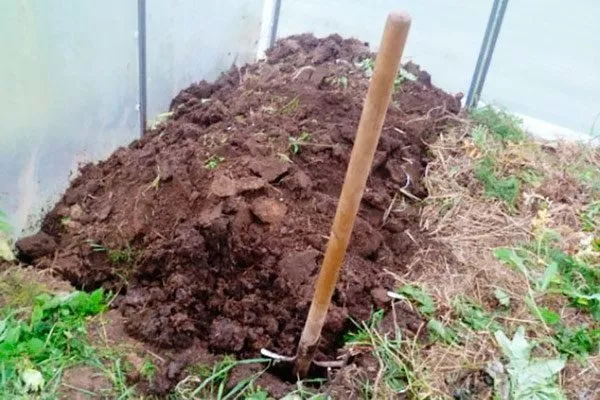
Preparing the plot for cucumber planting should begin in the fall, during the previous season's harvest. Here's what to do:
- dig up the beds;
- Enrich the soil with mineral mixtures containing humus - 8-12 kg of manure or bird droppings per 1 square meter of soil (the amount depends on the fertility of the area).
Before planting cucumbers, the soil should be dug up again and weeds and their root remains should be removed.
Planting seeds
To ensure a good harvest of cucumbers, their seeds should be prepared in advance:
- Place them in a damp cloth first;
- put it in the refrigerator and leave for 24 hours;
- treat with a solution of manganese, soaking in it for 30-40 minutes;
- remove and place on cheesecloth to dry;
- then plant each seed in a pot with peat to a depth of approximately 2.5-3.5 cm.
Transplanting seedling bushes
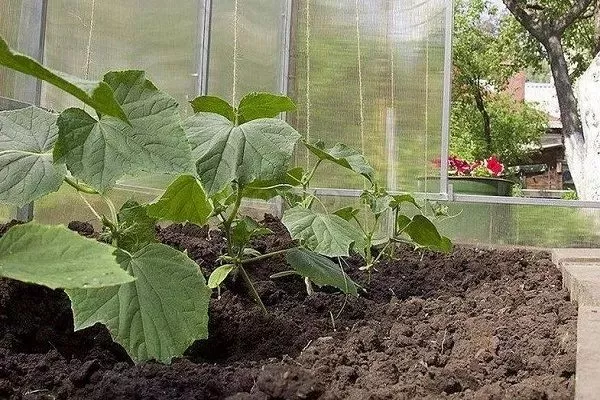
Cucumbers are transplanted into open ground when their shoots reach a height of at least 18 cm, maximum 22 cm, and have 4-5 leaves. After transplanting, the plants should be protected from the cold by covering them with a thick film and watering them with warm water.
Planting diagram
As for the arrangement of plants, Altai cucumbers should be planted in such a way that there is 30 to 50 cm between plants, and the depth of the hole for each plant is at least 15-18 cm.
Care
Care procedures are quite standard, but be sure to take into account some varietal subtleties and nuances.
Watering
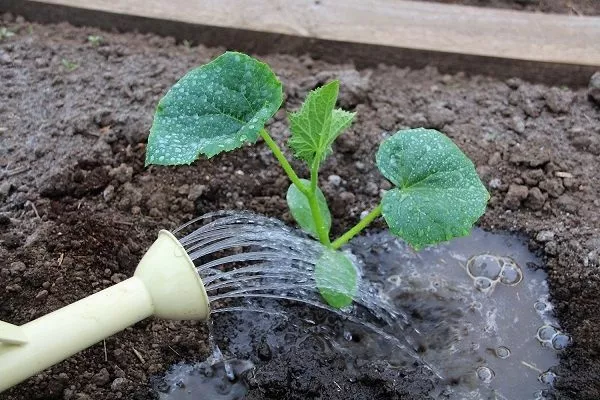
To ensure Altai cucumbers bloom and produce a harvest, they need to be properly watered. The key is to apply water when the soil begins to form a thin, dry crust.
Rules:
- The water must be settled and warm, so fill the barrels in advance and leave them in the open sun to warm up.
- From the beginning of planting until budding, water the bushes once a week.
- When the fruits begin to ripen, increase the frequency of irrigation to one or two times in the same 7 days.
- Perform the procedure early in the morning or late in the evening.
- Pour water under the roots of the bushes, avoiding contact with the leaves.
- The above-ground part can be sprayed occasionally, only after sunset.
Garter and shaping of bushes
To maintain the desired shape and growth of the bushes, install vertical or horizontal supports before planting. As the plant grows, tie the shoots to the supports so that their tendrils can cling to them.
To encourage early fruit ripening, carefully remove excess stems from the axils of the five lowest leaf tiers and, if necessary, remove the ovaries from the three lowest leaves.
Top dressing
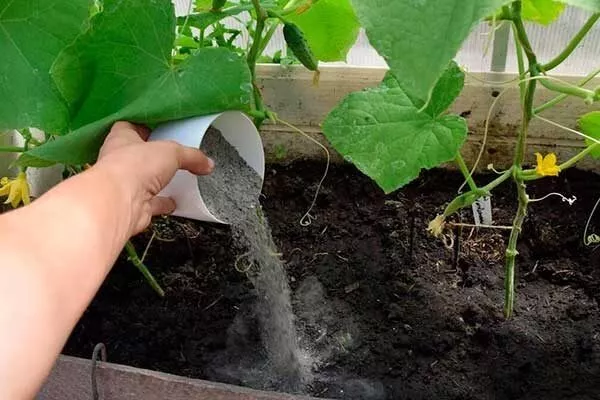
To get a healthy cucumber harvest, you need to fertilize them regularly, at least three times:
- At the time of planting seeds or seedlings in the beds.
- At the flowering stage.
- When the fruits are at the ripening stage.
Organic components can be used as fertilizer, including rotted cow manure and chicken manure.
Hilling
Cucumbers have a short root system, which makes them vulnerable to hilling, as this process often damages the roots, which can lead to the death of the entire bush.
However, experienced gardeners recommend loosening the soil around cucumbers with a garden fork. This will provide the plant's root system with oxygen and remove weeds.
Diseases and parasites
Despite the efforts of breeders in the Altai region, who have ensured the sustainability of cucumber varieties, these plants are still susceptible to certain diseases and sometimes fall prey to insects:
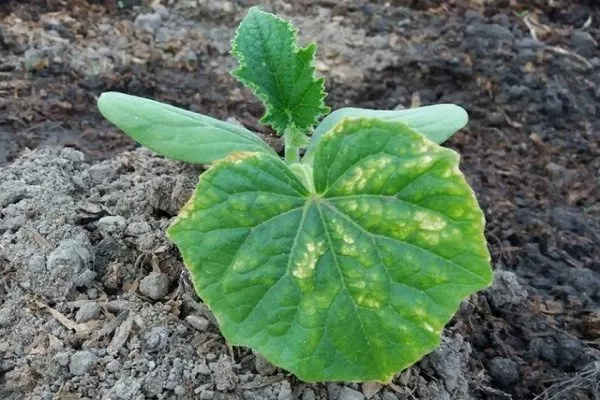
- Bacteriosis – This is a fungal disease that causes spots to appear on plant leaves. In high humidity conditions, these spots become oily. Additionally, bacterial blight causes small ulcers to form on cucumbers, containing cloudy fluid.
To combat bacterial disease, chemicals such as Kuproskat and Champion are used. - Anthracnose – This is a disease that can kill a plant without the use of special chemicals. A chloroacid solution is used to treat anthracnose.
- Peronosporosis, Also known as downy mildew, this fungal disease causes oily spots on cucumber leaves that take on a brownish-brown tint. In high humidity, a gray-purple coating develops on the underside of the foliage.
If the disease develops severely, the plant may die. For control, biological fungicides are recommended, as well as chemical agents such as Gamair, Fitosporin M, and Trichoderma Veride 471. - Whitefly – A small pest that infests greenhouses and hotbeds. It resembles a moth in appearance and can damage not only crops but also neighboring plants. To combat whiteflies, the chemical product Confidor Extra is recommended.
- Thrips. These insects feed on plants, often causing their extinction. To protect cucumbers from thrips, treat them with solutions of Actellic, Confidor, or Karate.
- Ticks. These insects suck the plant's sap, which interferes with its normal development. To combat mites, use Actellic solution.
- Aphid. These tiny parasites infest the undersides of leaves, where they begin to suck out the plant's sap. Aphids can be killed using a 20% Confidor solution.
- Cucumber bug. This pest attacks fruits, shoots, and leaves. To control bedbugs, Confidor 20% is recommended.
Nuances of collection and preservation
Altai cucumbers aren't known for their long fruiting season, so to stimulate new fruit formation and increase yield, it's recommended to harvest them immediately after they ripen. A room with a temperature no higher than 3-4 degrees Celsius (37-40 degrees Fahrenheit) is ideal for storing the fruit. A basement or cellar is usually chosen for this purpose.
To prevent the cucumbers from rotting, arrange them in several layers in a box to ensure each cucumber has access to air and oxygen. If you plan to use the Altai cucumbers soon, they can be stored in the refrigerator.
Positive and negative qualities of the variety
One of the main advantages of the Altai cucumber variety is its complete lack of bitterness. Additional benefits include:
The variety also has its disadvantages:
Reviews of cucumber varieties
This cucumber variety is characterized by a juicy sweetness and is ideal for pickling. The cucumbers are small and slightly cylindrical. When pickled, they retain their crispness and shape throughout the winter. They can be grown both outdoors and indoors. A distinctive feature of this variety is its tolerance to cold and low light.