
Yellowed and wilted carrot tops are a warning sign that should get your attention. Yellow carrot leaves indicate improper care, disease, or pest infestation.
Wrong choice of variety
| Name | Ripening period (days) | Disease resistance | Recommended growing region |
|---|---|---|---|
| early ripening or early maturing | 85-100 | High | Northern regions of Russia |
| mid-season | 95-120 | Average | Southern regions of Russia |
| late-ripening | more than 125 | Low | Southern regions of Russia |
Growing carrot varieties that are zoned for your region increases the plants' resistance to adverse environmental conditions and various types of diseases.
Depending on the ripening period, there are three main groups of varieties:
- early maturing or early ripening (85-100 days from emergence);
- mid-season (95-120 days);
- late-ripening (more than 125 days).
For the northern regions of Russia, early-ripening varieties with a ripening period of about 90 days and excellent shelf life are recommended.
In the southern regions, during the season, it is possible to obtain harvests from both early-ripening, mid-season, and late-ripening varieties.
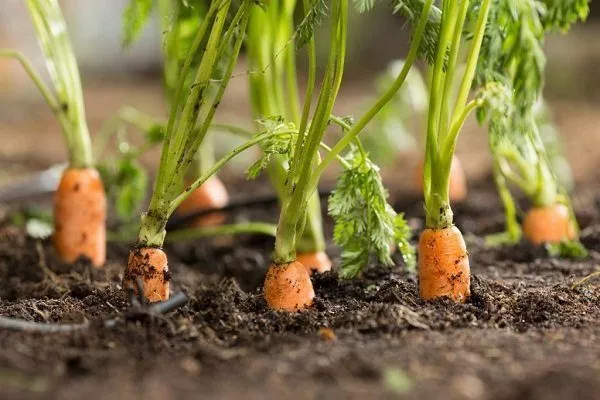
Failure to comply with the watering regime
Carrots are very demanding regarding the amount of moisture received during the growing season:
- When there is a lack of water Root crops slow down in growth, plants become weak, and the tops may become wilted or even dry.
- Too much watering They promote the growth of pathogenic bacteria and the development of fungal infections. These are the ones that cause the tops to turn yellow. Watering with a strong stream of water easily damages the above-ground portion of the root crop, which can subsequently dry out.
- ✓ The optimal water temperature for watering is 18-22°C. Cold water can cause stress to plants.
- ✓ The soil moisture depth should reach 20-25 cm for adult plants to ensure sufficient moisture for the root system.
It is best to develop a watering schedule and stick to it; the most effective watering for carrots is once every 4-5 days.
Ideally, carrot beds should be watered to the depth of the center of the underground part of the plants. On the hottest days, in the absence of natural precipitation, water 3-4 times a week.
Lack and excess of nutrition
Carrots require a large amount of nutrients. Plants must receive the essential components (nitrogen, phosphorus, potassium, boron, and manganese) throughout the entire ripening process.
Deficiency of certain microelements causes changes in the tops:
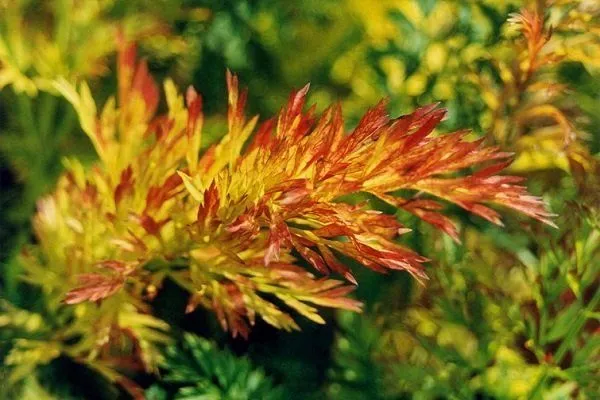
- potassium - yellow veins on the leaves with signs of dying along the edges, wilting;
- nitrogen - pale color, slow growth;
- manganese - yellowish-whitish spots, necrosis.
An imbalance of phosphorus and boron does not cause yellowing, but it also has a negative effect on the condition of root crops.
If the fertilizer contains too many nutrients, root crops will develop branching, with the root splitting into two or three trunks, and excessive nitrate accumulation. The tops may turn yellow if too much fresh manure is used.
How to correct nutrient deficiencies:
- Potassium. To quickly correct a potassium deficiency, apply potassium sulfate at a rate of 20 g per square meter. Potassium sulfate can be applied either dry or dissolved, combined with watering.
- Nitrogen. To eliminate nitrogen deficiency, it is added to the soil in the form of potassium, sodium nitrate, ammonia, organic and other fertilizers (see the dosage on the packaging).
- Manganese. To solve the problem, spray the tops with Aminofol Mn, AM EDTA Mn 13% (Mn Chelate), manganese sulfate (see the dosage on the packaging).
To eliminate excess nutrients, keep the plants in clean water for a couple of days and then gradually restore nutrition (fertilizer), first introducing 50% of the dosage and gradually increasing it to 100%.
If you use complex fertilizers, but the problem recurs, most likely the cause is not in the fertilizer, but in external factors.
Hot summer or frost
High temperatures impair the absorption of nutrients from the soil, reduce the amount of chlorophyll in the leaves, and inhibit photosynthesis. This manifests itself as yellowing and drying of the foliage.
How to save your carrot crop in hot weather:
- Water your plants as often as possible. It's best to do this early in the morning so that the moisture has time to be absorbed before the sun and wind evaporate it.
- Pour water only under the roots, trying not to wet the tops - This may cause sunburn.
- Rare, abundant watering is better than scanty and frequent watering. Plants only suffer from superficial watering in hot weather.
- Loosen the soil regularly after watering., preventing crust formation. During prolonged hot weather, loosen the soil around the carrots before watering, making a small hole so that the plant is centered in the hole.
- Stop weeding temporarilyWeeds will provide the carrots with some shade, thus protecting them from the scorching sun. Of course, they'll "steal" some water, but the benefits will be greater.
Carrots are frost-resistant plants that can withstand temperatures down to -5…-7°C, so they survive spring frosts without any problems.
Diseases and ways to combat them
Carrot diseases that manifest as yellowing of leaves:
- Jaundice. This is a viral disease. The pathogen, Phytoplasma, is transmitted by aphids and other small insects. Leaf veins darken, shoots grow on the roots, and the leaves turn yellow.
The main methods of control are preventative:- compliance with crop rotation;
- seed treatment with a solution of polycarbacin (5 g of the preparation per 1 kg of seeds);
- keeping seeds in hot water at a temperature of 50°C for 30 minutes.

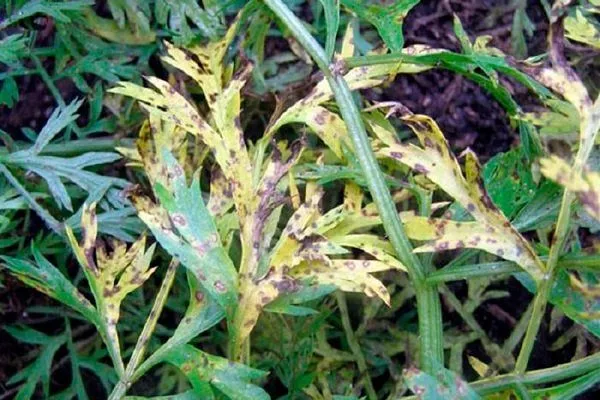
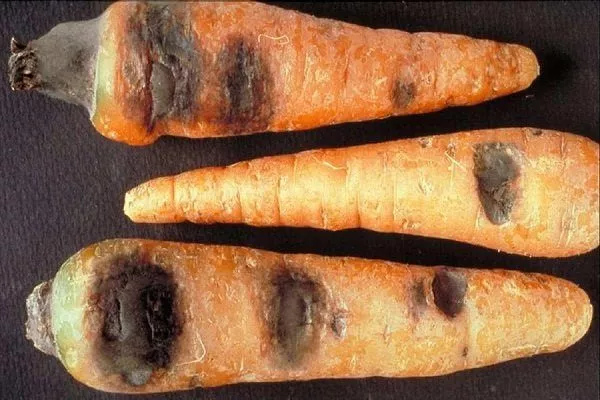
- White and brown spotting. Alternaria wilt is a fungal disease caused by Alternaria dauchi. It causes pinpoint lesions on leaves and petioles, with brown spots. Later, rot spots appear on root crops.
Yields can be reduced by up to 50%, and the weakest plants may turn yellow and dry out. Control measures include preventative temperature conditioning of seeds and crop rotation. Treatments with Bravo or Quadris are carried out twice, 10 days apart.
- Fomoz. The causative agent is the fungus Phoma rastupii or Leptosphaeria libanotis. It attacks seed and root crops, causing rot during storage. Petioles and leaves are affected by long, brown spots with sticky secretions, while branching areas become purple.
Without treatment, the tops turn yellow and dry out. Cavities with moldy surfaces form in the roots.
Eliminated:- treatment of seeds and fruits with Fitosporin-M;
- by applying increased doses of potassium and phosphorus fertilizers;
- compliance with crop rotation;
- sorting fruits before storing them for winter;
- separate storage of seeds and fruits.
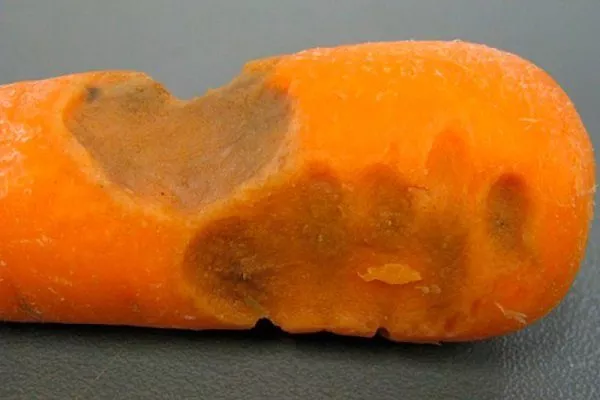
- Bacteriosis.Soft bacterial rot. Caused by Pseudomonas and Bacillus. The disease begins with yellowing of the lower leaves, then darkens and spreads to the root, causing sunken, wet spots with an unpleasant odor.
To get rid of the disease, observe crop rotation, avoid excessive watering, and treat the affected beds with Hom.
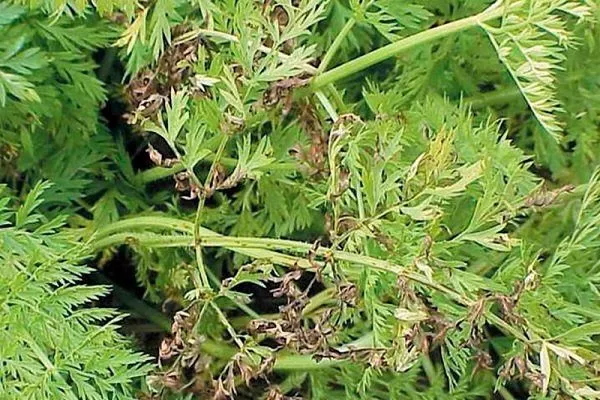
- Cercospora leaf spot.Caused by the fungus Cercospora carotae, small brown spots with light centers appear on leaves in midsummer. These gradually grow larger and merge. A thick gray coating appears on the underside of the leaves.
The spots appear sunken on the outside. The leaves turn yellow and die, and the root crop is deprived of sufficient nutrition and grows small and wrinkled.
Eliminated:- removal of plant residues from the soil;
- deep digging of the area;
- using disease-resistant varieties;
- treatment of plantings with preparations "Bravo", "Quadris", "Baikal-M", "Fitosporin", "Trichodermin" and others;
- cleaning of carrot storage areas with sulfur checkers, whitewashing, lime with the addition of copper sulfate.
- ✓ Plants should be treated with preparations in the morning or evening hours to avoid sunburn.
- ✓ The air temperature during treatment should not exceed 25°C, as high temperatures reduce the effectiveness of the preparations.
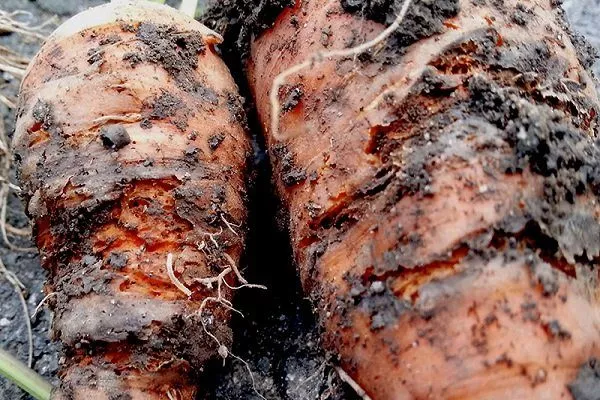
- Rhizoctonia (felt disease). Caused by the pathogenic fungus Rhizoctonia violaceae Tul. Subcutaneous gray spots appear on the roots. These spots later grow, covering the entire root surface and turning purple. The leaves turn yellow and dry out.
The disease often manifests itself during winter storage. The roots turn brown and gradually soften, with the skin being most severely affected.
Pathogen elimination:- disinfection of soil under infected areas after harvesting;
- no carrot plantings in the infected area for at least 4 years;
- adding lime to the soil;
- increased application of phosphorus and potassium fertilizers;
- timely removal of weeds, which may also be affected by rhizoctonia.
Pests and methods of control
In addition to bacterial and fungal infections, carrots can also suffer from insect pests.
Carrot psyllids
The appearance of this pest becomes noticeable by the curled leaves, which become similar to parsley.
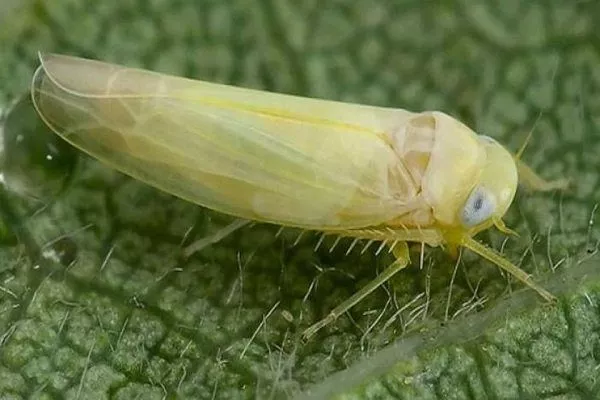
The carrot psyllid produces a single generation during the summer, overwintering in the bark of coniferous trees or in the remains of wild carrots. In the spring, it lays eggs on carrot seedlings. The hatched larvae and the flea beetles themselves feed on the leaf sap. The seedlings lose their sap, turn yellow, and die.
Prevention of occurrence consists of:
- destruction of wild carrots on the site;
- fencing carrot beds from coniferous plantings;
- treating plants with a daily tobacco infusion prepared at the rate of 30 g of laundry soap, 1000 g of dry tobacco raw materials per bucket of boiling water;
- using the preparations "Arrivo", "Actellic", "Decis", "Sumicidin" for spraying crops.
Root-knot nematodes
A white roundworm, 1.2-1.5 mm long, causes meloidogyna. The root becomes twisted, fails to grow, and several malformed shoots form. The infection becomes noticeable by yellowing and wilting of the leaves.
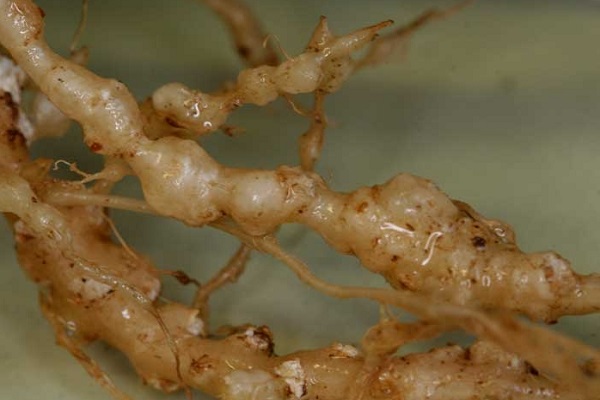
To get rid of nematodes:
- plant marigolds, calendula, and mustard between the rows (this is also suitable as a preventative measure);
- Use chemical nematicides such as Tiazon, Heterophos and others.
Carrot fly
The larvae of this pest feed on root crops. The leaves of infected plants turn purple, then yellow and dry out. Rot develops in the tunnels gnawed by the larvae, causing the entire fruit to rot.
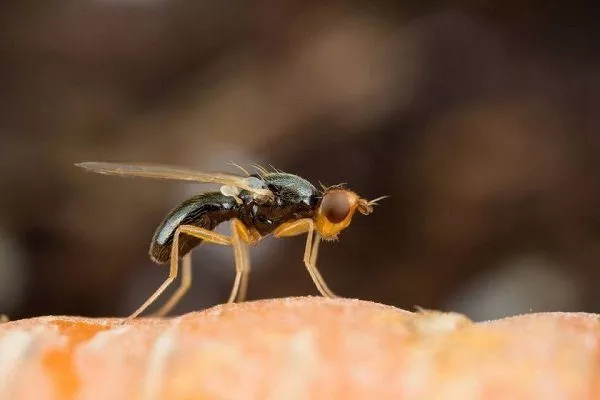
To get rid of and prevent the appearance of this pest, use:
- sowing seeds of varieties resistant to carrot fly;
- treatment of the area with insecticides azotofit, trichodermin, preparations "Inta-Vir", "Arrivo", "Actofit";
- pollination of plants with ash mixed with ground pepper and mustard powder;
- spraying with infusions of marigold flowers and wormwood.
What to do if nothing helps?
If none of the above methods for combating yellowing of carrot leaves have produced good results, select several affected plants and contact the nearest plant protection station.
Until the exact cause of the infestation is determined, avoid planting carrots in this area, and possibly other root crops, for several years. Plant green manure crops in the area to repel pests and improve the soil.
Prevention
The following are the main preventive measures:
- Crop rotation.Plant carrots after plants that are not susceptible to carrot diseases and pests. These include nightshades (potatoes, peppers, eggplants), cabbage and brassicas, cucumbers, zucchini, pumpkin, squash, and herbs.
- Timely removal of affected leaves. Remove all plant debris from the soil and its surface. This will prevent pests from surviving the winter and reproducing in large numbers.
- Soil cultivation.To get rid of pathogenic bacteria and fungi, spray the soil or water with solutions of fungicides and insecticides.
- Use of reliable varieties.Plants with strong immunity to diseases will produce a good harvest and eliminate the need to use plant protection products.
- Proper care. Ensure timely watering, but don't overwater. Bacteria and fungi thrive in a humid, warm environment. Combine watering with plant treatments.
Apply fertilizers according to the rates that correspond to the carrot development period; use complex fertilizers in accordance with the recommended amounts and on time.
If there's a risk of infestation, use manure with caution, as it can become a source of pathogens. Weeding, thinning, and cultivating the soil between rows will strengthen the plants and prevent pests from multiplying.
Early detection of yellowing leaves will give you the opportunity to address the problem in your garden promptly. To prevent yellowing and drying of leaves, use preventative measures, such as watering and fertilizing the soil regularly, weeding, and loosening the soil.