
Yellow carrots are a popular variety, though they are rare in Russia. The root vegetable owes its color to certain pigments. There are several varieties of this crop. It's important to grow them correctly, avoiding common mistakes.
Features of yellow carrots
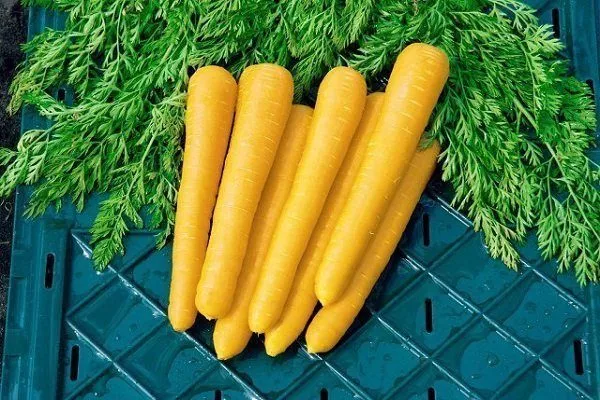
Yellow carrots are believed to have originated in Central Asia. The color of the roots is provided by pigments—carotene, anthocyanin, and xanthophyll. It is the latter pigment that is responsible for the yellowness of carrots, which can be deep or light yellow. Carotene, which produces the orange color, is present in smaller amounts.
Yellow carrots have several characteristics:
- the root vegetables are very sweet;
- the content of lutein is increased – this substance is especially beneficial for vision;
- low moisture content, which determines certain culinary properties of the product - it is good to use in frying and stewing;
- high yield of yellow carrot varieties.
Distinctive features of yellow carrots compared to their orange counterparts include a higher price for seeds (the difference is small) and greater heat-loving properties.
Excessive consumption of yellow carrots can lead to yellowing of the skin. This condition is not dangerous, but it can be unsightly.
Varieties
There are several varieties of yellow carrots, each with its own distinct advantages. Differences among varieties also include the shape, size, and flavor of the roots, which determines their use in cooking and canning.
Let's look at popular varieties of yellow carrots.
Mirzoi 304

Yellowstone
Solar Yellow
| Name | Ripening period (days) | Root shape | Disease resistance |
|---|---|---|---|
| Mirzoi 304 | 115 | Short thick | Average |
| Yellowstone | 90 | Fusiform | High |
| Solar Yellow | 90 | Fusiform | Average |
Mirzoi 304
This is one of the most common varieties of yellow carrots. It is a table variety and was developed back in the 1940s. It originates from Tashkent. It is grown both in private farms and commercially.
This yellow carrot variety is particularly heat-loving, requiring temperatures of at least 16 degrees Celsius for successful growth. Adequate moisture is also important—poor watering, especially in heavy clay soil, can cause the roots to crack.
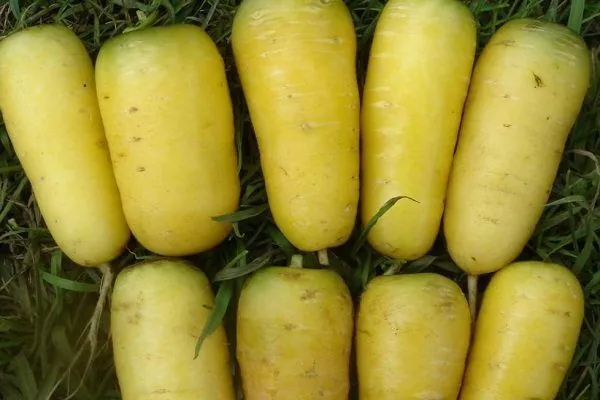
Mirzoi 304 is distinguished by its short, thick, light-yellow roots with blunt tips. Each root averages 0.1-0.15 kg in weight. The core is thick, occupying approximately a third of the fruit.
Ripening takes 115 days, with bunch maturity occurring after 50 days. Average yield is 2 kg per square meter.
Mirzoi 304 is a versatile variety. It can be used for frying, stewing, and canning. It also stores well.
Yellowstone
This hybrid variety is early-ripening, high-yielding, and adaptable. Its main advantage is its resistance to various diseases, making it highly prized in Russia.
The roots of this variety are spindle-shaped and bright yellow, with an average length of 23 cm. Loose soil is essential for a rich harvest.
Solar Yellow
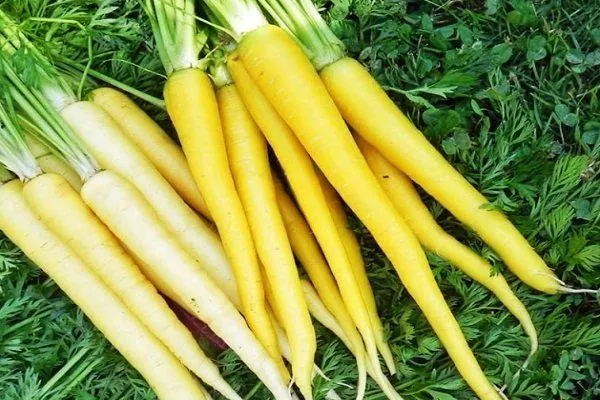
This variety is also a hybrid. The roots are spindle-shaped, averaging 20 cm in length. The fruits are sweet and crisp.
Solar Yellow is an early-ripening variety, maturing in 90 days.
This variety is sensitive to growing conditions. It requires a consistently high temperature of at least 18 degrees Celsius. Loose soil and adequate daylight hours are also important.
Solar Yellow is a table variety. Its flavor makes it ideal for frying and eating raw (children especially love it).
Stages of cultivation
Growing yellow carrots requires a standard, step-by-step approach: preparation, planting, care, and harvesting. Each stage has its own unique characteristics.
- ✓ Soil temperature at planting should be at least 10°C to ensure good germination.
- ✓ The optimal soil acidity (pH) for yellow carrots is 6.0-6.5.
Preparation
At this stage, the soil needs to be fertilized, loosened, and weeded. Standard fertilizers for yellow carrots are used. Seed preparation for planting involves the following steps:
- Rejection. Getting rid of poor-quality seeds is easy: just soak the seeds in warm water and mix gently. Anything that floats to the surface is defective and unsuitable for planting.
- Heat treatment. This method is used to prevent infectious diseases of the crop. The seeds should be placed in a cloth bag, dipped in warm water (50 degrees Celsius), then immediately into cold water. Drying is essential after this treatment.
- Growth stimulation. This treatment is carried out using special preparations. Typically, phytosporin or sodium (potassium) humate are used – 100 or 50 g of the product should be dissolved in a liter of water, respectively.
- Warm water with oxygen. This is used to bubble the seeds. This treatment is continued for 24 hours. Then, the seeds should be placed in a potassium permanganate solution (light pink in color). After 20 minutes, remove them, rinse in clean water, and dry.
Landing
A temperature of at least 16-18 degrees Celsius is essential for any yellow carrot variety. The optimal planting time depends on the climate of the specific region. The ripening period (3-4 months) should also be considered.
Planting yellow carrots is standard and includes two options:
- rows and subsequent thinning;
- tapes – you can buy ready-made or make your own (usually thin toilet paper is used).
| Method | Advantages | Flaws |
|---|---|---|
| Thinning rows | Ease of organization | Additional time is required for thinning |
| Ribbons | Saving time on thinning | Additional costs for materials |
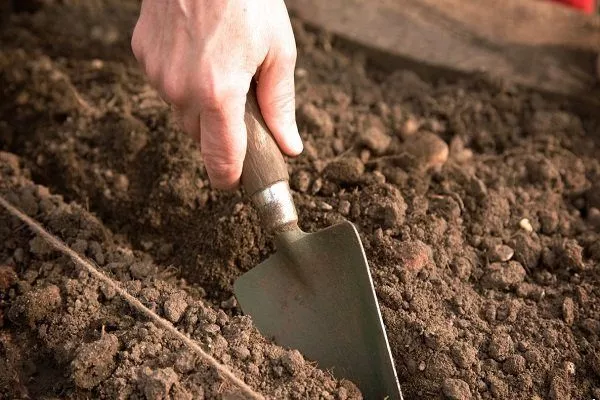
It is recommended to plant yellow carrots in beds 1.2-1.3 m wide. Leave 20 cm between rows and 2 cm between seeds. The planting depth depends on the soil characteristics: 1.5 cm for heavy soil, 2.5 cm for light soil.
Care
In addition to temperature control, caring for yellow carrots includes a number of other considerations:
- oxygen access;
- medium humidity;
- sufficient irrigation, especially important at the initial stage, 4 thousand cubic meters of water are required per hectare;
- avoid over-watering - watering every 3-4 days is recommended, during dry periods you can increase the frequency (depending on the condition of the soil);
- do not allow crust formation on the soil;
- on cold days, water for irrigation should be at ambient temperature;
- regular loosening - carry out carefully, removing weeds at the same time;
- weed by hand or mulch (When mulching, the frequency of watering is reduced).
Harvesting
Harvesting time is determined by the ripening period of the specific variety. You can also pull up one or two roots and inspect them. The presence of small roots indicates it's time to harvest. This is recommended during dry weather.
Only undamaged root vegetables can be stored. Trim off any tops, otherwise the carrots will sprout. Store at a temperature of up to 4°C (4°F). Removing soil or washing before storage is not required.
You can learn more about yellow carrots from the following video:
Mistakes when growing
When growing yellow carrots, the following mistakes and their consequences are possible:
- lack of thinning – root crops are small, yield is lower;
- lack of watering – poor growth, cracking of fruits;
- manure and droppings for fertilizer - curvature of fruits;
- Late harvest – fruits are unsuitable for food.
Yellow carrots are a variety of carrots distinguished by their color, sweetness, and nutritional composition. There are several common varieties, each with its own unique characteristics. Growing yellow carrots requires proper care, taking into account common mistakes and their consequences.