
The Vitaminnaya 6 carrot attracts both experienced and novice gardeners, as it's quick to grow and guarantees bountiful harvests. While not particularly disease-resistant, it's highly productive and boasts excellent flavor. Regular care is essential.
History of the variety's development
The Vitaminnaya 6 carrot variety was bred in 1969 at the All-Russian Research Institute of Vegetable Crops Breeding and Seed Production (VNIISOK) in Russia. It was developed by domestic breeders.
Description of carrots
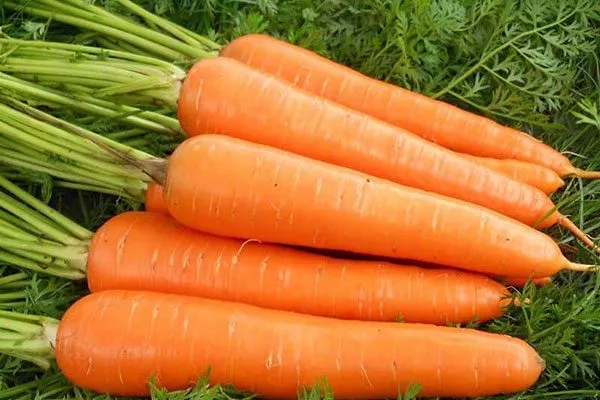
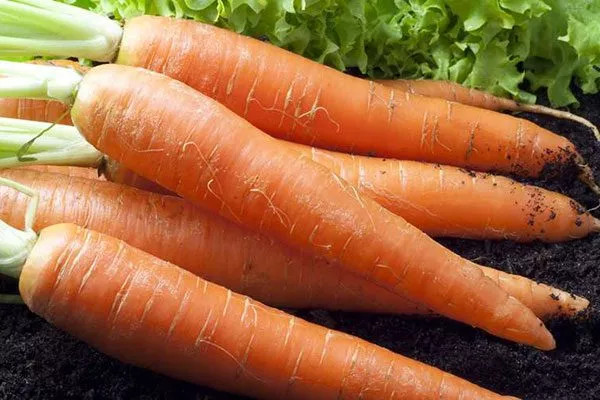
The rosette of leaves is erect. The roots are oblong and cylindrical, with a slightly blunted tip. The average weight of a mature vegetable is about 100-170 g, but larger specimens weighing up to 200 g are common. The length reaches 17 cm.
Advantages and disadvantages
Before planting a new variety in your garden, study its positive and negative qualities to avoid any drawbacks.
Detailed characteristics
Vitaminnaya 6 is a mid-season variety, with a harvest period of 75-100 days. This carrot is highly productive.
If all agricultural practices are followed, 6-8 kg are harvested per square meter. The regional average is 3.5-4 kg per square meter.
Growing regions
The crop is grown in almost every region of our country, but it is not widely cultivated in the North Caucasus. The variety is popular in Kazakhstan, Lithuania, and Latvia, and is also cultivated by Ukrainian gardeners.
Taste and uses
The crop has gained widespread popularity due to the excellent taste of its ripe fruits. They ripen sweet, aromatic, and have a pleasant texture.
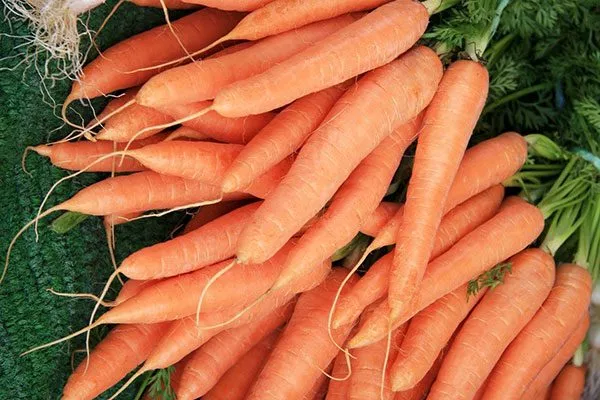
Vitaminnaya 6 carrots are versatile. They're eaten fresh and used in a wide variety of dishes. They're also suitable for canning or making homemade juice, preserving all their vitamins.
Chemical composition
The Vitaminnaya 6 carrot variety is renowned for its rich chemical composition, making it particularly beneficial for health. The main components contained in this vegetable include:
- Beta-carotene (provitamin A). It is converted into vitamin A in the body. It is important for the health of the eyes, skin, and immune system.
- Vitamin C. Helps strengthen the immune system, improve skin condition and aid in wound healing.
- B vitamins (B1, B2, B3, B6). They play a key role in metabolism, maintaining the nervous system and skin health.
- Vitamin K. Important for blood clotting and bone health.
- Vitamin E. An antioxidant that protects cells from damage.
- Potassium. Helps maintain normal functioning of the heart and muscles, regulates water-salt balance.
- Calcium. Essential for healthy bones and teeth, and for the normal functioning of muscles and nerves.
- Magnesium. Important for the normal functioning of muscles and the nervous system, and is involved in protein synthesis.
- Iron. Necessary for the formation of hemoglobin and the transport of oxygen in the blood.
- Phosphorus. Promotes the formation of bones and teeth, participates in metabolic processes.
- Zinc. Important for the immune system, skin health and reproductive function.
- Fiber. Helps support normal digestion, promotes feelings of fullness and maintains healthy blood sugar levels.
- Antioxidants. Carrots contain many antioxidants that help fight oxidative stress and protect cells from damage.
Nutritional value (per 100 g):
- caloric content – 23.5 kcal;
- proteins – 1.0-1.3 g;
- fats – 0.1-0.2 g;
- carbohydrates – 6.7-7.0 g;
- dietary fiber – 2.4-2.8 g.
This rich and balanced chemical composition makes Vitamin 6 carrots not only delicious, but also an extremely beneficial product for well-being.
- ✓ The optimal soil pH should be between 6.0-6.8 to prevent diseases and ensure maximum nutrient absorption.
- ✓ The soil should be free of stones and hard lumps to a depth of 30 cm to prevent deformation of root crops.
Growing
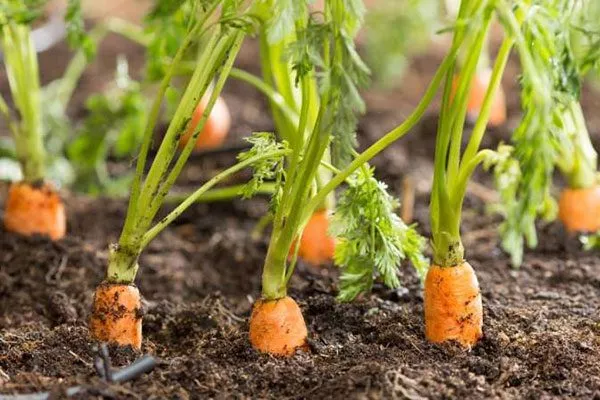
Carrots prefer sunny sites with light, well-drained soil. Loamy or sandy loam soils are ideal. Follow these simple guidelines:
- In the fall, before planting, dig the area to a depth of 20-25 cm and add organic fertilizer (compost or rotted manure).
- In the spring, before sowing, loosen the soil and add mineral fertilizers.
- Sowing should be carried out in late April-early May, when the soil warms up to +8-10°C.
- Before the procedure, soak the seeds for 24 hours in warm water to improve germination.
- Sow seeds to a depth of 1-1.5 cm. The distance between rows should be about 20 cm, and between plants – 4-5 cm.
- When the first true leaves appear, thin out the plants, leaving 5-7 cm between them.
- Carrots require regular watering, especially during the period of active root growth. Water the plants once a week, applying approximately 10-15 liters of water per square meter.
- After each watering or rain, loosen the soil to prevent crusting and allow air to reach the roots. Remove weeds regularly.
- Fertilize the crop for the first time 2-3 weeks after germination, applying nitrogen fertilizer. During root formation, use potassium and phosphorus fertilizers.
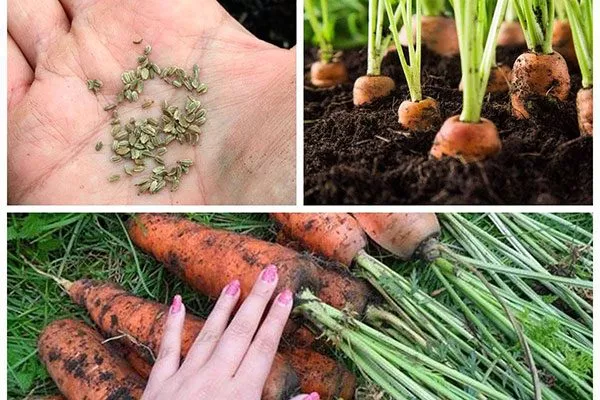
By following these recommendations, you can grow a high-quality, vitamin-rich crop of Vitaminnaya 6 carrots.
Harvesting and storage
Harvest Vitaminnaya 6 carrots immediately after ripening. Once the lower leaves of the roots turn yellow, they're ready to harvest. If planted in mid-April, dig up the vegetables around August.
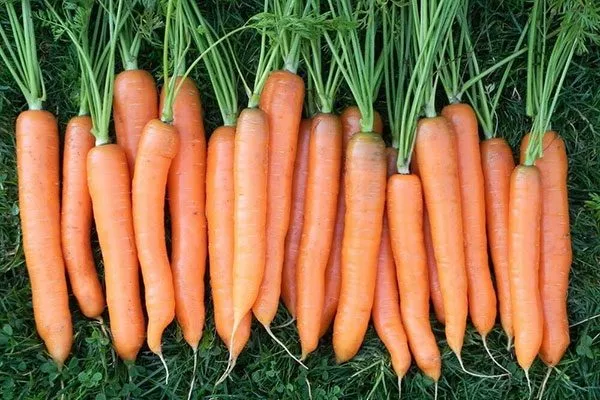
If all storage conditions are met, the harvest will easily retain its flavor throughout the winter. Root vegetables can be stored either in a cellar or in a special box on an insulated loggia. Before storing the vegetables for the winter, thoroughly dry them outdoors or in a ventilated area.
- Pre-treat seeds with biofungicides to increase resistance to fungal diseases.
- Regularly inspect plants for the first signs of disease to ensure timely intervention.
- Use crop rotation, not planting carrots in the same location for more than 3 years in a row, to reduce the risk of pathogen buildup in the soil.
Diseases and pests
The plant has a weak immune system, so it's often susceptible to various diseases. Here are the most common problems:
- Dry rot.Brownish-gray spots appear on the tops, which then spread to the roots, causing rotting. As a preventative measure, use phosphorus-potassium fertilizers.
- Rhizoctonia.The peel contains lead inclusions, causing the vegetables to rot. To combat the disease, use a copper sulfate solution.
- Wet rot or bacteriosis. Yellowish spots appear on the lower leaves, which darken and dry out over time. Dark, wet areas with a putrid odor develop on the roots. Use HOM as a preventative measure.
The carrot plant can be attacked by the carrot psyllid, a pest that feeds on leaves. This causes the leaves to curl. As a result, the plant grows slowly and the vegetables become bitter. To combat this, use insecticides such as Borey, Vantex, or Alatar.
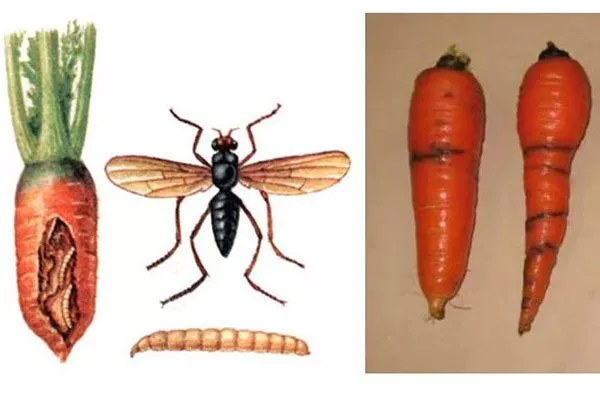
Slugs actively feed on the tops of root crops and cause extensive damage to the base of root vegetables. To prevent and control them, scatter crushed eggshells around the plants, as the naked body of the pest does not tolerate scratching objects. In the evening, spray the plants with a salt solution (100 g of salt per 10 liters of water).
Various problems in growing and ways to solve them
Gardeners may encounter various problems when growing Vitaminnaya 6 carrots. The table below presents the most common ones and solutions:
| Sign | Cause | Solution |
| Early curling and change of color of leaves to a burgundy shade | Potassium deficiency | Application of potassium fertilizer |
| The appearance of numerous hairs on the root crop | Over-hydration | Reducing the volume of water after the second thinning |
| Darkening of the core | Manganese and barium deficiency | Treating plantings with microelements after 5-6 leaves appear |
| Root crops have become multi-tailed | Excessive application of fertilizers containing ash, lime or nitrogen | Reducing the amount of nitrogen fertilizers and banning the use of ash |
| Fruit cracking | Excess moisture or nitrogen | Reduce watering and stop applying nitrogen fertilizers to the soil |
Storage and shelf life
For long-term storage, create conditions with an air temperature of +2…+4°C and humidity between 85-90%. The room should ensure constant air circulation. Under these conditions, carrots will retain up to 98% of their quality.
Similar varieties
| Name | Ripening period | Disease resistance | Sugar content |
|---|---|---|---|
| Losinoostrovskaya | Mid-season | High | High |
| Nantes | Mid-season | Average | Average |
| Shantane | Late-ripening | High | High |
| Tushon | Early ripening | Low | Low |
| Emperor | Mid-season | High | High |
There are several varieties with similar characteristics to Vitaminnaya 6. The following varieties are distinguished:
- Losinoostrovskaya. Delights with bright and sweet vegetables, suitable for universal use.
- Nantes. It belongs to the mid-season varieties and pleases with excellent yield indicators.
- Shantane. A variety with good keeping qualities and excellent taste characteristics.
- Tushon. Characterized by good resistance to flowering.
- Emperor. Cylindrical carrots with high carotene content.
These varieties are often grown in the same area to produce generous harvests.
Reviews
The Vitaminnaya 6 carrot is a variety that gained popularity many years ago. Over the years, it has been tried and tested by many gardeners across the country. This variety lives up to its name, boasting a rich nutritional composition. Furthermore, it produces generous harvests and high-quality root vegetables. This is only achieved through regular care.