
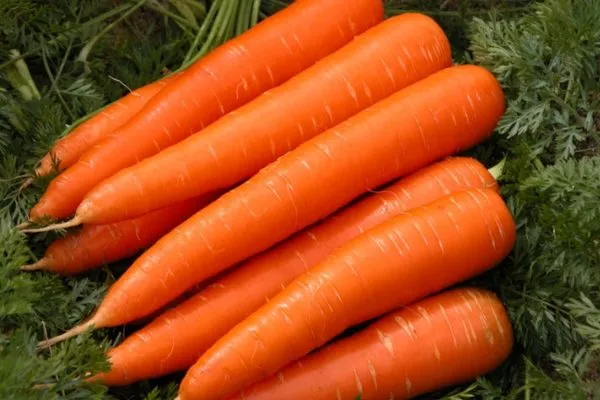
The Victoria carrot is a Shantane variety, originally from the Netherlands. This hybrid has a versatile use – it's perfect for fresh and cooked salads, as well as for first and second courses. This juicy carrot is also used to make vitamin-rich juices and preserves. Alternatively, the roots can be frozen and used as a bunching product.
Introduction to the variety
This carrot variety requires careful attention, as it must be planted in moist soil and carefully tended, including frequent loosening, regular watering, and fertilizing. However, the high-quality harvest fully compensates for all the effort.
Specifications:
- The optimal time for sowing Victoria seeds is April-May. The distance between rows and within a furrow should be 20-25 cm and 4-6 cm, respectively, and 600,000 to 800,000 seeds should be planted per hectare.
- The variety has good resistance to Alternaria, but it is still necessary to carefully monitor the condition of the plants and carry out preventive treatments in the spring and summer.
- This carrot variety's resistance to bolting is significantly higher than average.
- The period between emergence and harvesting is 80-85-90 days.
- The excellent marketability of the variety compensates for its poor shelf life, so the root crops should be used within a short time after harvest.
External and taste characteristics, purpose
This plant has a characteristic vertical rosette-shaped leaf arrangement. The leaves are of medium thickness. Other varietal characteristics:
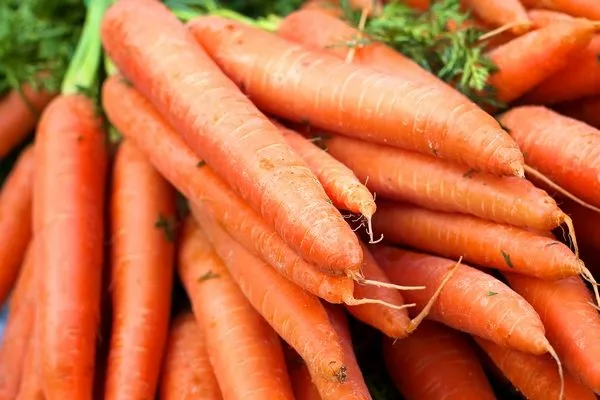
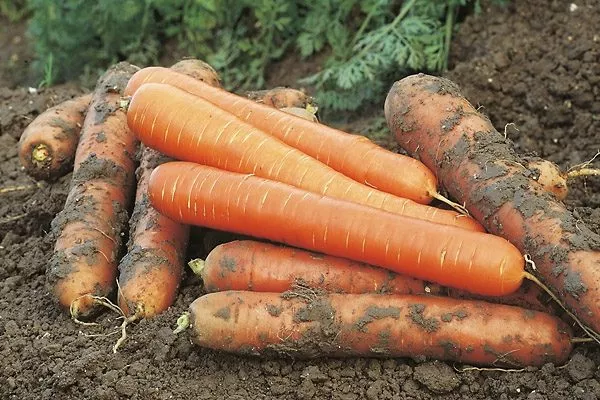
- The cylindrical root vegetables are distinguished by their bright orange interior and skin.
- A distinctive feature of this variety is the relatively small size of the core.
- The weight of the roots varies from 90 to 200 g, and their length can reach up to 20 cm.
- The pulp is firm and juicy, making it an ideal ingredient for making delicious carrot juice.
Seed growing technology
Begin planting once any threat of a cold snap has passed. Many gardeners sow in two or three stages: first in early spring, then in late May, and then in June. This allows for a harvest throughout the entire growing season.
Peculiarities:
- Carrots don't tolerate transplanting, so choose a site early. The best growing space is bright and well-ventilated, with light, well-drained soil free of stones and other hard particles. If the soil is too compacted, add sand and compost.
- Preparing the beds requires deep digging – at least 1.5 spade depths.
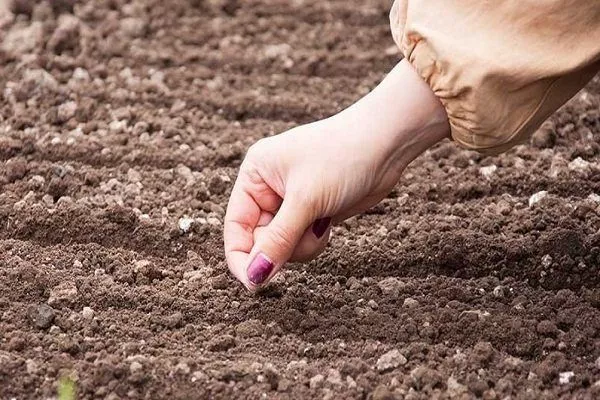
- When sowing, the distance between rows is approximately 30-45 cm, the seeds are distributed evenly at a depth of 1-1.5 cm and carefully buried.
- Soil moisture is maintained at a moderate level, avoiding over-watering of the plantings, which is especially critical before the emergence of seedlings.
- Try to sow carrots and radishes together, as they have different ripening times and similar growing conditions. Radish seedlings emerge earlier, making the carrot beds easier to maintain. After the early vegetable harvest, carrots will only begin to actively grow.
- In dense plantings, remove excess plants when they reach a height of about 7-9 cm, leaving bushes 2-5 cm apart.
Care during growth
Care procedures are standard:
- To maintain a young carrot field, it's necessary to regularly till it. This will help remove weeds that compete with the roots for water, nutrients, and light.
- Mulching between rows can be used as a measure to combat unwanted vegetation.
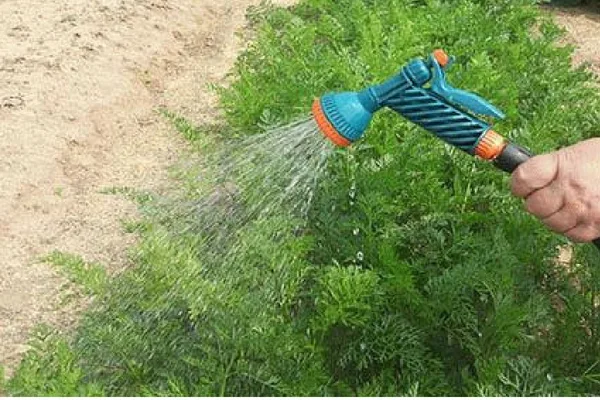
- It is important to ensure regular watering of plants, especially during periods of drought and high air temperatures, using, for example, a drip irrigation system.
- If spraying is chosen, it's best done in the morning. The soil should be moistened to a sufficient depth, but not exceed the required level of 2-15-20 cm.
- When necessary, plants are fed and protected from pests and diseases.
Harvesting and preserving
For optimal root crop harvesting, thoroughly water the beds beforehand—approximately 2-3 days before digging. Carrots are highly frost-resistant, allowing them to be harvested after the first frosts of winter.
How to properly harvest and store root vegetables:
- Leave small sections of stems on the roots to ensure better preservation of the product; cut off the rest with a sharp tool.
- Then place the carrots in a room with a temperature of around +3-5°C and high humidity, reaching 96-98%.
- As an alternative method for long-term storage of root vegetables, use thick plastic bags and place them in the refrigerator.
- If you need to store a large number of root vegetables, arrange them in wooden boxes and store them in a cellar or basement. Carrots can be sprinkled with sand, sawdust, or peat.
- Pre-freezing of carrots is possible.
Carrots are often used to make a variety of preparations: fresh salads, pickled dishes and savory snacks.
Advantages and disadvantages
The variety has no critical flaws.
Reviews
Victoria carrots are highly prized for their delicious, vitamin-rich fruits. This vegetable requires little care and can grow in a variety of soils and weather conditions. Simply follow a few simple agricultural practices during the growing season to ensure a harvest that lasts throughout the winter.