
The Tushon carrot variety is very popular among gardeners. Its main value lies in its excellent taste, attractive appearance, and the high amount of valuable nutrients it contains.

Carrot seeds of the Tushon variety
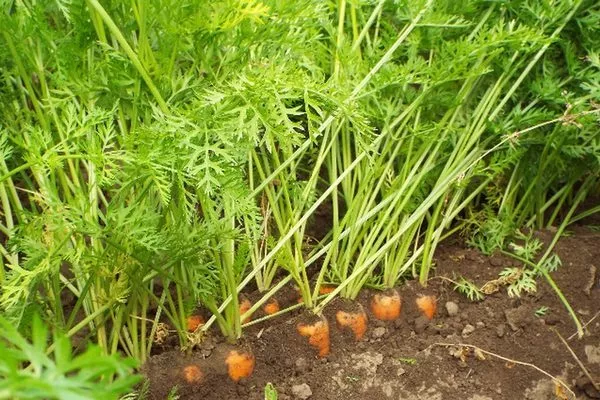
It is necessary to thin out the seedlings; too dense planting slows down the growth of root crops.
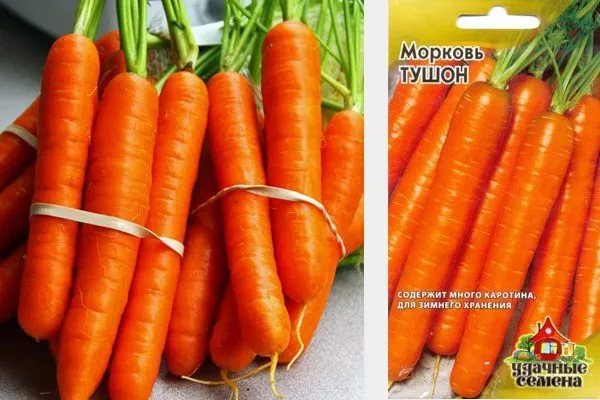
The Tushon variety has high yield rates.
Origin and popularity of the variety
This is a signature carrot variety developed in France. All the roots have an attractive appearance, which plays a significant role in sales.
Tushon is an Amsterdam variety. Its main characteristic features are its fruits, which have a delicate and slightly sweet flavor. They do not tolerate transportation well, nor do they tolerate long-term storage. Therefore, it is recommended to eat them almost immediately after harvesting or use them for further processing.
The variety has gained great popularity due to its high yield and ease of care and cultivation.
Description of carrots
Tushon is an early variety, recommended for spring planting, but fall planting is also possible. The full growing season lasts approximately 70-85 days.
The carrot has rich green tops, medium height, and well-developed leaves that are not too large. The root is cylindrical, with a blunt end. Each carrot weighs approximately 95-190 g and is no more than 22 cm long. The soft core is what makes this variety so popular.
- ✓ Root vegetables have a high content of carotene, which makes them especially beneficial for vision.
- ✓ The variety has increased resistance to flowering when planted early.
The core and pulp share a nearly identical, rich orange hue. This variety is considered versatile, and the fruit has a pleasant flavor. It's ideal for young children.
Advantages and disadvantages of the variety
The described variety has a lot of positive qualities, which include:
- excellent yield rate;
- good resistance to various diseases;
- root vegetables do not crack;
- ripening occurs very quickly;
- attractive appearance;
- pleasant, slightly sweet and delicate taste.
The only drawback is that Tushon carrots cannot be stored for long periods of time. It is recommended to consume them almost immediately after harvesting.
Maturation
Tushon is an early variety, one of the first to ripen. Approximately 60 days after the first shoots emerge, the carrots are ready for consumption. Technical maturity is reached after approximately 85-95 days.
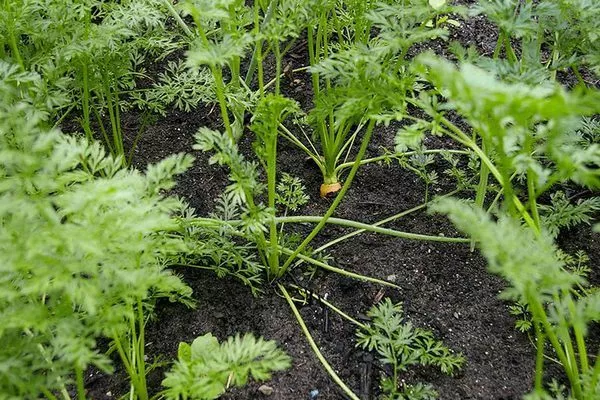
It can also be used to harvest bunch carrots—a crop that hasn't reached technical maturity. This is the very first carrot harvest, young, small in size, and has a delicate and mild flavor. It's called bunch carrots because after harvesting, the carrots are tied into small bunches.
For an early harvest, sow carrots in the fall. This variety is ideal for winter sowing.
Productivity
This carrot variety produces a fairly high yield, with approximately 5-6 kg of vegetables harvested per square meter. This high yield makes Tushon highly sought after by farmers.
Growing region
This variety is considered universal. It thrives in various regions and can be grown throughout the country. It is considered ideal for the Volga region and central Russia. In these areas, the variety demonstrates all its characteristics and advantages perfectly.
When growing Tushon in other areas, proper, regular, and more thorough care is required. This depends directly on specific climate conditions.
In northern regions, it's recommended to plant carrots a little later, but they'll take a little longer to reach technical maturity. When growing in southern Russia, it's recommended to plant Tushon a little earlier.
Before planting this carrot variety, it's worth consulting with experienced farmers. This will allow you to develop an appropriate planting plan and make adjustments based on your growing region.
Selecting a location and timing for growing
The quality of the harvest depends on the correct selection of the site for growing Tushon. It's also important to correctly determine the optimal time for sowing the seeds.
Lighting and location
When planning to grow the Tushon carrot variety, choose a sunny, open site. Constant shade can slow the plant's growth. Therefore, it's not recommended to plant Tushon near buildings, fences, bushes, or trees.
Soil type
Choose fairly loose soil, and good drainage is also important. The root vegetable thrives in loamy and sandy loam soil. If the soil is clayey and very heavy, add a little compost mixed with sand. This will make the soil lighter and ideal for growing root vegetables.
- ✓ Soil pH should be between 6.0-6.8 for optimal growth.
- ✓ The soil must be free of stones and hard clods to prevent deformation of the root crops.
When to start planting?
To calculate the ideal time to begin sowing seeds, it's important to consider the carrots' full ripening period. The optimal period is considered to be between March and April.
The root vegetable can easily tolerate light frosts down to -3 degrees Celsius. If the spring is expected to be very warm, planting can be done as late as late February. However, make sure the soil has had time to warm up sufficiently.
Sowing seeds
The process of sowing seeds is very simple and doesn't require any special knowledge or skills. However, proper seed preparation is crucial. This determines the success of the harvest.
Preparation of planting material
Before sowing seeds, they need to be properly prepared. You can soak them in plain water for 24 hours or use special accelerators for rapid growth.
Another option for preparing seeds is to take toilet paper and glue the seeds onto it. Use simple starch as glue. However, in this case, soaking the seeds won't work, so be sure to water the bed thoroughly after sowing.
To ensure that the seeds are evenly distributed across the bed, pre-mix them with sand in a 2:1 ratio.
Sowing scheme
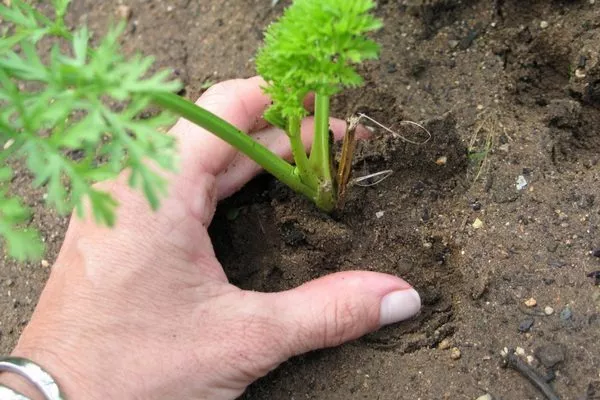
Sow the seeds in pre-formed beds, but don't plant them deeper than 3-4 cm. Space the seeds approximately 2 cm apart. This will prevent the seedlings from becoming too dense. After planting, lightly dust the seeds with soil.
After you have completed sowing, be sure to water. Mulching the garden bed This will create favorable conditions for rapid growth. Cover the carrots with a layer of hay or peat. This will help protect the crops from weathering and reduce the need for watering. It's best to leave the covering layer on in the future, as it will provide excellent fertilizer for the seedlings.
It's best to plant carrots in areas previously occupied by tomatoes, zucchini, and beans. Planting carrots in areas previously occupied by plants with similar pests and diseases as carrots is not recommended.
Growing and caring for carrots
Proper and timely watering is the cornerstone of caring for this vegetable crop. Loosening the soil and thinning the seedlings are also essential.
Watering
Carrots require abundant and frequent watering. The taste and juiciness of the ripe carrots depend on how well they are watered. After planting the seeds, water the carrots daily for the first week, then gradually reduce the amount of water.
Depending on the climate, soil type, and rainfall, adjust the watering frequency. Avoid overwatering, as this can lead to crop loss.
Thinning and loosening
Regular thinning of seedlings is essential, as planting too densely slows the development and growth of root vegetables. This results in small and spindly carrots. Therefore, periodically remove all excess plants, performing this procedure in several stages. Initially, leave about 10 cm between plants, and as the seedlings grow, at least 20 cm.
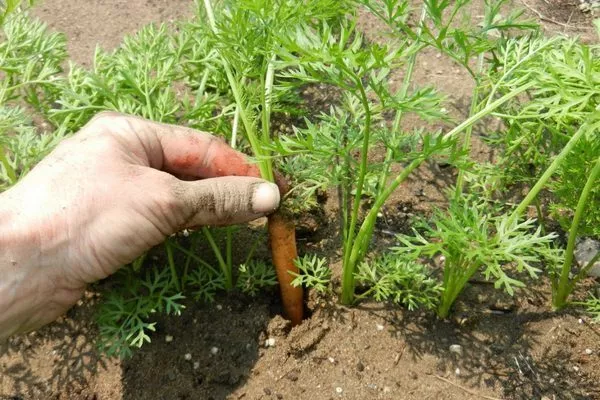
An equally important procedure is loosening the soil. This can be done immediately after watering, while simultaneously thinning and weeding. Plant roots need access to air to produce strong and large root vegetables.
Fertilizers
An excellent fertilizer option is a combination of potassium salt (20 g), double superphosphate (15 g), and urea (15 g).
A combination of mineral fertilizers and potassium chloride is effective. To achieve maximum benefit, dissolve 20 grams of each in a bucket of plain water.
Pest and disease control
Tushon is distinguished by its high resistance to insect attacks, pests, and various diseases. With proper and regular care, these problems can be avoided when growing this vegetable crop.
Carrot diseases
To prevent carrots from suffering from various diseases, water them regularly and moderately, and loosen the soil regularly. In this case, no additional measures will be necessary, as proper care is an effective preventative measure.
Common diseases affecting root crops include white rot and dry rot. Potassium-based fertilizers can help prevent these diseases, but they should be applied to the soil before sowing the seeds—no more than 45 g of potassium chloride per square meter. After 14 days, the soil is saturated with a mineral solution: 10 g of the solution is dissolved in 10 liters of plain water.
Carrot pests
The most dangerous pests for Tushon are the root-knot nematode, carrot moth and carrot psyllid.
When it comes to insect control, prevention is the most effective. To this end, apply special pesticides before planting seeds. If an insect attack occurs, begin combating it immediately.
Follow these tips:
- To combat pests in the early stages, it's not necessary to resort to chemicals. Folk remedies are equally effective. If carrot fly has appeared, simple ash, tobacco dust, and slaked lime are effective. All ingredients are used in proportions of 8-10 g per square meter. Sprinkle the beds with the mixture every 7-8 days.
- Tobacco helps solve psyllid problems. To prepare a solution, dissolve 1 kg of cigarettes in 10 liters of warm water. The resulting paste should be strained and diluted by diluting 2 liters of the resulting mixture in 10 liters of plain water. Add 25 g of laundry soap to the solution, mix well, and use to spray plants.
- To get rid of carrot moths, use tomato tops. Finely chop the tops (3 kg) and pour boiling water (10 liters) over them. Let the solution sit for at least 24 hours, then use it to spray the tops of the plants.
- You don't always have the time or opportunity to prepare various home remedies for pest control. In this case, you can use "Azotofil" or "Fitocide." The principle of application is simple: the solution is dissolved in plain water in specific proportions and then used to spray the crops.
- Only chemical treatments can help combat root-knot nematodes. Anthelmintics, such as "Decaris," are typically effective. Dissolve one tablet in 1 liter of water. Water the plant with the prepared solution several times a day.
At the first sign of disease, treat the plants immediately with specialized products. If using chemicals, strictly follow the dosage instructions on the packaging.
Harvesting and storage
Harvest the vegetables as they ripen. Only harvest those roots that have reached the desired size and are sufficiently juicy and sweet. Carefully dig up fully ripened vegetables to avoid damaging them.
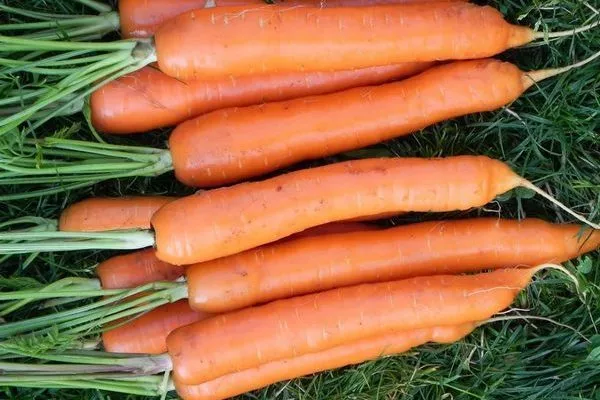
Before storing carrots, thoroughly clean them of any remaining soil and rinse with water if necessary. Then place them in a dry place to dry thoroughly, removing any green tops.
Store Tushon carrots in a cool place or in the refrigerator. However, this variety is not suitable for long-term storage, so try to eat the carrots immediately after harvesting.
The best producers of carrot seeds Tushon
Today, the market offers a wide selection of this carrot variety from various producers. However, it's best to choose from trusted brands:
- Semetra – this brand is considered the best among budget options and has a long shelf life.
- Gavrish – the agricultural company is one of the most reliable suppliers of high-quality seeds.
- Aelita – the company has been operating for over 30 years and during this time has been able to build a good and reliable reputation.
- Plasmas – the company carries out additional plasma treatment of seed material.
- Seeds of Altai – the agricultural company has been on the market for over 20 years and has a good reputation.
Reviews from gardeners
The Tushon carrot is a versatile variety, very popular among both experienced and novice farmers. Its main advantages include not only the tender and juicy flavor of its roots but also its ease of care. It is an ideal variety for an early harvest.