
Carrots are not only a source of vitamins and fiber, but also a food that can be incredibly tasty and sweet. There are many juicy and sweet varieties, each boasting excellent yields and exquisite flavor. Each variety has its own distinctive qualities.
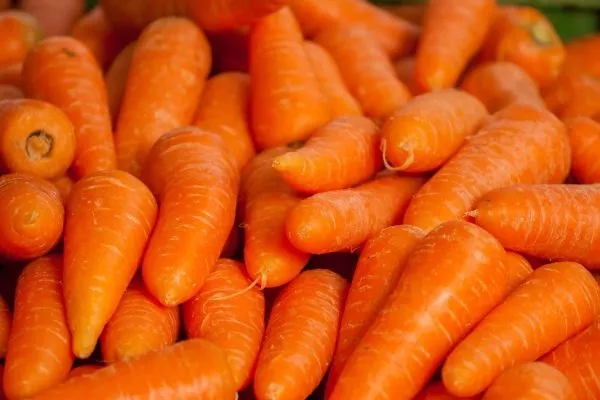
Distinctive features of juicy and sweet carrot varieties
They include several key characteristics that help you identify them and select the most suitable varieties for your purposes. Here are the main ones:
- ✓ Consider the climatic conditions of your region to select the most adapted variety.
- ✓ Pay attention to the variety's resistance to diseases, especially if certain carrot diseases are common in your region.
Sugar content
They are distinguished by their high sugar content, which makes their taste sweeter and more pleasant. The sugar content reaches 8-10% and higher, significantly exceeding that of standard varieties.
Productivity
They are highly productive. They often form large, uniform roots that are easy to harvest and process. Yields may vary depending on growing conditions and care.
Tasting evaluation
They receive high tasting scores and are prized for their sweet flavor and juicy texture.
Purpose
Sweet carrot varieties have a wide range of uses. Their sweet flavor and juiciness make them ideal for fresh consumption, such as in salads or as snacks. Their high vitamin content and sweet taste make them an excellent choice for baby food.

Appearance and shape
Sweet and juicy carrot varieties have an attractive appearance. Their bright orange color indicates a high beta-carotene content. Large, smooth roots are cylindrical or conical in shape, free of significant defects and cracks.
The best varieties of the category
Sweet and crunchy carrots are not only a tasty but also a healthy treat for children. They contain numerous vitamins, fiber, and essential macro- and micronutrients that promote healthy and balanced body function. Popular varieties are listed below.
| Name | Ripening period | Disease resistance | Sugar content |
|---|---|---|---|
| Children's sweet | Early | High | High |
| Maestro F1 | Mid-early | Average | Average |
| Emperor | Late-ripening | High | High |
| Nantes 4 | Mid-season | High | High |
| Bolero F1 | Early | High | Average |
| Caramel | Mid-season | High | High |
| Honey | Mid-late | High | High |
| Sweet tooth | Mid-early | High | High |
| Sweet tooth | Mid-season | High | High |
Children's sweet
The plant is characterized by an attractive, marketable appearance. The bushes reach a height of 30-40 cm and have delicate, green leaves.
Differences between root vegetables:
- Form - cylindrical.
- Length - 19-21 cm.
- Diameter – 2.5-3 cm.
- Peel – bright red or orange.
- Weight - 150 g
This variety is excellent for salads, canning, and fresh carrot juice due to its high carotene content and excellent taste.

Maestro F1
The rosette of foliage is semi-spreading, the leaves are medium-length, finely dissected along the edges, and bright green. The roots are cylindrical with a slightly pointed tip. Each vegetable weighs between 80 and 176 g, and its length is 18-22 cm. The skin is orange, and the core is reddish.
Hybrid characteristics:
- The root vegetables are tasty and sweet. With proper cultivation, the sugar content reaches 7.3%.
- Vegetables retain their appearance well for a long time. To ensure proper storage, thoroughly clean the fruits to remove any remaining soil and dry them properly. If these procedures are not carried out promptly, carrots may rot due to mold.
- This is a mid-early variety. The time from germination to harvest is approximately 130 days.
- Demonstrates high yields. Under favorable conditions, up to 40 tons can be harvested per hectare. For home garden use, the yield is approximately 4 kg per square meter.

Emperor
A plant with a vigorous, upright rosette and semi-spreading leaves. The foliage reaches a height of 35-45 cm and is bright green. The leaves are medium-dissected, sometimes pinnately dissected, and lack a distinct aroma. This variety belongs to the Berlicum cultivar type.
Mature root vegetables protrude slightly above the soil surface, making harvesting easier. Their main differences are:
- Neat and level, which attracts farmers engaged in commercial cultivation.
- Average weight is 80-190 g.
- They are long – 25-30 cm, with a diameter of up to 5 cm. The shape is standard – cylindrical, with a slightly pointed nose.
- The skin is thin, shiny, without noticeable eyes or threadlike roots, and the color is uniformly red-orange.
This variety boasts excellent flavor. The red-orange flesh is dense, meaty, crisp, and very juicy, without stringiness or air pockets. The flavor is balanced—sweetness and sugariness combined with a vibrant carrot aroma.
Emperor is a late-ripening variety. It takes 120-135 days from germination to root ripening. Yields are high – 5.5-8 kg per square meter (158-290 centners per hectare).
Ripe vegetables are versatile: they can be eaten fresh, frozen, added to hot and cold dishes, used in canning, pickling, and processed into purees and juices. This variety is ideal for winter preserves.
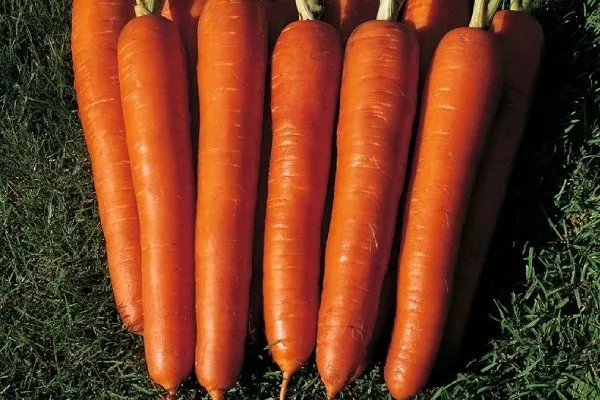
Nantes 4
The plant's rosette is semi-spreading and tall, with sturdy foliage. Distinguishing features:
- Leaves - medium-sized, dissected, bright green in color.
- Root vegetables – medium-sized, cylindrical in shape with a rounded, blunt end.
- Weight - varies from 90 to 160 g, length is 15-17 cm, and diameter is 4-5 cm.
- Surface – smooth, rich orange color.
- Core – small and round, has no noticeable voids and matches the color of the root vegetable.
- Pulp – juicy, tender, dense and crispy.
Nantes 4 carrots are suitable for fresh consumption, adding to salads, soups, and hot dishes. They can also be used to make juices, purees, and jams. The fruits are sweet and not bitter.
This variety is a mid-season crop, with a harvest time of approximately 78-108 days from germination. Yields are high, with 4.2-6.5 kg harvested per square meter and 25-65 tons per hectare.

Bolero F1
This early variety is excellent for fresh consumption, long-term storage, and bunch production. The seeds are very hardy, germinate easily through dry soil crust, and tolerate hot weather well.
The roots are medium-sized, cylindrical, and have a blunt tip. The skin and core are bright orange. Bolero F1 is resistant to Alternaria and powdery mildew, and demonstrates good resistance to Cercospora leaf spot and root rot.
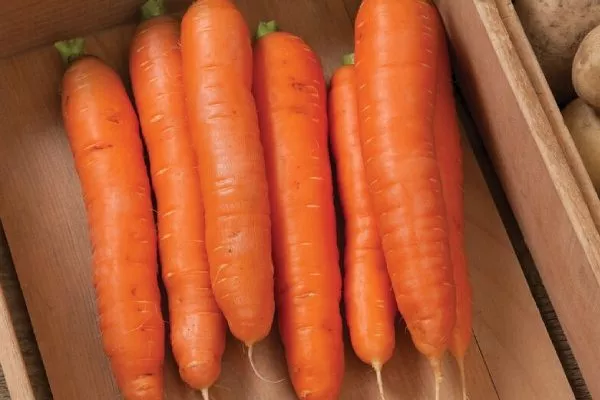
Caramel
This plant has a vigorous, spreading rosette. The top leaves are medium-length (15-20 cm), neat, with small and large dissections, and a uniform emerald green color. Sometimes the leaves may bend and trail due to their own weight.
Other distinctive features:
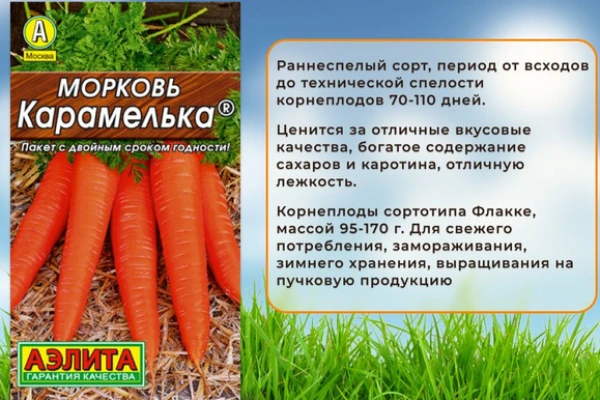
The crop belongs to the Flake variety and is distinguished by its resistance to flowering and cracking.
- Ripe root vegetables are neat and even, with an average weight of 95 to 175 g and a length of 15-16 cm.
- Carrots are conical in shape with a rounded or blunt tip. The skin is thin, smooth, and bright orange.
- It belongs to mid-season varieties with a growing season of about 4 months (110-120 days).
- The yield is good. Under favorable conditions, up to 4 kg of vegetables can be harvested per square meter, and on an industrial scale, the yield is 236-367 centners per hectare.
- The vegetable is famous for its excellent taste and valuable vitamin content.
- The orange flesh is tender, meaty, slightly crunchy, and juicy, without stringiness. The flavor is sweet and sugary with a bright carrot aroma.
- The core is thin and does not differ in color from the pulp.
Honey
The carrot forms a semi-spreading rosette with medium-length leaves. They are light green and have fine to medium lobes along the edges. The plant is resilient to adverse conditions and exhibits excellent agronomic performance.
The roots are cylindrical in shape with a slightly pointed tip. They have a smooth, even surface, giving them an attractive appearance.
Features of the variety:
- Weight - from 120 to 210 g
- Length - 16-18 cm.
- Color - bright orange both outside and inside.
- Taste - sweet, juicy with a rich carrot aroma.
- Texture – dense, crispy and tender.
Medovaya is a mid-late variety with a growing season of 115-125 days. Harvesting occurs in late September or early October, depending on growing conditions. It produces good yields of 5-7 kg per square meter or 30-35 tons per hectare.

Sweet tooth
The plant has a semi-spreading rosette of foliage. Leaf blades can be either elongated or medium-sized, with a normal green color.
Distinctive features of root vegetables:
- Form - elongated cylindrical with a slightly pointed nose.
- Length - 16-18 cm.
- Diameter – 4 cm.
- Weight - varies from 90 to 160 g.
- Peel – bright orange.
- Core – small.
Lakomka quickly gained popularity among vegetable growers thanks to its excellent taste. The aromatic and sweet root vegetables are versatile: they can be eaten fresh, used in various dishes, or processed into juices, which are especially tasty and healthy.
This variety is mid-early, with the time from germination to harvest being 90-100 days, depending on weather and climate conditions. Lakomka boasts high yields, ranging from 260 to 505 centners per hectare.
Sweet tooth
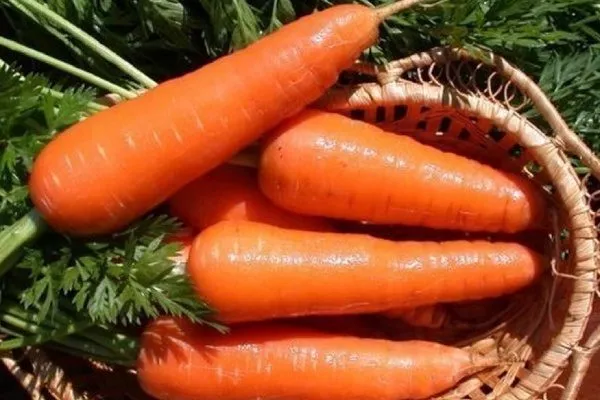
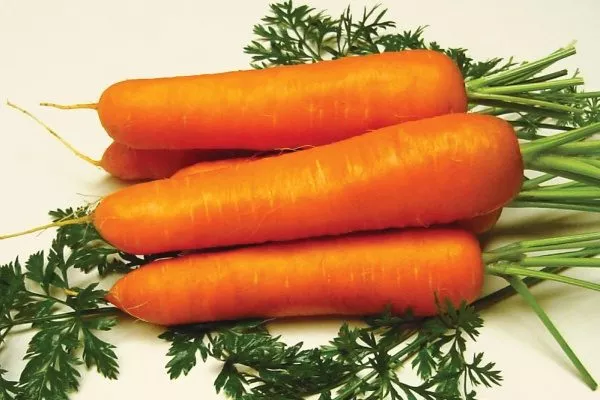
The carrot plant has a semi-spreading rosette of leaves. Distinguishing characteristics include the following:
- Leaves - medium length, green and moderately dissected.
- Root vegetables – cylindrical in shape with a slightly tapering end and a blunt base.
- Length - about 18 cm.
- Diameter – approximately 2.5 cm.
- Peel and core – bright orange in color, although depending on growing conditions the shade can vary from orange to red.
- Weight - varies from 105 to 180 g.
- Pulp – dense and juicy, with a distinct sweetness.
From germination to harvest, approximately 120 days pass. The average yield of this variety ranges from 287 to 542 centners per hectare, with marketability ranging from 73% to 91%, demonstrating its high quality.
Reviews from gardeners and farmers
Choosing juicy and sweet carrot varieties can significantly enrich your diet and gardening experience. These varieties not only delight with their taste but also offer excellent nutritional value. When choosing a carrot to grow, it's important to consider not only its sweetness and texture but also its adaptability to the region's climate.