
The Solomon carrot is a super-large hybrid bred in Siberia. It stores well—until spring—and has excellent flavor. This hybrid variety is suitable for a wide variety of purposes and is grown both in gardens and on an industrial scale.
Description of the variety
The Solomon variety has a semi-spreading rosette of coarsely dissected leaves of medium to long length. The leaves are dark green.
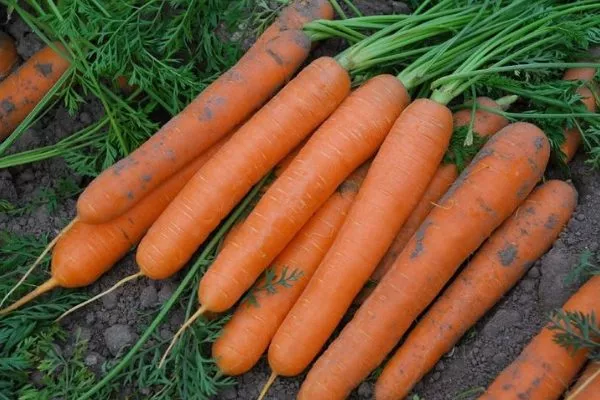
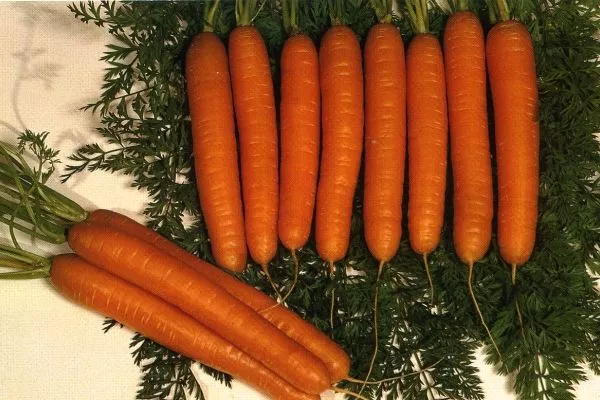
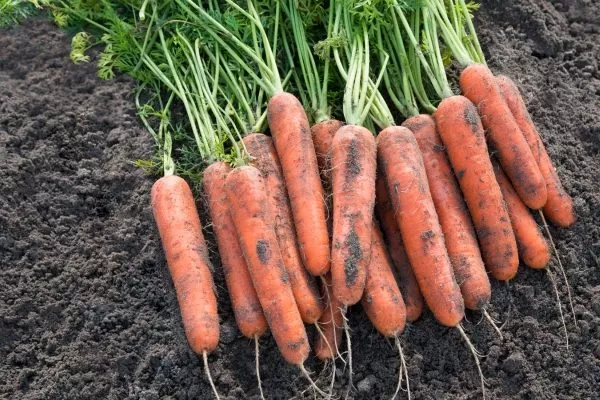
The roots are elongated and conical, bright orange in color (both the outer surface and the core). The tips are slightly pointed. Each root weighs 85-185 g and is 25-27 cm long.
History of creation
The Solomon hybrid belongs to the Flakke variety. It was developed by Russian breeders V. N. Dederko and S. V. Ugarova. The variety was approved for cultivation in 2009 and is recommended for cultivation in the West Siberian region.
The taste and purpose of root vegetables
Solomon carrots have excellent flavor and are suitable for a wide variety of purposes. They are widely used in cooking, make excellent carrot juice, and are also suitable for canning and freezing. They can be grown for bunch production.
Characteristics
Solomon carrots are high-yielding varieties. They yield between 230 and 420 centners per hectare, comparable to the renowned Chantenay carrot. The Solomon hybrid is mid-season, with a harvest time of 120-140 days from sowing to harvest. The variety's marketability ranges from 68-91%.
Pros and cons
The Solomon hybrid boasts an impressive array of advantages, making it deservedly popular among both gardeners and large agricultural producers. Before planting the Solomon variety in your garden, carefully evaluate all its advantages and disadvantages; this carrot may not be suitable for your needs.
Pros:
No particular disadvantages were found in the Solomon variety.
Landing features
Proper planting is essential for a good harvest. It's important to choose the right plot and sow carrot seeds according to generally accepted agricultural practices.
Landing features:
- Sowing takes place in April-May, taking into account climate and weather conditions. Delaying sowing is not recommended, as this may result in slow crop development.
- When selecting a plot, consider crop rotation. Solomon carrots grow best after corn, cabbage, beets, and tomatoes.
- The plant prefers loose, light, and well-drained soils with a neutral pH. The planting site is prepared in the spring. The soil is dug, fertilized, and, if necessary, deacidified with slaked lime or loosened with sand or humus.
- The site should be level, sunny and warm, without drafts, strong winds or stagnant moisture.
- Seeds (if not prepared for planting by the manufacturer) are disinfected in potassium permanganate, then washed and soaked in warm water for approximately 20 minutes. Then, the seeds are immersed in a growth stimulator for 24 hours, and only then can sowing begin.
- Furrows are prepared in the beds at 20 cm intervals for planting. They are watered generously, and once the water has been absorbed, the seeds are evenly sown at a depth of 0.5-2 cm (depending on the soil density). The seeding rate is 0.4-0.6 g per square meter. The seeds are then covered with soil, lightly compacted, and watered using the sprinkler method.

How to care?
To grow large and juicy root vegetables, regular care is essential. The Solomon hybrid requires standard care—watering, fertilizing, loosening the soil, mulching, and weeding.
Care features:
- The first thinning is carried out two weeks after emergence. After three weeks, the carrots are thinned again.
- Watering should be moderate, taking into account the weather and rainfall; stagnant water should be avoided. During rainy periods, it is even recommended to organize drainage from the beds. When the root vegetables reach the size required by the variety, watering is stopped.
- The soil is regularly loosened and mulched. Weeding is carried out simultaneously with loosening, removing all weeds.
- Carrot beds are fertilized three times per season. Fertilizers are applied after watering. Initially, the crop is fertilized with nitrogen fertilizers to stimulate foliar growth.
At the three-leaf stage, carrots are fertilized with ammonium nitrate or organic matter (slurry, poultry manure). Subsequently, organic fertilizers are added, and carrots are fed only with potassium-phosphorus compounds, which promote root growth.

Pest and disease control
The Solomon hybrid has good immunity, but lacks tolerance to overwatering. This is why it is susceptible to various types of rot. This hybrid is also susceptible to leaf spot and leaf spot.
To prevent damage, carrot crops are sprayed with Oxychom, Fundazol, or a 1% Bordeaux mixture. Rotten, diseased roots are pulled out and destroyed.
The biggest threats to Solomon carrots are carrot flies, psyllids, and cutworms. An infusion of tobacco, garlic, and onion peels can help control them. For severe infestations, insecticides such as Actellic can be used, but be mindful of the timing of spraying and when the carrots are actually eaten.
Harvesting
The mid-season Solomon carrot is ready for harvesting in late August or early September. Dig the roots in dry weather, doing so carefully to prevent the long carrots from breaking.
Reviews
The Solomon carrot is a promising variety for the Siberian region. It will appeal to those who love large root vegetables and classic "Nantes" varieties. This hybrid is guaranteed to provide a bountiful harvest, provided you maintain a proper watering schedule.