
The Shantane carrot has been a well-known and sought-after variety for over 70 years. Many growers and home gardeners choose this carrot variety for its excellent quality, high yield, and excellent flavor. Below are the characteristics of Shantane and its cultivation techniques.
Origin of the variety
The Chantanaye carrot was developed by French breeders. This variety is considered a standard, a benchmark for the crop. Other varieties were developed from it, many of which bear the name Chantanaye. All representatives of this type share similar characteristics, appearance, and flavor.
This carrot was brought to Russia during World War II and was registered in the State Register as Shantane 2461. This carrot is considered the progenitor of all Shantane varieties bred in Russia.
Description of carrots
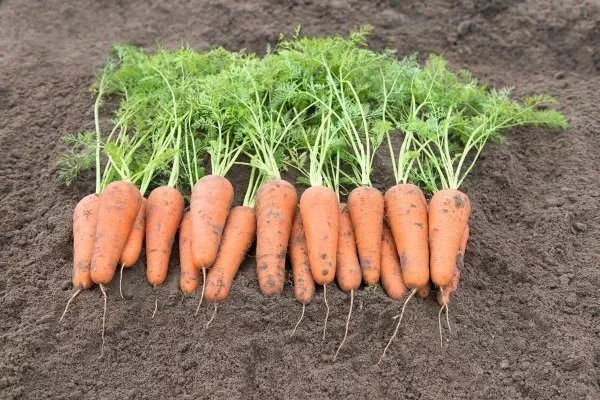
All varieties of this type have orange roots with dense, juicy flesh. Shantane's distinctive feature is its conical shape with a blunt tip. The carrots average 10-15 cm in size and weigh between 100 and 200 g, depending on the variety. Some varieties have a sugar content of up to 10%.
Advantages and disadvantages of Shantane carrots
This carrot variety has become widespread due to its versatility and the ability to be grown throughout almost the entire territory of Russia.
Shantane's advantages include:
- the yield is at the level of 400 c/ha, which is quite high;
- resistance of root crops to cracking and branching;
- carrots are not prone to flowering in the first year of cultivation;
- possibility of planting on heavy and infertile soils;
- reduced requirements for care and attention when growing;
- resistance to the main types of diseases of umbrella plants;
- long shelf life (over 8 months) and the possibility of transportation over long distances.
A disadvantage of this variety is the need for special storage conditions. However, this applies to all carrot varieties in general. Also, don't exceed the harvest deadline, as this will degrade the carrots' flavor.
Varieties of Shantane
| Name | Ripening period | Yield (c/ha) | Sugar content (%) |
|---|---|---|---|
| Kuroda Shantane | Early | 400 | 10 |
| Shantane 5 | Mid-season | 450 | 8 |
| Chantenay A COUR ROUGE 2 | Early ripening | 380 | 10.5 |
| Shantenay Royal | Mid-season | 500 | 9 |
| Shanene Royal | Mid-season | 340 | 8.5 |
| Chantenay-Comet | Mid-early | 360 | 9.5 |
Late, mid-season, and early-season carrot varieties and hybrids were developed based on the Shantane 2461 variety. The name includes both the Shantane and Shantane variants.
Among the variety of new varieties and hybrids bred by Shantane, it is worth noting some included in the State Register:
- Kuroda Shantane. One of the sweetest early varieties, with a sugar content of up to 10%. Commercial yield reaches 96%.
- Shantane 5. It has a large root crop, reaching 200 g, and a high yield. It is a mid-season variety.
- Chantenay A COUR ROUGE 2. An early-ripening sweet variety with a sugar content of up to 10.5%. The root vegetable is small in size, weighing up to 120 g.
- Shantenay Royal. A fairly large carrot, weighing up to 180 g, with a yield higher than the standard.
- Shanene Royal. A mid-season variety with large roots. Average yield, up to 340 c/ha.
- Chantenay-Comet. Mid-early carrots weighing from 95 to 160 g.
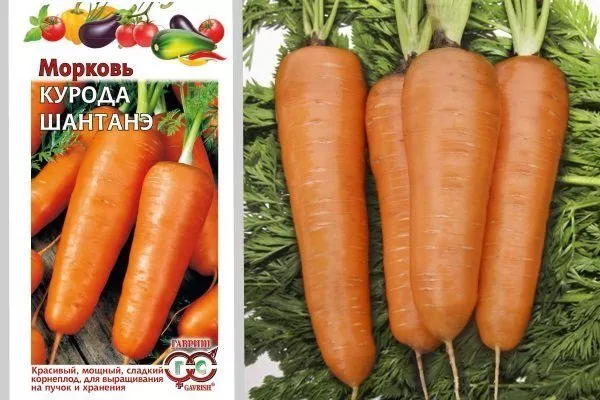
Kuroda Shantane Carrot
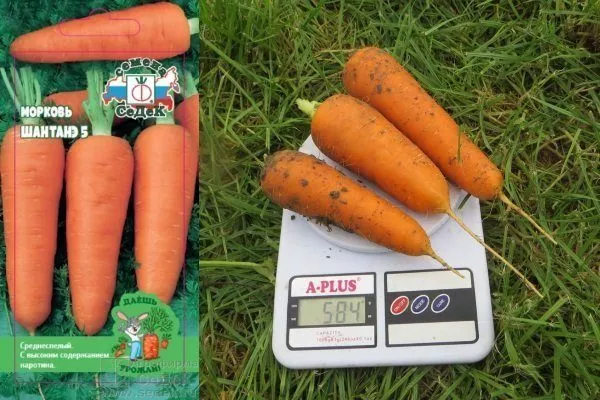
Shantane Carrot 5
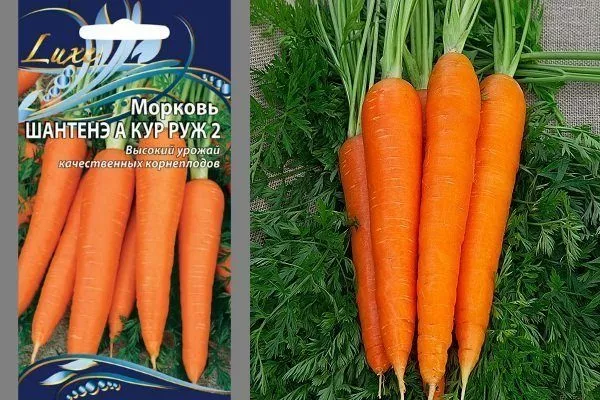
Carrot Chantenay A COUR ROUGE 2
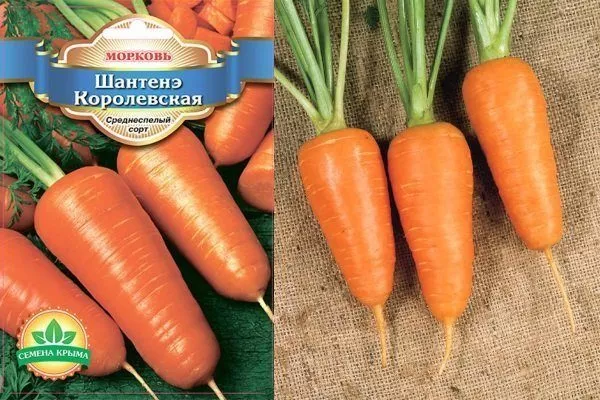
Shantane Royal Carrot
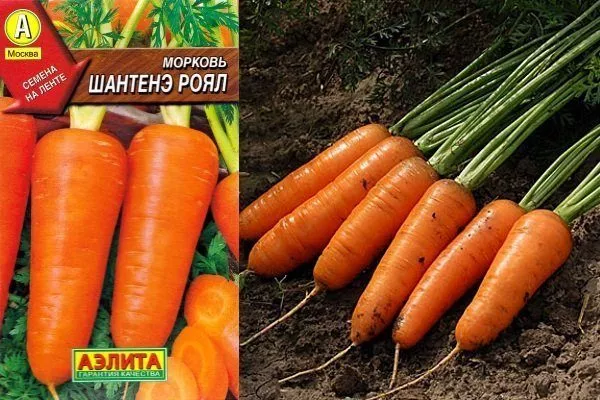
Shantane Royal Carrots
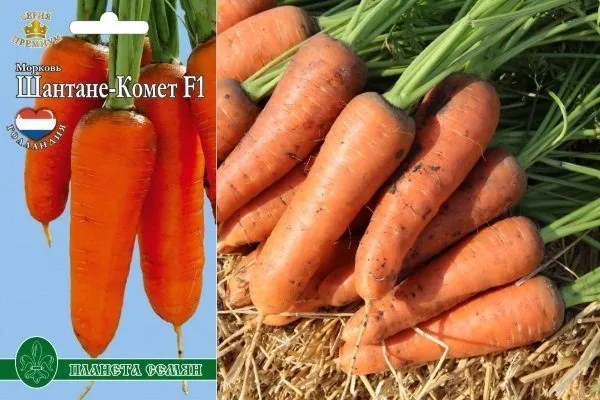
Shantane-Comet carrots
Ripening period
Thanks to the huge number of varieties bred on the basis of Shantane, this type of carrot has both early, mid-season and late varieties:
- Early varieties. The growing season for this type of carrot ranges from 70 to 100 days. It is sown indoors or outdoors, weather permitting, in late April to early May. Early carrots are intended for fresh consumption. These include the Kuroda Shantane, Shantane A COUR ROUGE 2, Shantane-Komet, and Abako varieties.
- Mid-season varieties. Carrots mature in 100-120 days. They are sown outdoors in late May to early June. Mid-season carrots are typically the sweetest and are used for making juices and purees. These include the following varieties: Shantane 5, Shantane 2461, Shantane Royal, Shantane Royal, Royal Shanson, Krasa Devitsa, Moskovskaya Zimnyaya, Katrin, and others.
- Late varieties. This carrot is intended for winter storage. Its flavor is not as pronounced as that of mid-season carrots, but it lasts longer. Some varieties are used for winter sowing. Late-season carrots include Cascade, Abledo, Cupar, Canterbury, and others.
Productivity and planting features
The Shantane carrot variety has a fairly high yield. However, your harvest will depend on the growing conditions you provide. Good soil aeration, increased soil fertility, and proper tillage will significantly impact root development, regardless of the variety.
Landing region
The wide variety of this carrot variety means it can be grown in various regions of our country, spanning from the southern regions to the Far East. When choosing carrots for planting, carefully read the packaging, as it indicates the recommended growing zones.
| Growing region | Carrot varieties (Shantane variety) |
| Central | Abledo, Abaco, Cascade, Beauty Maiden, Coupar, Moscow Winter, Shantenay 5, Chantenay 2461, Chantenay Royal, Chantenay Royal, Royal Chanson. |
| Central Black Earth | Canterbury, Cascade, Catherine, Cupar, Shantane 5, Shantane 2461, Shantane Royal, Royal Chanson. |
| Northwestern | Abaco, Canterbury, Cascade, Coupar, Moscow Winter, Chantenay 2461. |
| Volga-Vyatka | Abaco, Canterbury, Cascade, Catherine, Cupar, Shantenay 2461, Shantenay Royal. |
| North Caucasian | Abaco, Cascade, Kuroda Chantane, Cupar, Moscow Winter, Chantenay 2461, Chantenay A COURS ROUGE 2, Chantenay-Comet. |
| Middle Volga | Abaco, Canterbury, Cupar, Moscow Winter, Shantenay 2461. |
| Lower Volga | Abaco, Canterbury, Cascade, Cupar, Shantenay 2461. |
| West Siberian | Abaco, Canterbury, Cascade, Cupar, Shantenay 2461. |
| East Siberian | Abaco, Canterbury, Cascade, Cupar, Shantenay 2461. |
| Ural | Canterbury, Cascade, Cupar, Shantenay 2461. |
| Far Eastern | Cascade, Coupar, Moscow Winter, Chantenay 2461, Chantenay Royal. |
| Northern | Shantenay 2461. |
Selecting a location and preparing the soil
Choosing a site for planting carrots is crucial for the yield and flavor of the root vegetables. Carrots are sun-loving crops and should be grown in a sunny location. Overwatering carrots during growth can lead to root rot. Therefore, it's best to plant the carrots on a slight slope to allow excess moisture to drain.
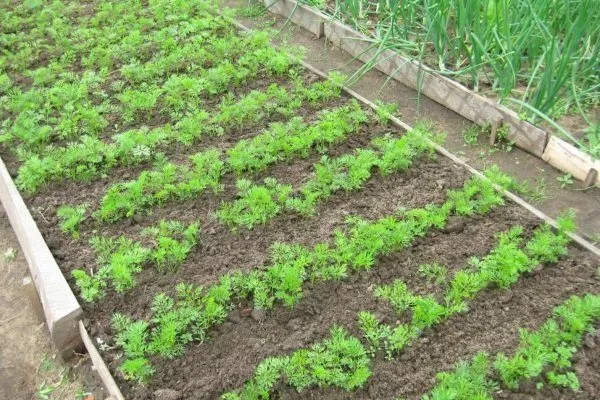
There are varieties that produce crops in any soil. But to get a great carrot harvest, the soil must be highly fertile and loose. This vegetable grows well in sandy loam and light loam soils.
Crop rotation rules
Early cabbage and potatoes, tomatoes, cucumbers, zucchini, and onions are considered good predecessors for carrots. Fresh manure should not be added to carrots, so choose a plot with vegetables that were well fertilized the previous season.
Carrot crop rotation in the same plot is carried out every 3-4 years. This helps prevent root aphids and nematodes and protects root crops from diseases common to carrots. Read more about crop rotation for carrots and other vegetables in this article.
Sowing technology
Carrots are sown in open ground or in a greenhouse. If the planting site is moist and the groundwater level is close to the surface, carrots are sown in beds. In arid regions, they are sown on level ground.
Row spacing varies from 25 to 45 cm, and the distance between root crops should be at least 5 cm. Seeds are planted at a depth of 0.5 to 2.5 cm, depending on soil composition.
- ✓ Optimum soil temperature for seed germination: 20-25°C.
- ✓ The seeding depth varies depending on the soil type: on light soils – 2.5 cm, on heavy soils – no more than 0.5 cm.
Seedlings will germinate depending on soil temperature and moisture. At 2-3 degrees Celsius, germination will take 25-30 days. At 20-25 degrees Celsius, the seeds will sprout in just 4-5 days.
Growing and caring for carrots
Carrots don't require any special care. Once planted, they will need to be thinned, weeded regularly, and watered. By following proper carrot growing techniques, you'll get an excellent harvest.
Watering
Carrot roots grow quite deep in the soil, making them drought-resistant and requiring little or no watering. Regular watering, avoiding over-watering, should be done only until the seedlings emerge. Once the carrots have sprouted, stop watering for 7-10 days to allow the roots to penetrate as deeply as possible.
Carrots don't need to be watered frequently, but do so thoroughly and evenly. In July and August, water no more than once every 7-10 days. After each watering or rain, loosen the soil. Stop watering 2-3 weeks before harvesting to prevent cracking of the roots.
For more information on watering carrots, please see here.
Fertilization
Carrots respond very well to fertilization, both natural and mineral. In the fall, when digging the plot, it is advisable to add humus or compost to the soil (4-6 kg/sq. m). When sowing on infertile soils, add nitroammophoska (50 g/sq. m). Fertile soils do not require fertilization.
If you apply a lot of nitrogen fertilizers, this will worsen the storage quality of carrots.
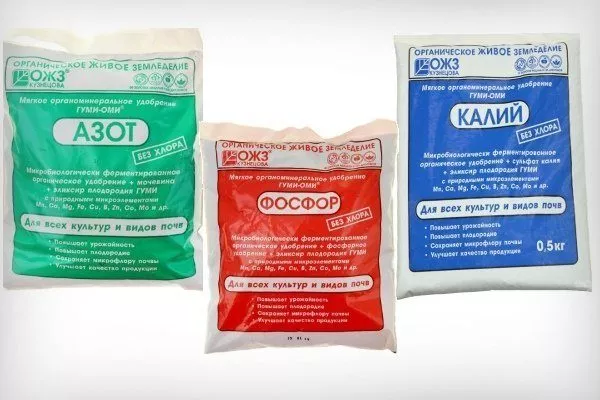
During the growing season, plants are fertilized with nitrogen, phosphorus, and potassium. Recently, many balanced multi-component fertilizers for various crops have become available, making choosing the right one easy.
- The first feeding should be carried out 3-4 weeks after germination, using nitrogen fertilizers.
- The second feeding should be carried out 6-8 weeks after germination, using potassium-phosphorus fertilizers.
Pest and disease control
Fungicides are used to combat fungal diseases, and diseased plants are destroyed. Pesticides are used to control insects that destroy carrot crops.
To prevent damage to carrots, maintain proper crop rotation and avoid planting too densely. The soil should be completely cleared of plant debris before sowing. growing season weeds are carefully removed.
Control of carrot diseases:
- Fomoz. This disease is incurable. Remove all affected plants. To prevent phoma, apply potassium-phosphorus fertilizer before planting.
- White rot. To combat this disease, spray crops with copper-containing preparations and apply potassium fertilizers.
- Gray rot. Treat the seedlings with Bordeaux mixture and fertilize with nitrogen fertilizer. Remove damaged plants.
- Rhizoctonia. Spray the plants with copper oxychloride.
- Black rot. Treat plantings with fungicides containing iprodione.
- Bacteriosis. This is an incurable disease. Destroy the crops. As a preventative measure, spray the seedlings with copper oxychloride.
Insect pests primarily attack the above-ground portion of carrots. This leads to stunted root development and reduced yields. The following methods are used to control these pests:
- Carrot fly. Treat carrots with pesticides. To prevent them from laying eggs in the soil, sprinkle them with a mixture of mothballs and sand.
- Carrot psyllid. Only manual collection of this insect's eggs will help. Spray crops with a tobacco solution. Avoid planting near coniferous trees.
- Slugs. Add superphosphate to the top layer of soil and treat the plants with a solution of garlic, hot pepper and mustard.
- Wireworm. The only way to get rid of it is with insecticides. Feed your carrots with ammonia.
- Carrot aphid. Eliminate weeds in your area promptly. Spray your crops with a solution of ash and tobacco.
Harvesting and storage
Carrot roots reach their peak weight in September, so harvesting occurs late. Watering should be stopped 2-3 weeks beforehand. Harvesting should be done in dry weather. The tops are cut off at the root head. The carrots are left to dry in a shaded area outdoors.

Optimal conditions for storing carrot crops: Air temperature 0 degrees. Relative humidity 95-96%. As the temperature rises, root vegetables begin to sprout. If the temperature was lower, root rot may occur during thawing. Low humidity can cause carrots to wilt.
How to avoid mistakes when growing?
Although growing carrots isn't difficult, novice gardeners can make some mistakes. These can lead to a significant reduction in carrot yield:
- Planting technology. Remember that carrots prefer rich, loose soil. Improve the soil as much as possible before planting.
- Thinning carrots. A good, strong root vegetable will grow if it has enough space, at least 5-6 cm between plants. Carrots are thinned twice. The first time, at the 2-3 leaf stage, leaving 1.5-2 cm between shoots. The second thinning occurs 20-25 days later.
- Proper watering. To prevent carrots from cracking, water them regularly. If they haven't been watered for a long time, resume watering gradually, in small amounts.
- Sufficient feeding. Avoid over-fertilizing, as this will weaken the plant and increase the risk of disease.
- Hilling up plants. Don't forget this important step. Hill up the carrots at least three times during the growing season. Most carrot varieties require the head to be completely covered, otherwise it will turn green and taste bitter.
Reviews
It's no wonder the Shantane carrot is considered a classic among carrot varieties. Its versatility, ability to be grown throughout Russia, and ease of care make this variety attractive not only to many gardeners but also for large-scale cultivation.