
Rote Riesen is a late-ripening, imported carrot variety popular with gardeners. It is prized for its high yield, marketable appearance, and excellent flavor, as well as its suitability for long-term storage and transportation. It is popularly known as the "Red Giant" for its large fruits and high carotene content, which gives the carrot its scarlet hue.
Introduction to the variety
This vegetable variety is intended for open-field cultivation. If you plan to grow it in your garden, familiarize yourself with the variety's key characteristics and a description of the harvest's commercial qualities.
Who developed the variety and when?
Rote Riesen is an achievement of German breeding in the 1970s, belonging to the Flakke variety. Its application for approval for use was submitted by the company Mayer Zamen (Germany) and dates back to December 1975.
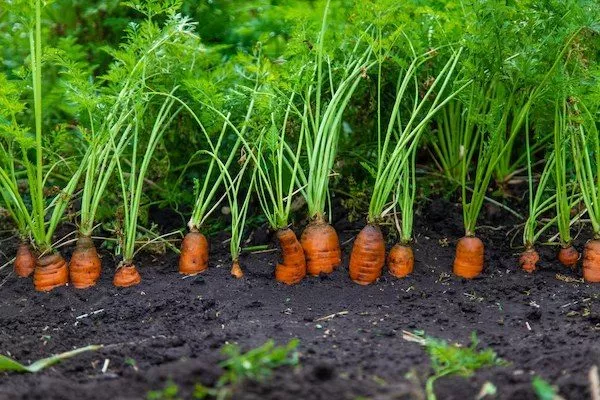
Bush
Red Giant plants have distinctive external features:
- powerful and spreading rosette of leaves;
- upright structure;
- leaves: medium-sized, green, medium-dissected.
German carrots have very strong tops, making harvesting the roots much easier. Many home cooks use them as a culinary herb.
Root vegetable
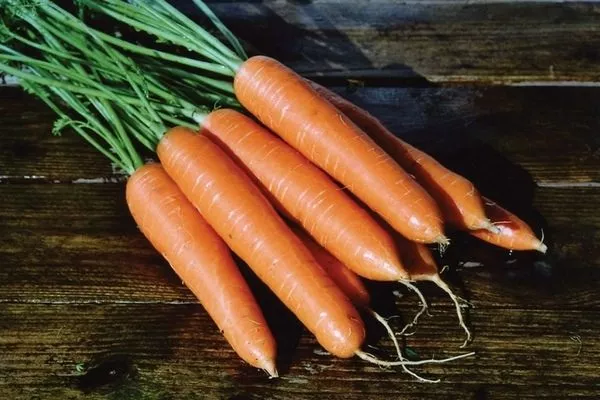
Rote Riesen vegetables are resistant to cracking. They are characterized by uniformity, attractive appearance, and excellent quality. They possess the following characteristics:
- classic shape (elongated cylindrical with a rounded top);
- large sizes (length - 24-27 cm, diameter - 4.5-6 cm);
- weight - 80-150 g;
- bright red-orange color;
- smooth surface of dense skin;
- medium-sized core;
- pulp: aromatic, tender, with a crunch and a lot of juice.
Taste characteristics and purpose
This variety is renowned for the excellent flavor of its roots. They are neither watery nor bland, but very sweet, thanks to the high sugar content (7.9%) and dry matter (12.7-13.6%) in the pulp.
The purpose of the crop is universal:
- carrots are eaten fresh;
- added to salads, first and second courses;
- processed into juice;
- canned;
- freeze;
- are placed in the cellar for long-term storage.

Ripening and yield
Rote Riesen is a late-ripening vegetable variety. The root crops mature in 130 to 150 days (counted from the moment the seedlings emerge). After planting the seeds in April (May), gardeners harvest the crop in June (August).
The variety is renowned for its high yield. Its performance indicators are as follows:
- from 2.1-3.7 kg per 1 sq. m is collected by summer residents cultivating the crop in their personal subsidiary plots (with enhanced agricultural technology, the yield increases to 4 kg or more);
- from 21,200 kg to 37,300 kg are collected by farmers growing the Red Giant on an industrial scale;
- marketability of the crop - 82%;
- excellent transportability and shelf life (vegetables can be stored until spring, retaining their taste, juiciness and marketable appearance).
Difference from other species
Rote Riesen, like other late-ripening varieties, differs from early and mid-ripening carrots in the following features:
- longer ripening of the crop;
- late period of its collection (from July to October);
- large-fruited;
- sweeter taste compared to mid-season varieties, but in terms of sugar content and juiciness it is inferior to the early vegetable;
- the best suitability for long-term storage compared to other varieties of vegetable crops.
Among popular late-ripening carrot varieties, the Red Giant stands out due to its high sugar content and rich carotene content. A comparison of technical characteristics is provided in the table:
| Name | Length/weight of root crop, cm/g | Yield rate, kg per 1 sq. m | Taste | Growing season |
| Rote Riesen | 27\150 | 4 | sweet, juicy, tender,
carotene content - 10%, sugar - 7.9%
| 130-150 days |
| Queen of Autumn | 25\230 | 4 | sweet, juicy, tender,
11% sugar, 15 mg/100 g carotene | 120 days |
| Flake-2 | 18-22\180 | 4 | juicy, sweetish, with dense flesh | 130-160 days |
| Perfection | 15-17\130 | 5 | sweet, tender, juicy | 110 days |
| Canada F1 | 20\up to 500 | 5-7 | juicy, sweet, 8% sugar | 135 days |
Advantages and disadvantages
The variety is valuable for its many inherent qualities:
Rote Riesen also has several significant disadvantages:
Growing and care rules
You can achieve a rich harvest of large and tasty root vegetables of the Rote Riesen variety by strictly following the rules of vegetable cultivation.
Dates and place for planting
Sow carrot seeds in open ground at the following times:
- at the end of April or in the first days of May:
- in October.
Give preference to late spring sowing. The harvest is good for both fresh consumption and long-term winter storage. Plant carrots in May, when temperatures reach 20-22°C. At lower temperatures, the roots will be less vibrant and attractive.
Select a suitable area in your garden for a carrot bed. Its characteristics are as follows:
- abundance of sun (in the shade or partial shade, plants stretch out, and yield decreases);
- with light and sufficiently moist soil containing a lot of humus, neutral or slightly alkaline (pH = 6–8);
- dug to a depth of 30 cm and fertilized with humus, diluted with sand for looseness (do not add fresh manure to the soil, it reduces the shelf life of root crops);
- where there were previously beds with cabbage, onions, cucumbers, and legumes.
Sowing technology
Before sowing the seeds, soak them in lukewarm water for 24 hours. You can add a little Epin if desired. Germination is not required.
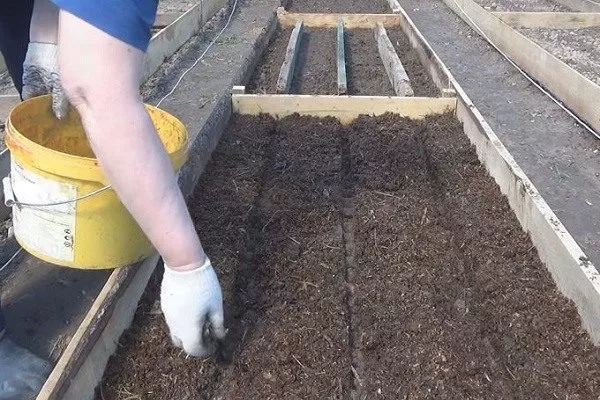
Sow the seeds in pre-prepared furrows (2-3 cm deep and 5 cm wide), watered and sprinkled with a layer of wood ash. Follow the pattern:
- the distance between the furrows is 18-20 cm;
- seeding depth - 1-2 cm;
- step - 3 cm;
- seeding rate: 60-80 g per 100 sq. m.
Sow by hand. Distribute the seeds evenly, following the recommended spacing. Perform this procedure in calm weather. Cover the furrows with a 2 cm layer of humus. Cover the planting area with plastic film to retain soil moisture. Remove the film after the seedlings emerge.
Post-sowing care
Pay special attention to caring for your carrot bed to ensure it rewards you with beautiful and delicious vegetables. Consider the following:
- WateringWater the crop during its early development period once every 3 days. Use only warm water. Do not allow the soil to dry out completely. Reduce watering as the plants grow to once every 7 days. Stop watering the beds 14-20 days before harvest.
Despite carrots' love of moisture, overwatering is harmful: it delays the development of the bushes and leads to cracking, curvature, and rotting of the roots. - Top dressingUse liquid nitrogen-containing mixtures at the beginning of the crop's growing season. Then apply potassium and phosphorus. Apply two additional fertilizers per season: 20 days after germination and 60 days later.
- Weeding and loosening the bedsPerform these procedures after watering. They will prevent plantings from becoming infected with diseases and pests and improve the air and moisture permeability of the garden soil.
- Thinning (Do this as needed). Remove excess bushes from dense plantings, starting after the first leaves appear on the seedlings. Maintain a distance of 3 cm between plants.
Repeat thinning when the second pair of true leaves appears, maintaining a 6 cm spacing. By removing all unnecessary growth, you create optimal conditions for the proper development of the plant.
Disease and pest prevention
The variety is moderately resistant to infections and pests. By implementing several agricultural practices, you can prevent plant diseases:
- by digging up the garden soil in the fall and treating it with a solution of copper sulfate (30 g per 10 l of water);
- performing pre-sowing disinfection of seeds;
- observing crop rotation on the plot (do not plant the crop in the same place for several years in a row, do not grow it after umbrella plants);
- by properly watering and fertilizing the planting, and thinning it out in a timely manner;
- removing bushes affected by diseases or pests from the garden bed;
- growing calendula, garlic, and mint next to carrots to repel insects.
If the Rote Riesen variety is not given sufficient or high-quality care, it suffers from diseases and pests, such as:
- Fomoz (dry rot). Infected bushes, stems and umbels become covered with brown spots or black dots. Treating the garden soil with Bordeaux mixture (1%) and applying potassium fertilizers can help prevent complications.
- Alternaria (Black rot). The disease manifests itself during the root growth period. It is indicated by blackening of the stem. To solve the problem, remove and destroy the remains of infected bushes, carry out timely loosening of the beds and thinning of the plantings, and use Roval.
- BacteriosisThe disease manifests itself by the appearance of yellow spots on the foliage, darkening of the stem, and the formation of dots and stripes. There is no cure. Affected plants must be destroyed. As a preventative measure, spray the planting with Hom 20 days after germination.
- Carrot flyThe parasite attacks the tops of the plants. The leaves of affected plants curl and take on a bronze color. To prevent attacks, practice early sowing and deep plowing, avoid overwatering the soil, thin out the plants and weed, and dust the beds with tobacco dust and powdered ash.
- LeafhopperThe larvae of this jumping insect damage leaves, causing them to curl and the carrots to dry out. To combat this, locate carrot beds away from coniferous plantings, remove weeds, and spray the crop with insecticides.
- WirewormA small yellow worm damages the underground parts of carrot plants. To get rid of the parasite, apply ammonia-containing fertilizers, lime the soil, and use insecticides.
Harvesting and storage
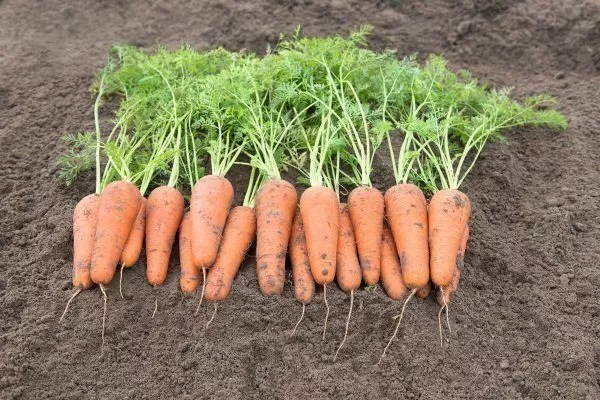
Dig up Rote Riesen carrots after the tops have lodged. Harvest them in dry weather. Use a pitchfork to carefully remove the carrots from the ground.
For winter storage, select root vegetables that have the following characteristics:
- fully ripe;
- whole, without damage or cracks;
- no signs of disease.
Remove the tops and then dry the harvest for long-term storage. Store it in the cellar, ensuring the following conditions:
- lack of sunlight;
- temperature - 0°C;
- air humidity level is 98%.
If you haven't collected a lot of root vegetables, you can freeze them and store them in the refrigerator at home.
Problems in cultivation and ways to solve them
When growing vegetables in your garden, you may encounter a number of common problems:
- Cracking of fruitsThese vegetables spoil quickly. This problem is caused by excess nitrogen, improper watering, and heavy soil. You can prevent this by liming the soil before sowing the seeds, adding sand, and fertilizing it with organic matter one year before planting the carrots.
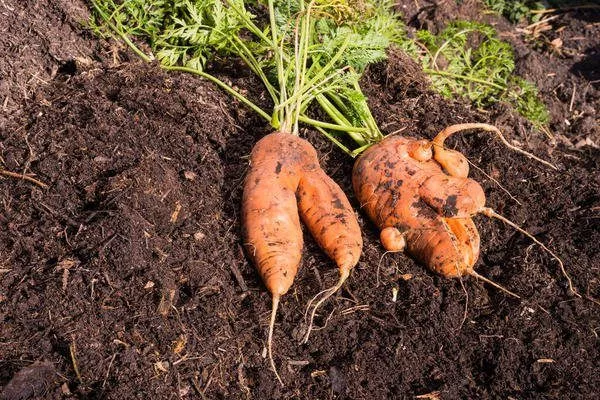
- Deformation of root cropsThis is caused by the introduction of nitrogen compounds during the formation and ripening of the crop, the use of fresh manure to fertilize the soil, and dense soil.
To prevent this problem, you can use the right fertilizers and properly prepare the soil for sowing seeds, in particular, by deep plowing. - Hairiness of carrotsThe appearance of roots on the surface of root crops is observed due to seeding in soil with low humus content. Irregular watering also contributes to the problem.
It is enough to increase the fertility of the soil, loosen it frequently and establish a watering regime so that the harvest has a marketable appearance. - Bitterness in the taste of root vegetablesComplications can arise from poor agricultural practices, carrot fly infestations, exposed root tips, and solanine accumulation. Hilling and repelling carrot flies from the garden bed can help prevent this.
Reviews from gardeners
Rote Riesen is a German carrot variety popular with Russian gardeners. It boasts excellent root flavor and high yields. It is suitable for both private and commercial cultivation on an industrial scale due to its high marketability, attractive appearance, shelf life, and transportability.