
Curling carrot tops are a warning sign for gardeners, signaling the risk of losing a crop or the lion's share of it. A deteriorating appearance of carrot plants indicates their poor health. Knowing why the foliage has become curled will help you choose the right treatment and easily address the problem.
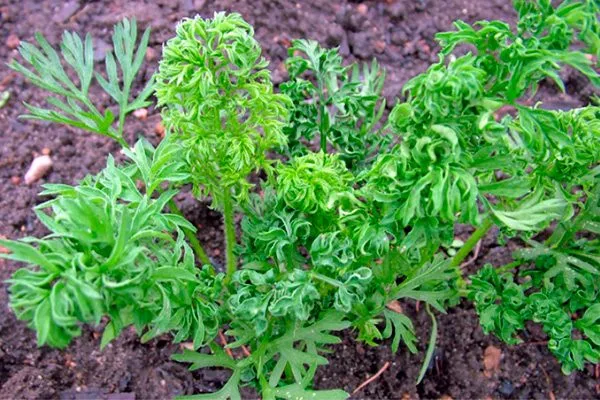
The main causes of carrot leaf curl
Curling of carrot tops can be caused by various factors. These include:
- damage to plantings by harmful insects;
- deficiency or excess of nutrients;
- illiterate watering.
| Name | Ripening period | Disease resistance | Soil requirements |
|---|---|---|---|
| Carrot psyllid | 1-2 generations per year | Low | Not demanding |
| Carrot fly | 2-3 generations per year | Average | Prefers moist soils |
| Carrot aphid | Many generations per year | High | Not demanding |
Carrot psyllid
A psyllid is a miniature insect (size 1.7-3 mm) with a pale green body and transparent wings.
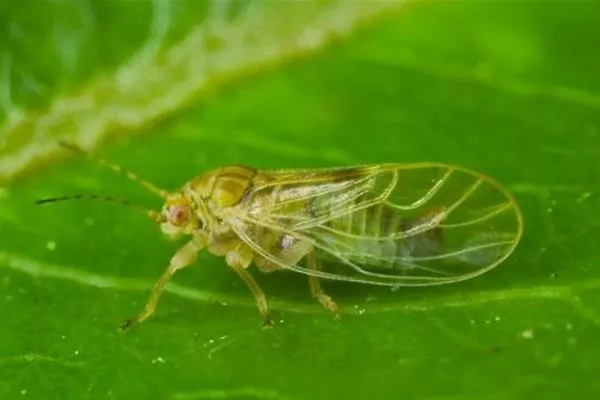
This is the worst enemy of such garden crops:
- carrots;
- parsley;
- parsnip.
The psyllid's flight is observed in late spring, when, after overwintering in a coniferous planting, the pest moves to carrot beds to breed. There, throughout the summer, it feeds on carrot sap and lays eggs on the foliage.
The following signs will indicate an invasion of carrot psyllid on a vegetable planting:
- weakening of plant immunity;
- cessation of bush growth;
- drying out of leaves;
- underdevelopment and spoilage of root crops.
See also the video on this topic:
Carrot fly
This is a small, two-winged fly with a black body (4-5 mm long) and a reddish-yellow head. Besides carrots, it also attacks other garden plants:
- parsley;
- celery;
- parsnip;
- dill.
The flight of young carrot flies coincides with the apple blossom season. At least three generations of this pest emerge during the summer season. The peak of the carrot infestation is from the second half of June to early August.
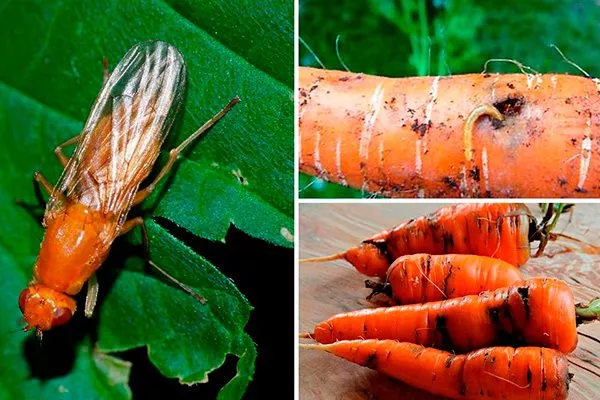
The female lays a clutch of up to 120 eggs at the base of the bush. The larvae, which emerge soon after, chew through the roots to reach the soil, where they pupate. In late June, the second generation of flies emerges. The larvae hatch from their eggs, pupate in the fall, and remain in the garden soil overwinter.
It is not difficult to identify a vegetable crop damaged by carrot fly based on the following signs:
- the appearance of a reddish-purple tint in the color of the tops;
- the presence of multiple passages in the root vegetables (the carrots look perforated);
- fruit rot.
- ✓ Presence of larvae in root crops, visible when cut.
- ✓ The appearance of a characteristic rotten smell near the affected plants.
Root rot is accompanied by yellowing and drying out of the bush. Its foliage also curls up.
Carrot aphid
Gardeners consider the carrot root aphid to be another of the vegetable crop's worst enemies. Clusters of the miniature pest, with green, translucent bodies (1.7 mm long), are observed on the lower stems of carrot plants in mid-summer.
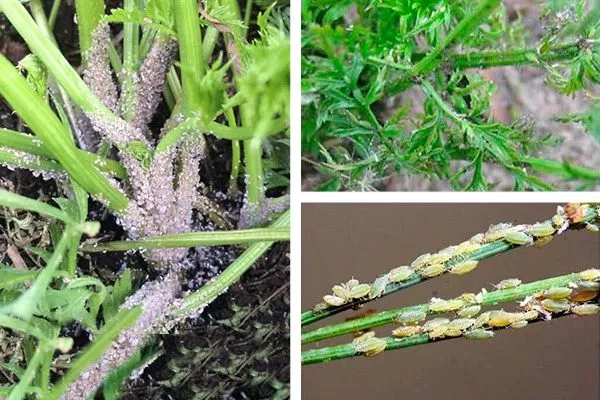
Parasites feed on their sap, which stunts the underground growth of the plant. Root crops harvested from aphid-infested beds are not large, have a marketable appearance, or have a pleasant taste.
You can identify a carrot planting damaged by aphids by the following signs:
- the presence of insect colonies on the stems and leaves;
- weakening of plant immunity;
- their defeat by fungal and viral infections, carried by aphids;
- drying out, yellowing, curling of tops;
- sticky coating (honeydew) on leaves;
- abundance of ants in carrot beds.
Micronutrient imbalance in the soil
Deterioration in the appearance of a carrot bush, including its abnormal curling, is often a consequence of a lack of nutrients in the garden soil, such as:
- phosphorus (other signs are small leaves with a purple tint in color, premature drying of the tops);
- potassium (potassium deficiency also manifests itself in the faded color of the foliage, the appearance of a brown tint, and slow growth and development of the bush);
- magnesium (other signs include underdevelopment of the bush, lower leaves acquiring autumn colors, faded color of the upper leaves, premature dying off of the tops).
Excessive nitrogen levels in the soil also contribute to the problem. This causes carrot tops to appear curly and bright green. A deficiency of this nutrient manifests itself as yellowing and curling of the leaves.
Lack of moisture
Lack of moisture in carrot bushes threatens their appearance:
- yellowing of the tops;
- by twisting it;
- drying out.
The problem is caused by dry summer weather and insufficient watering of the beds. In this case, it's sufficient to water the root crops more frequently and thoroughly to eliminate leaf curl and restore the carrot plants to a healthy appearance.
What to do?
The solution to the problem of curled tops is to treat carrot beds with solutions of preparations designed to destroy harmful insects.
Instead of store-bought insecticides, folk remedies are also suitable. Use them if the vegetable crop has only minor pest infestations or if harvest is just a few weeks away. While the roots are ripening, treating carrot plants with chemicals is unacceptable.
Pest control with insecticides
To combat carrot enemies, use the following preparations:
- Aktara. To make a liquid solution, dissolve a small amount of the chemical (5 g) in water (10 liters). Spray the carrots affected by aphids with the resulting solution. To eliminate carrot fly, apply two treatments to the root crops per season.

- Inta-vir. Prepare a solution of water (10 liters) and one tablet of the product. Apply it to your carrot beds no later than three weeks before harvest. The product is toxic.
- ActellicTo make a liquid solution, dissolve the product (2 ml) in water (2 l). Apply it to carrot plants affected by pests. This is also a highly toxic insecticide. Do not apply it later than 4 weeks before harvest.
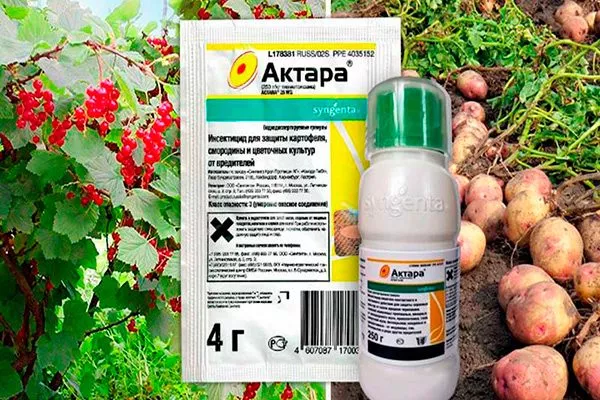
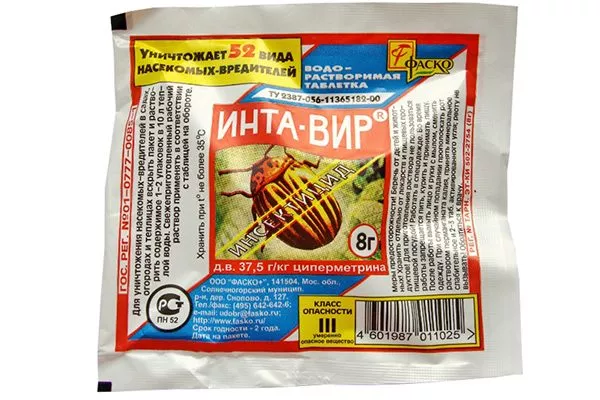
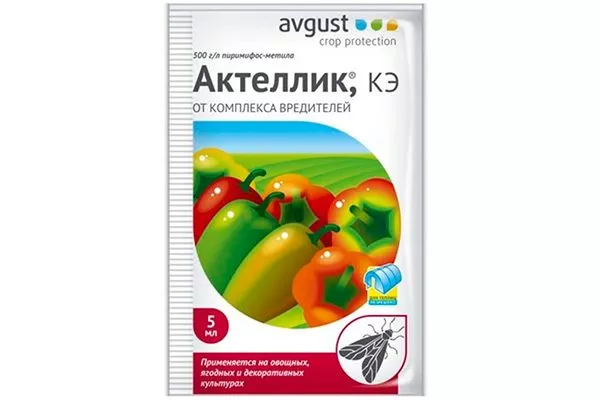
Spray carrot plants with chemicals on a dry, windless day, wearing a respirator and work gloves. Use these products no more than twice per season.
If they don’t help, all that remains is to weed out all the infected beds and burn the plant waste outside the area.
Folk remedies for curly carrot tops
Homemade solutions, infusions, and decoctions can also help combat carrot pests. While not as effective as chemicals, they are safe for humans and the environment.
The following folk remedies have proven effective in the fight against carrot flies, aphids, and leafhoppers:
- Ash infusion. To make it, pour 300 g of ash into 1 liter of water, boil, and let steep for several hours. Strain the infusion and add 25-30 g of liquid soap.
- Garlic water. To make the remedy, pour 200 g of crushed garlic cloves into 1 liter of water and let steep for several hours. Strain the liquid before using.
- Chamomile decoction. To prepare it, pour 1 kg of dried plant material into boiling water (5 liters), bring to a boil again, and let it steep for 8 hours. Strain the infusion through cheesecloth.
Instead of chamomile, you can use other herbs: yarrow, celandine, wormwood, tobacco, horse sorrel. - Soapy water. To prepare the solution, take 300 g of shredded laundry soap and add 15 liters of water. Once the soap has completely dissolved, spray the carrot beds with the resulting liquid.
- Serum with added medications. To prepare the solution, add iodine (5 g), boric acid (4 g), and baking soda (40 g) to a milk product (1 liter). Combine the resulting liquid with a rich pink solution of potassium permanganate (0.5 liters). Stir, filter, and apply to the carrot beds.
- Tobacco dust or powdered wood ash. Dust the root crops with these powders. For best results, mix the products in a 1:1 ratio. Sprinkle the resulting dry mixture generously over the curly carrot tops.
Use folk remedies to treat carrot beds repeatedly. Repeat the treatments until the "enemy" retreats.
Other methods to solve the problem
If carrot top curl is the result of a nutrient deficiency in the garden soil, the solution is not insecticides, but fertilizer. Fertilize the vegetable twice per season:
- 20 days after the seedlings appeared;
- 30 days after the first feeding.
If the tops of the beds begin to curl, water the bushes with one of the following nutrient solutions:
- ash infusion (2 glasses of ash per 10 liters of water);
- potassium nitrate (20 g) dissolved in water (10 l) with the addition of urea (15 g) and double superphosphate (15 g);
- with a solution of nitrophoska (15 g per 10 l of water).
What are the consequences of carrot leaf curl?
Curly carrot foliage is abnormal (with rare exceptions). Healthy carrot plants have the following characteristics:
- bright green color;
- uniform tone of stems and foliage, without inclusions or yellowed areas;
- straight and even leaves.
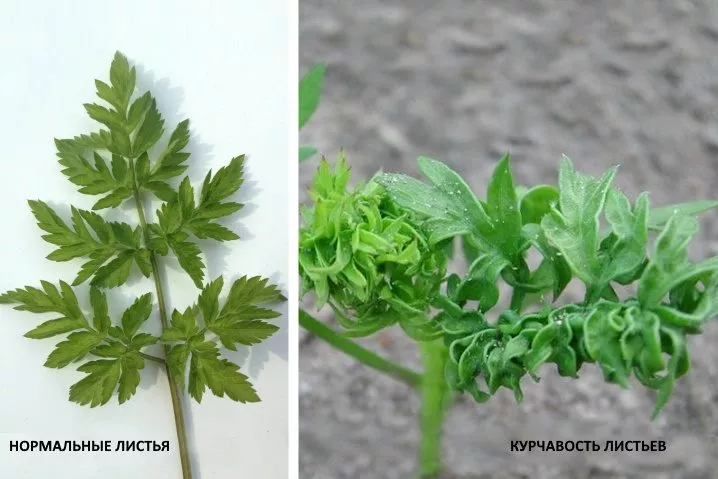
Carrot curl is most often caused by an infestation of harmful insects. If left untreated, the consequences for the gardener can be dire:
- obtaining a meager harvest;
- low quality of root vegetables (small size, crooked shape, tough flesh with a very hard core, lack of juice and sweetness);
- poor shelf life of vegetables.
Carrots damaged by pests are generally unfit for consumption. Root vegetables that can be used for cooking do not have a long shelf life and are often used as animal feed. Severely damaged carrots are destroyed.
How to prevent the problem?
The following preventative measures can help prevent leaf curling on carrot bushes:
- growing vegetables in an open and well-ventilated area of the garden;
- refusal to plant carrot beds in places where there was a planting last season that was damaged by pests;
- planting onions, garlic, calendula, and marigolds between rows;
- timely thinning of carrot plantings;
- regular removal of weeds in the garden, in particular dandelions and clover;
- abundant watering of the beds with subsequent obligatory loosening of the soil;
- mulching the root crop planting with peat or tomato tops to repel carrot flies;
- preventative spraying of bushes with herbal infusions;
- clearing the area of plant debris and digging it up immediately after harvesting.
Curly carrot tops are a common problem caused by pest infestations. It's easier to prevent than to deal with the parasites that suck the life out of the plants and prevent large, juicy roots from developing. If pests have already attacked your carrot plant, insecticides and effective folk remedies can help save it.
Thank you for the very useful information! My magpies also started curling this year. I read in your post that it was insects, and that's exactly what happened. I treated them, but also took precautions beforehand to prevent further pests. Thanks for the smart advice – I planted onions right next to each other and garlic on the other side. Of course, while they were growing, pests kept popping up, but then, when the onions started to sprout, the pests became much fewer. Now I'll be planting these crops right between each carrot row in the spring.