
Diseases and pests can significantly reduce yields. If left untreated, the entire harvest can be lost. Let's learn about the dangers and stages of carrot pests, and how to prevent fungal, bacterial, and insect damage.
Carrot diseases
Compared to other vegetable crops, carrots are rarely susceptible to disease during the growing season. The greatest threat to them comes from fungal diseases that cause root rot. Growing carrots isn't enough—they also need to be preserved. After root crops are established, for storage, a wide variety of rot types can become active.
| Name | Type of disease | Affected plant parts | Control measures |
|---|---|---|---|
| Powdery mildew | Fungal | Leaves, roots | Treatment with fungicides, isolation from umbellifers |
| Fomoz | Fungal | Tops, root crops | Increase phosphorus-potassium fertilizers, remove tops |
| White rot | Fungal | Roots | Increasing the dose of potassium, spraying with copper-containing preparations |
| Gray mold | Fungal | Roots | Application of nitrogen fertilizers, spraying with Bordeaux mixture |
| Rhizoctonia | Fungal | Roots | Spraying with copper oxychloride, adding lime |
| Alternaria | Fungal | Stems, roots | Spraying with the drug "Rovral" |
| Bacteriosis | Bacterial | Tops, root crops | Spraying with "Hom" |
| Cercospora leaf spot | Fungal | Leaves | Spraying with fungicides |
| Brown spot | Fungal | Leaves, roots | Application of potassium and phosphorus, spraying with fungicides |
Powdery mildew
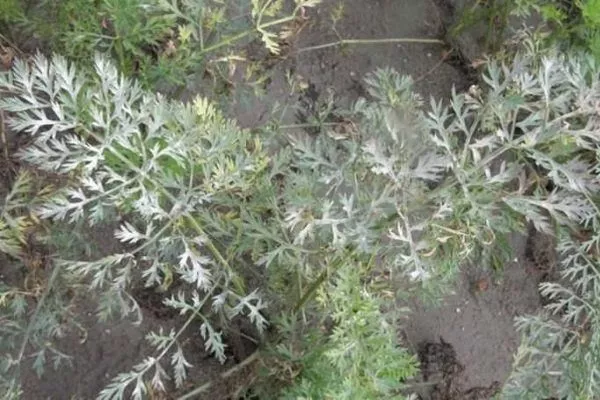
One of the most common diseases. It tends to develop particularly rapidly in certain years—when the weather is hot and dry, and the leaves are dehydrated. The disease dramatically reduces photosynthesis, roots shrink, and leaves dry out and die.
The fungus spreads through plant debris. Primary infection can also originate from plants of the celery family. The fungus is transmitted by conidia formed on the mycelium.
Symptoms. The leaves are covered with a whitish, powdery coating that gradually thickens and turns gray. Dark brown and black, spotty growths called cleistothecia form on top of the coating. The affected leaf parts turn brown and die. The roots become stunted, smaller, and harder.
Control measures:
- treatment of plantings with Fitosporin-M and other fungicides, as well as iodine, ash, copper-soap or copper-soda solution;
- Isolation of carrot crops from plants of the umbelliferous family.
- ✓ Optimum temperature for processing: +15°C to +25°C.
- ✓ Air humidity should not exceed 70% to avoid leaf burns.
Fomoz
A dangerous fungal disease, also known as dry rot, it attacks the crop at the end of the growing season. Phoma blight spreads most rapidly during storage. The disease is most active if root vegetables are stored in a warm basement—at temperatures above 10°C.
The disease is not dangerous during the first year of growth. Dry rot poses the greatest threat to seed plants stored in storage. The disease is considered incurable. Affected plants are removed and destroyed.
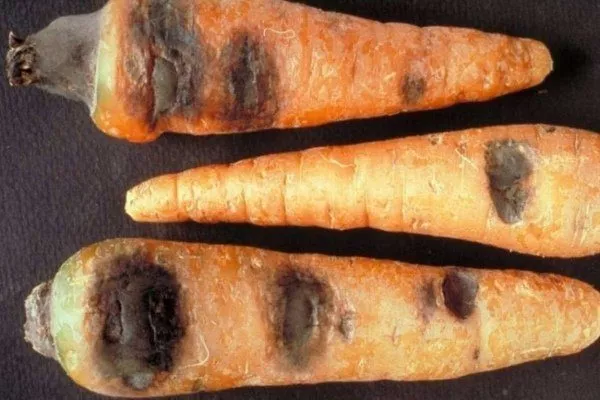
Symptoms. At the onset of the disease, elongated gray-brown spots appear on the tops of the carrots. Gradually, the disease spreads to the roots. Initially, dark, whitish lesions appear on the tops of the carrots; these lesions grow and destroy the entire root.
Control measures:
- Increasing the dose of phosphorus-potassium fertilizers.
- The tops are removed immediately after harvesting.
White rot
In its early stages, sclerotinia—another name for white rot—is virtually asymptomatic. This fungal disease manifests itself during storage. When storing root vegetables, gardeners are unaware that they are introducing a dangerous infection into their cellar, capable of destroying everything stored in the bin.
The development of white rot can be triggered by an overdose of nitrogen fertilizers.
Sclerotinia affects many garden plants. To prevent this disease, it is recommended to avoid growing carrots near pumpkins, tomatoes, cucumbers, beans, and cabbage.
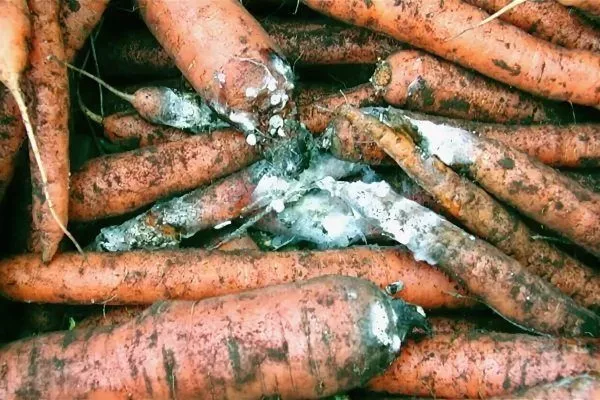
Symptoms. Soft spots appear on carrots, initially detectable only by touch—they're indistinguishable in color from healthy carrots. Over time, a fluffy coating develops on the soft spots, then wet droplets that harden to form dark growths.
Control measures:
- Increasing the potassium dose – add 1.5 tablespoons of potassium sulfate for every 10 liters of water.
- Spraying with copper-containing preparations.
- Disinfection of the cellar. For example, you can use sulfur checkers.
Gray mold
Another name for gray mold is botrytis. It attacks carrots stored in storage, primarily those that have been sun-dried or frozen.
To minimize the risk of disease, it is not recommended to store carrots near cabbage. Gray mold can destroy 80-90% of the crop.
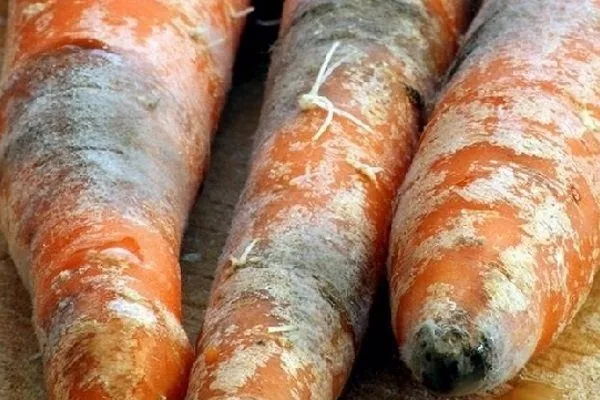
Symptoms. Initially, moist, brown areas appear on the roots. They soften when pressed. Later, a grayish coating develops on the softened areas. Sclerotia—tuberous structures—soon appear on top of the gray mycelium.
Control measures:
- Timely application of nitrogen fertilizers in accordance with the dosage prescribed for carrots.
- Spraying with 1% Bordeaux mixture.
- Store at a temperature of about +2°C.
Rhizoctonia
This disease is better known as felt rot. It occurs during active growth and storage. It is caused by a soil-dwelling fungus. The fungus is widespread, affecting not only carrots but also beets, parsley, clover, chicory, and turnips.
The disease can be detected even during growth: lead-colored subcutaneous spots appear on the roots. The foliage of affected plants turns yellow and even dries up.
Symptoms. Gray spots appear on the root vegetables. They are located under the skin. A purple-brown, felt-like coating develops over the spots. Over time, black formations form on top of the coating. The root tissue softens and rots.
Control measures:
- Spraying with copper oxychloride.
- The application of lime is recommended.
Alternaria
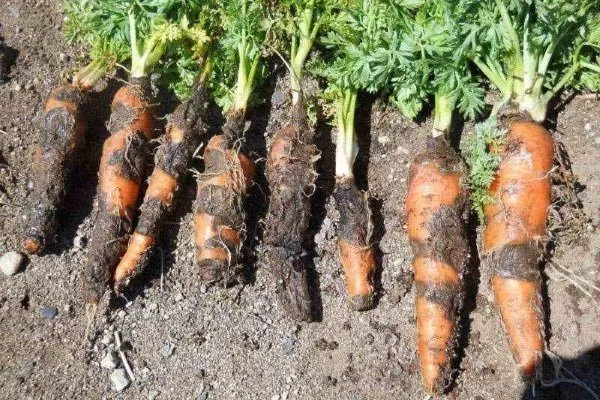
Gardeners call this fungal disease black rot. Its development is favored by hot, rainy, and windy summers. Evening watering can trigger rhizoctonia. Symptoms usually appear during storage. The fungus is transmitted through soil, plant debris, and seed. The disease can completely destroy a crop in a short period of time.
The disease can completely destroy plants between germination and the appearance of 3-4 leaves. In this case, the plants are usually said to be affected by "black leg."
Symptoms. During the growing season, the stems of young shoots turn black. Roots become covered with dry black spots. Penetration depth is up to 10 mm.
Control measures: spraying with the drug "Rovral".
Bacteriosis
The disease is bacterial in nature. Infection by pathogenic bacteria occurs during the first year of cultivation. The disease is very common and can be diagnosed during the growing season.
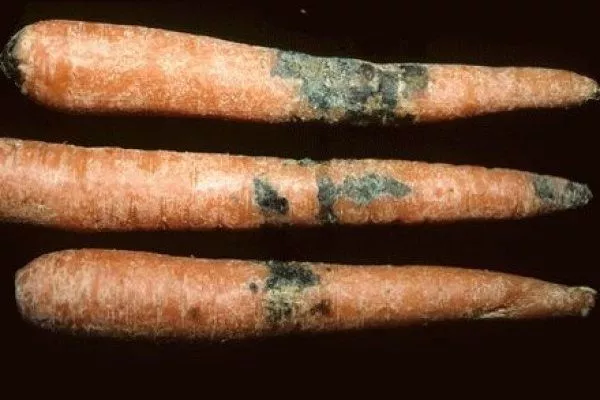
If the infection spreads widely, the plant develops an unpleasant odor. Bacterial blight cannot be cured, so infected plants are destroyed.
Symptoms. Yellowish spots appear along the edges of the lower leaves. As they grow, they darken. Grayish and yellowish drop-shaped spots—bacterial exudate—appear at the base of the petioles. The stems become covered with brownish spots and stripes. Ulcers and sunken, brownish areas develop on the roots.
Control measures: 20 days after emergence, spray with “Hom” (40 g diluted in 10 liters of water).
Cercospora leaf spot
A widespread, ubiquitous fungal disease. It is often observed in waterlogged and floodplain areas. It typically appears during cool, rainy summers.
If plants are severely affected, leaves die, and roots become small and wrinkled. Plant debris can become the source of infection.
Symptoms. Initially, the leaves are affected, developing brown spots with white centers. The spots then enlarge and become lighter in color. The leaves dry out and curl. A gray coating forms on the spots—these are fungal spores. The mold then spreads across the entire surface of the leaves, causing them to turn black and rot.
Control measures: spraying with fungicides, for example, Quadris.
Brown spot
Another name for this fungal disease is cladosporiosis. On young plants, it appears as constrictions. If carrots become infected early in the growing season, they usually die. Optimal conditions for fungal development are between 20 and 25°C. Plant debris or seeds can be the source of infection.
This pathogenic fungus is transmitted by wind and water, and is carried by insects. It attacks roots and seed heads at any stage of the growing season. Cladosporiosis reduces crop yields by 40-50%. If left untreated, the entire crop can be lost.
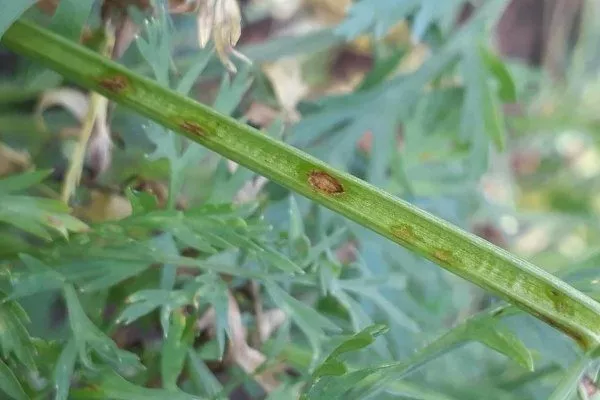
Symptoms. The first signs appear on seedlings. Dark stripes appear on the lower part of the plant. In mature plants, symptoms appear during the root formation phase. More often, the fungus affects the entire above-ground part. Brown spots with a dark border appear on the leaves.
If the damage is severe, the leaves curl. The tops look as if they've been scalded. Light brown spots about 1.5 cm in diameter are visible on the roots. Healthy and diseased tissue are clearly delineated. The root flesh is deeply rotted.
Control measures:
- Adding increased doses of potassium and phosphorus is especially important for loamy soils.
- Spraying with fungicides.
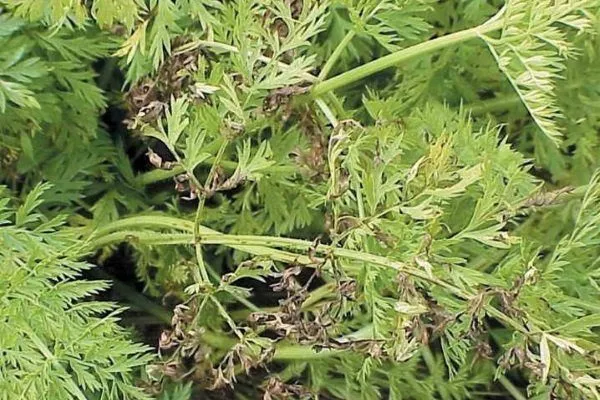
Carrot pests
Carrots have few pests, but their attacks can lead to complete crop loss. Let's learn about the most harmful insects that feed on the above-ground and underground parts of carrots.
| Name | Pest type | Affected plant parts | Control measures |
|---|---|---|---|
| Leafhopper | Insect | Tops | Treatment with soap solution, tobacco dust |
| Umbrella moth | Insect | Tops | Cutting off tops, spraying with preparations |
| Naked slugs | Mollusk | Tops, root crops | Treating the soil with lime mortar |
| Wireworms | Insect | Roots | Liming the soil, adding ammonia-containing preparations |
| Carrot fly | Insect | Roots | Spraying with chemicals and folk remedies |
| Exclamation owl | Insect | Stems, fruits | Spraying with insecticides, folk methods |
| Root nematode | Worms | Root system | Replacing the soil, burning the affected plants |
| Mole cricket | Insect | Root crops, young shoots | Kerosene treatment, mustard tincture, traps |
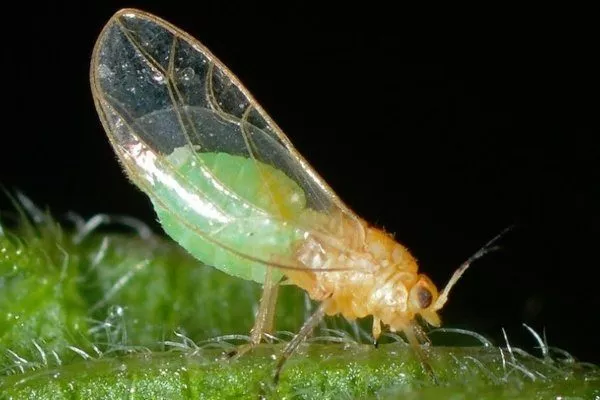
Leafhopper
Like common fleas, leafhoppers have jumping appendages. This ability allows them to jump long distances. Although they are very small pests, they can cause significant damage. They infest pine forests.
The pest is extremely difficult to eradicate, so it is recommended to take preventative measures - cover the plantings with non-woven material in advance.
Harm and signs of damage. Females lay eggs on carrot tops. The hatched larvae feed on the sap of the leaves. The plant may dry out completely, and the roots stop growing.
Control measures:
- Treatment with a soap solution or tobacco dust. For 10 liters of water, add 1 kg of tobacco and 30 g of laundry soap.
- Scattering or laying out coniferous branches between rows.
Umbrella moth
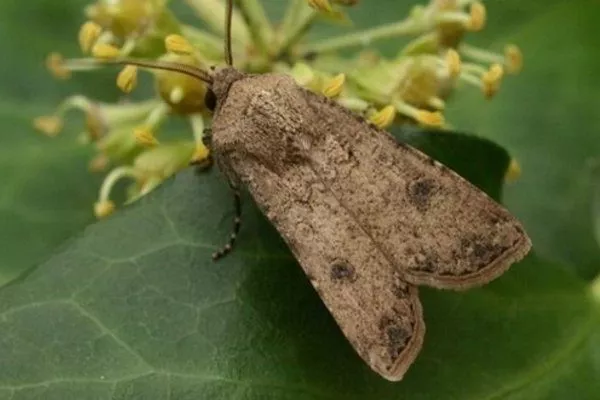
The carrot moth, or umbrella moth, is a small butterfly. There are several varieties of carrot moth, but the brown carrot moth is especially dangerous, attacking fruits and seed pods. The moth's peak period is late June to mid-July. It attacks parsnips, fennel, caraway, dill, and other umbelliferous plants.
The first caterpillars appear at the end of June. The caterpillars develop for about 20 days. After pupation, they pose no threat to the crop until the following year. To prevent pest development, deep tilling of the soil in the fall is recommended.
Harm and signs of damage. Pests spin cocoons—these can be used to identify the presence of a pest. Plants darken and dry out.
Control measures:
- Cutting off tops and mechanical collection of caterpillars.
- Spraying with lepidocide, entobacterin, etc. during the budding period.
Naked slugs
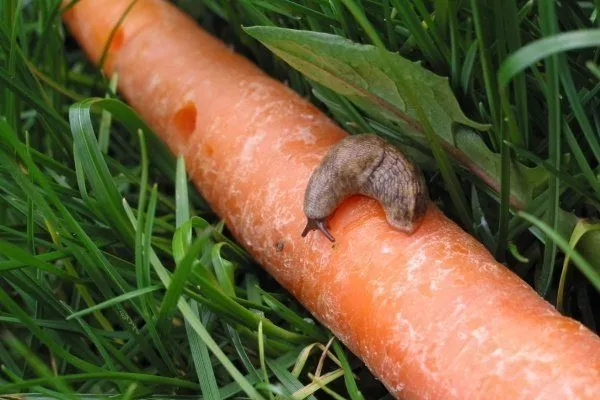
This voracious pest is especially active in damp, rainy weather. Both adult slugs and larvae pose a threat to crops. The pests usually hide under stones or among the leaves.
The pest constantly reproduces, laying eggs throughout the summer and fall, and can cause significant damage to crops. A female can lay up to 500 eggs at a time. The hatched slugs become full-fledged garden pests within 2-3 weeks.
You shouldn't grow carrots in low-lying areas where moisture stagnates - there is a high risk of slug infestation.
Besides carrots, slugs also eat other garden crops. It's extremely difficult to eradicate them, as it's difficult to pinpoint their locations. They typically spread throughout the entire garden. It's recommended to look for slugs under rocks, boards, and other objects that have been standing for a long time without changing their location.
Harm and signs of damage. Slugs eat plant tops and roots. You can identify their presence by the light trails they leave behind. Slugs usually emerge at night or immediately after rain.
Control measures:
- Treating the soil with a lime solution to which wood ash has been added.
- Regular weeding is the best way to control slugs.
Wireworms
Wireworms are hard, yellow worms, reaching 3 cm in length. They are the larvae of the click beetle. These insects are especially dangerous in the first half of summer. By early August, the larvae, having pupated, are no longer a threat to carrots.
Wireworms are especially common in potato beds. They are the most dangerous potato pest. Optimal conditions for the pest include soil moisture of approximately 50% and air temperatures above 20°C. Low humidity kills the worms quickly, but arid conditions also kill the plants.
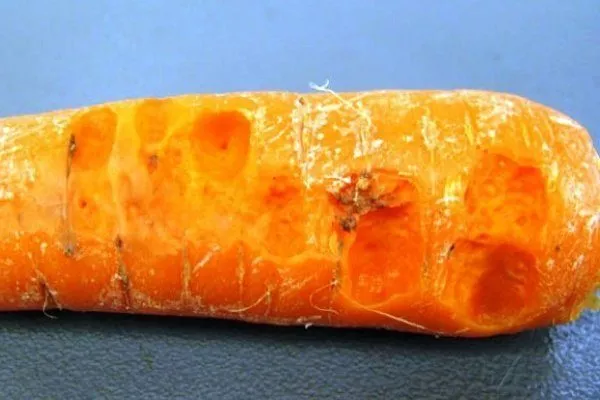
Harm and signs of damage. Wireworms feed on root vegetables by gnawing fine passages. By gnawing through the flesh, wireworms make the root vegetable vulnerable to various infections. Gnawed carrots are unfit for either consumption or storage.
Control measures:
- Soil liming.
- Application of ammonia-containing preparations – ammonium nitrate, ammonium chloride, etc.
- ✓ Thin passages in root crops with a diameter of about 1-2 mm.
- ✓ Presence of click beetle larvae in the soil during digging.
Carrot fly
This is the most common and damaging insect to carrots. It lays eggs directly on the plant or in the soil near it. The first attacks begin as early as late May.
Carrot flies are dangerous at all stages of development. It's important to take measures to destroy the eggs they lay. However, controlling the fly requires a comprehensive set of agricultural measures.
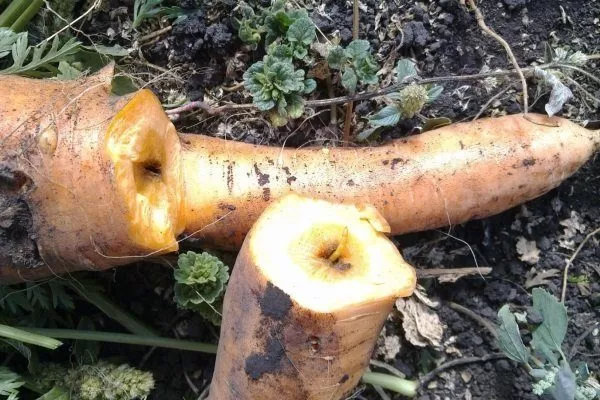
Harm and signs of damage. After hatching, the larvae chew tunnels into the root vegetables. You can tell if the fly is infesting the tops of the roots—they take on a yellow or purple tint, and the roots become bitter. The tops wilt, and the roots become inedible.
Control measures:
- Spraying with chemicals – Zipper, Sharpei, etc.
- A folk remedy involves treating the plants with a solution of ash, slaked lime, and tobacco dust, taken in equal parts. The mixed components are scattered between the rows.
Exclamation owl
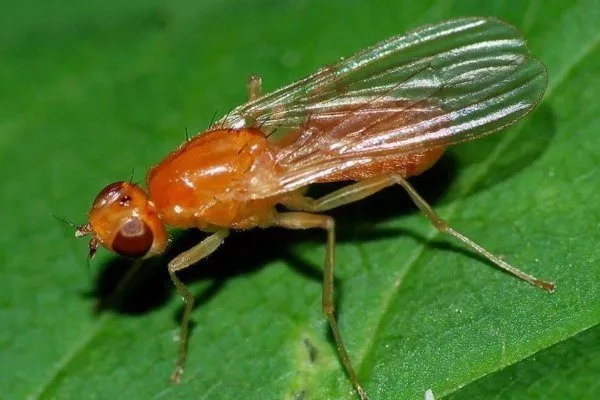
This is a butterfly whose caterpillars attack all parts of the plant. It is a polyphagous pest, damaging grain, industrial, and vegetable crops. The butterflies emerge in early May and feed on flowers for a time.
Harm and signs of damage. Caterpillars eat stems and fruits, chewing holes in them.
Control measures:
- Spraying with insecticides - Decis, Politrin, Fury.
- Using traditional methods – spraying with burdock and chamomile infusion.
Root nematode
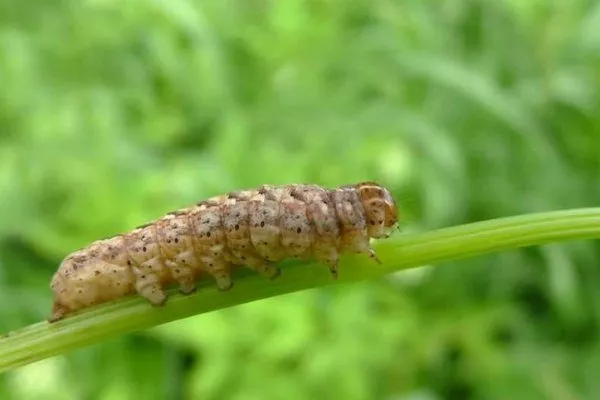
These are small white worms that live in the soil. They are 0.5-1.5 mm long and damage the root system. The worms live in the top layer of soil. The worms gnaw through the burrows, destroying root crops.
Nematodes can survive in the soil for years and then infect the entire crop. Active reproduction begins in hot and humid weather. There is no definitive way to eradicate nematodes.
Harm and signs of damage. Root crops, due to worms that penetrate inside the root crops, become covered with growths and swellings - galls, in which these insects reproduce - in them the nematodes lay eggs.
Control measures:
- Replacing the affected soil.
- Burning of affected plants.
- Soil treatment with formalin.
Mole cricket
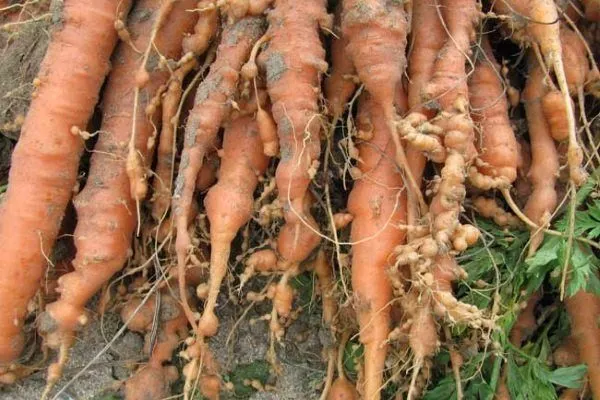
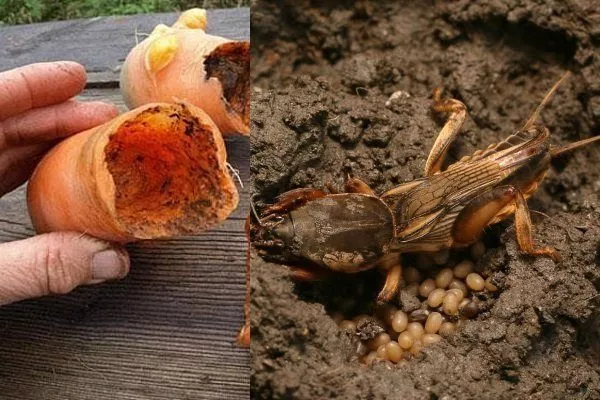
This insect is dangerous to most garden crops. The mole cricket lives underground and reaches 5-6 cm in length. It has powerful jaws and a tough shell. Both the adult and larval stages pose a threat.
In a short period of time, the insect can destroy a significant portion of the crop. To prevent the spread of mole crickets, thorough and deep soil digging is recommended.
Harm and signs of damage. The mole cricket chews through the roots and young shoots. The plant dies.
Control measures:
- Treatment with kerosene or washing powder.
- Tincture of mustard, alcohol and pepper, mixed in a ratio of 1:1:10.
- All kinds of traps – dung, beer, etc.
- Chemical preparations – for example, granulated preparations “Grizzly”, “Medvetoks”, “Thunder”.
Prevention
Not all carrot diseases are curable, but there are preventative measures for every infection. To combat all diseases and pests at once, a comprehensive range of preventative measures is used.
Preventive measures:
- Soaking seeds in hot water (+52°C). Soak for 10 minutes. Transfer to cold water for 3-5 minutes. Or soak in 3% hydrogen peroxide for 9-10 hours.
- Soil treatment with a solution of copper sulfate (30 g per 10 l). Per 1 sq. m – 0.1 l of solution.
- Correct selection of varieties - zoned in a specific region and resistant to diseases.
- Watering only with warm water. The carrots are watered in the evening, with water heated by the sun during the day.
- Crop rotation. Carrots shouldn't be grown in the same spot for two years in a row, nor after umbelliferous plants. They're best planted after cereals or onions.
By recognizing diseases and pests early, you can select timely control measures and save your crop. However, preventative measures are the most effective and accessible – they can prevent most dangerous diseases and insect attacks.