
Polar Cranberry carrot is a round-rooted variety developed specifically for regions with harsh climates. Named for its resemblance to a wild berry, this early carrot grows and ripens during the short northern summer.
Description of the plant and root crops
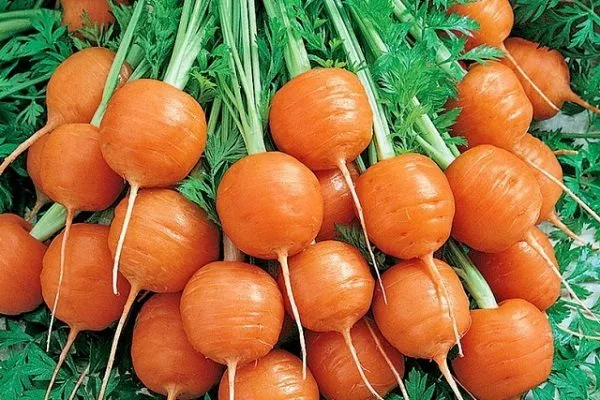
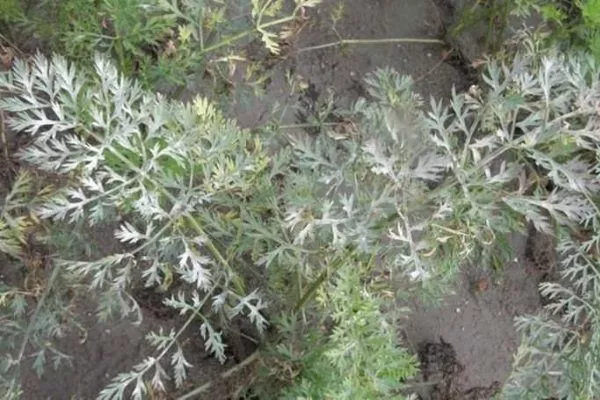
The plant looks ordinary, with green, pinnately dissected leaves. However, the roots are quite unusual, rounded in shape, similar to radishes. Their diameter reaches 3-5 cm. Each root weighs 40-60 g. The color is bright orange, the surface is smooth, and the eyes are small.
Characteristics of the variety
This variety is considered ultra-early, maturing in approximately 65 days. The first roots can be harvested as early as July. Yields depend on growing conditions and care and can range from 3.5 to 4.5 kg per square meter. The variety is fairly resistant to diseases and pests, cold-hardy, and quite hardy.
Taste and purpose
Polar cranberry carrots have juicy, crunchy flesh with a slightly sweet flavor. They are rich in carotene, solids, and sugars, making them not only beautiful but also tasty and healthy. Carotene gives them their vibrant orange color.
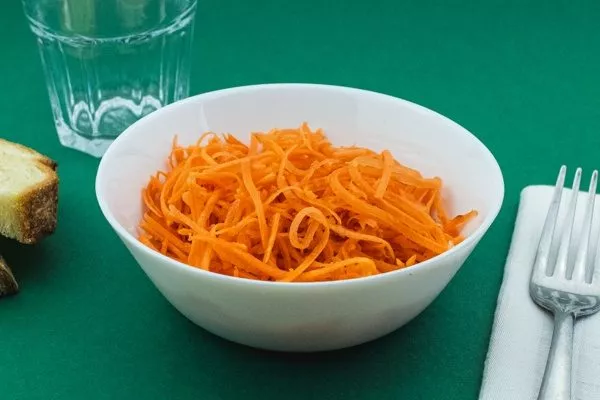
Round carrots are a favorite among children, who love to eat them raw. These brightly colored roots can also be used for canning, salads, soups, and main courses. Moreover, whole carrots can be used for winter preserves, creating a unique and appetizing look. This variety is suitable for freezing.
Pros and cons
How to plant correctly?
Planting is carried out in accordance with existing agricultural practices and taking into account the regional climate. The optimal temperature for carrot growth and development is 15 to 25°C.
Landing features:
- Sowing takes place from April to May. Seeds germinate at temperatures of +3…+4°C. For carrots, these are very low temperatures.
- Sow seeds at a depth of 0.5-2 cm, depending on the soil type. The denser and heavier the soil, the shallower the planting depth. Polar Cranberry carrots grow best in sandy loam, loamy clay, and peaty soils. The optimal acidity is neutral (pH 6-7).
- The soil is prepared in the fall. It is dug over, adding fertilizer and soil-improving components. If the soil is acidic, wood ash, lime, and dolomite flour are added. Heavy soils are loosened with coarse sand.
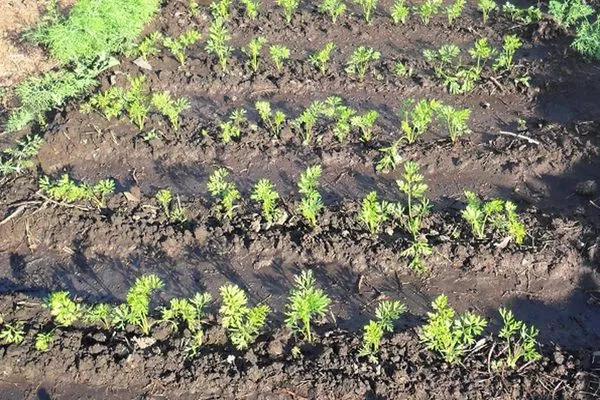
- In spring, the area is loosened with a rake and furrows 2-3 cm deep are prepared for sowing. The distance between adjacent furrows is 20 cm. The bottom is compacted with a board and watered; once the water has been absorbed, the seeds are sown.
- Space seeds 2-4 cm apart. You can sow more densely, but you'll still need to thin them out later. You can also use any sowing method for small seeds (mixing them with sawdust, sticking them onto toilet paper, etc.). Fill the furrows with soil and compact them lightly.
- If there is a risk of recurrent frost, cover the seedlings with plastic or other covering material. Once the seedlings emerge, remove the covering.
Care Features
To obtain a good harvest of large, bright and sweet root vegetables, certain care is necessary.
How to care for carrots:
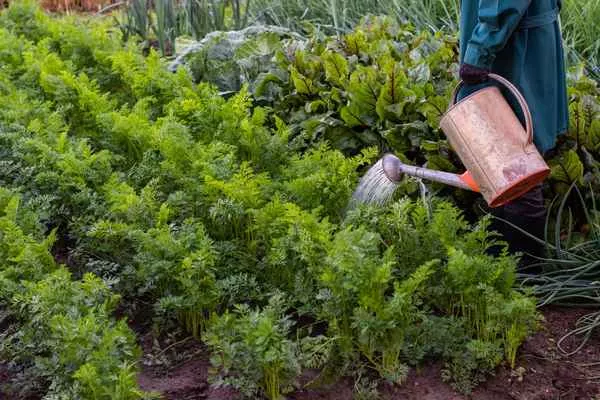
- They are watering The beds should be watered moderately so that the soil never becomes dry. Avoid overwatering, which can lead to root rot. In drought conditions, root crops will grow and develop poorly, which will negatively impact yields.
The recommended watering frequency is once a week. The recommended watering rate is 10 liters per square meter. Overwatering will cause the carrots to develop numerous lateral roots, resulting in tasteless and unattractive carrots. - Thinning out Planting is done twice, the first time at the stage of 1-2 true leaves, leaving 1.5-2 cm between adjacent plants. The second thinning is done at the cluster stage, when the plants have formed 3-4 true leaves. The final spacing between plants is 5-6 cm.
- They loosen the soil After each watering, weed the beds. Hilling is also recommended to prevent the tops of the root crops from turning green. Weed control can be achieved with herbicides such as Gezagard, Reglon Super, or similar products.
- Fertilization. To grow not only a large but also a delicious carrot harvest, the soil needs to be fertilized several times—during soil preparation and during growing. Here's a sample fertilizing schedule:
- In autumn, 50 g of double superphosphate and 30 g of potassium sulfate are added per 1 sq. m during digging.
- Before sowing (in spring), add 30 g of double superphosphate and 20 g of nitrophoska per 1 sq. m. The granules are scattered over the area and raked in.
- During sowing, wood ash is added to the furrows - 1 handful per linear meter.
This amount of fertilizer will be sufficient; additional fertilizing is not necessary in summer. If carrots are grown in low-fertility and compacted soil, apply 5-6 kg of humus per square meter.
Pest and disease control
The Polar Cranberry variety has fairly good immunity, but if agricultural practices are not followed—crop rotation is disrupted, excessive watering, dense plantings, etc.—carrots can be affected by various diseases, most often fungal ones—phoma, cercospora, powdery mildew, or alternaria (dry and black spot).
To combat fungal and bacterial infections, infusions of celandine, nettle, horsetail, or other herbs are used. Copper oxychloride and Bordeaux mixture, various chemical fungicides such as Skor, Rovral, or their analogs, as well as biofungicides such as Trichodermin, Fitosporin-M, etc. are also used.
Among the most dangerous and common carrot pests are the carrot fly, psyllid, garden moth, root-knot nematode, and mole cricket. To prevent these insects, it's important to follow proper agricultural practices: sowing carrots early, thinning them promptly, loosening the soil, and, most importantly, spraying after emergence. Use Aktara, Decis, and other insecticides.
Harvesting and storage of crops
It's important to harvest carrots before frost, as frozen roots lose their flavor. Since the Polar Cranberry variety is an early ripening variety, harvesting is usually straightforward. It's recommended to dig carrots in the evening, when the roots are at their sweetest; morning carrots have less sugar.
The maturity of root vegetables is judged by the condition of the above-ground portion. As soon as the lower leaves begin to die back, the carrots are ready to harvest. Harvesting should only be done in dry weather. Dug carrots are dried for some time outdoors, but not in direct sunlight, but under a canopy.
The shelf life of early-ripening polar cranberry carrots is poor. These are primarily summer carrots, used for food, canning, freezing, and drying. However, round carrots can, in principle, be stored in a cellar; under favorable conditions, they can easily last for several months.
Reviews
The Polar Cranberry carrot will appeal to gardeners with a penchant for unusual varieties. Round carrots are also always a favorite among children, and they look beautiful whole when preserved. However, those who prefer classic large carrots are unlikely to appreciate this unique variety, with roots comparable in size to a large radish.