
The carrot vegetable "San'kina Lyubov" was created through hybridization, hence the prefix "f1" in its name. A key feature of this variety is its unique ability to grow in any soil structure, even heavy clay soil. Fruit production remains unaffected by weather conditions such as cold, rain, and heat.

What kind is this?
This hybrid is one of those varieties that matures later than other varieties. However, this can be rectified: to ensure an early harvest, the seeds are sown in late autumn, around November, when the average daytime temperature is around 5 degrees Celsius.
Origin and development
Breeders from the Moscow-based agricultural company Uralskiy Dachnik developed a carrot for cultivation in risky farming conditions, including the Urals and Siberia. However, this hybrid is grown by gardeners throughout Russia.
Composition and beneficial properties
Root vegetables are rich in elements essential for human health:
- Potassium. Necessary for proper cell function and maintaining water balance.
- Sodium. Together with potassium, it ensures a balance of acidity and water content, which is necessary for muscle contractions.
- Phosphorus. Plays a key role in the health of bones, teeth, muscles, heart, kidneys, as well as in energy metabolism and transmission of nerve signals.
- Calcium. The main building material for bones and teeth, it is involved in the functioning of the neuromuscular junction and the regulation of hormonal processes.
- Magnesium. Helps the digestive system, supports the heart, muscles, nervous system, and has vasodilating properties.
- Manganese. Necessary for immunity and sexual function, participates in neurochemical reactions.
- Aluminum. Promotes the formation of structures of the musculoskeletal system and skin in combination with other elements.
- Carotene. A distinctive feature of this hybrid root vegetable is its richness in carotene pigment, reaching 9-10 mg per 100 g of product. Carotene is converted in the body into vitamin A, critical for child development. Beta-carotene also has antioxidant properties.

Vitamin set of carrots:
- B vitamins. These include thiamine, riboflavin, pantothenic acid, pyridoxine, and folic acid. They strengthen the immune system, regulate cardiovascular function, and the nervous system. They also promote healthy skin and intestinal function, protect the body from stress, and prevent muscle cramps.
- Vitamin C. It has powerful antioxidant properties, helps fight inflammation, and strengthens the immune system.
- Vitamin E. It is important for maintaining the health of the reproductive system and is involved in important metabolic processes in the body.
Ripening period and yield
Lyubov Sankina is a carrot variety that reaches full maturity approximately 120–140 days after the seeds begin to germinate. This variety is highly productive: up to 5 kg of carrots can be harvested from 1 square meter of soil. Despite growing even in heavy clay soils, the yield remains high.
Resistance to disease
The variety has good disease resistance, but if overwatered, exposed to stagnant soil, or planted too close together, it is susceptible to fungal infections, such as white rot, black scab, brown spot, and black rot. These diseases can appear both during cultivation and during storage.
External data
This variety is cold-resistant and doesn't require any special growing conditions. The roots are strong and resistant to breaking or cracking.
Lyubov Sankina has an attractive appearance:
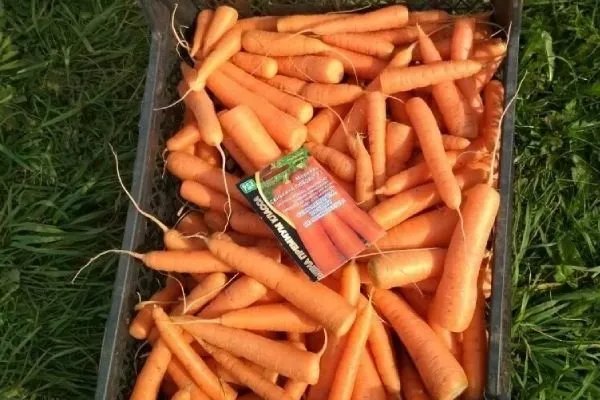
- The roots have a blunt end, an indistinct core, an elongated cylindrical formation (within 20-25 cm and a width of about 3 cm).
- Their color is deep orange, the skin is thin.
- The weight of root vegetables ranges from 90 to 120 g.
- Sankin's carrots are sweet, crunchy and juicy, making them a versatile product.
Regions for cultivation
This hybrid carrot variety is a popular choice for cultivation throughout our country. It's ideal for both the central part of the country and the cooler regions of the Urals and Siberia, requiring no special weather conditions.
Advantages and disadvantages
The hybrid boasts numerous positive attributes, making it beloved by domestic gardeners and consumers. Here are a few:
Differences from other varieties
This hybrid is distinguished by its ability to produce high-quality fruits in abundance, even in unfavorable soils. The roots retain their marketable appearance and flavor for 8-10 months.
The subtleties of planting work
Carrots can be sown not only in spring but also in autumn. Autumn sowing, which begins in late October or early November, allows for an earlier harvest, but the resulting crop is only suitable for fresh consumption and canning, while spring sowings are best for winter storage.
Preparing for landing
San'kina Lyubov carrot seeds require no special treatment before planting. They can be planted dry, whether sown in the fall or spring.
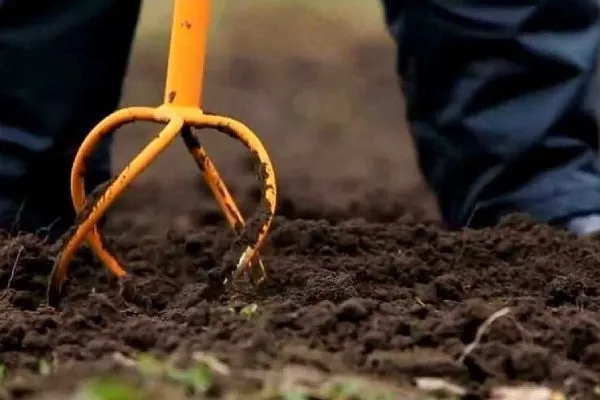
The soil for the garden bed is prepared in the fall:
- remove plant debris;
- they are digging.
- ✓ Choose green manure crops that are not related to carrots to avoid common pests and diseases.
- ✓ Optimal green manures: mustard, phacelia, rye, as they improve the soil structure and suppress weed growth.
Improvement of soil quality can be achieved by sowing green manure in the fall and cultivating the soil again in the spring.
Soil requirements
Carrots grow best in loamy or sandy loam soils. To improve clay soil, fertilize it with a mixture of peat and sand at a rate of 8-12 kg per square meter.
Predecessors
The carrot hybrid is grown in areas where the following crops were previously grown:
- potato;
- cabbage;
- cucumbers;
- onion;
- corn;
- tomatoes.
After dill, parsley, celery, zucchini and other varieties of carrots, they are not planted in the same place to prevent the possibility of diseases.
Timing, scheme and rules of planting
This hybrid requires special attention when choosing the ideal planting location. Carrots grow best in a sunny spot, planted alongside onions and garlic, which repel insect pests.
Spring carrot planting occurs from the end of April to mid-May, and autumn planting occurs from October 20 to November 10. In more northern regions, planting is delayed by 1-2 weeks.
Peculiarities:
- The space between rows is 20 cm.
- The furrows are dug to a depth of 1.5-2 cm, after which they are generously moistened.
- Then the seeds are distributed in them and carefully buried.
- To retain moisture, the surface is covered with polyethylene film (necessarily light and transparent).
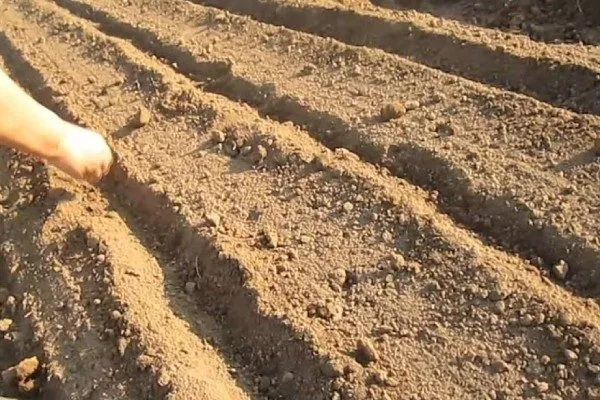
Modern gardeners use the technique of compacting planting cells by hand to protect the seeds from being blown away by the wind.
Care Features
Once the first shoots emerge, remove the covering after 2-3 weeks. Further carrot care involves several key steps:
- Features of watering. Carrots thrive on moisture, so they need to be watered every 2-4 days. At the beginning of plant growth, watering should be moderate, but as the roots grow, increase the amount of water until the soil is moistened to a depth of 17-22 cm.
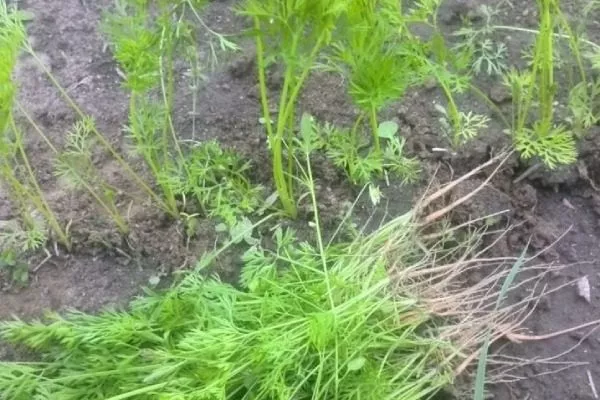
To improve flavor, increase sugar content, and extend shelf life, stop irrigation completely 25-28 days before harvesting. Use only warm, settled liquid for irrigation. - Thinning. To ensure large and uniform carrot roots, it's recommended to thin them 2-4 times during the season. When the tops reach 5-7 cm in height, remove excess shoots, leaving 4-5 cm gaps between them. This process requires special attention and precision. Experienced gardeners prefer to use tweezers.
The second thinning should be carried out 25-27 days after the initial thinning, removing the thickening specimens and increasing the distance between them to 8-9 cm. - Weed removal. This is an important element of carrot care, as weeds are a source of harmful microorganisms that take away nutrients from the crop.
- Feeding carrots. Carrots don't require frequent fertilizing. A month after the seedlings emerge, apply a mineral-rich fertilizer rich in nitrogen, potassium, and phosphorus. One popular product for this purpose is nitrophoska, diluted at a ratio of 1 tablespoon per 10 liters of water. After another 30-40 days, water the plants with an ash solution (200 g of dry matter per 10 liters of water).
What to do with diseases and pests?
In the early stages of fungal infections, plants are treated with biological preparations such as Fitosporin, Fitodoctor, and Trichodermin. If the disease progresses, affected plants are destroyed, and healthy ones are sprayed with the fungicide Kuproksat every two to three weeks until symptoms disappear completely.
The main source of damage to carrots are insects:
- carrot fly;
- wireworm;
- slug;
- mole cricket;
- aphid;
- scoop.
To control these pests, use insecticides such as Inta-Vir, Fas, and Mukhoed. Preventing stagnant moisture in the beds and timely weeding are key measures to prevent diseases and pests.
What difficulties may you encounter: useful recommendations
When growing hybrid carrots, several problems arise:
- the need for significant work on thinning carrots, especially when the first shoots appear, and this is very painstaking work;
- the need to combat fungal infections and harmful insects.
Experienced vegetable growers are happy to share some tips:
- To protect the crop from pests, pest-repelling plants such as marigolds, carrots, garlic, and calendula are placed around the bed.
- To keep root vegetables fresh until early spring, they are first coated with a clay mixture and dried.
- For personal consumption, carrots should be pulled not from one place, but from different ones, thanks to which the space for growth and development of the specimens remaining in the ground will be expanded.
Harvesting and storage
Harvesting of root vegetables begins at the appointed time after the shoots emerge. The vegetables are ready for harvesting when white root fibers appear at the tips of the roots and the leaves at the base turn yellowish. They are dug up in warm, dry weather. Harvesting is completed by mid-September to avoid rain.
Other cleaning and preservation features:
- Dig up carrots with a shovel, not a pitchfork.
- After removing from the ground, clean off any remaining soil and leave 2 cm of tops.
- Choose healthy, whole root vegetables with a dense structure for storing.
- Before storing, dry the carrots in a dark place for 24-48 hours.
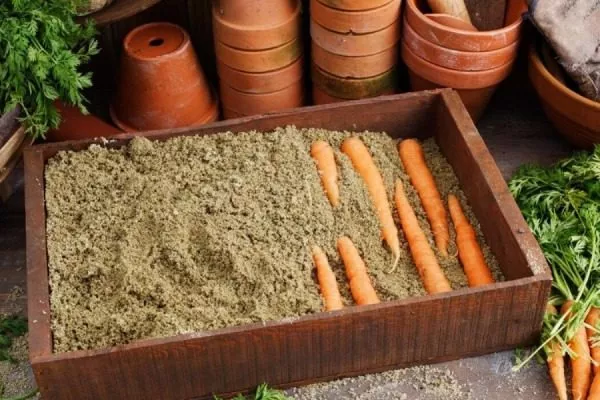
- Then place them in wooden boxes in layers, between which sprinkle a layer of dry sand 2-3 cm thick.
- It should be stored in a cellar or basement at a temperature of +2…+4 degrees and air humidity of up to 98%.
If all the rules are followed, root vegetables will remain fresh until spring and even summer.
Reviews
The San'kina Lyubov carrot variety is highly resistant to various climate conditions and soil types, ensuring its productivity and producing juicy, sweet roots. The ability to preserve the harvest until the next season makes this variety even more attractive to gardeners and large farmers. To protect your garden beds from pests and diseases, it's essential to take timely preventative measures.