
Many people believe that white carrots are the result of improper cultivation practices, while others mistakenly believe they are a variety of horseradish, parsnip, or turnip. However, white carrots are a distinct plant with excellent flavor.
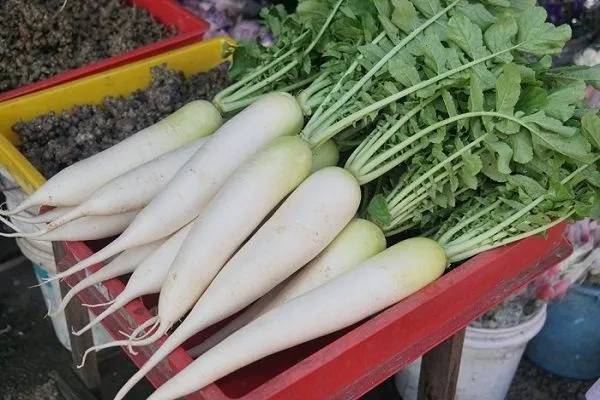
General characteristics of white carrots
Carrots can turn completely white for two reasons: if the wrong variety of seed was planted, or due to improper cultivation practices. The latter involves sowing an orange variety. These carrots are unpalatable, bitter, and gnarled. The main causes are poor-quality seed, lack of fertilizing, improper watering, etc. This results in the normal carrot becoming a wild variety (the same variety that grew centuries ago).
The modern white vegetable variety was developed by American breeders who modified the gene. Simply put, the beta-carotene pigment gene was replaced with an element that produces vitamin E. The result is an umbelliferous plant related to the wild carrot. This variety thrives in temperate climates, making it easy to grow in our country.
Wild white carrots were virtually unused until the 17th century, when Dutch breeders transformed the root vegetable into a sweet and juicy orange vegetable. It is this carrot that has survived to this day.
Appearance of the bush and fruits
The plant has pinnate, deeply dissected leaves, distinguished by their petiolate structure. The tops can be confused with parsley (some varieties). The roots are colorless, ranging from ivory to a distinct white. The surface is smooth, and the flesh is juicy.
Ripening and yield
White carrots are divided into different varieties. Each has a different maturity period, but the germination time is the same: from a week to 14 days. The maturation period ranges from 2 to 3 months.
The yield is quite high: up to 500 kg of root vegetables, with a minimum of 100 kg, can be harvested from one hundred square meters of garden space. It is possible to increase the yield even further (up to 800 kg). To achieve this, it is necessary to apply fertilizer four times per season.
Composition and caloric content
White carrots are rich in nutrients, but unlike orange varieties, they lack beta-carotene and anthocyanin, which are essential for the human body's supply of vitamin A.
What it contains:
- copper and iron;
- zinc and lithium;
- boron and selenium;
- potassium and phosphorus;
- chlorine and sodium;
- magnesium and calcium;
- iodine and sulfur;
- chromium and fluorine;
- vanadium and manganese;
- aluminum and nickel;
- cobalt and molybdenum;
- pectin and bioflavonoids;
- amino acids, etc.
The energy value of white carrots is 32-33 kcal/100 grams. Nutritional ratio:
- proteins – 1.3 grams;
- carbohydrates – 6.9-7.2 grams;
- fats – 0.1 grams.
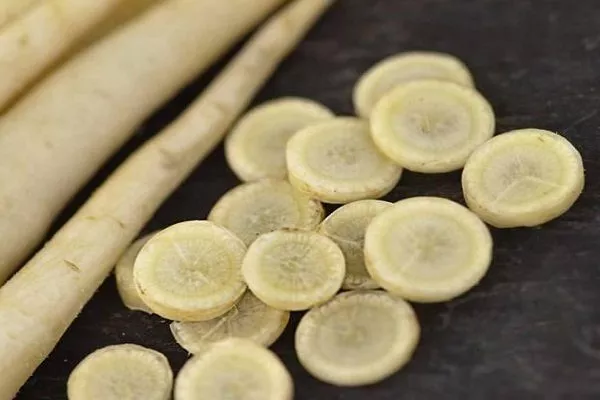
Beneficial and harmful properties
Due to the rich content of nutrients in white carrot varieties, the vegetable has the following beneficial properties:
- prevents the development of cancer cells;
- improves the functionality of the gastrointestinal tract.
- strengthens the immune system;
- has a beneficial effect on the cardiovascular system, preventing strokes, atherosclerosis and heart attacks;
- dissolves and removes harmful cholesterol and toxins from the body;
- improves liver condition;
- normalizes blood glucose levels in diabetes;
- has a diuretic and choleretic effect;
- regenerates damaged cells and tissues;
- restores visual acuity;
- accelerates metabolism;
- enhances blood clotting;
Despite such a long list of health benefits, white carrots can be harmful. This most often occurs when the vegetable is contraindicated. When is it prohibited to eat it:
- allergic reaction (usually to pectins);
- hypervitaminosis (for vitamins B, E, C);
- some pathological disorders of the thyroid gland.
Accordingly, overeating white carrots is also undesirable, as it can exacerbate gastrointestinal problems. And due to the accelerated metabolism, a side effect such as frequent urination may occur.
Pros and cons
Advantages white varieties:
- low calorie content, so the vegetable is used for dietary nutrition;
- comprehensive effect on the body;
- ease of care and cultivation;
- excellent taste;
- An unusual color that attracts buyers and cooks.
White carrots in cooking
In cooking, white carrots are used for various dishes:
- salads;
- juices;
- frying;
- baking;
- soup, borscht;
- second courses.
Popular varieties of white carrots
| Name | Ripening period | Productivity | Temperature conditions |
|---|---|---|---|
| White Belgian | 3 months | 500 kg/are | +10-12°C |
| Moonlight White | 2 months | 100-800 kg/hundred square meters | +16°C |
| White satin | 70 days | 100-800 kg/hundred square meters | +16°C |
White Belgian
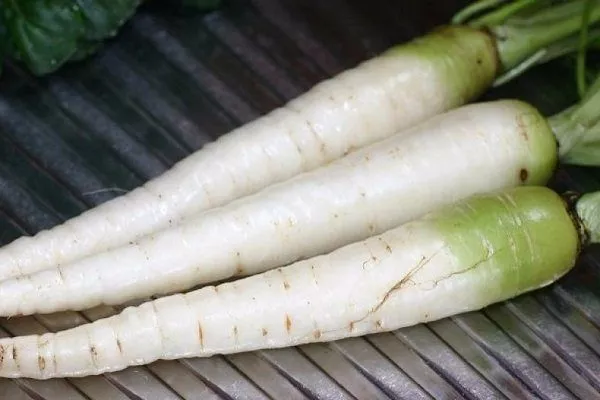
The English name is White Belgian (Blanche A Collet Vert). This variety is distinguished by a 1-cm green stripe. Other characteristics:
- the color of the pulp is close to yellow-white;
- seed germination time – from 7 to 15 days;
- the root crop ripens in 3 months;
- maximum length of the fruit is 20-25 cm;
- does not tolerate low temperatures, the minimum temperature should be +10-12 degrees;
- the taste is better revealed after heat treatment;
- does not require special fertilizers when growing.
Moonlight White
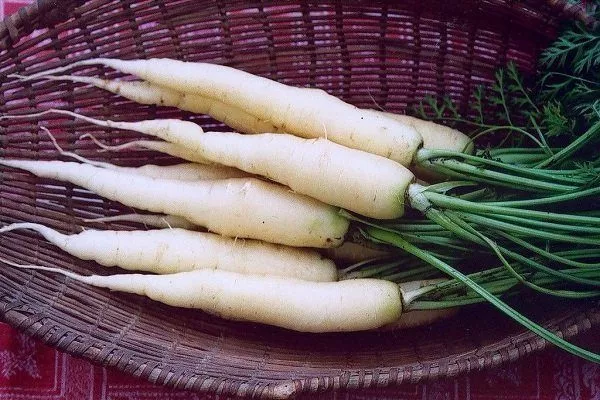
Another name is Lunar White. Indicators:
- the first shoots appear in at least a week;
- harvesting takes place after 2 months;
- the skin is thinned;
- the pulp is quite juicy, aromatic, sweet;
- The taste can be compared to the fruit of the mango tree;
- shape – elongated;
- root crop size – up to 30 cm;
- favorable temperature conditions – at least 16 degrees Celsius;
- long shelf life (up to 12 months under certain conditions);
- requires regular watering;
- special soil is required – peat, black soil;
- landing type – geometric.
White satin
Also known as White Satin, it has the following distinctive features:
- germinates in the same time as the previous options;
- ripens in 70 days;
- the pulp has a creamy tone;
- tip - pointed;
- taste – sweet;
- the maximum length is 30 cm;
- there is a specific crunch;
- watering – moderate;
- the soil should be medium-loose;
- cylindrical shape.
- ✓ Belgian White: requires hilling to prevent the top from turning green.
- ✓ Lunar White: Peat soil is preferred for maximum yield.
- ✓ White Satin: Moderate watering is critical to maintaining the sweetness of the roots.
Peculiarities of growing white carrots
To ensure that white carrots meet the desired taste and other parameters, it is necessary to adhere to agricultural practices.
Preparing for landing
First, you need to decide on the soil type. It should be neutral, but slightly acidic is acceptable. Black soil, light loam, sandy soil, and peat soil are preferred.
- ✓ The soil temperature during planting should not be below +10°C for most varieties of white carrots.
- ✓ Optimal soil acidity is neutral or slightly acidic, pH 6.0-7.0.
Other features of the preparatory activities:
- Select a site based on crop rotation. White carrots should be planted after zucchini, cabbage, tomatoes, and cucumbers.
- Remove all weeds with their root system from future beds.
- In the autumn, the following fertilizers are added: ammonium nitrate – 25 grams, potassium salt – the same amount, superphosphate – 50 grams, water – 10 liters.
- Before planting, the bed is dug up and furrows are created.
- Preparing the seeds. Soak the seeds in plain water or with added fertilizer. Let them sit for 24 hours, after which they can be planted. There are two main methods:
- in a wet state, the seeds are glued onto the tape;
- The seeds are mixed in equal proportions with sand (after soaking, the seed material is dried).
Landing features
Optimal conditions for planting seeds:
- Planting can be done in either fall or spring. In the first case, the harvest can be collected in the summer, in the second – in the fall. Winter crops are sown in October, in the spring – in April, and for long-term storage – in May or June.
- Scheme: the distance between rows is 28-32 cm, the distance between bushes (after thinning) is from 5 to 15 cm. The depth of seeding in the fall is at least 5 cm, in the spring - 3-4 cm.
- The optimal soil temperature is 10 degrees.
- If winter seeds are planted, the soil should be predominantly light (with peat and sand).
- Sowing rates for winter planting are 0.5 grams per linear meter, for spring – 0.3 grams.
Care instructions
Immediately after sowing, the seeds are covered with a damp cloth to maintain the required moisture level and ensure oxygen access to the soil. Subsequent care consists of the following:
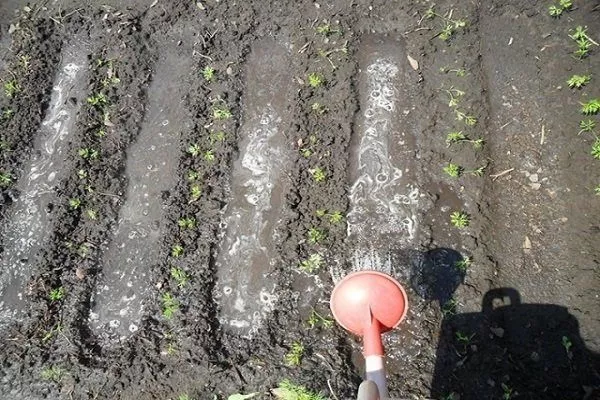
- How to water? Avoid over-watering, where water sits in the soil, but don't allow the plants to dry out. Water once a week until the first shoots appear, then reduce the frequency to 2-3 times a month. Once the roots are established, reduce watering even further. The water should penetrate to a depth of at least 30 cm. The water should be warm and settled.

- Feeding rules. The soil needs to be fertilized three times per season. The first time is for the first shoots, the second and third times are done a month later. Fertilizers should be applied primarily with minerals. Specifically, add a couple of cups of wood ash, 15 grams each of urea and superphosphate, 20 grams of potassium nitrate, and a tablespoon of Nitrophoska to 10 liters of water. It's important to fertilize the soil immediately after watering the carrots.
- How to loosen and weed? Carrots are thinned twice during their active growth period. This is done in several stages: the first time after the sprouts emerge, the second time after the initial thinning, and then as needed. The first two times, only the inter-row spaces are thinned, then the spaces between the plants are also thinned. Hilling is essential (as needed).
- Mulching. Mulch is applied only after the seedlings reach 15 cm. Grass (dry or fresh), pine needles, leaves, compost, nettles, and manure can be used. Cardboard scraps and burlap are also acceptable. Adding peat or newspaper is strictly not recommended. The mulch layer should not exceed 8 cm. If you don't mulch, you will need to frequently loosen the soil and water.
Diseases and pests
White carrots, like orange ones, are susceptible to diseases and pests. What they're susceptible to and how to combat them:
| Diseases/pests | Treatment and prevention methods |
| Powdery mildew. | Fungicidal preparations. |
| Black rot. | Rovral remedy. |
| Brown spot. | Loosening is carried out between the rows. |
| Felt rot. | Copper chloride solution. |
| Cercospora leaf spot. | Bordeaux mixture solution (1%). |
| Bacteriosis. | Fungicide Hom (for prevention, spray 20-25 days after sprouts appear). |
| Gray rot. | Nitrogen fertilizers, Bordeaux mixture. |
| Insect pests: psyllid, carrot fly and moth. | Chemical preparations: Profis, Decis, VDG.
Folk remedies: ash infusion, soap solution, tomato tops decoction, mulching with pine needles. |
| Mole cricket. | Pour vinegar solution into the holes (200-250 ml of vinegar per 10 liters of water, 9% or 6%, respectively). |
Possible errors and difficulties
Sometimes gardeners ignore certain recommendations, resulting in the following mistakes:
- They buy low-quality seed material. Various companies produce white carrot seeds today, but you should only trust producers with a proven track record. If you're unsure about their reputation, read reviews from real buyers on any specialized website.
- Sawdust or manure (fresh, unrotted) are used as fertilizer. This is absolutely not recommended, as it degrades the quality of the root crop, slows growth, and reduces yield.
- The mulch layer is compacted. This is a gross violation of agricultural practices, as carrots prefer loose, moist soil.
- The planting depth is too deep. The seedlings have a hard time breaking through the soil layer.
- Hilling is not performed. This leads to greening of the upper part of the fruit, which is typical only for the white Belgian variety.
- Plant spacing is not maintained, and thinning is not done. Because of these factors, root crops fail to grow.
Harvesting and storage
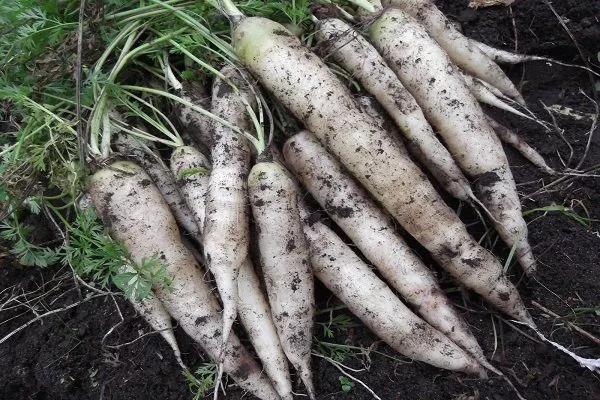
The harvest is collected during the period corresponding to the planting time (July, August, September). Follow these harvesting guidelines:
- the day before, do some light moisturizing;
- dig up the soil around the bush with a shovel/pitchfork;
- pull the tops.
How to store:
- sort out defective items;
- dry the fruits;
- clean from dirt;
- cut off the tops;
- place for storage in a room that has been disinfected (with lime);
- the temperature should not be below 0 degrees and above +4;
- humidity level ‒ 90%.
To preserve carrots for about a year, you can make a weak solution of potassium permanganate. Place the carrots in this solution for 15 minutes, then dry them for 10-15 days at a temperature of 12-15 degrees Celsius. This harvest can be stored in boxes filled with dry sand, sawdust, or onion skins.
There are other storage methods:
- In a clay coat. Mix equal parts water and clay to form a creamy paste. Dip each fruit in the mixture and let it air dry. Place in a wooden container.
- Using lime and sand. Slaked lime and mix with fine dry sand in a 1:50 ratio. Place the mixture in an 8-10 cm layer on the bottom of the box, then place the carrots on top. Continue stacking until the very top. When using this method, the room temperature should not exceed 2-3 degrees Celsius.
- Prepare a suspension of chalk, spray the root vegetables with a spray bottle, and dry.
- Moisten the pine leaves and place the vegetables between them.
- Place sawdust and carrots in layers in plastic bags or sacks. Stand them upright and poke several holes in them.
- The pile method. Used primarily in the south. Dig a hole in the garden, lay the fruit in, and sprinkle it with fine sand. Cover with soil and a tarp.
Reviews
White carrots are a unique, selectively bred vegetable that is increasingly gaining popularity in our country. They are distinguished by their high yield, excellent taste, and ease of cultivation. The key is to strictly adhere to simple farming practices.