
Nezhnost is a mid-season carrot popular with domestic farmers for its high yield, uniform root ripening, and ability to be grown in a variety of regions and climates. Its excellent flavor and high carotene content make it attractive not only to gourmets, mothers, and healthy lifestyle advocates. It's ideal for preparing dishes, including dietary ones and those intended for children.

Introduction to the variety
Tenderness is a carrot of the Nantes variety. The product was developed by research staff at Aelita Agrofirm:
- Kachainu V. G.;
- Kandobe A. V.
The variety has been listed in the Russian Federation State Register since 2008. It is recommended for cultivation in private farms and for commercial cultivation in the Volga-Vyatka region.
This vegetable variety is considered mid-season. Its harvest matures 100-110 days after the first sprouts emerge. The technical characteristics of the Nezhnost carrot are as follows:
- marketable yield indicator - from 37,200 kg to 59,700 kg per 1 ha (industrial cultivation), 5-8 kg per 1 sq. m (private cultivation);
- maximum yield - 85,600 kg per 1 hectare (obtained during state testing of the variety in the Kirov region);
- the yield rate of commercial products is 72-95%;
- excellent transportability and shelf life of the crop (root crops can be stored for a long time, retaining their marketable appearance and juiciness until spring);
- resistance to adverse weather conditions, diseases, pests.
External and taste characteristics, purpose
Plants of the Tenderness variety have the following external features:
- semi-spreading rosette of leaves;
- The foliage is medium to large in size, green in color, finely and moderately dissected.
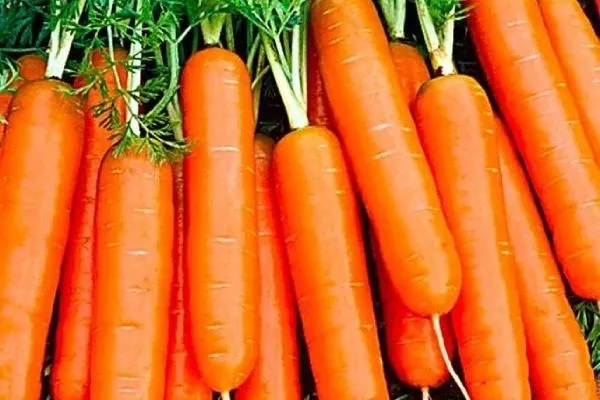
This carrot variety produces good commercial quality carrots. The roots are attractive and large. They possess the following characteristics:
- elongated shape, close to cylindrical, with a pointed tip;
- length - 15-20 cm;
- weight - from 100 to 250 g;
- bright orange color;
- small core size;
- juicy, crispy, aromatic pulp.
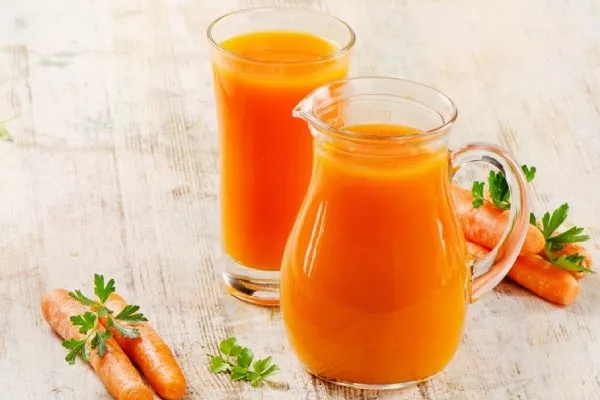
This vegetable variety is widely used in dietary and baby food (juice, puree). The roots are eaten raw, added to salads, and in first and second courses. They are suitable for storage throughout the winter.
Growing technology
Select a sunny spot for carrots with light, loose soil, such as loam or sandy loam. Place the bed where you grew your carrots last year:
- potato;
- onions;
- tomatoes;
- cucumbers;
- legumes.
- ✓ The area should be protected from strong winds that can damage young shoots.
- ✓ Groundwater should not rise above 1.5 meters to the surface to avoid rotting of root crops.
In the spring, prepare the plot for sowing seeds: dig it over and add complex mineral fertilizers to improve soil fertility. Sow the Nezhnost seeds in late April. Plant them in furrows, following the pattern below:
- sowing step - 3 cm (if you use pelleted seeds, increase the step to 4-6 cm, thinning will not be required for such a planting);
- seeding depth - 2 cm;
- the distance between rows is 18-20 cm.
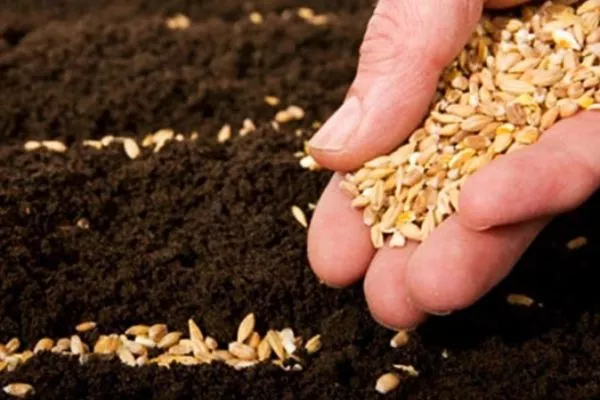
Before the seedlings emerge, cover the bed with plastic film to maintain optimal soil moisture. Once the seedlings emerge, remove the covering material.
Further care for carrots consists of the following activities:
- ThinningDon't be lazy and thin out the planting twice: when the first two pairs of true leaves appear on the sprouts and when the root crop reaches 1 cm in diameter.
- WateringWater the bed with warm water in the evenings. Maintain the recommended water consumption: 5 liters per square meter (for seedlings) and 6-8 liters per square meter (for mature plants). Water once every 7-10 days. Avoid overwatering.
- Weeding and looseningCarry out these treatments regularly after moistening the soil and as weeds grow. This will ensure oxygen reaches the carrot roots and maximize the plant's absorption of nutrients from the soil.
- Top dressingAt the beginning of the growing season, the planting requires nitrogen, followed by phosphorus and potassium. Use urea as the first fertilizer. Apply 10-15 g per square meter. Follow this with superphosphate (20-30 g per square meter) and potassium salt (10-15 g per square meter) when root crops begin to form.
Reviews
Nezhnost is a carrot variety popular among Russian gardeners, boasting many advantages. It is prized for its marketable appearance and high-quality harvest, its ability to be stored for extended periods throughout the winter, and its resistance to adverse weather conditions. Thanks to its excellent yield and low maintenance, it is used for commercial cultivation.