
Nantskaya 4 is a mid-season carrot variety known to Russian gardeners for over eight decades. It remains in demand today due to its high yield, disease resistance, and ability to withstand short periods of drought and frost without damage. Its marketable appearance, sweet root flavor, and shelf-life make it suitable for both home and commercial cultivation.

Characteristics and description of the Nantes 4 carrot variety
This vegetable variety is one of the most undemanding among domestic varieties. Thanks to its excellent adaptation to adverse weather conditions and resistance to temperature fluctuations, it is grown almost everywhere. It also boasts other excellent characteristics.
Origin
Nantskaya 4 is a variety bred by the Gribovskaya Breeding Station in 1930. The authorship belongs to N. M. Nasrullaev and I. T. Karakai, as well as the Moscow-based agricultural firm Aelita. It has been listed in the Russian Federation State Register since 1943.
External data
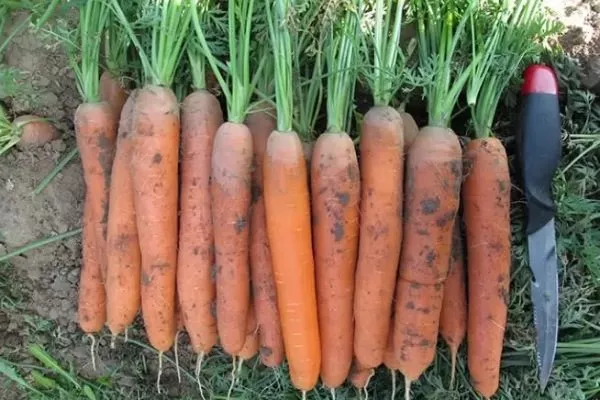
Plants of this variety are distinguished by a semi-erect rosette of medium-sized green leaves. The roots are slightly raised above the ground. They are characterized by the following characteristics:
- orange in color, sometimes with a reddish tint;
- weight - 90-160 g;
- small size (length - 16-18 cm, diameter - 4 cm);
- cylindrical shape with a blunt tip;
- smooth surface;
- small round core;
- crispy, dense, not coarse and juicy pulp.
Usefulness and composition
Nantes carrots are renowned for their high vitamin and mineral content. They are rich in many substances beneficial to human health:
- carotene (100 g of product contains 19.4 mg);
- tocopherol;
- ascorbic acid;
- B vitamins;
- calcium;
- sodium;
- phosphorus;
- potassium;
- magnesium;
- fiber, in particular pectin;
- lignin, cellulose;
- lutein;
- lycopene and others.

Features of application
The flesh of Nantes 4 root vegetables is very sweet without bitterness, juicy, and crunchy. It's delicious fresh. It's suitable for baby food and dietary nutrition.
Housewives use the harvest of this vegetable variety universally:
- added fresh and boiled to salads;
- processed to obtain juice and puree;
- used for preparing first and second courses;
- they cook carrot jam;
- canned;
- freeze;
- put into the cellar for winter storage.

Ripening period
This vegetable variety is classified as a mid-season variety. The growing season lasts 78-108 days (from germination to root maturity). Carrots ripen uniformly in late July. With proper care, they will not develop cracks or voids.
Productivity
The variety is considered high-yielding. Its characteristics are as follows:
- from 3.5 to 6.6 kg per 1 sq. m is obtained by gardeners growing the variety in their private farms;
- Farmers cultivating Nantes 4 on an industrial scale collect from 25,000 to 65,000 kg per hectare;
- the rate of commercial output is 78%;
- excellent shelf life and transportability of the crop.
Disease resistance
This variety is renowned for its robust immunity. Its plants are not prone to flowering and are rarely affected by diseases or insect attacks. If improperly cared for, the planting may suffer from fungi and slugs.
Which regions is it suitable for?
Nantskaya 4 is grown widely by Russian gardeners due to its low maintenance, adaptability to a variety of climates, and ability to withstand temperatures down to -4°C. The variety is zoned for cultivation in the following regions of the Russian Federation:
- Northern;
- North-West;
- Central;
- Volga-Vyatka;
- Central Black Earth Region;
- North Caucasian;
- Middle Volga;
- Lower Volga;
- Ural;
- West Siberian;
- East Siberian;
- Far Eastern.
The main advantages and disadvantages of the variety
Despite the many new varieties and hybrids, the Nantes 4, which has been around for over 80 years, remains competitive. It is sought after by domestic gardeners for its many advantages:
The variety also has several disadvantages:
Features of planting and growing
If you plan to grow carrots in your garden, choose a suitable area for the bed:
- solar;
- open;
- smooth;
- not located in a lowland where moisture stagnates and it gets very cold.
- ✓ The site should be protected from strong winds to prevent seeds from being blown away and the soil from drying out.
- ✓ The soil must have good water permeability to avoid water stagnation and rotting of root crops.
Preparing for landing
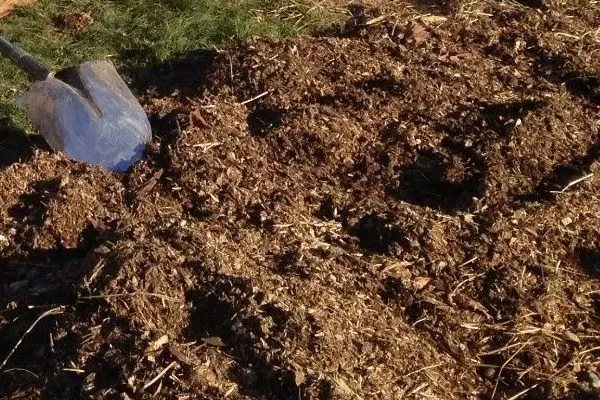
Begin preparing the carrot bed in the fall. Dig it deeply to ensure the soil remains loose and well-drained in the spring. Thirty days before sowing, dig it again and remove weeds. Fertilize the area:
- complex mineral composition - 40-50 g per 1 sq. m;
- organic matter (humus, compost) - 5 kg per 1 sq. m.
Nantes 4 seeds also require preparation for sowing. Take the following steps:
- soak them for 2 hours in warm water with Epin or another growth stimulator added to it;
- Etch in a weak solution of potassium permanganate for 20 minutes.
Soil requirements
Carrots are demanding when it comes to garden soil quality. They grow best in soils that meet the following requirements:
- light (heavy ones will need to be structured by adding sand);
- loose;
- well drained;
- sandy loam, loamy, peaty;
- fertile;
- fertilized with organic and mineral fertilizers;
- slightly acidic or neutral (pH 5.7-6.8);
- without stones and expanded clay.
Predecessors
Plant Nantes 4 where crops considered to be the best predecessors of the vegetable were previously grown:
- tomatoes;
- potato;
- cucumbers;
- onions;
- cabbage;
- zucchini;
- garlic.
Don't grow carrots in a former carrot bed. Other poor predecessors include garden greens like parsley and dill, parsnips, and celery.
Planting times and rules
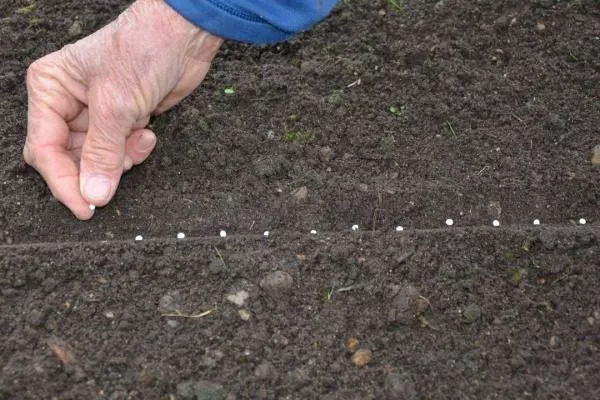
Begin sowing seeds outdoors in late April or early May. Follow these step-by-step instructions:
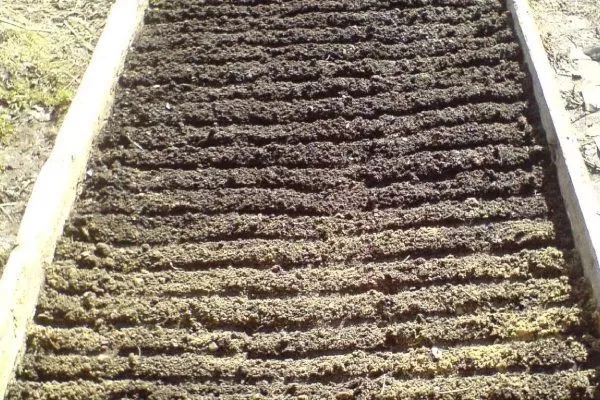
- Level the soil. Make furrows in it 2 cm deep, spaced 10-15 cm apart.

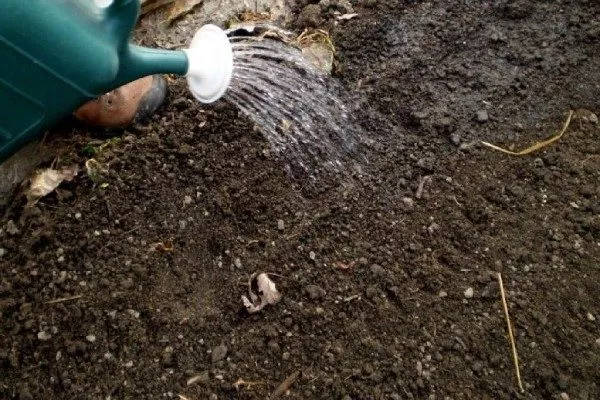
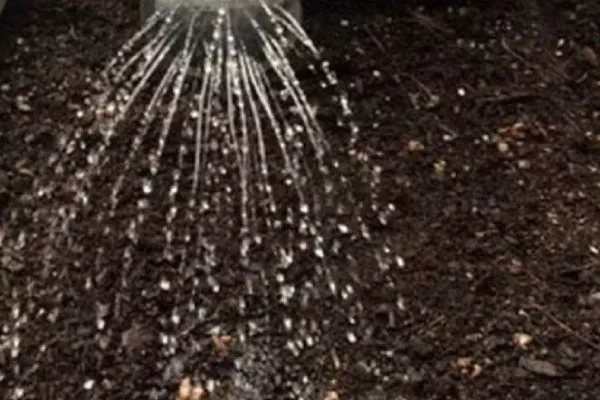
- Water the furrows.
- Plant seeds in them, keeping a distance of 4-5 cm between them. If you sow more densely (2-3 cm apart), you won't be able to do without thinning the planting.
- Sprinkle the seed furrows with soil to a depth of 1-2 cm.
- Firm the soil lightly. Water the planting again if necessary.

Features of cultivation
If you prefer to grow vegetable crops for seedlings, sow early in the spring. In regions with risky farming, it's best to avoid sowing seeds early in the open ground. In harsh climates, it makes sense to use seedlings.
Sow seeds in open ground to obtain root crops suitable for long-term storage in the spring under the following conditions:
- soil warming - +8°С;
- air temperature — +12-15°С.
Care nuances
The Nantes 4 vegetable crop requires proper care. Without it, you won't be able to achieve a bountiful harvest of large, juicy root vegetables.
Watering mode
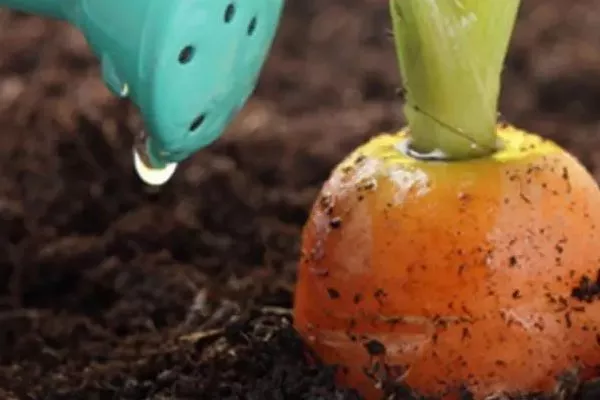
Carrots love moisture. Water your carrot beds evenly throughout the growing season. Follow these rules:
- water in the evenings;
- water the carrot planting with warm, settled water;
- For young sprouts, use water according to the norm - 5 liters per 1 sq. m;
- water adult bushes once every 8-10 days, using 6-8 liters per 1 sq. m of bed;
- Pour water under the plants slowly, moistening the soil to a depth of more than 30 cm;
- 14 days before harvesting, water thoroughly, using 20 liters of water per 1 sq. m;
- Irrigate vegetable crops taking into account the amount of precipitation.
- ✓ Watering should be uniform, without periods of drought or over-watering, to avoid cracking of root crops.
- ✓ Using mulch after watering helps retain moisture in the soil and reduce the frequency of watering.
Thinning and weed control
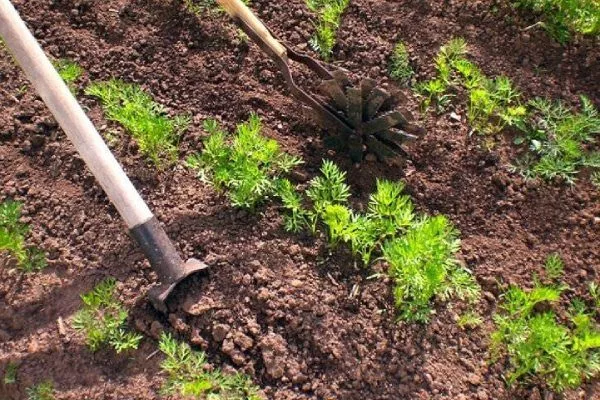
Nantes 4 carrots require timely thinning to ensure optimal feeding area. Perform this procedure in several stages:
- Thin the plantings for the first time when the first leaves appear on the seedlings (they are 0.5-0.6 cm tall). Leave a distance of 2-3 cm between seedlings. Remove all weak plants.
- Thin out the plants a second time when they reach a height of 1.3-1.5 cm. Leave a distance of 3 cm between them.
- Thin the carrots a third time when the roots appear. Space the plants 5-6 cm apart.
Don't forget to loosen the soil in the garden bed and weed it. Remove weeds to avoid complications such as:
- lack of nutrition;
- damage to plantings by diseases;
- pest infestations.
Top dressing
To ensure a bountiful harvest, fertilize your vegetable crops. Consider the fertilizers already applied to the soil and the condition of the plants.
Feed the Nantes 4 carrot according to the following scheme:
- First time (At the beginning of the growing season) apply nitrogen compounds. Use urea. Consumption: 10-15 g per 1 sq. m.
- Second time Feed the crop with potassium and phosphorus. Fertilize it during the root formation and ripening stages. Use superphosphate (20-30 g per 1 sq. m) and potassium salt (10-15 g per 1 sq. m).
If plants are underdeveloped, use bird droppings dissolved in water (1:15). Let the fertilizer sit in a warm place for several days. Before applying, dilute the mixture with warm water at a ratio of 1:10. This will accelerate carrot growth.

Pest and disease control
Nantes 4 is a disease- and pest-resistant variety. Under unfavorable growing conditions, its plants are susceptible to disease and pests.
Carrots are at risk of infection:
- black rot;
- brown spot;
- phomosis.
Treating plants with fungicides will prevent infection. Use specialized products, such as Maxim, to combat diseases.
If care is poor, carrot plants become susceptible to pests:
- Carrot flyIts larvae eat the leaves of vegetable crops. To control them, dust the planting with crushed tobacco dust or ash. For commercial pest control, use Bayleton.
- SlugsTo get rid of them, use the drug "Groza" and sprinkle the soil around the seedlings with crushed eggshells.
Harvesting and storage
To ensure maximum preservation of your harvest during the winter, properly harvest and store root vegetables.
How and when to collect?
Harvest Nantes 4 carrots from mid-August to the end of October (the time frame depends on the growing region).
Follow the rules:
- do the work on a dry, sunny day;
- use a pitchfork to dig up root crops;
- Do not remove the vegetable from the ground without digging (the risk of damaging the root crop increases if you neglect this rule).

After harvesting, trim the carrot tops to prolong their shelf life. Dry them briefly to preserve their juiciness.
Storage features and shelf life of the variety
Nantes 4 is suitable for winter storage and has excellent shelf life.
Select the root vegetables that you will send to the cellar for the winter:
- large size;
- with a dense structure;
- without mechanical damage and signs of disease.
Use any small, crooked, or damaged vegetables immediately. These items cannot be stored for long periods.
In storage, observe the following conditions:
- temperature regime - 0°С;
- humidity - 98%.
To prevent carrots from drying out, store them in a root cellar with soil (10% of their total weight). Storing them in clay, sawdust, or sand is also acceptable.

What difficulties might arise when growing?
When growing carrots, gardeners face difficulties that arise due to violations of agricultural practices:
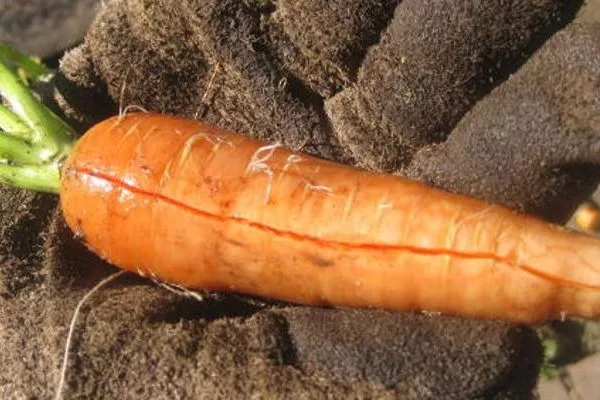
- Cracking of root crops. This is not only an external but also an internal defect. Such carrots don't store well and are difficult to peel. The causes of this problem include overwatering (overwatering, excessive rainfall) and excess nitrogen.
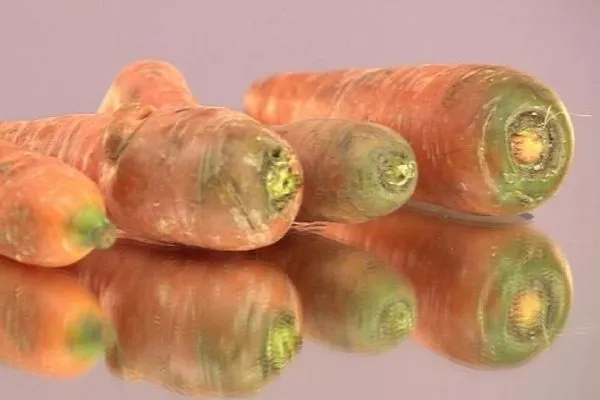
- Greening of the upper part of root cropsThis is a symptom of the accumulation of toxic solanine in carrots. The cause of this complication is sunlight hitting the exposed part of the root. Hilling up the roots can help prevent this.
- The root vegetables turn out gnarled and horned.The problem is caused by early planting, unsuitable soil, untimely fertilization, root damage, and insufficient watering.

To avoid complications when growing this variety, follow proper agricultural practices (water and fertilize on time, remove weeds, and thin out plantings).
Tips from experienced gardeners
To get large, juicy root vegetables from Nantes 4, experienced gardeners offer several recommendations to new gardeners:
- Don't neglect pre-sowing seed treatmentThey are slow to germinate, absorb moisture poorly, and swell slowly due to their high essential oil content. Do not use old seeds that have been stored for more than two years.
Before planting, grind and calibrate them. To speed up germination, use pre-sowing germination. - Remember your predecessorsGreen manure fallow is considered ideal for growing carrots. This is the name given to soil plowed after growing legumes and grains.
Potatoes are another good predecessor for carrots. They keep the soil free of weeds. - Practice crop rotationSow carrots in the same place no earlier than 3 years later.
- Before sowing carrots, prepare the area properlyPlow the soil with reversible plows at a depth of 30 cm. This will remove weeds, cover plant residue, and better distribute the applied fertilizer.
- Use ridge cultivation technology. It is recommended for areas with strong winds. It helps conserve water during irrigation and improves crop quality.
Reviews of the Nantes 4 carrot variety
The mid-season Nantskaya 4 variety is an excellent choice for both private and commercial cultivation, proven over decades and by several generations of domestic gardeners. It is suitable for spring and winter sowing and produces a large yield. The plants exhibit resistance to carrot bolting and diseases. The crop has excellent quality characteristics, including excellent shelf life.