
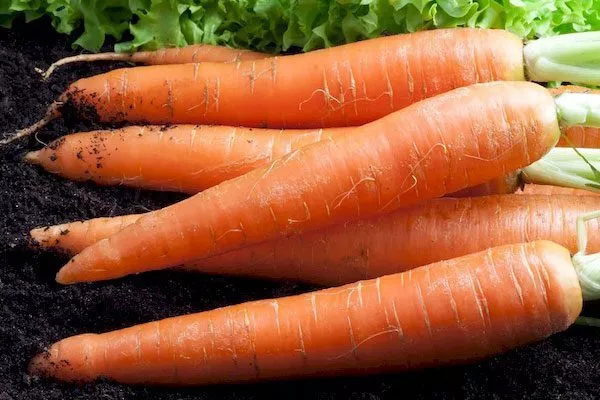
The Nantes Red variety is one of four varieties of the famous, time-tested Nantes carrot. This variety is productive, with large roots and is a constant favorite among gardeners and vegetable growers.
Who developed the variety?
The Nantes Red variety was developed by Russian breeders in collaboration with two seed companies. Authors: A.S. Semin, Z.S. Vinogradov, and A.A. Kushch. The variety was approved for cultivation in 2011 and is included in the State Register for the Central Black Earth Region.
Description of the variety
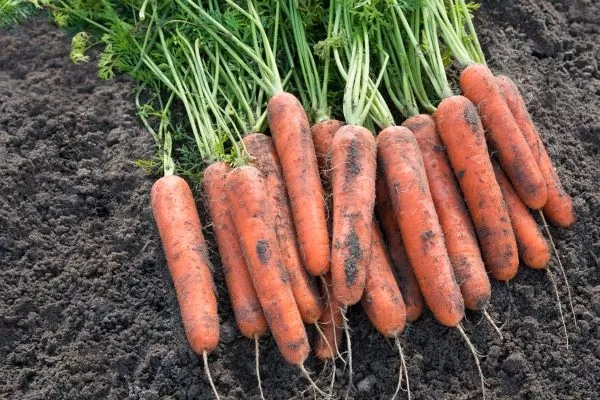
The aboveground portion of the plant is a semi-spreading rosette of green leaves. They are coarsely dissected, medium to long. The roots are brightly colored, elongated and conical, with a slightly pointed tip.
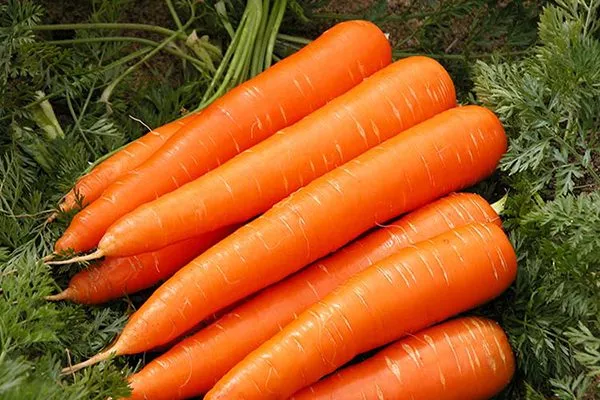
The root vegetable length is 16-18 cm. The diameter is 4-5 cm. The weight of one root vegetable is 80-200 g. The color of the surface and core is orange. The roots are smooth and attractive.
The taste and purpose of root vegetables
Nantes red carrots have juicy, crunchy flesh and a sweet, good to excellent flavor. Dry matter content ranges from 10.9 to 12.8%, sugar content ranges from 5.7 to 6.7%, and carotene content reaches 12.9 mg.
Productivity and other characteristics
This variety has a medium ripening period. From germination to root ripening, it takes 100 to 110 days. Yields are 4-5 kg/sq. m. When grown on a large scale, yields of up to 300-305 centners per hectare are achieved. The marketability of the roots is 65-87%.
Pros and cons
Before planting Nantes red carrots in your garden, carefully review all of their benefits. Also, be aware of their drawbacks; this variety may not be suitable for your garden or specific needs.
How to plant carrots?
The key to successful cultivation is proper planting. Growing location and conditions, amount of light, soil quality, and much more are important factors for this crop.
Landing features:
- The area for carrot beds should be well-lit and free of standing water. The best soil for carrots is loamy or sandy loam, with a neutral pH.
- The soil is prepared in the fall by digging it up to the depth of a shovel blade and adding a standard set of fertilizers during digging.
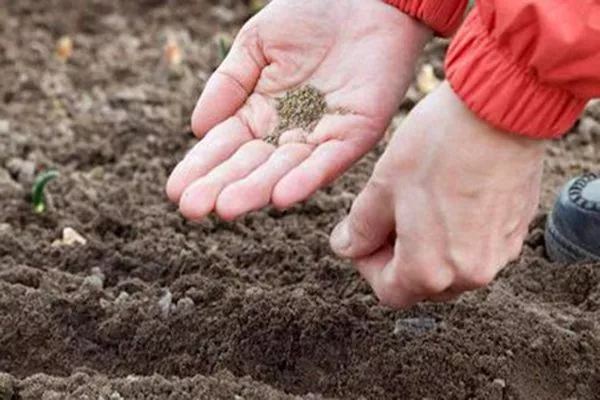
- Carrot seeds are difficult to germinate, so it is recommended to soak them in water for 24 hours before sowing. Alternatively, they can be immersed in hot water (50…52°C) for 20 minutes or in a 0.1% boric acid solution.
- Carrots are sown according to the local climate; in temperate zones, sowing occurs approximately from late April to mid-May. The optimal sowing pattern is 5-7 x 15 cm.
Care Features
To get a good harvest and high-quality root vegetables—bright, even, and delicious—it's important not only to plant carrots correctly but also to provide them with proper care.
Care nuances:
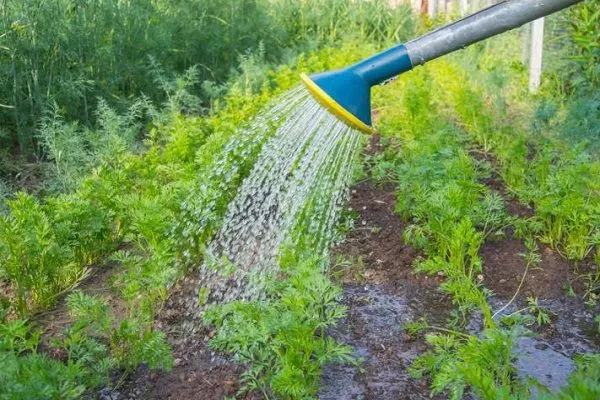
- This variety requires regular watering. It's best to use warm, settled water. It's best to water the beds in the morning and evening. The average watering frequency is once a week.
- After watering and rain, the soil is loosened and weeded. Mulching the beds can significantly reduce the amount of watering and loosening required.
- Seedlings are thinned twice: at the two-leaf stage and again a month later. After the first thinning, the intervals between adjacent plants are 1-2 cm in the first case, and 5-7 cm in the second.
- Fertilize after 5-6 leaves appear. The first time, carrots are fed with nitrogen fertilizers, and the second time with phosphorus and potassium in midsummer, when the roots are gaining weight. Wood ash, mullein, various herbal infusions, and other folk remedies can be used.
Diseases and pests
The variety has fairly good resistance to various diseases. However, under a combination of unfavorable factors, it can be affected by rot, leaf spot, brown spot, and other diseases. Fitosporin-M, Aktara, Hom, and other insecticides are used to combat these.
The most dangerous pests for Nantes Red carrots are the carrot fly, psyllid, wireworm, and slugs. The former can be controlled with the "Bayleton" treatment applied to the seedlings, while slugs can be controlled with the "Groza" preparation or by scattering finely crushed eggshells in the beds.
Harvesting and storage of crops
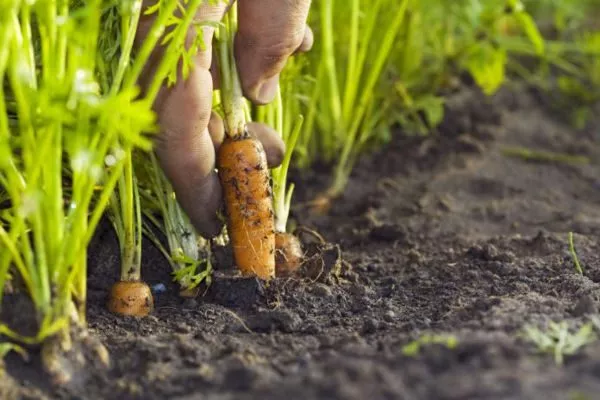
Harvesting should be done in dry, clear weather, preferably after a week of no rain. Harvest carrots one to two at a time, no more. Avoid shaking off the soil, as bumping the carrots against each other can cause them to crack. If the soil is hard, dig up the carrots with a pitchfork.
Reviews
The Nantes Red carrot is a classic member of the Nantes carrot family. Compared to other Nantes varieties, the red variety boasts the largest roots. This variety also delights gardeners with its high yield, low maintenance, and excellent disease resistance.