
The Nantes carrot is considered a classic, and its flavor has become the benchmark for comparing other varieties. A rich and juicy harvest can be achieved by following simple cultivation practices. More on this below.

Nantes carrot seeds
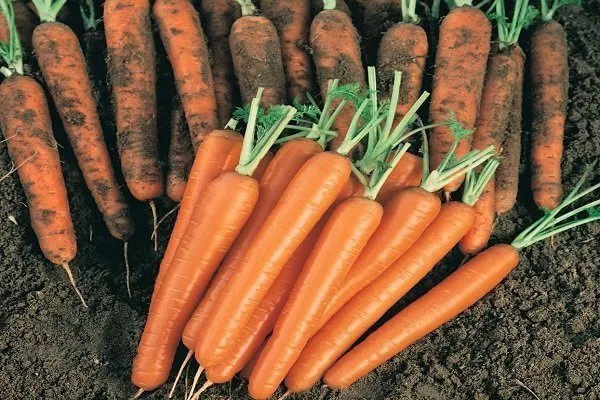
Nantes carrot
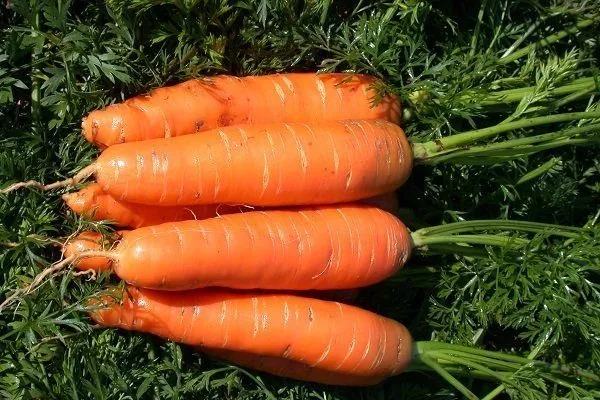
Nantes carrots contain a large amount of carotene.
Description of the variety
The Nantes carrot variety was developed by breeders in 1943 for planting throughout Russia, Ukraine, and Belarus. It remains deservedly popular. There are several varieties of this variety, collectively known as the Nantes variety:
| Characteristics | Nantes 4 | Nantes Red | Nantes Improved | Nantes Semko |
| Fruit length (cm) | 12-16 | 14-16 | 15-17 | 16-17 |
| Fruit weight (g) | 70-160 | 80-200 | 90-160 | 90-150 |
| Color | red-orange | orange | bright orange | orange |
| Ripening period (days) | 80-120 | 100-110 | 90-110 | 90-100 |
| Yield (c/ha) | 230-260 | 260-305 | up to 600 | 280-530 |
Advantages and disadvantages
This carrot variety has many advantages that make it suitable for growing not only in private gardens, but also on an industrial scale:
- high content of carotene, which causes the bright orange color of carrots;
- The high amount of sugar makes this variety not only desirable for children, but also allows you to get high-quality carrot juice from it;
- in terms of the content of phytoncides that kill pathogenic organisms, this carrot is almost as good as garlic and onions;
- has a high shelf life and, if stored properly, retains its marketable appearance until spring;
Varieties of Nantes carrots
All varieties of this cultivar have excellent taste characteristics.
Nantes 4
Most gardeners are familiar with this variety, which is the progenitor of the Nantes carrot. It's a mid-season variety, fully ripening in approximately 110-120 days, but it reaches marketability as early as 70 days after germination. This variety is one of the best for winter sowing.

Nantes Improved
The variety is named for its improved root uniformity and marketability. A distinctive feature of the variety is its early germination, allowing for a consistently high yield suitable for long-term storage.
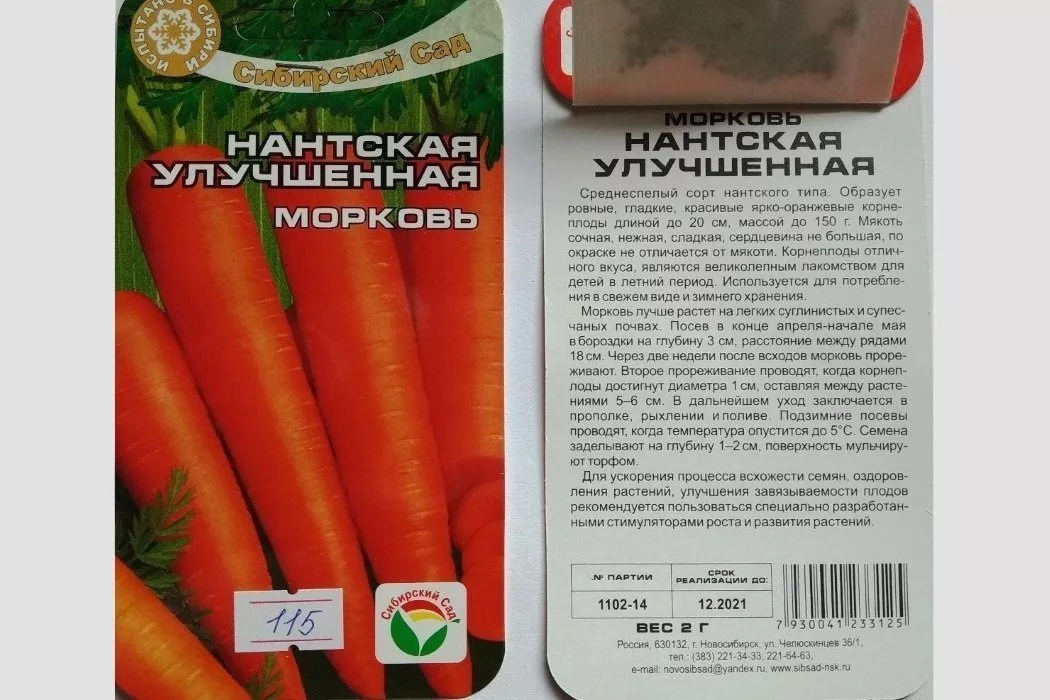
Carrots are used to produce carrot juice due to their taste and high sugar content.
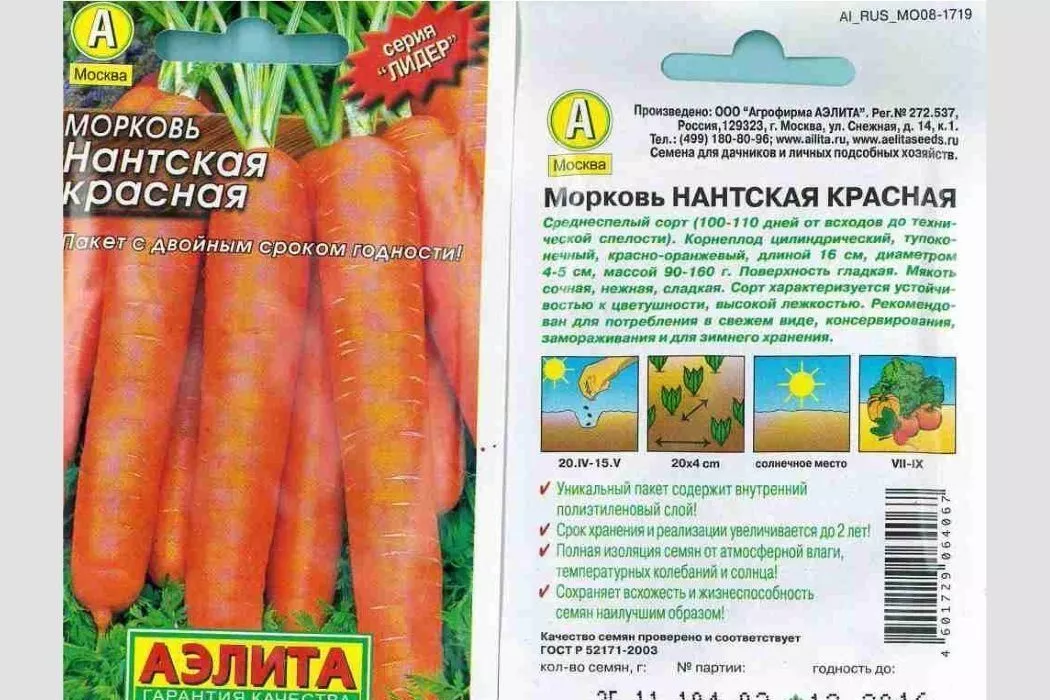
Nantes Red
Like other varieties of Nantes carrot, it produces orange, cylindrical fruits with a small tail. This variety is resistant to the main diseases that affect carrots and can be stored for a long time without losing its flavor.
Nantes Semko
A hybrid developed at the end of the last century. Developed specifically for large-scale cultivation, it boasts high yields, reaching 810 centners per hectare. Suitable for mechanical harvesting, the hybrid's value lies in its resistance to bolting, excellent shelf life, and excellent flavor.

Soil preparation
Carrots thrive best in soil that doesn't form a crust, such as sandy loam, loamy soil, or peat. Carrots shouldn't be planted under freshly applied manure. It's best to use carrots as a second or third crop, after fertilizing the soil.
- ✓ The optimal soil pH should be in the range of 6.0-6.5 for maximum nutrient absorption.
- ✓ The depth of the arable layer should be at least 25 cm for free growth of root crops.
The best predecessors are zucchini and early cabbage and potatoes, but carrots also grow well after tomatoes, cucumbers, onions, and mid-season cabbage.
In the fall, the area where carrots are to be planted is tilled and rotted, adding 4-6 kg/sq. m of humus or compost. In the spring, the soil is tilled with a cultivator and harrowed with a rake. Before planting, it is advisable to apply 50 g/sq. m of nitroammophoska to poor, infertile soils. Fertile soils do not require additional fertilization.
Seed preparation
Carrots are a slow-germinating crop, so it's advisable to treat the seeds before sowing. There are several effective techniques for increasing carrot germination:
- Soaking in water. Soak the seeds for 24 hours and then dry them until they become loose. This will speed up germination by several days.
- Hydrothermal treatment. Soak the seeds in a gauze bag in water heated to 50-52 degrees Celsius for 20 minutes. Cool with cold water and dry. This treatment helps fight infections.
- Soaking in boric acid. Use a 0.1% boric acid solution to treat seeds during the day, this will increase the yield.
- Bubbling. Pass air or oxygen through the water (at a temperature of 20 degrees Celsius) containing the soaked seeds. Use an aquarium aerator. Processing time is 18-20 hours. Seedlings from the bubbled seeds appear in 5-7 days.
Sowing
Carrot seeds take a long time to germinate. At soil temperatures of 2-3 degrees Celsius, germination takes 25-30 days. The optimal temperature for seed germination is 20-25 degrees Celsius, when the seeds will sprout in 4-5 days.
Carrot seedlings are frost-resistant and can withstand temperatures down to -4 degrees.
Carrots are sown in winter, spring, and summer, depending on the time of planting. Row spacing during sowing ranges from 25 to 45 centimeters, with a 5-centimeter distance between root crops.
Subwinter
Winter sowing is usually done before the first frost sets in, so the carrots don't have time to sprout. The seeds are planted very shallowly, no more than 1 centimeter deep, and covered with loose soil. This type of sowing yields carrots 10-15 days earlier than early-ripening carrots.
Spring
Early spring sowing is used to obtain carrots early for consumption and sale. Depending on climate conditions, sowing typically occurs in late April or early May.
Carrots can't be transplanted because they develop branched roots. Therefore, this root vegetable cannot be grown from seedlings.
Summer
For fall and winter use, carrots are sown from the first half of May until the end of the month. Sowing carrots in June can be challenging, but the results will be good.
The seeding depth varies from 0.5 to 2.5 centimeters, depending on soil properties. If groundwater is close to the surface, carrots are sown in raised beds. In arid regions, sowing is done on level ground.
Carrot care
Carrots don't require any special care; just weeding, thinning, watering, and protecting them from diseases and pests are sufficient. By following these simple tips, you'll get a bountiful carrot harvest in your garden:
- Before seedlings appear, water regularly so that the soil never dries out;
- When seedlings appear, thoroughly weed out the weeds that are choking out the young plants;
- stop watering for 7-10 days to allow the roots to go as deep into the soil as possible;
- do the next weeding after watering;
- When thinning for the first time, remove weak plants and leave stronger ones at a distance of 3-4 centimeters from each other;
- Loosen the space between rows regularly, especially after watering or rain;
- during the second thinning, the strongest plants are left at intervals of 5-6 centimeters;
- when 5-6 leaves appear, apply foliar feeding with ¼ dose of mineral fertilizers;
- In July-August, water once every 7-10 days.
- The first watering should be carried out immediately after sowing to ensure sufficient moisture for seed germination.
- The second watering is carried out after 5-7 days, if there is no rain, to maintain soil moisture.
- Subsequent watering should be carried out once every 7-10 days, increasing the intervals during the ripening period of root crops.
Don't overdo it with nitrogen fertilizers, as too much will reduce the shelf life of carrots. For more information on proper fertilization, see the article:How, when and what to feed carrots with?".
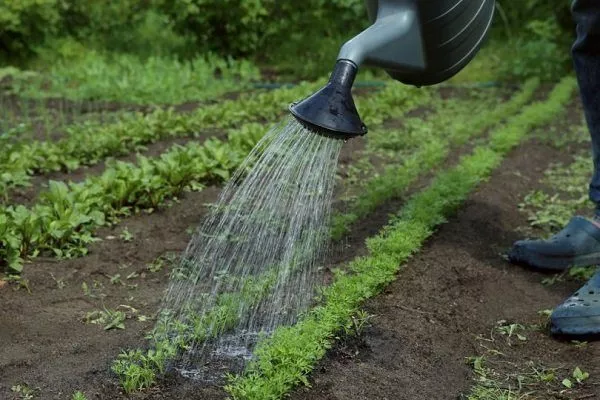
Water carrots generously and evenly, but not too frequently. Watering should be regular to prevent the roots from cracking. You can learn more about watering requirements for carrots. here.
Harvesting and storage
To sell carrots in bunches, they are harvested once the root diameter reaches 15 mm. However, the greatest yield increase occurs in September, so carrots for storage are harvested late.
Harvesting is done in dry weather, the tops are cut off, and the carrots are left to dry for several hours in the open air. The roots are then sorted, removing small, deformed, and diseased ones.
The temperature for storing carrots should not exceed 2 degrees Celsius, otherwise they will begin to sprout. For longer storage, the roots are layered with sand, using boxes filled to a height of 70-110 centimeters. For other methods of storing carrots, read this article.
Pests and diseases
Carrots are susceptible to numerous diseases, both during cultivation and storage. These are primarily fungal diseases, such as rot, in which case affected plants are destroyed and the remaining crops are treated with fungicides. Pre-sowing seed treatment is used to prevent many diseases.
| Name of the disease | Symptoms of damage | Treatment | Prevention |
| Fomoz | Gray-brown spots on leaves and petioles, then the root crop is affected. | It is impossible to cure the disease that has appeared; affected plants are removed. | Application of phosphorus-potassium fertilizers before planting. |
| White rot | The appearance of a white coating on carrots, then a crust with black dots. | Increased application of potassium fertilizers, spraying with copper-containing preparations. | Removal of weeds and waste. |
| Gray mold | Wet rot on fruits, darkening and soaking of the carrot surface. | Affected fruits are removed. | Spraying with Bordeaux mixture, feeding with nitrogen fertilizers. |
| Rhizoctonia | Dark grey spots inside the root vegetable. | Spraying plants with copper oxychloride. | Pre-sowing seed treatment. |
| Black rot | Blackening of the stem and curling of the leaves. | Treatment of plantings with fungicides containing iprodione. | Pre-sowing seed treatment. |
| Bacteriosis | Brown spots on leaves and stems, soft spots on roots, unpleasant odor. | It is not cured, crops are destroyed. | Seed treatment, spraying seedlings with copper oxychloride. |
Most carrot pests attack the above-ground portion of the plant, resulting in poor root development, small size, and reduced carrot yields.
| Pest | Signs of defeat | Control measures | Prevention |
| Carrot fly | Red-purple tint of leaves. | Pesticide treatment. | Sprinkling the soil with a mixture of naphthalene and sand (1:10), removing waste. |
| Carrot psyllid | Leaf curling. | Collecting insect eggs, spraying with tobacco solution. | Loosening the soil, weeding and fertilizing plants. |
| Slugs | Leaf eating. | Adding superphosphates to the top layer of soil. | Spraying plants with an infusion of garlic, hot pepper and mustard. |
| Wireworm | Pinpoint passages in the root crop. | Ammonia feeding, insecticide treatment. | Maintaining sanitary cleanliness of plantings, loosening and reducing soil acidity. |
| Carrot aphid | Insect infestation, curling and drying of leaves. | Spraying with a solution of ash and tobacco. | Weed control. |
Reviews from summer residents
With proper cultivation techniques, Nantes carrots are not difficult to grow. There are many varieties available today, but by choosing an old, time-tested variety, you can enjoy them as early as late July, saving the main harvest for autumn.