
The Monastyrskaya carrot is, without exaggeration, one of the most popular varieties among our gardeners. It enjoys the same demand as, for example, the well-known Nantes and Shantenay varieties. This late-ripening carrot is distinguished by its delicate flavor, stores well, and has many other advantages.
Breeding history
The Monastyrskaya carrot belongs to the Flakke variety. Its creators are Gavrish company breeders S.F. Gavrish, V.V. Morev, and others. This variety is suitable for all purposes and was approved for cultivation in 2013.
Description of the variety
The Monastyrskaya carrot has a semi-spreading rosette of medium-length, dark green, moderately dissected leaves. The orange roots reach 25 cm in length and 4-5 cm in diameter. They have an elongated conical shape and pointed ends. The core is orange. The roots weigh 90-150 g.
- ✓ The high content of sugars (7.6%) and carotene (10.6 mg per 100 g) makes this variety especially useful for dietary nutrition.
- ✓ Cold and disease resistant, making it ideal for winter sowing.

The taste and purpose of root vegetables
The Monastyrskaya carrot's flesh is tender, juicy, and pleasantly flavorful. This variety is recommended for daily and dietary use. Its excellent flavor is due to its high sugar content—7.6%—and dry matter—12.1%. The carotene content in 100 g of raw material reaches 10.6 mg.

Root vegetables make excellent juices, purees, and carrot patties. They are also widely used in first and second courses, soups, and meat and vegetable dishes. Monastic carrots are suitable for fresh consumption, canning, and freezing.
Productivity and ripening time
The Monastyrskaya carrot is a late-ripening variety. It takes 130-140 days from germination to technical maturity. The yield of this variety is 3.2-5.6 kg/sq.m. When grown commercially, 300 to 575 centners of carrots are harvested per hectare.

This carrot is suitable for spring and winter sowing. It boasts high marketability—from 83% to 90%—and is fairly resistant to disease and cold, as well as insect pests.
Pros and cons
Over the past 10 years of growing the Monastyrsky variety, gardeners and experts have appreciated all its advantages. Before planting this or any other carrot, it's a good idea to familiarize yourself with all its advantages and disadvantages, if any.
No shortcomings were found in this wonderful variety.
Selecting a site
It's recommended to plant Monastyrskaya carrots in well-lit, level areas without standing water. They grow best in loose, fertile soils, such as sandy loam or light loam. This variety grows well after cabbage, tomatoes, onions, cucumbers, and early potatoes.
- ✓ Soil pH should be between 6.0-6.8 for optimal nutrient absorption.
- ✓ The soil must be well-drained to avoid water stagnation and root rot.
Sowing dates
Carrot planting is determined by the climate and weather conditions in each specific region. In temperate zones, carrots are typically planted between late April and early May.
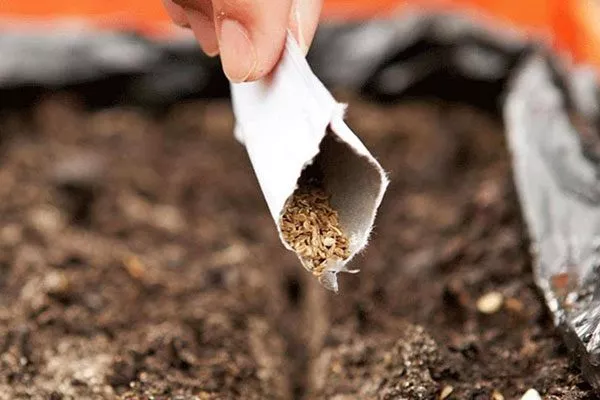
Late-ripening carrots can also be planted in the fall, from late October to mid-November. This option is very convenient, as autumn gardening is usually less work than spring.
The Monastyrskaya carrot, like the crop in general, is cold-hardy. However, don't rush sowing, as at temperatures of +3 to +4°C, the carrots will take a very long time to germinate. Once the soil warms to +20°C, the seedlings will appear in just 8-10 days.
Planting diagram
Carrot seeds are very difficult to germinate because they contain a lot of essential oils, which inhibit germination. If the seedlings haven't been prepared by the manufacturer, you'll need to soak them yourself in hot water (40 to 50°C) for 24 hours.
Every 2-3 hours, change the water in which the seeds are soaked to remove the essential oils, then top up with hot water. Next, dry the seeds to make them easier to sow.
How to sow Monastery carrots:
- The beds for planting are prepared in advance. In the fall, or a couple of weeks before sowing, the soil is dug over, adding fertilizer and other components necessary to improve the soil composition and/or adjust its acidity. Double superphosphate and potassium sulfate are added during digging at a rate of 30 and 20 mg per square meter, respectively.
- Grooves are made in the prepared area and the seeds are sown into them. They are planted 1 cm deep. The intervals between adjacent grooves are 20 cm.
- The distance between adjacent plants should be 5-7 cm. However, seeds are sown more densely to ensure 100% coverage. Excess seedlings are removed and the plantings are thinned.
Care Features
The Monastyrsky variety, like carrots in general, is an unpretentious crop, but to obtain a good harvest, it is recommended to follow basic agricultural practices.
How to care for Monastyrskaya carrots:
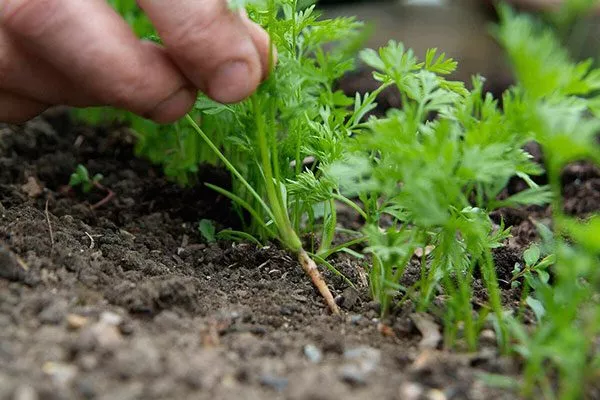
- Plants are thinned twice during the growing season. First, at the 1-2 true leaf stage, leaving 1-2 cm intervals between adjacent plants. The second thinning is done at the 3-4 leaf stage, this time leaving the final intervals of 5-7 cm.

- Watering should be moderate, otherwise the root vegetables will become watery and lose their shelf life. If the summer is cool and damp, watering is not necessary at all. However, in hot and dry weather, watering is essential; the recommended frequency is once every two weeks. 7-10 liters of water are used per square meter.
- Fertilizers are applied sparingly, as the crop is sensitive to high concentrations of salts (mineral fertilizers). A typical fertilizing regimen is as follows:
- Before sowing, apply double superphosphate and nitrophoska at a rate of 15 g per square meter. The granules are scattered over the soil and then raked in.
- When sowing seeds, wood ash is added to the beds - 100 g per 1 linear meter.
- In spring and fall, humus is added to low-fertility soils at a rate of 5-6 kg per square meter. It is spread over the area and then dug in. This process not only enriches the soil with nitrogen but also makes it looser.

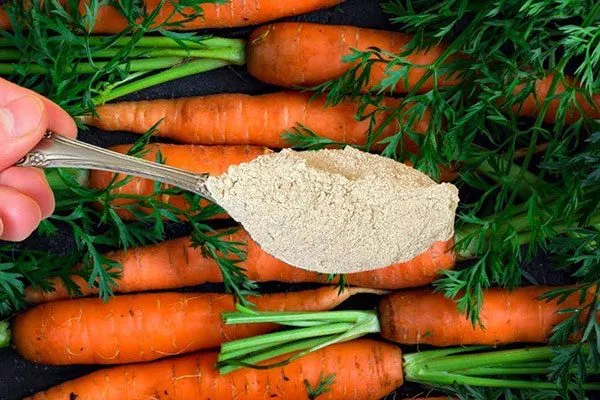
The fertilizers listed above are sufficient for the entire growing season. No additional summer feeding is required for carrots.
Fresh manure should not be used as a fertilizer for carrots, as it negatively impacts the shelf life of the root vegetables, causing them to rot quickly.
Pest and disease control
To prevent carrots from curling, rotting, or becoming wormy, it's important to prevent them from being attacked by diseases and pests. Among the latter, the carrot fly is considered the most dangerous, and aphids can also pose a threat to the crop.

Proper preventative measures can help prevent insect infestations, including maintaining a regular watering schedule, using moderate fertilizers, proper care, and avoiding overcrowding. If pest infestations do occur, Fufanon-Nova, Inta-Vir, and other insecticides can be used.
Among the diseases affecting the Monastyrskaya carrot, fungal infections (phoma, alternaria, and various types of rot) are most common. These are typically caused by unfavorable (damp) weather and gross violations of agricultural practices.
How to harvest and preserve crops
It's important to harvest carrots before frost sets in. Frost can improve the flavor of some root vegetables, such as parsnips, but this doesn't apply to carrots. After exposure to freezing temperatures, they lose their original flavor.

It's best to dig up carrots in the evening. During this time, the nutrients accumulated in the leaves during the day are directed to the roots. Carrots have less sugar in the morning.
The tops of carrots intended for storage are trimmed, leaving stumps 3 cm long. This should be done immediately after removing the carrots from the ground—moisture quickly escapes through the leaves, causing the carrots to wilt. The carrots are stored in basements, placed in boxes filled with sand. This variety can be stored for up to 9 months.
Reviews
It's no wonder the Monastyrskaya carrot is among the top five late-ripening varieties. It has everything gardeners value about this vitamin-rich root vegetable: excellent flavor, long shelf life, and high vitamin content. If you need carrots that will keep until spring, the Monastyrskaya variety is just what you're looking for.