
MO (Special Carrot) is a late-ripening vegetable variety. It is popular with domestic gardeners due to its high yield, large size, excellent taste, and attractive appearance, as well as its suitability for long-term storage. It is cultivated not only by private farm owners but also by large agricultural companies producing vegetables for commercial use.
What kind is this?
MO belongs to the Shantenay cultivar. This vegetable variety is intended for late planting to produce root vegetables in late autumn for long-term storage. Gardeners also sow its seeds before winter.
The late-ripening variety has characteristics that distinguish it from early and mid-ripening carrot varieties:
- long crop ripening period - from 130 to 150 days;
- its late collection, which occurs in September-October;
- large size of tubers, lower sugar content;
- long shelf life without loss of juiciness, taste and vitamins.
Who bred it?
MO is a new variety developed by Russian breeders. It is one of the sweetest and most delicious late-ripening carrot varieties on the domestic market.
Characteristics of the appearance of the plant and root crops
The plants are characterized by a vigorous, semi-spreading rosette of emerald-green leaves with moderately lobed margins. Their height is 25-35 cm. The ripe roots protrude above the ground, making them much easier to harvest.
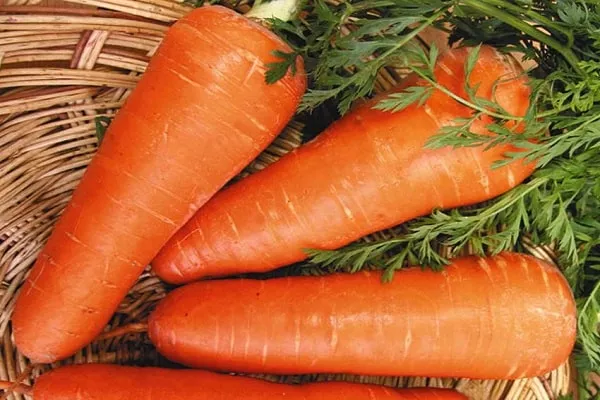
MO carrots are uniform, attractive, and large. They are distinguished by the following characteristics:
- bright orange-red color;
- a shape close to conical, with a blunt tip;
- weight - 150-210 g;
- length - 20-22 cm;
- diameter - 5 cm;
- smooth surface with a glossy shine;
- there are no noticeable eyes;
- flesh of moderate density, crispy, very juicy;
- the core is absent.
Purpose and taste of tubers
This variety is renowned for its pleasant sweet flavor and rich aroma. Its flesh is high in sugars, unlike other late-ripening carrots, with a glucose and other sugar content of 10%.
The harvest has a universal purpose. Housewives use it in the following ways:
- added to salads fresh and boiled;
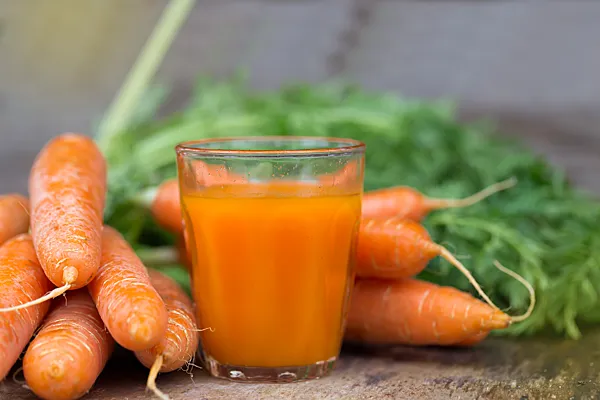
- processed into juice and puree for children's food;
- used for preparing first and second courses;
- canned;
- freeze;
- prepare sweets like carrot jam and marmalade;
- put into the cellar for winter storage.
Maturation
This variety is classified as late-ripening. The growing season lasts 125-150 days from the first shoots to harvest.
Gardeners dig up the first root vegetables in the last week of August. They are harvested en masse in September or October.
Productivity
MO is a high-yielding vegetable variety. Gardeners harvest 4.2-6.5 kg of carrots per square meter (up to 8 kg with enhanced cultivation techniques). The crop is transportable and keeps well. At temperatures of +2°C, the roots can be stored for up to 6-7 months, remaining juicy and tasty.
Soil requirements
The red vegetable grows well in soils that meet the following requirements:
- lungs;
- loose;
- breathable;
- loamy and sandy loam;
- fertile;
- characterized by neutral acidity;
- moderately moist, but not waterlogged (do not plant the crop in lowlands with shallow groundwater).
Necessary climatic conditions
This variety is heat-resistant and tolerates short dry periods in summer. It is suitable for cultivation in most regions of Russia, especially in the central part of the country. Its plants are stress-resistant and tolerate minor temperature fluctuations well.
Resistance to diseases and pests
MO plants rarely suffer from diseases and pests. They are resistant to fungal infections, such as:
- powdery mildew;
- Cercospora leaf spot.
Insects rarely attack this variety of red vegetable, such as mole crickets and carrot flies. Proper care and preventative treatments can help prevent disease and parasite infestations.
Growing and care
The MO carrot variety produces high yields when grown in favorable conditions. Select a location in your garden that meets these requirements:
- with plenty of sun (the crop tolerates short periods of shade, but produces sweet and large root crops only in a sunny bed);
- protected from cold wind and drafts;
- level or slightly elevated;
- with groundwater level of 1.5-2 m.
Follow crop rotation rules to ensure carrots grow well and don't get sick:
- do not allocate one area for vegetable crops for several years in a row (it is permissible to place them in the same place no earlier than after 3 years);
- do not grow red vegetables where garden greens (parsley, dill), as well as parsnips and celery, were previously grown;
- Sow carrot seeds in a place where tomatoes, cucumber bushes, onions, potatoes, garlic, and all types of cabbage grew last year.
Prepare the area for carrot beds in the fall:
- dig it to a depth of 30 cm;
- add humus (consumption rate: 5-6 kg per 1 sq. m.).
Begin sowing MO seeds in the spring (late April or early May). Wait until the garden soil warms to a depth of 10 cm to 5-8°C.
Pre-treat the seeds to improve their germination:
- calibrate them;
- grind;
- sprout.
Sow the seed into pre-dug furrows 3-5 cm deep. When sowing carrots, follow the pattern below:
- the distance between the furrows is 18-20 cm;
- seeding depth - 1-1.5 cm;
- seed planting step - 3 cm.
Carry out the procedure by following the algorithm of actions:
- Add a thin layer of loose soil to the furrows or loosen their bottom.
- Water the furrows. Use warm, settled water.
- Sow the seeds evenly, keeping the recommended distance (step) between them.
- Fill the planting with soil and compact it slightly.
- Water the crops.
- Mulch them with organic matter. Use non-acidic peat or sawdust. The mulch layer should be 1 cm thick.
- To create a greenhouse effect, cover the planting with plastic film.
- Remove the covering after seedlings emerge.
To get a rich harvest of large, juicy and sweet root vegetables, pay attention to the care of your carrot bed:
- Thin it outCarry out 2-3 procedures during the growing season to prevent planting from becoming too dense and to obtain large root crops.
Thin the seedlings for the first time when the first paired leaves appear on the seedlings. Maintain a distance of 2-3 cm between bushes.
Perform the second thinning when the carrots are in the bunch stage. Increase the distance between plants to 5 cm.
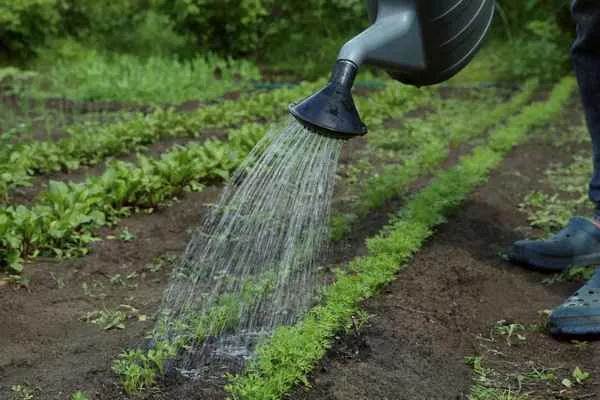
Carry out the third thinning if there is a risk of planting becoming too dense (if necessary). - Water the plantsWater your vegetable crops in the evening to avoid foliage burn. Use settled and sun-warmed water. The recommended watering rate for seedlings is 5 liters per square meter, and for mature plants, 6-8 liters per square meter.
Adjust your watering schedule based on weather conditions. Water the planting once every 8-10 days if the weather is favorable. During dry periods, water at least twice a week. Reduce the watering during the rainy season.
- Weed and loosen the bedsThese measures help improve soil air permeability and prevent plant diseases.
- Feed the vegetable cropAt the early stage of vegetation, fertilize with urea (10-15 g per 1 sq. m). Use superphosphate (20-30 g per 1 sq. m) and potassium salt (10-15 g per 1 sq. m) when root crops are forming.
Apply wood ash twice during the season (200 g per 1 sq. m). If seedlings are not growing well, water them with a 1:15 chicken manure solution. - Carry out preventative treatments of vegetable crops against carrot flyTo prevent pest infestations, plant low-growing marigolds around the orange vegetable bed. Use crushed stove ash for dusting.
Advantages and disadvantages
Pros:
Cons:
Reviews
MO carrots are a high-yielding, mid-late variety. They are grown throughout Russia. Gardeners love them for their large roots, high carotene and sugar content, and excellent flavor. The harvested crop is suitable for fresh consumption, processing, and long-term storage. Their marketable appearance makes them popular among gardeners for sale.