
The Lakomka carrot is a popular variety, deservedly popular among gardeners due to its excellent qualities. This crop boasts not only a vibrant flavor and high marketability, but also ease of cultivation, making it an ideal choice for experienced agronomists and novice gardeners alike. Proper care is essential for the plantings.
Breeding history
The variety was developed by plant breeders V. G. Kachainik and A. V. Kandoba. It passed all mandatory testing and was officially approved for use in 2008 due to its numerous advantages.
Introduction to the variety
Lakomka belongs to the Nantes variety. The vegetables grow to be high-quality and rich in flavor. A detailed description of this variety is provided below.
Characteristics of the appearance of the plant and root crops
The rosette of leaves is semi-spreading. The leaves on the plants can be either elongated or medium-sized, with a normal green color.

Distinctive qualities of root crops:
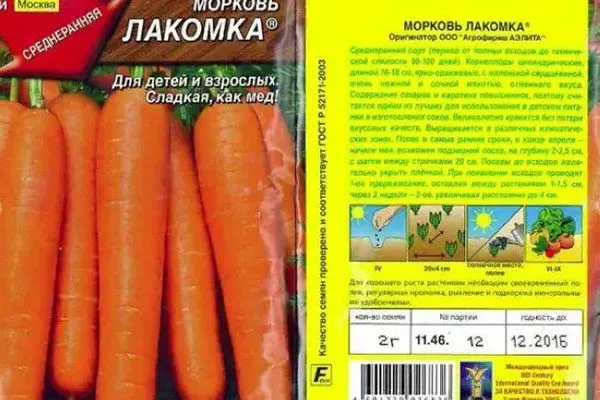
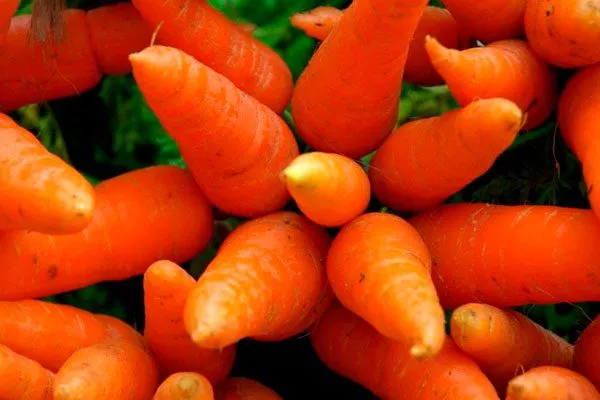
- Form - cylindrical, elongated, with a slightly pointed tip.
- Weight - varies from 90 to 160 g. There are specimens weighing 200 g.
- Length - 16-18 cm.
- Color - orange.
- Core – small size.
Purpose and taste of tubers
The sweet carrot is grown for fresh consumption. The crop is well suited for bunching and producing carrot juice. The fruits are easily preserved over the winter. The tender and juicy flesh provides excellent, and sometimes simply decent, flavor.

Maturation
This carrot is a mid-early variety. It typically takes 90 to 100 days from germination to harvest.
Productivity
Characterized by high yields, it is often cultivated on large production plots. Under such conditions, the average yield ranges from 260 to 505 centners per hectare, and the marketability of ripened root crops reaches 74-95%.

Growing and care
When planting Lakomka carrots, consider several agronomic nuances and care requirements. Prepare the site:
- Remove weeds so that they do not choke out the first shoots.
- Loosen the soil.
- Treat and soak the seed material in a growth stimulator for 2-3 hours.
- In autumn, fertilize with compost, manure or mineral complexes.
- ✓ Soil pH should be between 6.0-6.8 for optimal growth.
- ✓ The depth of the fertile layer is at least 30 cm to form even root crops.
In heavy, rocky soil, the roots grow crooked and small. To loosen the soil, add river sand. This variety thrives in sandy loam or loamy, slightly acidic soils with at least a 25-30 cm fertile soil layer. Liming to reduce soil acidity is not suitable for this variety.
Step-by-step instructions:
- Sow seeds outdoors from mid-April to early May, depending on your region. The first shoots will appear within a week at temperatures of 17-18°C. If the temperature reaches 12°C, the shoots will appear within 15 days.
- Make furrows at a distance of 15-20 cm, no more than 3-4 cm deep.
- Water it.
- Plant seeds no more than 5 cm apart.
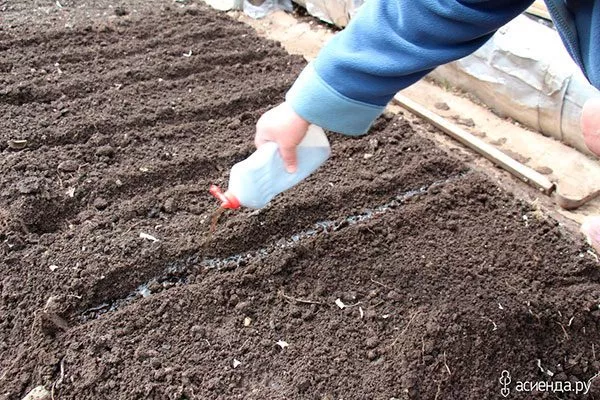
Provide proper care for your plants. Follow simple agricultural practices:
- Watering. Watering should be moderate and regular. Root vegetables will rot in overly wet soil, and a lack of moisture will cause the flesh to become tough and dry. The optimal regimen in temperate climates is once every 7-10 days.
In cold regions where winds dry out the soil, water the crops daily in small amounts during the initial germination stage.

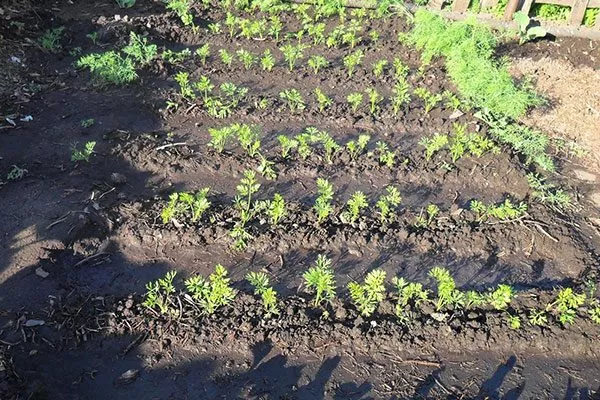
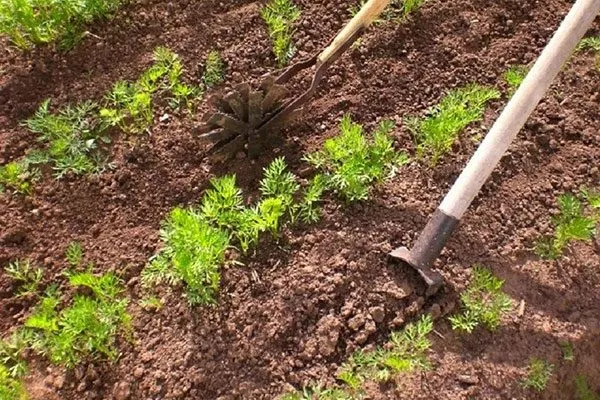
- Thinning and weed control. Carry out the thinning procedure in several stages. After the first pair of true leaves appears, thin the plantings so that the distance between plants is at least 2.5 cm. Repeat after 20-25 days, but leave the distance between seedlings at 5 cm.
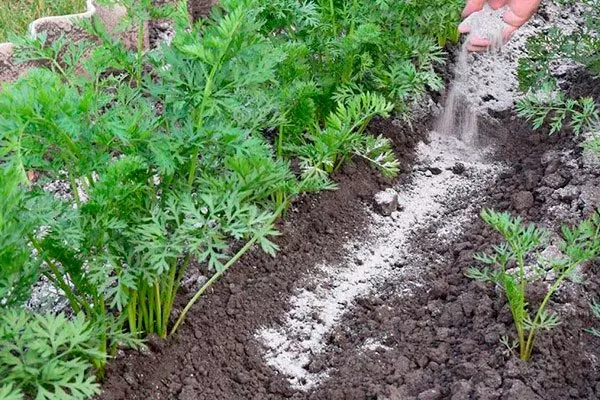
Remove weeds at least 2-3 times per season. Regular watering can cause the soil to wash away, so hill up the beds regularly to cover the tops of the root crops. - Top dressing. When soaking seeds, use the Siyanie-1 microbiological concentrate. Apply this solution to the soil and fertilize the carrots during watering (20 g per 10 liters of water), repeating the procedure once every 7-10 days.
In the fall, fertilize with an aqueous solution of humus or compost; the organic fertilizer layer should be at least 5 cm thick. At the same time, apply potassium or phosphorus fertilizers at a rate of 10-15 g per 1 sq. m. After the second thinning, fertilize with complex fertilizers such as Kemira or Nitrophoska. - Insect protection. For pest control, use Fitoverm 2%, which neutralizes 20 types of insects and pests in the soil. Spray the above-ground parts of plants with the solution throughout the growing season until harvest. The final application should be two days before harvest.
Mulching protects crops from pest attacks. A solution of Intavir or Actellic helps against carrot fly. To disinfect the soil, spray the above-ground parts with a solution of Bordeaux mixture. Use the biological products Bitoxibacillin and Lepidocide throughout the season.
Advantages and disadvantages
Before growing a crop, study its pros and cons. Lakomka has many advantages:
Reviews
The Lakomka carrot is an ideal choice for those seeking to grow a high-quality, tasty crop with minimal effort. Its ease of care, high yield, and excellent flavor make this variety a good choice for beginners. Proper care is essential for producing large fruits.